

Meghan Markle's podcast sparked a global discussion around colourism. What is it and how does it look in Australia?
- Written by Suzanne Plater, Adjunct Senior Academic, Aboriginal and Torres Strait Islander Education and Health, University of Sydney
If you’s white, you’s all right If you’s brown, stick around
But if you’s black, oh brother Get back, get back, get back
Big Bill Broonzy ‘Black, Brown and White Blues’
It takes a celebrity
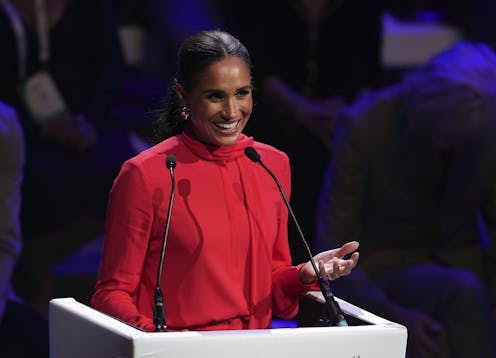
During a recent podcast from Meghan Markle’s weekly series Archetypes, the Duchess of Sussex briefly riffed with Mariah Carey about their shared experiences of “colourism”.
Apparently, to some Markle watchers she was too black. To others, she was too white. And for many, she was neither black nor white. According to Markle, the interest in her mixed-race heritage only became weaponised against her after she married a white prince.
The hierarchy of skin shade
Markle was feeling the sting of the global phenomenon known variously as colourism, pigmentocracy or shadeism. These descriptors represent a skin shade stratification system, with deep roots in white supremacy, predicated on the racist notion that dark skin represents savagery, irrationality, and inferiority, while light skin is defined by civility, rationality, and superiority.
Colourism bias is so ingrained that it is often practised among people who share a race or ethnicity. It’s also possible for someone to practice colourism against themselves.
Read more: Racism is different than colorism – here's how
Skin shade discrimination, and its hierarchical roots, values, and effects, has been extensively debated in the US and other neocolonial nations, particularly in Asia, Africa, and the Pacific.
However, it is largely absent from race and racism discussions in Australia. This is likely due to our ongoing reluctance to fully face up to our history of structural violence against Aboriginal people during the protection, segregation, and forced assimilation eras of the 19th and 20th centuries.
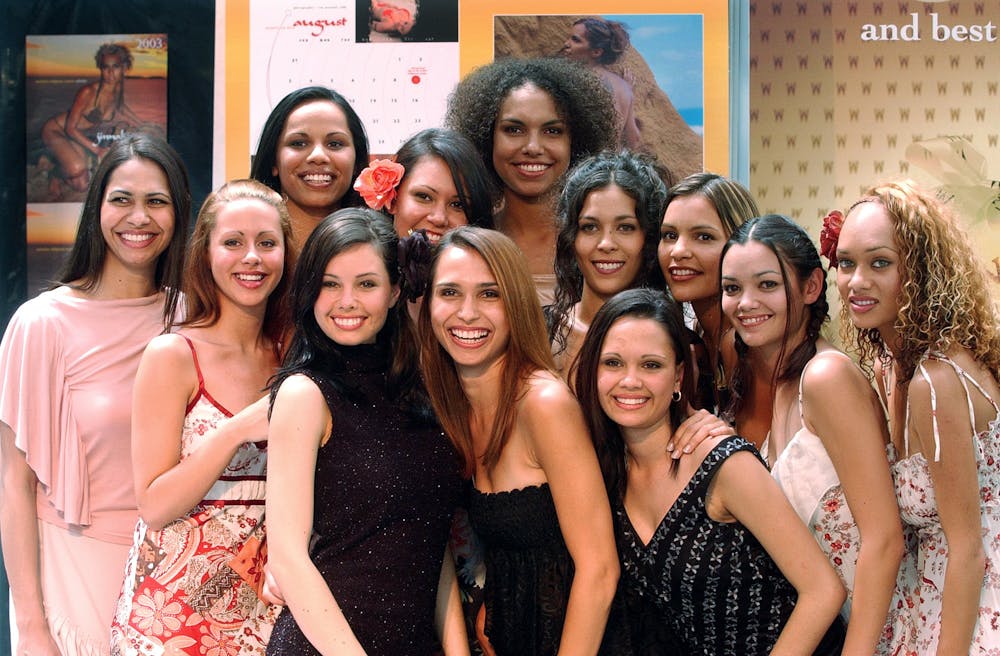
This was the period when the so-called science of eugenics bestowed legitimacy on skin shade discrimination as a way of determining the worth of an individual. It informed the policies now infamously known as “breeding out the colour” of Aboriginal people deemed fit for assimilation, and “smoothing the dying pillow” of those perceived unviable for the White Australia project.
Shadeism is one result of this and other state-sanctioned genocidal attempts to rid the nation of its First Peoples.
Read more: Women of color spend more than $8 billion on bleaching creams worldwide every year
Black-skins, brown-skins, and white-skins
Despite its anaemic presence in Australia’s racism debate, shadeism is an everyday burden for many black, brown, and white-skinned Aboriginal people. But it is complicated, as these interview extracts from a recent study on the workplace experiences of university-educated Aboriginal people show:
Gerard
I’m Aboriginal and Irish, and proud of my heritage. I grew up blackfella-way in a town camp near Darwin. But I’m called a yellafella, or a brown-skin, or a half-caste. Sometimes my brown skin is sought after because the white bosses need an Aboriginal person to do a job. But then that will get used against me by black people because I’m too white for that job. Or by white people because I’m too black for that job. Or by white-skinned Aboriginal people because I’m too brown and they wanted that job. Have I confused you yet?
Loretta
They think you’re the right type but they don’t know what type you are really. And if you turn out to be not what they expect they ditch you because you don’t fit the mould. They want our blackness but we can’t be too black for them, we have to act white. If you can’t act like a white person you’re inappropriate, they just won’t tolerate it.
Tone down the colour
As Gerard and Loretta suggest, being a brown-skin can sometimes mean greater acceptance by white people, provided they “tone down the colour”. In other words, they fare better in mainstream society if they can culturally mirror whiteness.
This is known as culturism, and it is used to fill the gap left behind by discredited notions of racial inferiority. It serves the same purpose as racism in that it measures the worth of other cultures against white standards and finds them wanting.
Many First Nations people, Australians of colour, and migrants of colour know all too well the racially stratified association with cultural inferiority formed by many in dominant Australian society.
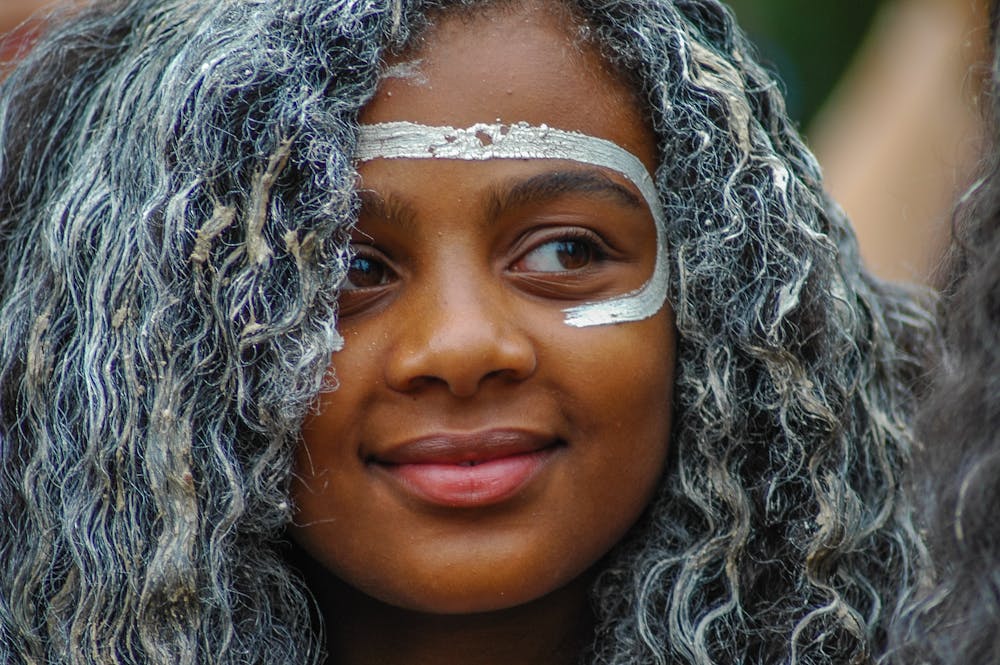 A member of Koomurri Aboriginal Dance Troupe taking part in a traditional Australian Aboriginal smoking ceremony.
Shutterstock
A member of Koomurri Aboriginal Dance Troupe taking part in a traditional Australian Aboriginal smoking ceremony.
Shutterstock
Multiple whammys
The shadeism and culturism experienced by the Aboriginal study participants, and other black, brown, and white-skinned Aboriginal people, could be seen as a triple-whammy. They are too black to pass as white. Too white to pass as black. And too connected to culture, kin, and country to be what mainstream Australia prefers its minority racial groups to be – white clones sheathed in dark skin.
Add to that its quasi-hierarchical effect in workplaces and communities, which can drive a wedge between black, brown, and white-skinned Aboriginal people, and you have a shadeist and culturist quadruple-whammy.
Giving up isn’t an option
It was tempting to finish this article on a positive note by writing about hope, allyship, and how together we might ultimately defeat racism, shadeism, and culturism. But as always, a sovereign and unplacated Aboriginal person (Gerard) said it best:
I’m a survivor of racism. I have to be. I have to live and feed the kids. And yeah, sometimes I do feel like giving up battling the system. It’s not good for your health, and many more will go against you. But I know the old people, my ancestors, are watching. Giving up isn’t an option.
Postscript: Eighty-one years ago, African American blues artist, Big Bill Broonzy, wrote Black, Brown and White Blues. Needless to say, its sentiment resonates today.
Authors: Suzanne Plater, Adjunct Senior Academic, Aboriginal and Torres Strait Islander Education and Health, University of Sydney

















