

We pay billions to subsidise Australia’s fossil fuel industry. This makes absolutely no economic sense
- Written by Richard Denniss, Adjunct Professor, Crawford School of Public Policy, Australian National University
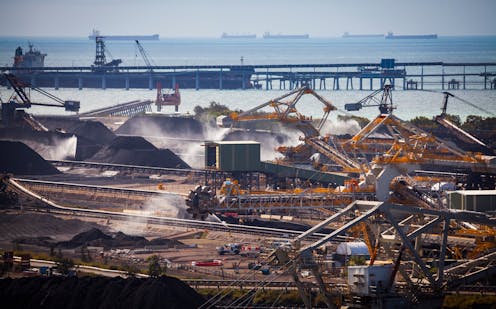
Fossil fuel subsidies from major economies including Australia reached close to US$700 billion in 2021, almost doubling from 2020, according to new analysis by the International Energy Agency and OECD.
These subsidies are expected to keep rising in 2022 as governments worldwide attempt to use fossil fuel subsidies to shield customers from the high energy prices caused by Russia’s invasion of Ukraine.
Australia spends billions each year giving subsidies to the fossil fuel industry, despite our climate change commitments. The Australia Institute estimates that in the 2021-22 budget period, Australian federal and state governments’ total fossil fuel subsidies cost A$11.6 billion. That’s up $1.3 billion on the previous year.
Subsidies play an important role in economies like Australia. By pushing the prices of things down below the cost of producing them, subsidies make everything from schools and hospitals to the ABC and childcare much cheaper and more widely available than they would otherwise be.
But it makes absolutely no economic sense to provide subsidies to things that a government is, or should be, trying to discourage.
Australia is a top emitter
Back in 2009 Australia and the other major economies that make up the G20 all promised to phase out “inefficient fossil fuel subsidies”.
But as the new report makes clear, the policy reality of many countries doesn’t come close to matching their ambitious rhetoric of reining in public funding for the major cause of climate change.
Australia is one of the largest emitters of greenhouse gasses in the world. Despite our relatively low population, we come in 15th for total emissions and 8th for per capita emissions. Only major fossil fuel-producing nations rank higher, such as Qatar and the United Arab Emirates.
We are even more “successful” at exporting fossil fuels than burning them, ranking third in the world behind only Saudi Arabia and Russia.
Despite Labor’s improved target to cut 43% of Australia’s emissions by 2030, Australia is still looking to open up huge new coal and gas projects.
Australia is failing at transitioning away from fossil fuels. Emissions from burning fossil fuels in transport, electricity and industry are all much higher now than they were back in 1997 when Australia signed on to the Kyoto Protocol.
Our fossil fuel exports have risen strongly since then as well, with 114 new fossil fuel projects awaiting approval in Australia, many for the export market.
Subsidies play a major role in this
The federal government subsidises the cost of exploring for coal, oil and gas in Australia, the infrastructure needed to extract and transport those fossil fuels, and then subsidises the use of them as well.
Of the $11.6 billion Australian governments spent on this in 2021-2022, $10.5 billion is accounted for by the federal government alone.
By far the largest of the federal subsidy is the $8 billion Fuel Tax Credit Scheme. This refunds the cost of diesel fuel excise to select industries, with around half going to mining industries.
The cost of these diesel excise refunds is greater than the annual $7.5 billion budget for the Australian Army.
Subsidies work, but only if we are subsidising things we want more of. It’s important we subsidised vaccines to help manage the COVID crisis, and that the previous and current federal governments subsidise renewable energy.
But subsidising fossil fuels when you are trying to transition away from them is like subsidising cigarettes when you are trying to encourage people to quit.
So far, the new government hasn’t indicated it has any plans to cease subsidising fossil fuels.
Economists call subsidies for things governments are ostensibly trying to discourage, “perverse”. So why would the Albanese government continue to spend billions on fossil fuel subsidies, and delay the transition away from coal and gas that voters and climate scientists want to see the back of?
Reasoning is numerous and bizarre
The arguments for keeping Australia’s perverse subsidies are as numerous as they are bizarre.
One argument is that subsidies will help people manage rising energy costs. But direct cash payments to low income earners would be a far cheaper and more equitable solution. Subsidies lock in the status quo, while cash supports help smooth the transition away from climate-wrecking industries.
Back in 2011, after signing on to the G20 pledge to phase out fossil fuel subsidies, the Gillard government declared it had no subsidies to phase out.
But documents released under the freedom of information act showed the treasury had, in fact, identified 17 fossil fuel subsidies that should have been declared and phased out.
At the other end of the spectrum, Senator Matt Canavan argued in 2016 that because all previous coal mines in Australia have benefited from subsidies, it would have been unfair to not subsidise the Adani mine as well.
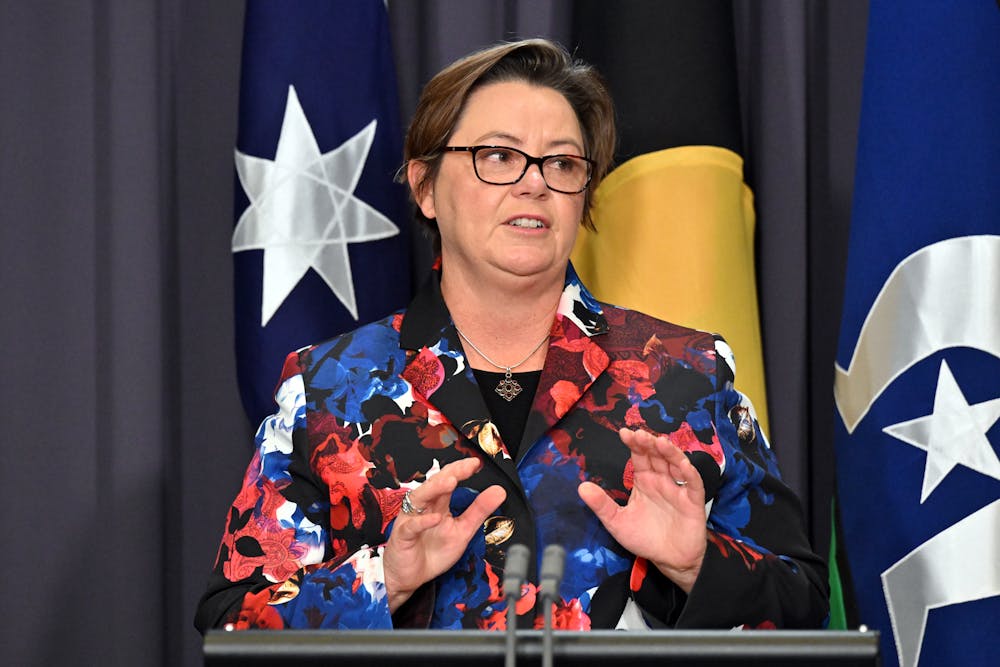
Labor’s Minister for Resources Madeleine King stated to the Guardian last month: “projects involving these traditional [fossil fuel] energy sources stack up environmentally, economically, and socially, we will support them.”
But if they need expensive subsidies to “stack up”, then they clearly aren’t economically viable. And if the fossil fuel industry doesn’t need the subsidies, then why would any government keep providing them?
Removing fossil fuel subsidies should be the first step taken by any government serious about reducing greenhouse gas emissions. What the latest data makes clear is that its not just Australian governments that are yet to muster the political courage to do something so simple.
Authors: Richard Denniss, Adjunct Professor, Crawford School of Public Policy, Australian National University

















