

Labor's climate change bill is set to become law – but 3 important measures are omitted
- Written by Frank Jotzo, Professor, Crawford School of Public Policy and Head of Energy, Institute for Climate Energy and Disaster Solutions, Australian National University
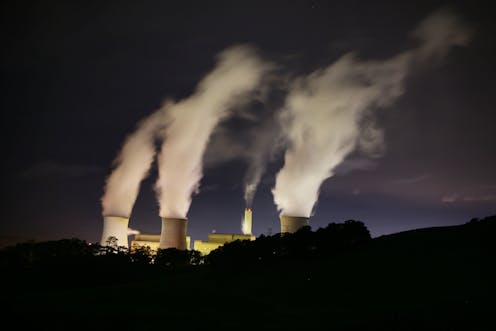
As of Wednesday night, Labor’s climate change bill was poised to pass the Senate after the government agreed to amendments proposed by independent senator David Pocock to improve accountability and transparency.
The law would set a national emissions target for 2030 and define a process to ratchet it up over time, as well as enshrining the goal of net-zero emissions by 2050. The independent Climate Change Authority will recommend future targets. These are sound and useful elements and will serve Australia’s climate policymaking well.
Yet three important elements are not in the bill: a long-term roadmap, securing the future of the Climate Change Authority, and measures for a proper national conversation on our journey to net-zero emissions. And the 43% emissions reduction target should be considered only a starting point.
Is 43% emissions reduction enough?
The bill mandates that Australia reduce its greenhouse gas emissions by 43% by 2030, compared to 2005 levels. Labor took that target to the federal election and has been unwilling to negotiate on it since winning office.
Is a 43% reduction in Australia’s emissions adequate in the context of the Paris Agreement?
There is no single objective yardstick for which country should do how much towards a global goal. And the trajectory of global emissions after 2030 – as well as before – matters greatly for longer-term global warming.
But an assessment is nevertheless possible, and it suggests that strengthening the target, perhaps by a lot, would be appropriate.
Emissions reductions in this broad range are what’s needed globally to limit warming to 2℃ compared to pre-industrial levels.
But high-income, high-emitting countries – Australia prominent among them – are rightfully expected to reduce their carbon footprint more quickly than developing countries, or countries where the economy is already relatively low-carbon.
What’s more, the effort needed by Australia to meet the 43% target is less than that required by many other countries. This is due to reductions in emissions from the land use and forestry sector more than a decade ago, and because we have lots of opportunities to cut emissions easily.
Big further reductions can be made by accelerating the shift from coal to renewables, better energy efficiency, electrifying transport, and cleaner processes in industry and agriculture.
An Australian reduction of the present order is definitely incompatible with limiting global warming to 1.5℃ – the global aspiration for limiting climate change. And it would be a contortion to argue it’s somehow in line with “well below 2℃”, the Paris Agreement’s long-term goal.
All that said, a 43% emission reduction target improves a lot on the previous government’s target. And enshrining it in law sends an important message. It makes zero-emissions options much more investable, and signals internationally that Australia is back on climate change action.
A trajectory to net-zero
Attention will soon shift to Australia’s 2035 emissions target. The bill commits the Climate Change Authority to recommend that target, and new targets every five years from then on.
If the government of the day does not accept that advice, it will need to explain its dissent to parliament. That is good process.
But Australia also needs to plot a forward trajectory beyond the next five-year period, because the investments that matter most are made on longer timescales.
Such “roadmapping” would shed light on questions such as:
what are the indicative targets for 2040 and beyond, on the way to net-zero emissions?
what might be the balance between remaining greenhouse gas emissions and removing emissions from the atmosphere, whether through forests and land-based carbon, or technological solutions?
The Climate Change Authority may choose to do such an analysis, mapping out scenarios and possible trajectories. But such advice would have stronger standing if there was a legal requirement for it.
Securing the Climate Change Authority
The bill puts the Climate Change Authority centre stage, but it doesn’t make sure it will always be properly equipped to do its job.
A future government might not like to hear a strong independent voice, and could quieten it by starving it. It’s happened before, following the Abbott government’s attempt to abolish the authority.
The Climate Change Authority needs to run a deeply inclusive and very extensive consultation process for future recommendations on the target. Not just roundtables and submissions to a website, but a really big effort to take the analysis to groups right across Australian society and take their views into account.
Let’s hope this and future governments will give their political backing for an inclusive process, and fund the authority to do so.
A proper national conversation
In any case, Australia needs a national long-term emissions reduction strategy. It should answer questions such as:
what will the shift to net-zero emissions mean for our economy, both nationally and regionally?
what needs to be done to prepare for the changes, maximise the upsides and deal with the downsides?
Such a strategy must be much more than just another report based on modelling with some stakeholder discussions along the way. What’s needed is a proper national conversation about how we tackle the transition to net-zero emissions.
This would bring out all available information and the many different perspectives, opportunities and vulnerabilities. It requires people coming together to really understand the issues and, where possible, to forge agreement.
That conversation should involve all major groups: businesses and business associations, non-government organisations, unions, community leaders, youth groups and so forth. The research sector would provide data and analysis, and the media would make the debate a public one, in many formats and dimensions.
Governments at all levels would be involved – but they would not control the process.
Some political instincts run against such truly open processes. But they’re essential – and the climate change bill doesn’t directly provide for them.
Authors: Frank Jotzo, Professor, Crawford School of Public Policy and Head of Energy, Institute for Climate Energy and Disaster Solutions, Australian National University

















