

Income redistribution or social insurance? A federal MP considers the future of the welfare state
- Written by John Quiggin, Professor, School of Economics, The University of Queensland
The Albanese government has something of an embarrassment of intellectual riches, with no less than three of its MPs holding PhDs in economics. Two of them, Andrew Charlton and Andrew Leigh, are also prolific authors with at least a dozen books between them.
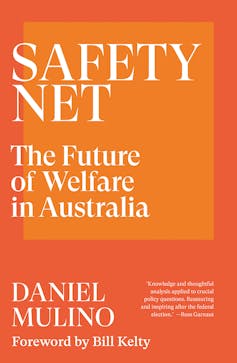
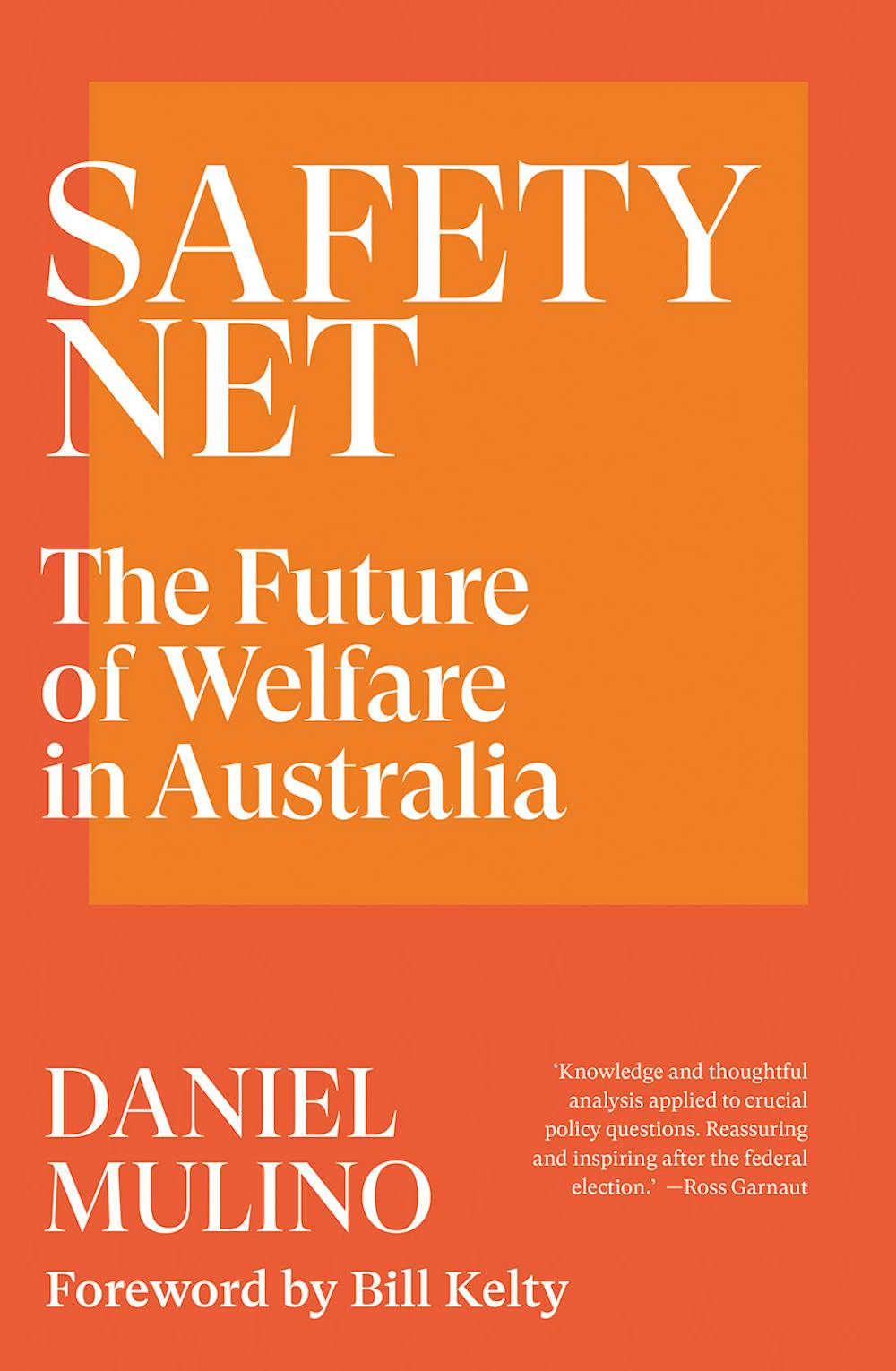
Now Daniel Mulino, who holds the Victorian seat of Fraser as well as a PhD from Yale, has entered the lists with Safety Net: The Future of Welfare in Australia.
Review: Safety Net: The Future of Welfare in Australia – Daniel Mulino (Black Inc).
Mulino offers a lot more than discussion of Australian welfare policy. His book also includes a detailed history of the welfare state and an analysis of the theory of risk management underlying social insurance. Some readers may find these sections heavy going, but they will be a valuable resource for others.
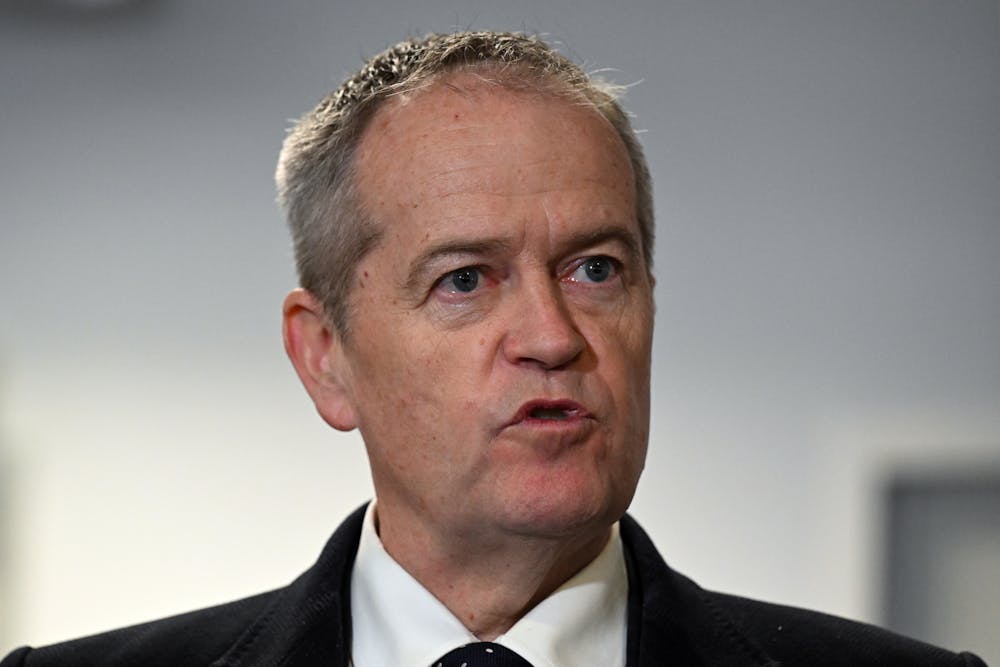 Bill Shorten, Federal Minister for the National Disability Insurance Scheme.
Mick Tsikas/AAP
Private insurance has also grown, but, as Mulino notes, most forms of private risk management (superannuation, health insurance, third-party car insurance) rely on public mandates and subsidies for their viability.
The main exception is home insurance, along with the property component of car insurance, and other forms of general insurance. General insurance premiums in Australia amounted to around $45 billion in 2020-21, or about 2% of national income.
Read more:
The economy can't guarantee a job. It can guarantee a liveable income for other work
Old-age dependency ratio
The weakest part of Safety Net is the treatment of retirement income. Mulino begins by focusing on the old-age dependency ratio – that is, the ratio of people aged over 65 to those aged 15-64. The idea here is that people over 65 must be supported in retirement by those of working age.
But the ratio no longer corresponds to what it is supposed to measure. First, the age of access to the age pension has been increasing steadily and will reach 67 in 2023. The previous government proposed a further increase to 70. The proposal was defeated, but will doubtless re-emerge in future.
The result is that the length of time Australian men can expect to spend on the age pension has barely changed this century. For women, who once gained access at age 60, expected time on the pension has been unchanged for the past 60 years.
Equally importantly, the denominator in this ratio has been obsolete for the past 50 years or so. Children of 15 are not “working age”. The legal age to leave school is now 17 in most states. In practice, most young people do not finish their education until they are in their 20s. While they may take on jobs along with study, they are almost certainly paying less in tax than they receive in support from government. The OECD now defines “working age” in the old-age dependency ratio as 20-64.
Taking these two effects together, there is no reason to see what is often called “population ageing” as a systemic risk to the welfare state. Mulino does seem to regard this as a risk, but does not commit to a specific policy response. He anticipates the welfare state covering more risks and getting bigger in relation to national income, but not changing fundamentally in form.
Despite being tightened in various ways, including higher pension ages, stringent eligibility testing for some benefits, and Jobseeker rates that remain below the poverty line (the recent increase was just an inflation adjustment), the social-insurance state has remained remarkably resilient over the past 40 years, a period in which the anti-government ideology often called neoliberalism has been dominant. Indeed, it has been extended in some areas, such as the National Disability Insurance Scheme in Australia and the Affordable Care Act (Obamacare) in the United States.
In part, this resilience reflects a general increase in demand for security. As average incomes have risen, there has also been an increase in risk of various kinds, along with a well-founded feeling that risk is not being shared fairly. As Mulino observes,
one strand that runs through much of the Brexit and Trump analysis is that many socially conservative blue-collar workers feel left behind and economically insecure and, whether they voted primarily on the basis of economic issues or on “cultural” issues, the angst they feel as a result of current distributional arrangements, including the distribution of risk and reward, is profound and deep-seated.
The maintenance of an effective social-insurance state, commanding a broad consensus of public support is an important bulwark against the appeal of demagogues like Donald Trump. At a time when politics is often decried as superficial and short-term, it is good to see books like this one. Safety Net is a significant contribution to public debate in Australia, which deserves a wide audience.
Authors: John Quiggin, Professor, School of Economics, The University of Queensland
Bill Shorten, Federal Minister for the National Disability Insurance Scheme.
Mick Tsikas/AAP
Private insurance has also grown, but, as Mulino notes, most forms of private risk management (superannuation, health insurance, third-party car insurance) rely on public mandates and subsidies for their viability.
The main exception is home insurance, along with the property component of car insurance, and other forms of general insurance. General insurance premiums in Australia amounted to around $45 billion in 2020-21, or about 2% of national income.
Read more:
The economy can't guarantee a job. It can guarantee a liveable income for other work
Old-age dependency ratio
The weakest part of Safety Net is the treatment of retirement income. Mulino begins by focusing on the old-age dependency ratio – that is, the ratio of people aged over 65 to those aged 15-64. The idea here is that people over 65 must be supported in retirement by those of working age.
But the ratio no longer corresponds to what it is supposed to measure. First, the age of access to the age pension has been increasing steadily and will reach 67 in 2023. The previous government proposed a further increase to 70. The proposal was defeated, but will doubtless re-emerge in future.
The result is that the length of time Australian men can expect to spend on the age pension has barely changed this century. For women, who once gained access at age 60, expected time on the pension has been unchanged for the past 60 years.
Equally importantly, the denominator in this ratio has been obsolete for the past 50 years or so. Children of 15 are not “working age”. The legal age to leave school is now 17 in most states. In practice, most young people do not finish their education until they are in their 20s. While they may take on jobs along with study, they are almost certainly paying less in tax than they receive in support from government. The OECD now defines “working age” in the old-age dependency ratio as 20-64.
Taking these two effects together, there is no reason to see what is often called “population ageing” as a systemic risk to the welfare state. Mulino does seem to regard this as a risk, but does not commit to a specific policy response. He anticipates the welfare state covering more risks and getting bigger in relation to national income, but not changing fundamentally in form.
Despite being tightened in various ways, including higher pension ages, stringent eligibility testing for some benefits, and Jobseeker rates that remain below the poverty line (the recent increase was just an inflation adjustment), the social-insurance state has remained remarkably resilient over the past 40 years, a period in which the anti-government ideology often called neoliberalism has been dominant. Indeed, it has been extended in some areas, such as the National Disability Insurance Scheme in Australia and the Affordable Care Act (Obamacare) in the United States.
In part, this resilience reflects a general increase in demand for security. As average incomes have risen, there has also been an increase in risk of various kinds, along with a well-founded feeling that risk is not being shared fairly. As Mulino observes,
one strand that runs through much of the Brexit and Trump analysis is that many socially conservative blue-collar workers feel left behind and economically insecure and, whether they voted primarily on the basis of economic issues or on “cultural” issues, the angst they feel as a result of current distributional arrangements, including the distribution of risk and reward, is profound and deep-seated.
The maintenance of an effective social-insurance state, commanding a broad consensus of public support is an important bulwark against the appeal of demagogues like Donald Trump. At a time when politics is often decried as superficial and short-term, it is good to see books like this one. Safety Net is a significant contribution to public debate in Australia, which deserves a wide audience.
Authors: John Quiggin, Professor, School of Economics, The University of Queensland 
















