

The best films at this year's Melbourne International Film Festival
- Written by Adrian Danks, Associate professor in Cinema and Media Studies, RMIT University
After two years online, the Melbourne International Film Festival (MIFF) returned to its regular, outsized form spread across a range of inner-city, suburban and regional Victorian locations.
It’s been many years since the experience of the same festival has been something to share with fellow moviegoers. These days, everyone traces their own path through the myriad of bad, good and excellent films and related experiences on offer.
If anything, this has been accentuated post-lockdown, now it is also possible to watch some films online and stick to particular geographic locations. This certainly has had an impact on the festival, fragmenting any real sense of a coherent and truly shared experience. This is not really a criticism – as there are many advantages to being able to cherry-pick and fully curate your own festival – but a reality that reflects the smorgasbord of what is on offer.
This is also reflected in the attendances at the festival. These varied massively between the small number of blockbuster films on offer (things like Park Chan-wook’s atmospheric but insubstantial Decision to Leave) and the many sparsely populated screenings that characterised the two-and-a-half weeks back in the cinema.
The festival is a unique and essential event, but it has been as affected by the challenges of clawing back an audience. In this regard, it was fascinating to see one of the festival’s highlights, Gus Berger’s The Lost City of Melbourne. This conventional archival documentary with talking heads spoke with some urgency about the legacy and impermanence of Melbourne’s built environment with a particular focus on its many lost and few surviving picture palaces.
Of the 25 or so films I watched – life didn’t stop to allow me to fully feast at the table – here are five that have stayed with me.
Man on Earth
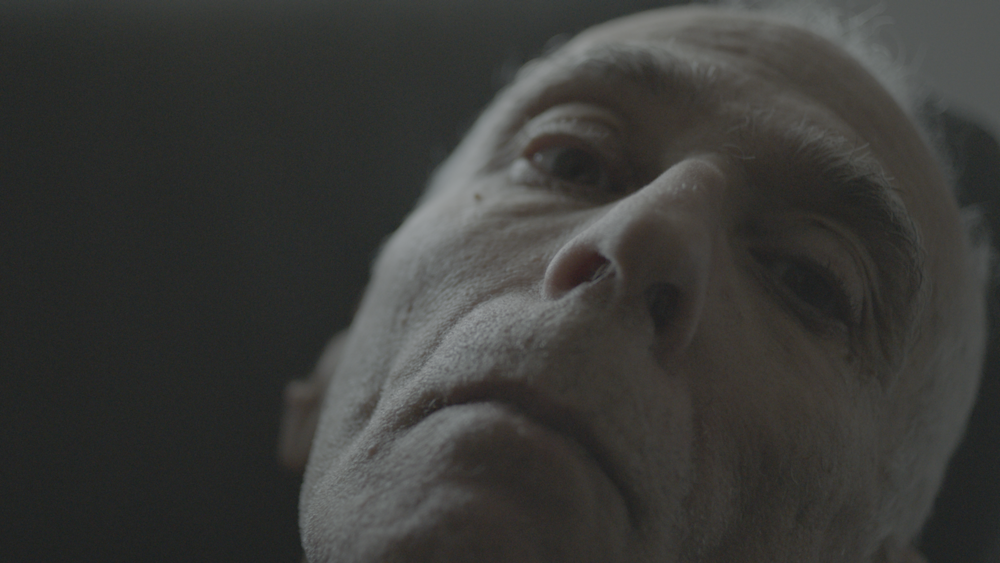
Over the past 20 years, Amiel Courtin-Wilson has emerged as one of Australia’s most perceptive, challenging, honest and adventurous filmmakers. His latest film, Man on Earth, is an unflinching, unguarded and deeply affecting experiential portrait of the last seven days in the life of Bob Rosenzweig.
Living in Washington and suffering from Parkinson’s, Bob has chosen to die with dignity. Courtin-Wilson’s intimate and deeply respectful documentary provides a touching portrait of a man making peace with those around him, including the filmmaking team. Man on Earth emerged from another project that used thermal imagery to record the final moments of human life and its afterglow. It is a true collaboration between the filmmakers and Bob, who asked them to document his last days.
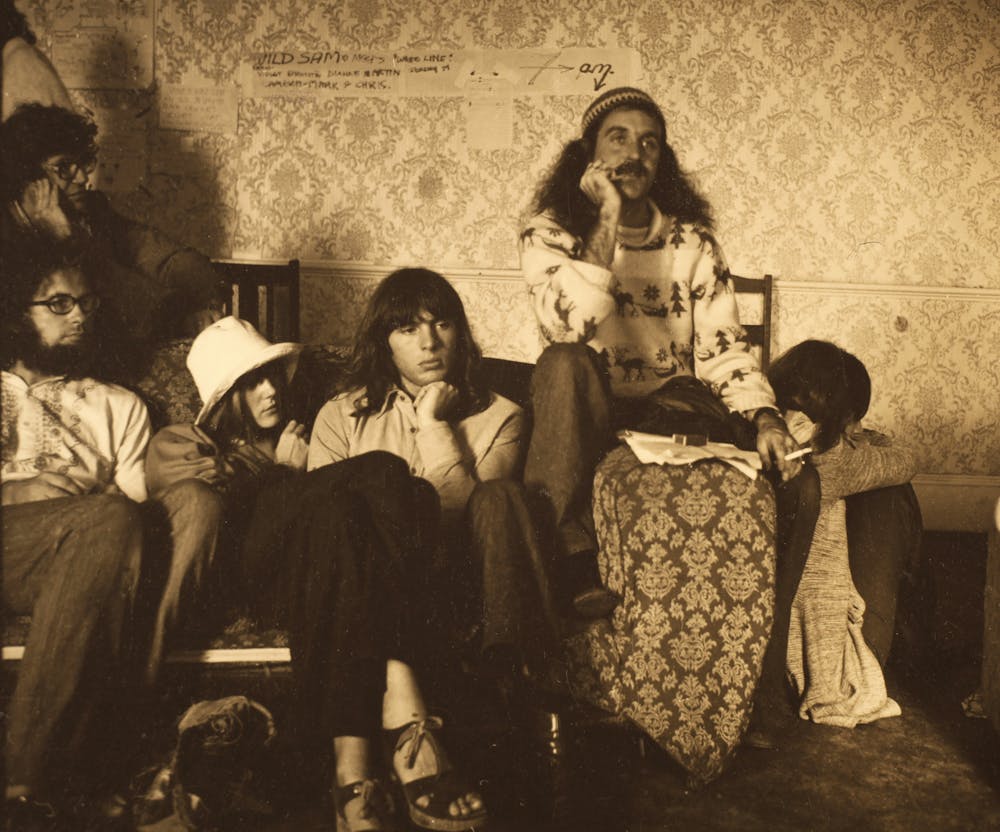 A co-op meeting as documented in Senses of Cinema.
The co-ops didn’t fund or make films, but provided an essential space for local and international work to be shown and debated. Hughes and Zubrycki’s documentary borrows its name from the more recent and groundbreaking online film journal, Senses of Cinema. In so doing, it recognises a shared connection between the various facets of non-mainstream, activist, grassroots and experimental screen culture in Australia. It sits alongside the extraordinary group of documentaries devoted to leftist film history Hughes has completed over the past 40 years, as well as the more observational and deeply committed works Zubrycki has created over the same period.
Made by two of Australia’s most important and, at times, maverick documentarians in the twilight of their careers, Senses of Cinema speaks, in every way, to the importance of collaboration and the necessary recognition and resurrection of often-forgotten parts of our film history and culture.
The Afterlight
Both Man on Earth and Senses of Cinema document lives, events and organisations as they pass into memory. Charlie Shackleton’s archival documentary, The Afterlight, memorialises those who live within an “afterlife” stored on celluloid.
The Afterlight is part of a broader movement in contemporary cinema and gallery art that highlights the decay and impermanence of the moving image, particularly in its material form prior to the digital turn. Taking its place alongside the work of filmmakers and video artists such as Bill Morrison and Christian Marclay, it collages together images from hundreds of films – all in black and white – that feature actors who are no longer alive. In some respects, the implications of Shackleton’s film are banal – who hasn’t registered that the images you might be watching are of people who are no longer alive? But his work is given force by both the way the images are organised and the conceptual conceit that surrounds the film’s distribution and exhibition.
A co-op meeting as documented in Senses of Cinema.
The co-ops didn’t fund or make films, but provided an essential space for local and international work to be shown and debated. Hughes and Zubrycki’s documentary borrows its name from the more recent and groundbreaking online film journal, Senses of Cinema. In so doing, it recognises a shared connection between the various facets of non-mainstream, activist, grassroots and experimental screen culture in Australia. It sits alongside the extraordinary group of documentaries devoted to leftist film history Hughes has completed over the past 40 years, as well as the more observational and deeply committed works Zubrycki has created over the same period.
Made by two of Australia’s most important and, at times, maverick documentarians in the twilight of their careers, Senses of Cinema speaks, in every way, to the importance of collaboration and the necessary recognition and resurrection of often-forgotten parts of our film history and culture.
The Afterlight
Both Man on Earth and Senses of Cinema document lives, events and organisations as they pass into memory. Charlie Shackleton’s archival documentary, The Afterlight, memorialises those who live within an “afterlife” stored on celluloid.
The Afterlight is part of a broader movement in contemporary cinema and gallery art that highlights the decay and impermanence of the moving image, particularly in its material form prior to the digital turn. Taking its place alongside the work of filmmakers and video artists such as Bill Morrison and Christian Marclay, it collages together images from hundreds of films – all in black and white – that feature actors who are no longer alive. In some respects, the implications of Shackleton’s film are banal – who hasn’t registered that the images you might be watching are of people who are no longer alive? But his work is given force by both the way the images are organised and the conceptual conceit that surrounds the film’s distribution and exhibition.
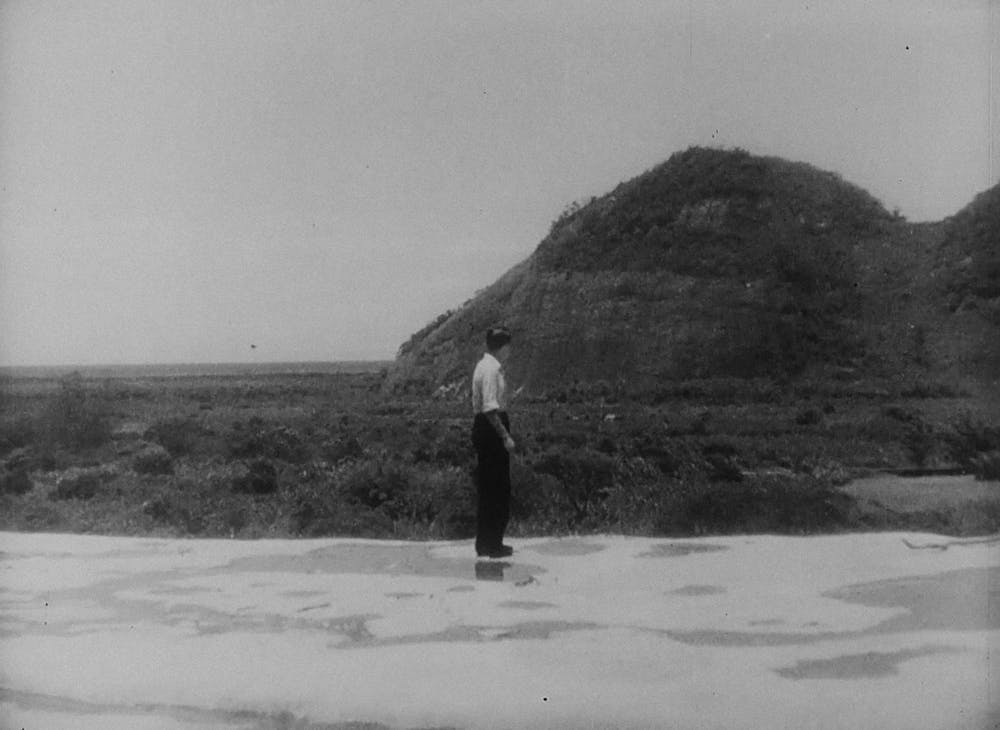 Afterlight was completed on celluloid and only exists in a single 35mm print that will tour the world and eventually weather and disintegrate. The varying quality of the footage it includes also speaks to the unequal fate of marginalised films alongside those that have been carefully guarded and monetised by the archive. In its global circulation it will also melancholically map the dwindling capacities of the world’s cinema to show archival films in their original state.
R.M.N.
Since his Cannes Palme d’Or-winning film 4 Months, 3 Weeks and 2 Days, Cristian Mungiu has been carefully building a rich filmography exploring the legacies of communism and the Ceausescu regime. His work also focuses on the deep-seated traditions and faith of Christianity, the impact of multiculturalism and multi-ethnicity on more traditional, often insular communities, and the opening up of contemporary Romania to the rest of Europe.
Set during the holiday period in the early days of winter, R.M.N. provides a subtle yet ultimately devastating portrait of a community gradually undone by the arrival of overseas workers, and the tide of xenophobia that crests in their wake. Centring on a local resident returning from his employment in Germany, Mungiu provides an unsettling vision of contemporary Transylvania. It shows a community embracing the modern world while also returning to the ancient prejudices and behaviours that lie just beneath the surface.
Afterlight was completed on celluloid and only exists in a single 35mm print that will tour the world and eventually weather and disintegrate. The varying quality of the footage it includes also speaks to the unequal fate of marginalised films alongside those that have been carefully guarded and monetised by the archive. In its global circulation it will also melancholically map the dwindling capacities of the world’s cinema to show archival films in their original state.
R.M.N.
Since his Cannes Palme d’Or-winning film 4 Months, 3 Weeks and 2 Days, Cristian Mungiu has been carefully building a rich filmography exploring the legacies of communism and the Ceausescu regime. His work also focuses on the deep-seated traditions and faith of Christianity, the impact of multiculturalism and multi-ethnicity on more traditional, often insular communities, and the opening up of contemporary Romania to the rest of Europe.
Set during the holiday period in the early days of winter, R.M.N. provides a subtle yet ultimately devastating portrait of a community gradually undone by the arrival of overseas workers, and the tide of xenophobia that crests in their wake. Centring on a local resident returning from his employment in Germany, Mungiu provides an unsettling vision of contemporary Transylvania. It shows a community embracing the modern world while also returning to the ancient prejudices and behaviours that lie just beneath the surface.
 Melbourne International Film Festival
Taking its name from the Romanian acronym for a MRI, R.M.N. is an outstanding portrait of a physical, experiential and psychological environment. It’s a film that seems usefully unresolved, providing a heat map of the urges, prejudices and troubling histories that sit just below its often-beautiful, wintry surface.
Corsage
Along with R.M.N., Marie Kreutzer’s Corsage screened at this year’s Cannes Film Festival and will undoubtedly move on to a relatively wide release in the world’s arthouses.
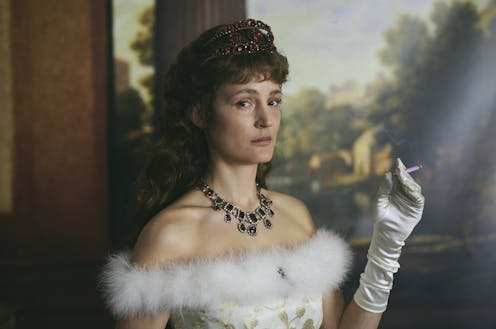
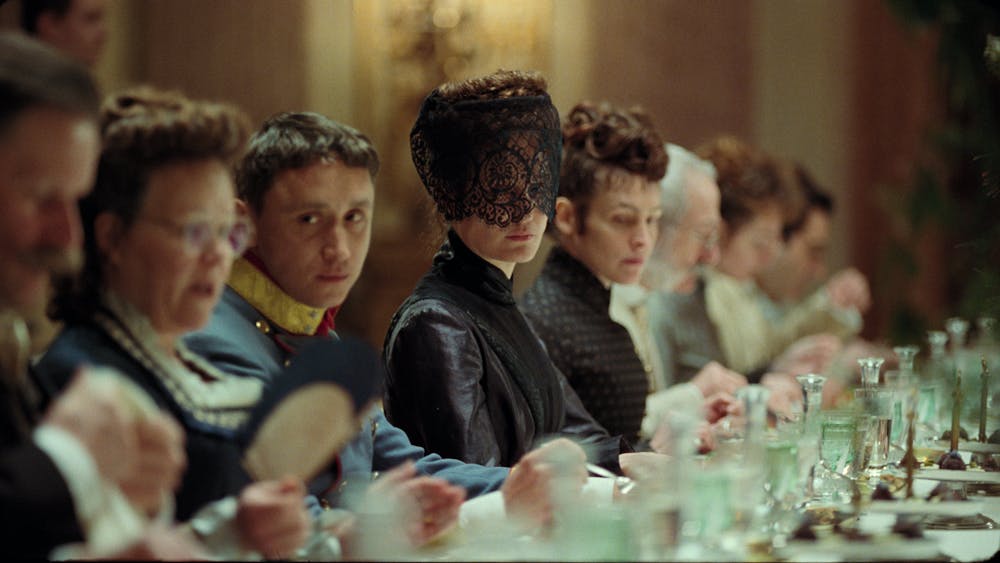
On one level, it follows the conventions of what we might expect of a late 19th-century period piece. But it combines this with a revisionist account of the life of Empress Elizabeth of Austria (popularly know as Sissi) as she turns 40 and starts to question the restrictive public role she has been corseted into.
Melbourne International Film Festival
Taking its name from the Romanian acronym for a MRI, R.M.N. is an outstanding portrait of a physical, experiential and psychological environment. It’s a film that seems usefully unresolved, providing a heat map of the urges, prejudices and troubling histories that sit just below its often-beautiful, wintry surface.
Corsage
Along with R.M.N., Marie Kreutzer’s Corsage screened at this year’s Cannes Film Festival and will undoubtedly move on to a relatively wide release in the world’s arthouses.
On one level, it follows the conventions of what we might expect of a late 19th-century period piece. But it combines this with a revisionist account of the life of Empress Elizabeth of Austria (popularly know as Sissi) as she turns 40 and starts to question the restrictive public role she has been corseted into.
 Melbourne International Film Festival
The cinematic representation and legacy of the figure of Sissi is indelibly marked by the trilogy of films made in the 1950s featuring the breathtakingly young and beautiful Romy Schneider in the title role. Kreutzer provides a different perspective on Sissi’s life, experience and appearance, drawing an extraordinary performance out of Vicky Krieps (Phantom Thread) in the central role.
Corsage wades into very crowded waters alongside other 21st-century feminist takes on historical figures like Marie Antoinette and Princess Diana – and the use of modern pop songs on the soundtrack certainly brings to mind Sofia Coppola’s opus. Nevertheless, it provides a singular account of famous and admired woman trying to break free from the shackles of both societal expectation and history.
Authors: Adrian Danks, Associate professor in Cinema and Media Studies, RMIT University
Melbourne International Film Festival
The cinematic representation and legacy of the figure of Sissi is indelibly marked by the trilogy of films made in the 1950s featuring the breathtakingly young and beautiful Romy Schneider in the title role. Kreutzer provides a different perspective on Sissi’s life, experience and appearance, drawing an extraordinary performance out of Vicky Krieps (Phantom Thread) in the central role.
Corsage wades into very crowded waters alongside other 21st-century feminist takes on historical figures like Marie Antoinette and Princess Diana – and the use of modern pop songs on the soundtrack certainly brings to mind Sofia Coppola’s opus. Nevertheless, it provides a singular account of famous and admired woman trying to break free from the shackles of both societal expectation and history.
Authors: Adrian Danks, Associate professor in Cinema and Media Studies, RMIT University 
















