

What do aged care residents do all day? We tracked their time use to find out
- Written by Joyce Siette, Research Fellow, Western Sydney University
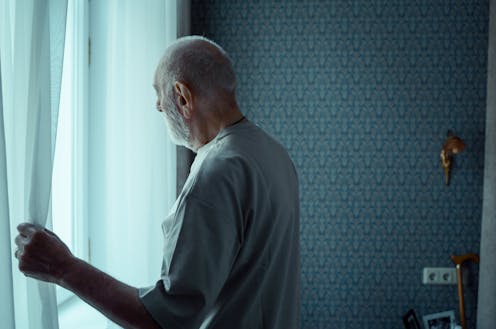
What’s the daily routine like for older people in residential aged care facilities?
To find out, we spent 312 hours observing 39 residents at six Australian aged care facilities to learn how and where they spend their time across the day. We wanted to know how socially engaged residents actually were and how this could affect their wellbeing.
Our study, published in the journal PLOS One, highlights some long-standing issues in aged care but also provides promise.
Residents were largely active, both in terms of communicating with other people in the centre and in terms of doing activities. But there’s more we can do to create opportunities for socialising.

Read more: Overseas recruitment won't solve Australia's aged care worker crisis
Humans are a social species
Transitioning from life at home to life in aged care can be challenging, often linked with loss of independence, loss of identity, and loss of control.
Many also associate moving into aged care with a decline in their social lives and overall physical health.
So it’s no surprise people living in aged care homes suffer from generally low levels of wellbeing.
Previous research has found residents hardly attend activities in their facility. The conversations they do have are often with care staff – these are very rare, short, and mainly about their physical care.
However, previous studies often fail to capture critical aspects of how and where socialisation occurs in aged care.
We know humans are a social creatures and that we’re wired to connect, with more social connections boosting our overall wellbeing.
That’s why we decided to take a closer look at how aged care residents spend their time.
 Having good evidence on how people spend their time in aged care centres helps identify gaps so we can address them.
Photo by Georg Arthur Pflueger on Unsplash, CC BY
Having good evidence on how people spend their time in aged care centres helps identify gaps so we can address them.
Photo by Georg Arthur Pflueger on Unsplash, CC BY
What we found
During the 312 hours we spent observing 39 residents, we found a day in the life of a resident looks something like this:
waking up in the morning and getting ready for the day (with the help of personal care staff if necessary)
attending the dining room for breakfast and spending most of the morning in the common area or lounge room – perhaps participating in an activity run by the lifestyle staff at the facility – before returning to the dining room for lunch
after that, depending on whether there is an activity being organised, most will go back to their own rooms to recuperate before coming back to the dining room for dinner in the early evening.
We found social interactions peak at breakfast, lunch and dinner.
Across the day, residents
spent the greatest proportion of time (45%) in their own room
were alone 47.9% of the time
were inactive 25.6% of the time
were most likely to chat with other residents, followed by staff, then family
outside of meal times, residents had conversations in the common area or in their own rooms.
Overall, residents spent more than half their time being socially and physically active.
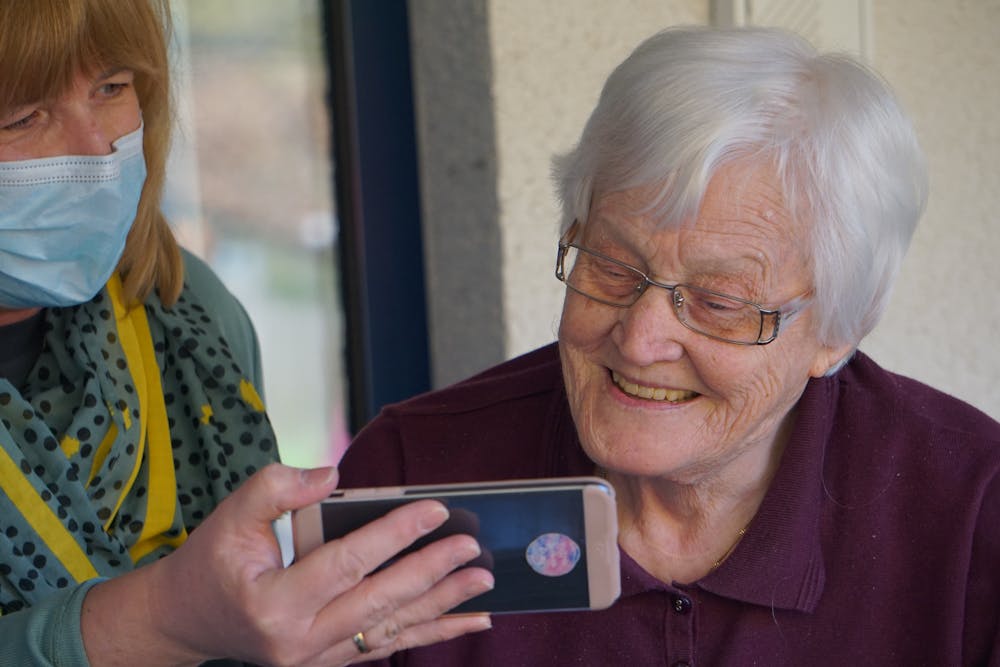
Over a third of their time was spent with another resident. Spending time with other residents was most likely to be associated with a higher quality of life.
We also found spending time with staff or too much time alone was linked to poorer quality of life.
 Spending time with other aged care residents tends to be associated with a higher quality of life.
Photo by Singapore Stock Photos on Unsplash, CC BY
Spending time with other aged care residents tends to be associated with a higher quality of life.
Photo by Singapore Stock Photos on Unsplash, CC BY
Creating opportunities for socially active lives
Based on our research, here are three things aged care providers and governments can do to improve older Australians’ wellbeing:
1. Improve staffing
Staff shortages and time pressures are key reasons why residents spend little time with staff.
Including more activities chosen and assisted by residents in aged care facilities could help create new social opportunities between residents and strengthen existing ones.
2. Tailor Montessori programs to the aged care environment
Montessori programs create a collaborative approach filled with self-directed activities with hands-on learning and play. Activities include things like sorting and recognising objects, completing puzzles, and practising opening locks.
Montessori programs in small groups or led by family members would suit the smaller staff to resident ratios in many aged care centres. They would also help residents (including those with dementia) regain some independence, feel less bored or isolated and have a sense of purpose.
3. Change the physical environment and offer more afternoon activities
Changing the physical environment to accommodate for more social spaces would go a long way to help.
Increasing the number of activities in the afternoon would mean residents have more opportunities to socialise with each other, especially those who are busy with personal care routines in the mornings.
Doing residential aged care differently
After media reports and a royal commission highlighted the failings of Australia’s aged care system, it’s time to think differently about aged care.
Our study reveals residents can and do socialise, and that it can significantly improve people’s quality of life.
We must now find ways to change aged care environments and practices to create more social opportunities.
Read more: Complaints, missing persons, assaults – contracting outside workers in aged care increases problems
Authors: Joyce Siette, Research Fellow, Western Sydney University

















