Modern Australian
Men's Weekly

.

The certainty of ever-growing living standards we grew up with under Queen Elizabeth is at an end

  • Written by Peter Martin, Visiting Fellow, Crawford School of Public Policy, Australian National University
The certainty of ever-growing living standards we grew up with under Queen Elizabeth is at an end

Much has been written about how, with the passing of the Queen, we have lost one of our last continuing links to the second world war.

We have, but we have also lost something even more profound – the link she gave us back to when the kind of world we know began.

On Tuesday last week Queen Elizabeth appointed a new prime minister of Britain, Liz Truss, who was born in 1975.

Seven decades earlier, Elizabeth II ascended to the role alongside Prime Minister Winston Churchill, who was born in 1874.

That her first and last prime ministers were born a century apart is remarkable enough. But it is particularly significant that the thread of her reign extended all the way back, through Churchill, to the 1870s. That’s when, according to a new economic book, the expectations we all grew up first began.

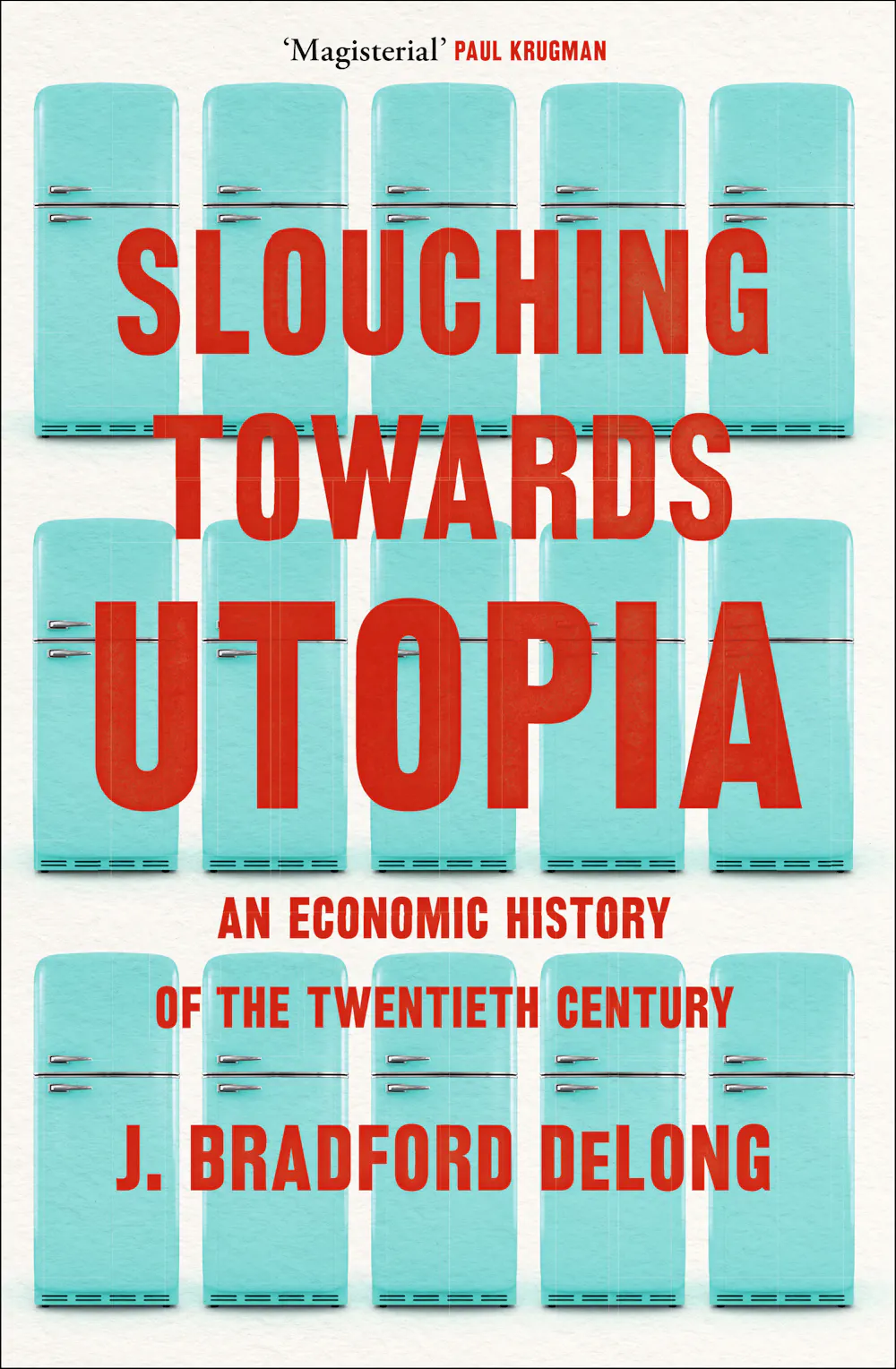
Slouching Towards Utopia As the new UK Prime Minister was sworn in last week, University of California, Berkeley economist Bradford DeLong published his long-awaited Slouching Towards Utopia. It’s an account of what he calls “the long 20th century”, a century he says began in 1870. Why 1870, and not 1901, or even a century earlier at the start of the industrial revolution? Because, DeLong says, right up until the 1870s living standards hadn’t changed much. More importantly, living standards hadn’t changed much since the dawn of recorded time. Until 1870, we weren’t much better off In the millennia leading up to the birth of agriculture, what humans were able to produce barely increased at all. In the 10,000-odd years between the year minus-8000 and the industrial revolution in 1500, our ability to produce food and other things increased tenfold, still not enough to be noticed over our (short) lifetimes. Our ability to produce more than doubled again between 1500 and the 1870. But so did population, which kept most people desperately short of calories – and in near continual childbirth in an attempt to produce surviving sons – while necessitating smaller farm sizes that blunted the benefits of mechanisation. From the 1870s, life got a lot better – fast Then, from the decade of Churchill’s birth, things went spectacularly right. Delong writes that in 1870 the daily wages of an unskilled male worker in London, the city then at the forefront of economic growth, would buy him and his family about 5,000 calories worth of bread. In 1600 it had been 3,000 calories. He says today the daily wages of such an unskilled worker would buy 2,400,000 calories worth of bread: nearly 500 times as much. The population grew, but our ability to produce things grew far faster. It grew to the point where, even in our lifetimes, we could see things getting better. In the words of Billy Joel, every child had “a pretty good shot to get at least as far as their old man got”. Unimaginable change in one lifetime From the 1870s on, continual improvements in living standards became a birthright – not for everyone, but for humanity as a whole. As did the development of once unimaginable products. The motor car, the radio, the television and the computer became ubiquitous during Queen Elizabeth’s life. With more to go around, it became easier to share rather than take things. Democracies grew to the point where they became natural. Economically, DeLong credits the development of research labs, modern corporations and cheap ocean transport that “destroyed distance as a cost factor”. From the 1870s onwards, people were able to get what they wanted from where it was made, and were able to seek better lives by travelling to where they were needed. University of California, Berkeley Professor Bradford DeLong’s economics lecture on ‘Slouching toward Utopia’.Most economists didn’t see it coming The market economy was necessary for this explosion in living standards, but not sufficient. People had bought and sold things for prices for millennia, but the prices had little to work with. Almost no one saw such an extraordinary change coming. The leading economist of the 1870s, John Stuart Mill, wrote it was “questionable if all the mechanical inventions yet made have lightened the day’s toil of any human being”. They had merely “enabled a greater population to live the same life of drudgery and imprisonment”. Mill wanted population control. He wanted the expanding “pie” to be split among the people we had, rather than the hordes that would grow to cut each slice back to size. Read more: GDP is like a heart rate monitor: it tells us about life, but not our lives The fathers of communism, Karl Marx and Frederick Engels, saw things more clearly. They expected technology and the taming of nature to produce so much wealth that there would one day be more than enough to go around, making the problem one of how to make sure it went around. DeLong sees the long 20th century that began in 1870 as an ever-shifting battle between those who wanted the market to determine the distribution of wealth (believing it was the best way to grow the pie), against those who believed such unfairness wasn’t what they signed up for. The end of certainty How long did that “long 20th century” last? DeLong thinks it ended in 2010, making it a long century of 140 years. Since the global financial crisis, we have been unable to return economic growth to anything like the pace of those 140 glorious years. Today, DeLong says material wealth remains “criminally” unevenly distributed. And even for those who have enough, it doesn’t seem to make us happy – at least “not in a world where politicians and others prosper mightily from finding new ways to make and keep people unhappy”. DeLong sees “large system-destabilizing waves of political and cultural anger from masses of citizens, all upset in different ways at the failure of the system of the twentieth century to work for them as they thought that it should.” Read more: Beyond GDP: changing how we measure progress is key to tackling a world in crisis – three leading experts Not only are we not near the end of the Utopian rainbow, Delong says the end of the rainbow is “no longer visible, even if we had previously thought that it was”. King Charles III inherits a future with no guarantee of ever-increasing living standards, no guarantee human ingenuity will prevail over global warming, and no guarantee democracy will prevail. It’s almost impossible to predict what the rest of this century has in store. But that’s how it was in the 1870s too – when even the brightest minds of the time couldn’t imagine what was to come. Authors: Peter Martin, Visiting Fellow, Crawford School of Public Policy, Australian National University

Read more https://theconversation.com/the-certainty-of-ever-growing-living-standards-we-grew-up-with-under-queen-elizabeth-is-at-an-end-190425

Why an Industrial Air Compressor Is Vital for Modern Manufacturing

In many industrial environments, compressed air is as essential as electricity or water. An industrial air compressor provides the power needed to ...

Why Commercial Carpet Cleaning Services Matter for Professional Spaces

Clean carpets play a major role in shaping how a commercial space looks, feels, and functions. Commercial carpet cleaning services are essential fo...

5 Things to Consider Before Choosing a Commercial Painter

Choosing the right painter for a commercial business can be challenging. Regardless of the type and the size of the property, all commercial project...

Why Medical Fitout Melbourne Practices Rely on for Modern Healthcare Spaces

A well-planned medical fitout Melbourne is essential for creating healthcare environments that support patient care, clinical efficiency, and regula...

Luxury Builders Melbourne Crafting Homes Defined by Design and Detail

Building a premium home is about far more than size or appearance. It is about precision, craftsmanship, and a deep understanding of how refined spa...

Electric Sliding Door Solutions for Modern Living and Commercial Spaces

The way people move through spaces has changed dramatically over the years, and the electric sliding door has become a defining feature of that evol...

Australia’s New Fast Track to Advanced Care in Vietnam

For many Australians, the decision to seek medical care abroad often begins with a specific feeling: the quiet frustration of waiting. According to ...

Cardboard Boxes: A Practical Packaging Solution for Modern Businesses

Reliable cardboard boxes play a vital role in how goods are stored, protected, and transported across industries. From small retailers to large-sca...

The Rise of Smart Homes in Australia: What’s Worth Investing In?

Australia is in the midst of a home technology revolution. From energy efficiency to integrated security, today’s homeowners are transforming thei...

Winter Hairstyling Tips to Prevent Dryness

Winter can be particularly harsh on your hair. Cold air outside, dry indoor heating, and frequent temperature changes can strip moisture from the ha...

Short Term Loans in Australia: Practical Insights for Borrowers and Finance Professionals

Short term loans play a crucial role in Australia’s personal finance landscape. They are designed to cover short-term expenses, unexpected bills, ...

Best EPD Consultants in Australia

Environmental Product Declarations (EPDs) play an increasingly important role in the Australian construction, manufacturing, and infrastructure sect...

I/O Controller And Its Role In Modern Industrial Automation

Industrial automation relies on a range of advanced technologies to ensure precision, speed, and reliability in day-to-day operations. Among these t...

Hydraulic Systems And Their Importance In Modern Industry

A hydraulic system plays a vital role in powering machinery, controlling movement, and delivering high-force performance across countless industrial...

Why Australian Businesses Are Having a Second Think About Digital Growth

Running a business these days is a whole lot different to how it was even a few short years ago. Customers are better informed, there's more competi...

Restaurants Risk Compliance Issues Amid Commercial Plumber Shortage

As demand for housing, roads and facilities increases, so does the demand for trade workers. According to Infrastructure Australia, the construction i...

The Importance Of A Professional Medical Fitout Melbourne For Modern Healthcare Facilities

Healthcare environments must operate with precision, efficiency, and a strong focus on patient comfort. A well-planned medical fitout Melbourne hel...

Top Safety and Comfort Features to Consider in Family Off Road Caravans

Exploring Australia’s coastline, bush tracks or outback locations is far more enjoyable when travelling in a caravan designed for both comfort and...