

In Bon and Lesley, Shaun Prescott has written an Australian horror story of uniquely local proportions
- Written by Bonny Cassidy, Lecturer in Creative Writing, RMIT University
If ever a novel set out the territory that its author would continue to travel, Shaun Prescott’s debut The Town (2018) did just that. It was like the indie boy band that smooths all your favourite punk acts into a one-stop melange.
When I reviewed The Town in these pages in 2019, I noted in particular how Prescott was able to synthesise elements from the late David Ireland and Gerald Murnane to create an augmented Australian realism. Like Murnane and post-plot novelists such as César Aira or Ottessa Moshfegh in My Year of Rest and Relaxation, Prescott wants the reader to focus on the poetics of variation within limited settings, scenarios and language.
Why? In The Town, Prescott took this approach in order to sit with his creatively blocked and socially awkward narrator. It didn’t totally work; the idea couldn’t endure the length of the novel. But in Prescott’s latest, Bon and Lesley, the banal and repetitious nature of the novel’s voice and structure create a more purposeful horror story of uniquely local proportions.
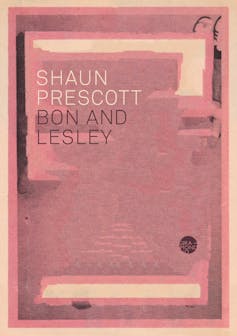
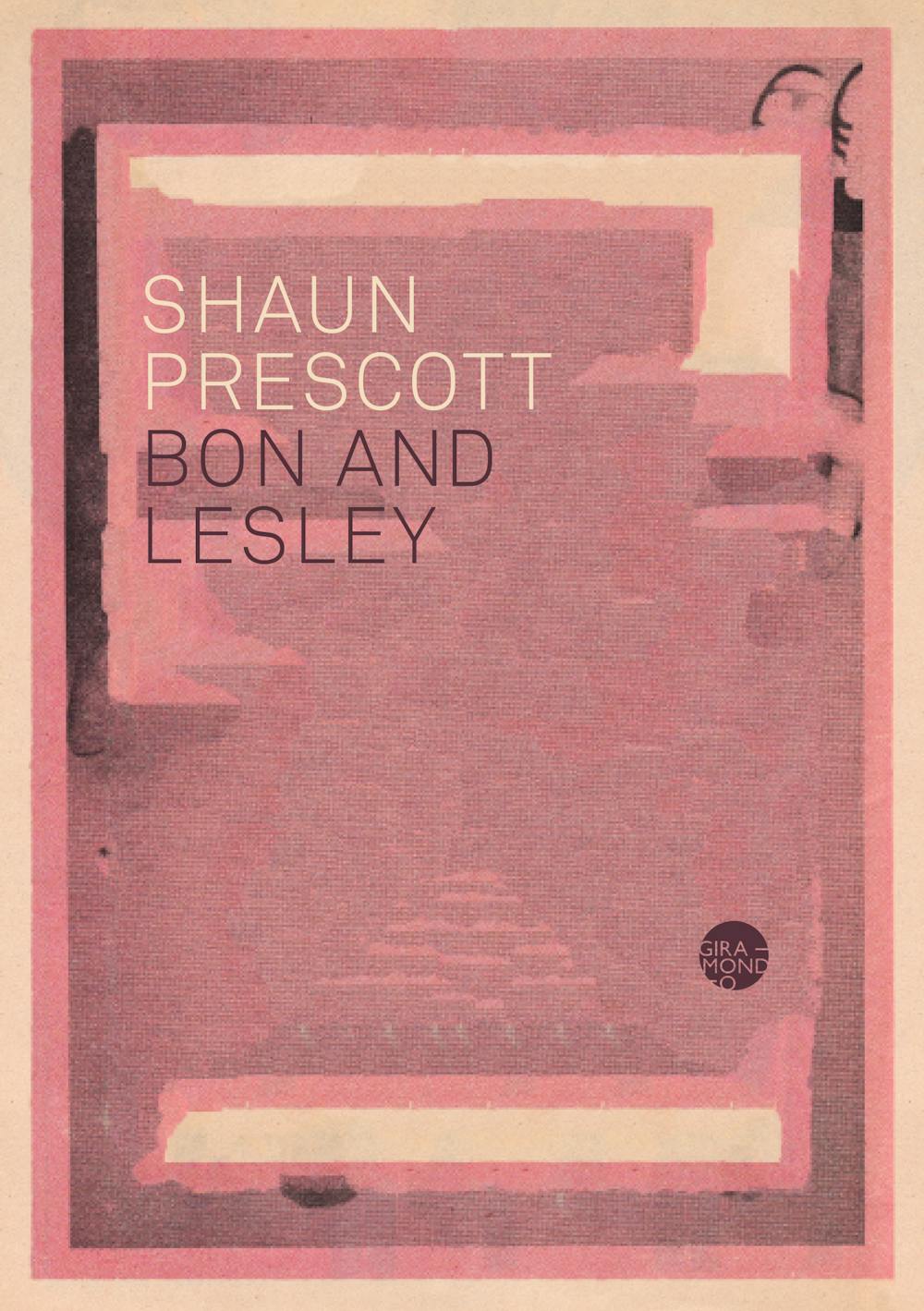
Review: Bon and Lesley – Shaun Prescott (Giramondo).
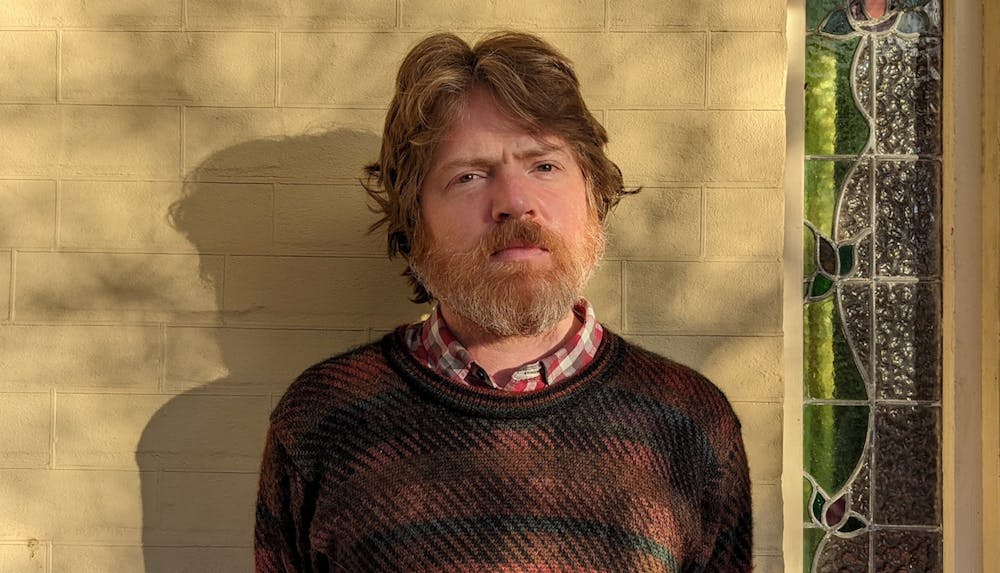 Shaun Prescott.
Giramondo Publishing
Read more:
Gender-ambiguous author Eve Langley is ripe for rediscovery. A new biography illuminates her difficult life
Abject devolutions
This dysfunctional ecology and culture is the breeding ground for what is happening within the miniature society of the family. From the moment Bon and Lesley meet Steven and Jack, they are aware of the presence of Colossal Man. The void at the centre of the novel, Colossal Man is a true horror presence: a faceless and speechless mass of flesh aimlessly cruising the curb (I imagined the Baron from Dune, or maybe Les Murray stuffed into a hatchback).
Colossal Man lives in a Eve Langley-like bush hut with an underground lair. He writes fascist literature and possesses an unspeakable hard drive. Jack is his incel apprentice.
Prescott chooses never to depict the contents of Jack’s and Colossal Man’s computer screens or DIY publications, though we know that Lesley recoils from them. In one sense, this is a classic horror technique, allowing readers to imagine their own worst fears.
On the other hand, Prescott is refusing to reinscribe the violence. It is not the kind he wants us to be concerned about. Once we come face to face with Colossal Man through Lesley, we realise that the impact of his material is meaningless compared to the ordinary degradation of the town. Colossal Man, the novel’s monstrous child, is just a symptom.
The devolution of the characters over the course of the novel is nothing short of abject. The horizons of the four protagonists are reduced to their safe, flat roles.
When sexual contact occurs, it is furtive frotting and bothersome embracing of or by Lesley. She develops a routine, which involves drinking cask wine, setting out snack platters, maintaining regular bedtimes, and praising Steven and Jack as they relax in front of Star Wars. Initially the plucky leader of the family’s destiny, and quite an action hero in her way, Lesley comes to relish her role as mother to “the boys” (another allusion: to Stephen Sewell’s and Rowan Wood’s menacing film of that name). When Lesley stops yearning to escape, Bon is free to give up his reluctant paternal role and drop out.
For a while, Steven clings to a stay-in-your-lane class dream, in which “freedom is having a job and not being bashed”. This provides him with a consistent if narrow philosophy of life. He starts out as the designer of the family group, but the purpose of his days dissolves into maintaining the household’s supply of booze and being paid cash to pointlessly torch abandoned houses. The job (literally) extinguishes itself and his fear of attack becomes a reality when an unseen force begins threatening the family house.
When we first meet Jack, he finds meaning as an online keyboard warrior and creates brown-noise tracks in his bedroom. He is secretive and defensive about his digital life and being in thrall to Colossal Man. This privacy gives him a sense of identity. Lesley’s probing influence encourages Jack to distance himself from the Colossal Man’s hate material. But Jack decides that withdrawing his creative voice from the world is the supreme form of independence:
Powers we don’t understand or even know about, try to control us through music and film and all so-called art […] But my sound – and he said my sound in a tone verging on pride – will outlast it all for not ever being heard.
If Jack’s theory of art is correct, then Prescott is using Bon and Lesley to immunise us against the infantilising and apathetic creep of cultural homogeneity and insularity. This is most definitely a Morrison-era novel. And maybe that highlights another layer of its intention: to persuade us that in the dysfunction of relaxed and comfortable settler colonialism, the old genres of apocalyptic and gothic horror have value yet.
Authors: Bonny Cassidy, Lecturer in Creative Writing, RMIT University
Shaun Prescott.
Giramondo Publishing
Read more:
Gender-ambiguous author Eve Langley is ripe for rediscovery. A new biography illuminates her difficult life
Abject devolutions
This dysfunctional ecology and culture is the breeding ground for what is happening within the miniature society of the family. From the moment Bon and Lesley meet Steven and Jack, they are aware of the presence of Colossal Man. The void at the centre of the novel, Colossal Man is a true horror presence: a faceless and speechless mass of flesh aimlessly cruising the curb (I imagined the Baron from Dune, or maybe Les Murray stuffed into a hatchback).
Colossal Man lives in a Eve Langley-like bush hut with an underground lair. He writes fascist literature and possesses an unspeakable hard drive. Jack is his incel apprentice.
Prescott chooses never to depict the contents of Jack’s and Colossal Man’s computer screens or DIY publications, though we know that Lesley recoils from them. In one sense, this is a classic horror technique, allowing readers to imagine their own worst fears.
On the other hand, Prescott is refusing to reinscribe the violence. It is not the kind he wants us to be concerned about. Once we come face to face with Colossal Man through Lesley, we realise that the impact of his material is meaningless compared to the ordinary degradation of the town. Colossal Man, the novel’s monstrous child, is just a symptom.
The devolution of the characters over the course of the novel is nothing short of abject. The horizons of the four protagonists are reduced to their safe, flat roles.
When sexual contact occurs, it is furtive frotting and bothersome embracing of or by Lesley. She develops a routine, which involves drinking cask wine, setting out snack platters, maintaining regular bedtimes, and praising Steven and Jack as they relax in front of Star Wars. Initially the plucky leader of the family’s destiny, and quite an action hero in her way, Lesley comes to relish her role as mother to “the boys” (another allusion: to Stephen Sewell’s and Rowan Wood’s menacing film of that name). When Lesley stops yearning to escape, Bon is free to give up his reluctant paternal role and drop out.
For a while, Steven clings to a stay-in-your-lane class dream, in which “freedom is having a job and not being bashed”. This provides him with a consistent if narrow philosophy of life. He starts out as the designer of the family group, but the purpose of his days dissolves into maintaining the household’s supply of booze and being paid cash to pointlessly torch abandoned houses. The job (literally) extinguishes itself and his fear of attack becomes a reality when an unseen force begins threatening the family house.
When we first meet Jack, he finds meaning as an online keyboard warrior and creates brown-noise tracks in his bedroom. He is secretive and defensive about his digital life and being in thrall to Colossal Man. This privacy gives him a sense of identity. Lesley’s probing influence encourages Jack to distance himself from the Colossal Man’s hate material. But Jack decides that withdrawing his creative voice from the world is the supreme form of independence:
Powers we don’t understand or even know about, try to control us through music and film and all so-called art […] But my sound – and he said my sound in a tone verging on pride – will outlast it all for not ever being heard.
If Jack’s theory of art is correct, then Prescott is using Bon and Lesley to immunise us against the infantilising and apathetic creep of cultural homogeneity and insularity. This is most definitely a Morrison-era novel. And maybe that highlights another layer of its intention: to persuade us that in the dysfunction of relaxed and comfortable settler colonialism, the old genres of apocalyptic and gothic horror have value yet.
Authors: Bonny Cassidy, Lecturer in Creative Writing, RMIT University 
















