

New Zealand has announced a biofuel mandate to cut transport emissions, but that could be the worst option for the climate
- Written by Paul Callister, Senior Associate Institute of Governance and Policy Studies, Te Herenga Waka — Victoria University of Wellington
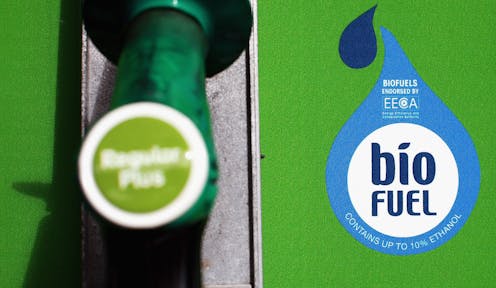
Biofuels – and a broader bioeconomy – are key parts of New Zealand’s recently released first emissions reduction plan, particularly for transport, forestry and a transition to a more circular use of resources.
Work is moving fast, with a biofuel mandate for land transport to be introduced from April 2023 and a plan to transform the forestry industry currently under consultation.
A bioeconomy is heralded as an opportunity to replace imported fossil fuels with carbon-neutral domestic biofuels and to create higher-value products from plantation forestry (much of which is currently exported as unprocessed logs) while supporting carbon sequestration at the same time.
New Zealand is not the only country thinking along these lines. Biofuels are part of a widespread strategy to address emissions from existing fossil-fueled vehicles, tens of millions of which are still being produced annually. They are also promoted for planes, ships and heavy trucks, often with few alternatives.
Both the Inflation Reduction Act, a landmark US law which aims to curb inflation by investing in domestic clean energy production, and the EU’s Fit for 55 package, expand support for biofuels through a combination of subsidies and mandates. In the International Energy Agency (IEA)’s Net Zero scenario, global biofuel production quadruples by 2050, to supply 14% of transport energy.
Unfortunately, a string of government reports, combined with experience of the real-world impacts of biofuels thus far, point to several downsides and challenges, both economic and environmental.
First-generation biofuels from food crops
The risks of first-generation biofuels, made from crops grown on arable land, are well known. They are not due to the fuels themselves or their production, but their indirect effects of how the land would have been used otherwise.
Already, 10% of the world’s grain is used for biofuels. This is at the heart of the “food-to-fuel” issue. This approach has been challenged because it could increase grain prices or, at the worst, lead to starvation. It has also led to agricultural expansion, often into ecologically sensitive areas.
Debated for years, it is now back in the spotlight as the effects of droughts in China, the US and Europe, combined with the war in Ukraine, push food prices up 50% on 2019-2020 levels.
Palm oil has borne the brunt of criticism about landuse change, as vast areas of rainforest in Indonesia and Malaysia have been cleared for its production. The impact of such “induced landuse change” (ILUC) gives palm oil biofuel nearly three times the emissions of fossil fuel.
But palm oil is a substitute for many other vegetable oils. Therefore, biofuel production from other oils like rapeseed (canola) is also implicated in ILUC, as diverting rapeseed to fuel leads to more palm oil entering the food chain.
Sustainability and credibility of feedstocks
The EU has undergone a lengthy process of strengthening the standards of its biofuel mandate. In the end, palm oil was the only feedstock listed as “high ILUC”, but was given a reprieve until 2030.
The cheapest biofuels with the biggest emissions savings are made from used cooking oil and beef tallow. But these feedstocks are in limited supply and open to fraud. They also already have other uses, which again raises the issue of substitution.
Z Energy’s NZ$50m tallow biodiesel plant, opened in 2018, has been mothballed due to the rising cost of tallow. The company has stopped work on plans for a much larger plant.
Since New Zealand’s biofuel mandate will initially be met solely by imports, questions of sustainability and certifiability of feedstocks will be crucial. It is concerning that landuse change will not be considered when calculating emissions reductions.
The fuels will count as zero-emission in New Zealand, while the actual emissions from growing, fertilising, processing and transporting will take place overseas, likely in countries with weaker climate targets. Unless accounted for, this is carbon leakage by design.
Second-generation biofuels from inedible plant material
For all these reasons, proponents are keen to talk up the prospect of second-generation biofuels, made from non-food crops. In New Zealand’s case, the main crop is pine trees.
Although there is some forestry waste available, much of it is currently left on site and would be expensive to collect and transport. The Wood Fibre Futures report, commissioned by the government, focuses on logs-to-fuel, specifically “drop-in” fuels that can substitute directly for petrol, diesel or jet fuel.
However, there are no such plants in commercial operation anywhere. The report calls the risks of such an unproved technology extreme, with little prospect for mitigation.
Read more: Biofuel: how new microalgae technologies can hasten the end of our reliance on oil
The economics are also challenging, in part because log prices are high due to the efficiency of the log export market. A plant capable of producing 150 million litres of drop-in fuels a year – just 1.5% of New Zealand’s liquid fuel demand – would cost $1.2 billion and have a negative rate of return.
To obtain an acceptable return, the government would need to pay for half the cost of the plant and the logs, and also subsidise (or enforce) a 50% higher sale price of the fuel. The report envisages such a plant being completed by 2028 in New Zealand.
A fundamental obstacle is that any such use has to compete with other uses – including sawn timber, wood chips and wood pellets – which are far simpler, more profitable and come with greater carbon benefits.
Stop the mandate, strengthen alternatives
For all these reasons, we have formed the interest group Don’t Burn Our Future, which aims to stop New Zealand’s biofuel mandate.
As advocates of strong climate action, these are painful conclusions to reach. But we argue that for transport, the answer lies in the avoid/shift/improve framework, which encourages people to drive less, shift necessary trips to other modes and make them less polluting.
Biofuels only enter in the third and least important step (improve) and even there, they are the worst option.
The transport transformations envisaged in the new climate plans for Wellington and Auckland are heavily focused on avoidance and shifts to other modes. These options should be the priority.
Authors: Paul Callister, Senior Associate Institute of Governance and Policy Studies, Te Herenga Waka — Victoria University of Wellington

















