Google AI


Modern Australian

What constitutes a mind? Lars Chittka challenges our perception of sentience with the smallest of creatures

  • Written by: Eliza Middleton, Laboratory Manager, School of Life and Environmental Sciences, University of Sydney
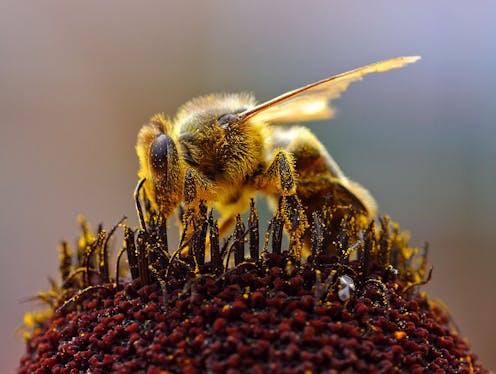
What constitutes a mind? Lars Chittka challenges our perception of sentience with the smallest of creatures

At the beginning of my research career around 15 years ago, any suggestion that a bee, or any invertebrate, had a mind of its own or that it could experience the world in an intricate and multifaceted way would be met with ridicule. As Lars Chittka points out in the opening chapters of The Mind of a Bee, the attribution of human emotions and experiences was seen as naivety and ignorance; anthropomorphism was a dirty word.

Pet owners eagerly ascribe emotions to their animals, but the simple brain of a bee surely could not experience the rich tapestry that is our existence. They are far too simplistic and robotic, right?

Review: The Mind of a Bee – Lars Chittka (Princeton University Press).
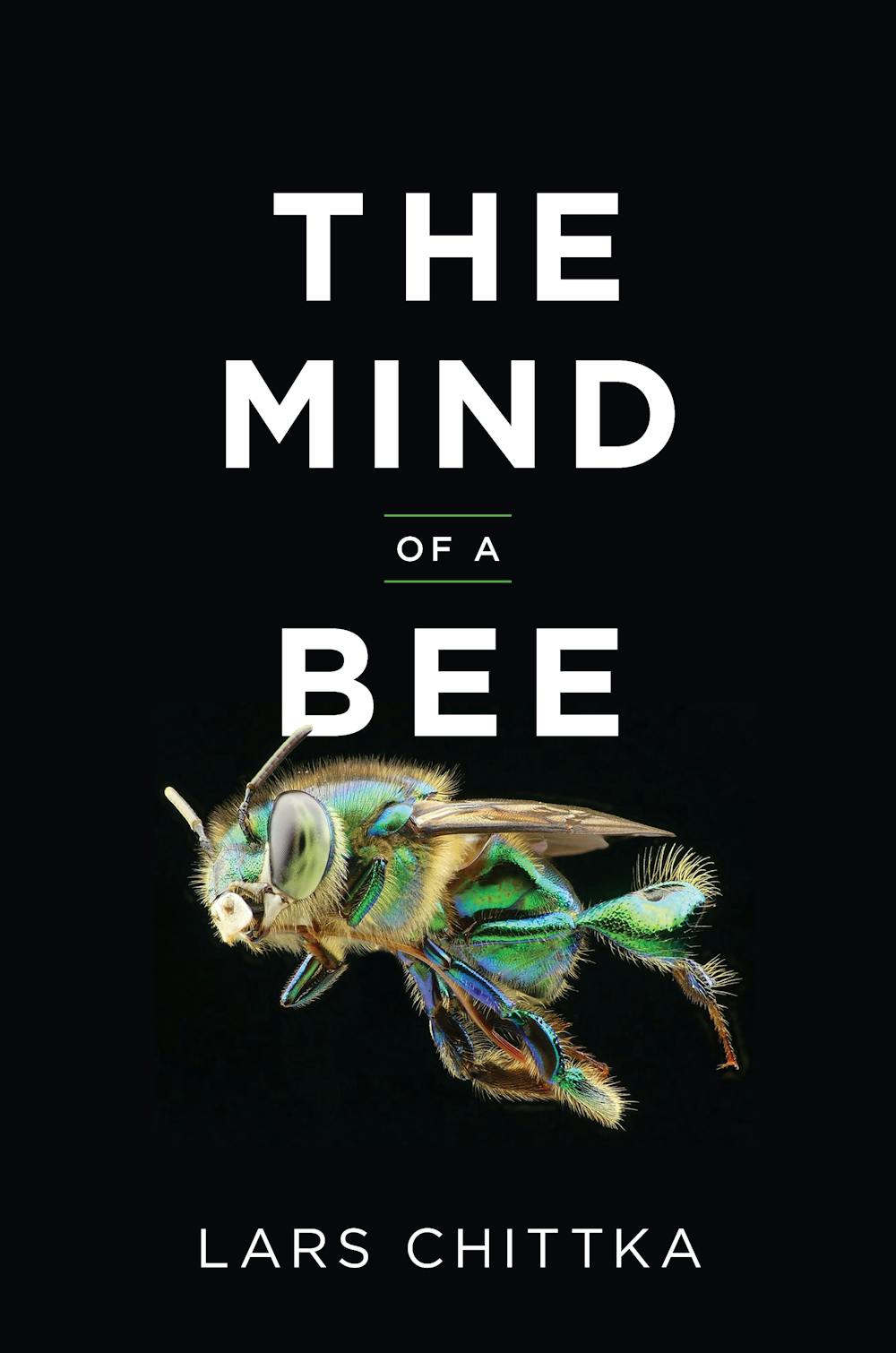
Lars Chittka has been researching honeybees for the past 30 years. The Mind of a Bee is a collection of his research stories. It also covers the influential figures in bee research and provides a historical perspective on the research that much behavioural work is built on today. People have long been curious about the behaviour of bees. Many questions posed in the 1800s are still around. While Chittka’s beautifully collated and captivating “story” does not present research results that are necessarily new, to read them presented together like this, I find myself tantalised by questions I had not thought to ponder. For example, how do bees decide who stays and who leaves when a swarm is formed? The world of a bee The book opens by challenging you to put yourself into the world of a bee. A honeybee’s experience of the world is so completely foreign to our own that to understand and research it is a challenge not to be underestimated. Indeed, it is understandable that we have relegated the experience of bees to something simplistic and robotic when you discover the difficulties faced by researchers. First, picture yourself as a bee. You have wings, allowing flight. Your vision is not as sharp anymore, worse than your grandfather’s with his coke-bottle glasses, but you see things more quickly. Life is experienced on a faster time line – what was once a movie is now more like a series of images in a slideshow. The antennae protruding from your head function as hands, ears, tongues and noses, all in one. You can tell if someone has visited a flower before you – a flower you picked out of a field of hundreds by its scent, and which you found by following the directions you felt a fellow bee dance for you inside the pitch-black hive perhaps ten kilometres from your current position. Chittka then invites us to imagine the life of the bee. Upon exiting the hive for the first time, you must learn its location through a series of flights – behaviour observed in other central-place foragers such as ants and wasps. Failure to recognise your hive and return home equals death. Once you have memorised the location of your hive, you then must successfully navigate your way to and from various resource-rich patches as efficiently as possible, learning new locations, the timing of certain flowers releasing their nectar, and the techniques required to manipulate other flowers into relinquishing theirs. So far, this sounds instinctual, a basic response to hunger. Yet Chittka presents additional research – historical and current – that provides insights into the cognitive skills of bees. We learn that bees can count. They can learn rules and categorise flowers. And they can learn from others, not only which flowers are rewarding, but how to access them. One of my favourite experiments, perhaps for the videos that accompanied the publication, is of bumblebees pushing balls into holes to get rewards. This skill can be learnt by an observer bee and, what is truly fascinating, it can be improved upon. The observer bee can solve the task by copying the goal rather than strictly copying the technique, demonstrating an understanding of the task and the desired outcome. But when would a bee ever need to push a ball into a hole to be rewarded with some “nectar”? As Chittka rightly points out, the questions we pose to understand the minds of bees must have a biological relevance to make sense. That is, we need to understand what is important to the survival of bees, what is essential in their existence, and frame our questions of intelligence and sentience around that aspect. If we ask the wrong questions, we will never fully understand the answers – like asking a fish to climb a tree and finding it lacking. Lars Chittka. Wikimedia commons, CC BY-SA Consciousness and emotion The punch this book packs is in the subtle build-up to the final chapters, whereupon it becomes increasingly hard to deny the “mind” of a bee. While it is impossible to prove consciousness in another organism, the research Chittka has collated provides a compelling argument. In The Mind of a Bee, you will read that bees feel emotions and pain, display metacognition (that is, they know what they know), and show individual differences in their ability to learn, with fast and slow learners. Bees are aware of their bodies and the outcomes of their actions, and they display intentionality through tool use – previously only recognised in humans, primates, and the corvidae family of birds. Regardless of whether you believe a bee has a mind or not, globally there has been a change in research practices as invertebrates are seen to experience the world more fully. Ethics approval is required for work on some invertebrates, including crustaceans and cephalopods, and statements of ethical treatment of other invertebrates are required for submission of manuscripts to some journals. To suggest an invertebrate, such as a bee, may have these fuller experiences of life is no longer attracting ridicule, but instead is creating an uncomfortable space for insect researchers, who may not wish to confront the reality of their experiments. We have underestimated the intelligence of bees and other “lower” species for far too long; it is time to pay attention. Chittka shows us that bees have the key ingredients of a mind: they have a representation of space, they can learn by observation, and they display simple tool use. Bees have demonstrated a flexible memory, with ideas of what they want to achieve, an ability to explore suitable solutions to get it, and an awareness of the possible outcomes of their own actions. Experiments have further shown that bees appear to attach emotional states to rewards and punishments. While their biology and experience of the world is very different to ours, it is reasonable to believe that they do indeed possess a mind capable of experiencing the rich tapestry of life we have so long thought only available to us. Written with moments of levity and soaked in curiosity, The Mind of a Bee is a delight. While some may not be ready to ascribe sentience to something as “simple” as a bee, this book will prompt you to question why not. As Chittka so eloquently put it in a recent talk: “We are thinking, suffering, enjoying beings in a world of other thinking, suffering and enjoying beings, with different minds and perceptions.” I for one am looking at the world a little differently with that in mind. Authors: Eliza Middleton, Laboratory Manager, School of Life and Environmental Sciences, University of Sydney


Read more https://theconversation.com/what-constitutes-a-mind-lars-chittka-challenges-our-perception-of-sentience-with-the-smallest-of-creatures-182855

Understanding a dental implant Melbourne Treatment Plan

A dental implant Melbourne patients may consider is one option for replacing a missing tooth, but suitability depends on oral health, bone support a...

How 3PL Logistics Australia Supports Faster and More Efficient Supply Chains

Why Has 3PL Logistics Become Important for Growing Businesses?  Gone are the days when supply chains were simpler and in minimal quantity. Now, the...

Common Skin Concerns and Treatment Options Available in Melbourne

Skin concerns can develop gradually or become noticeable following changes in age, lifestyle, sun exposure or hormonal factors. Pigmentation, rednes...

Why a Code-Compliant Home Can Still Feel Uncomfortable

When people build or renovate a home, they usually expect that meeting current building requirements will also produce a comfortable place to live. ...

Breach of Contract in Business: What Are Your Options?

Contracts are essential to business relationships. They establish expectations, allocate responsibilities and provide a framework for delivering goods...

How Pest Control Companies Can Rank for the Problems Customers Search First

Introduction SEO for Pest Control needs to start with the customer’s problem. Most people do not search for pest services in a neat or technical wa...

What Are the Benefits of Renovating an Older Home in Sydney?

Sydney has plenty of character homes, from Federation cottages to mid-century brick homes. Renovating rather than rebuilding can preserve what makes t...

Pool and Deck Design: How to Plan the Perfect Outdoor Living Space for Your Sydney Home

For many Australians, the backyard is where life happens. Summer barbecues, weekend swims and long evenings outdoors are all part of the lifestyle, ...

Is Solar Pool Heating Worth It? What Sydney Homeowners Should Know

There's nothing quite like a backyard pool on a hot Sydney day. But once autumn rolls in, many pools sit unused for months because the water is simp...

Planning a Luxury House Move: A Week-by-Week Timeline for Prestige Sydney Homes

Selling or buying a prestige home is a major milestone. Whether it's a waterfront residence in Birchgrove, a grand Federation home in Haberfield or ...

Downsizing or Upgrading Your Caravan? Here's How to Sell It Without the Hassle

Selling a caravan can feel like a major task, especially when you are unsure about its value, paperwork, or how to find a buyer. Whether you are dow...

The Best Overseas Adventure Holidays for Australians Who Love the Outdoors

Australia offers no shortage of incredible outdoor experiences, but sometimes the best way to satisfy your sense of adventure is to head overseas. A...

Cape Town Wine Shuttle: Winelands Tasting & Tours

Embark on an unforgettable journey through the picturesque Cape Winelands, where world-class wines and breathtaking scenery await. Our Cape Town Win...

Metal Fabrication: Choosing Metal Fabrication Melbourne Services for Custom Projects

What Modern Metal Fabrication Involves From individual components to complete structures, metal fabrication brings together processes such as desig...

Why Giant Rats Tail Grass Keeps Coming Back After Spraying

Giant Rats Tail Grass (GRT) is one of the most frustrating pasture weeds for farmers and lifestyle property owners. You spray an infested area, see th...

When Custom Cardboard Boxes Make Sense for Your Business

Custom cardboard boxes can be useful when a standard carton does not fit a product, packing method or presentation requirement particularly well. A ...

Full-Height vs. Pop-Top Caravan: Which Is Better for Family Travel across WA?

A pop-top caravan is an excellent choice for travellers who want the comfort of a caravan without committing to a larger, bulkier setup. With a lowe...

Bottle Label Printing: Key Factors for a Professional Finish

Why the Printing Method Matters When businesses need packaging or printed containers developed for a particular application, the right supplier can m...