

Australia has relied on agricultural innovation to farm our dry land. We'll need more for the uncertain years ahead
- Written by Sam Rudd, SIEF Ross Metcalf STEM+Business Fellow - Future Industries Institute, University of South Australia
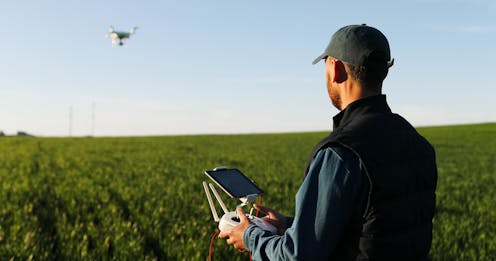
Since European colonisation, Australia’s farmers have had to pioneer new technologies to adapt agriculture to this dry land.
Think of innovations such as the world’s first mechanical grain stripper, which saved workers from the tedious task of stripping wheat from the stalk, or the stump jump plough, invented to avoid ploughs constantly breaking when they hit mallee roots on newly cleared ground.
The pace of innovation hasn’t slowed, and has led in part to Australia becoming an agricultural powerhouse. We produce enough food for 75 million people, according to the Australian Food and Grocery Council, and export around 70% of the food we produce.
We will need more innovation to cope with the changing climate – which will make water supplies more uncertain and add heat stress to livestock – as well as other environmental issues such as nutrient runoff from too much fertiliser.
In future, expect to see farmers go high-tech, relying more on drones to optimise fertiliser and water use, on harvest robots to tackle challenges with labour shortages, and on sensors to measure the health of the soil.
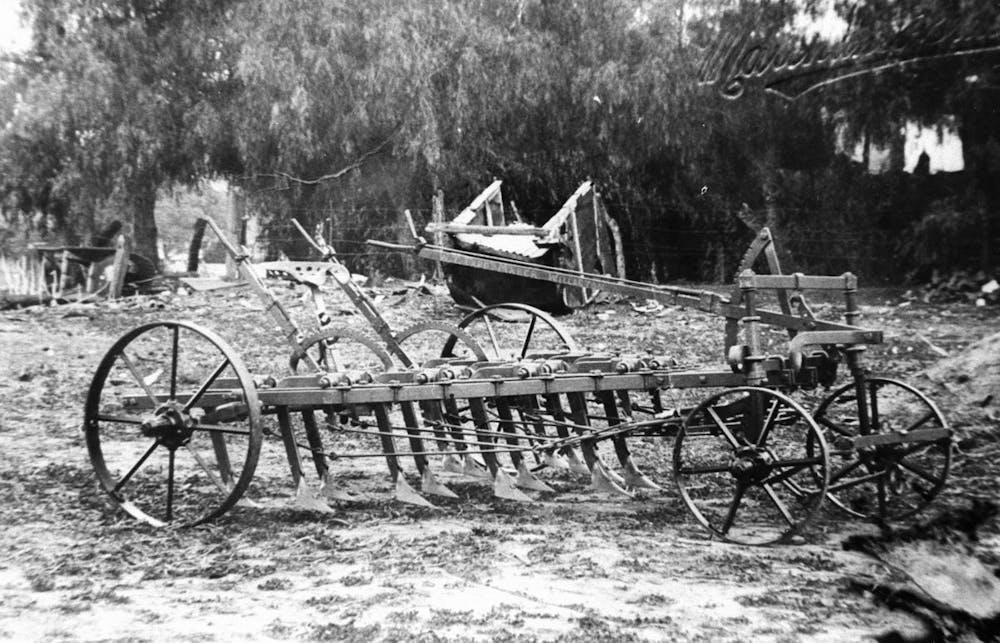
We need agricultural innovation, now more than ever
It’s impossible to overstate the importance of agricultural innovation. By some estimates, close to half of the world’s population owes its existence to the Haber-Bosch process, which pulls nitrogen from the air to produce fertiliser. The famous mid-20th-century Green Revolution that introduced high-yield varieties of crops also paved the way for major boosts in food security – and population.
Now we face a less certain future. Hunger is growing again. Last year, around 828 million people went to bed hungry every night.
For farmers, it has been a difficult few years. COVID travel restrictions and supply chain disruption coupled with the Russian invasion of Ukraine have caused global uncertainty – and major increases in costs for farmers.
It’s become harder to find workers. Fertilisers have become more expensive, as have herbicides, insecticides, seeds and fuel. Some of the increases are huge: fertiliser costs shot up from A$380 a tonne to a whopping $867 a tonne in just two months, between December 2021 and January 2022.
We will need ways of optimising how we farm and making the most of our farmland, if we are to make farming more resilient to climate shocks, more efficient users of water, fertilisers and chemicals, and keep food affordable.
Read more: Robot farmers could improve jobs and help fight climate change – if they're developed responsibly
Luckily, innovators are responding. By 2030, high-tech agricultural approaches are expected to add up to A$20 billion a year in farm production, according to the Australian Farm Institute.
If these new approaches deliver on their promise, it would take us most of the way to the industry’s goal of $100 billion by the end of the decade. At present, we produce $71 billion worth of food a year.
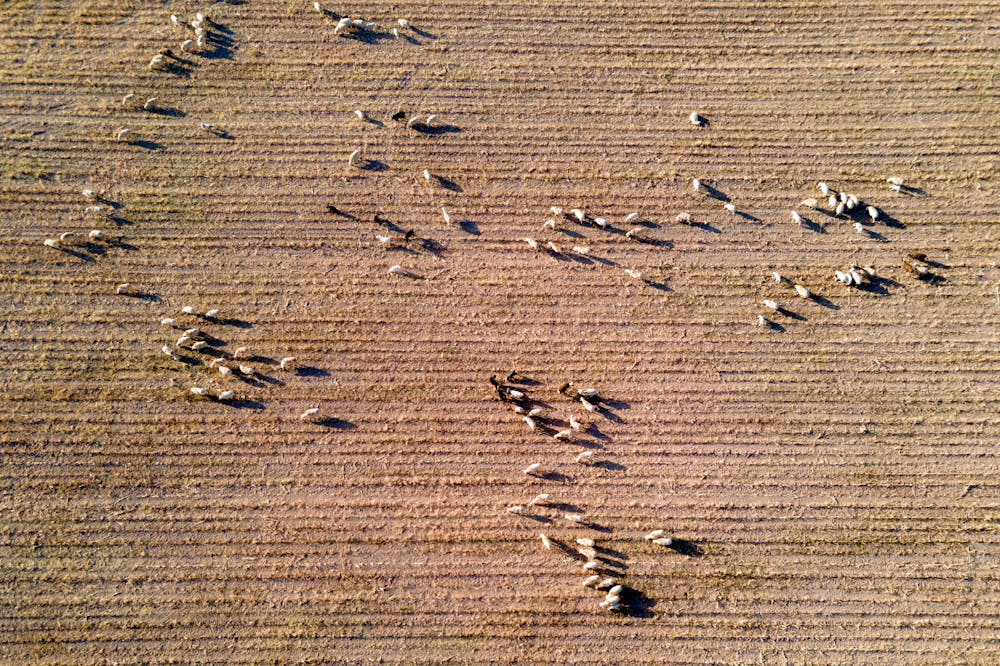 Precision agriculture is about optimising farming and producing more with less.
Shutterstock
Precision agriculture is about optimising farming and producing more with less.
Shutterstock
What does high-tech farming look like?
Traditionally, farmers have relied on common sense and experience to gauge the health of their soils and how well their crops are growing.
Increasingly, though, it’s becoming possible to get real-time information on a field-by-field basis using agricultural sensors. Sensors can measure soil moisture, temperature and salinity. If you deploy sensors throughout your fields, you can find out about issues early and respond quickly.
Broader technological advances are proving their worth for farmers too. Drones can give farmers an eye in the sky, which, coupled with AI image recognition, can detect and classify issues affecting plants. Think of getting a notification if telltale signs of an insect pest or destructive fungus are spotted on your farm. Farmers are already using drones to spot feral pigs. Drones can even apply fertiliser or agrochemicals in hard-to-access places.
For livestock farmers, drones offer a much faster way to count stock. Soon, drones may even be able to muster sheep or cattle. For plantation managers, drones can be used to plant trees by firing bundles of seeds and nutrients into the ground.
Farm robots and vertical farms
New advances in robotics are similarly useful. Many farmers were hard-hit by labour shortages due to COVID-linked lockdowns and restrictions on travel. In response, some are turning to the fast-developing field of farm robots. These robots can fertilise, apply pesticides, mow and are even becoming capable of picking fruit and vegetables.
Here, too, Australia has innovators such as Queensland’s SwarmFarm, which makes robots able to accurately spray weeds with herbicide and other routine tasks. As one farmer told the ABC, the robot has cut his use of chemicals by fully 80%. Overseas, robots are even being used to speed up the breeding of new crop hybrids.
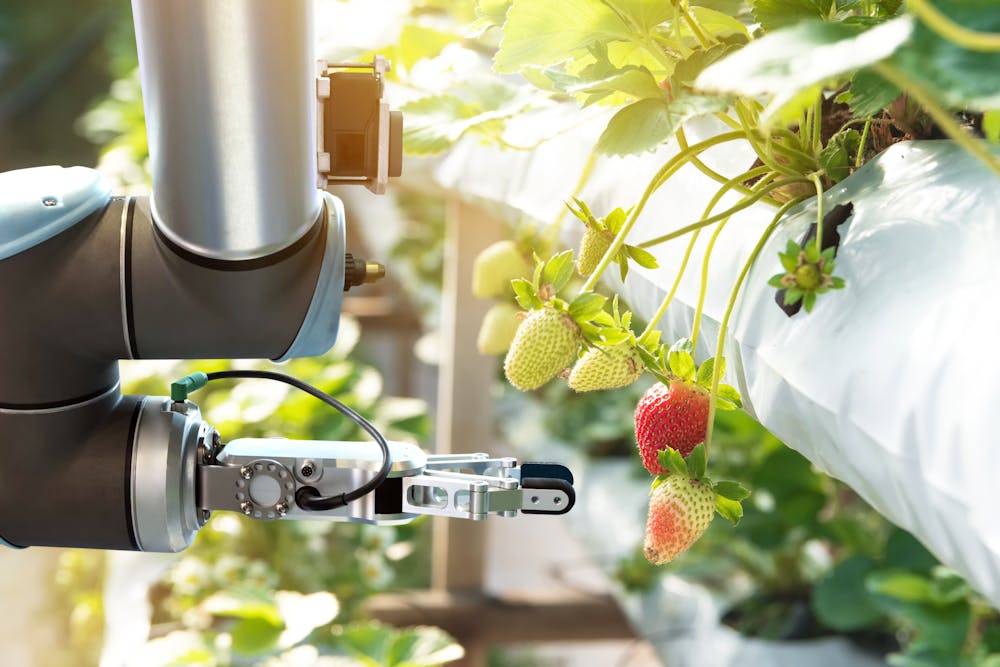 The capabilities of farm robots are growing rapidly.
Shutterstock
The capabilities of farm robots are growing rapidly.
Shutterstock
Vertical farming – indoor farms done in vertical layers – has the potential to slash water use, food miles and boost climate resilience. Queensland’s Vertical Farm Systems is one of the leaders making vertical farm systems cheaper, which has long been a challenge slowing uptake. Their automated leafy green growing farms are now exported to countries such as Canada and the United Arab Emirates.
Inventing and applying advanced technologies helps Australian farmers make decisions backed by hard data, to boost productivity and profitability. Some new technologies can also help prevent the overuse of fertilisers and other agrochemicals, and help make the wider environment cleaner.
Chemical overuse in farming is a well-known problem, with effects ranging from dangerous blue-green algae blooms linked to nitrogen fertiliser run-off from farms, human health issues from chemicals leaking into groundwater and watercourses, and direct consumption by humans, such as traces of pesticides on foods.
What these agricultural innovations have in common is a focus on precision, where key inputs like fertiliser and herbicides are applied as needed – no more, no less. Similarly, real-time data makes it possible for farmers to make the most out of their crop by fine-tuning irrigation and fertiliser as the plants require.
We will need all of these innovations – and more – to meet the challenges ahead.
Read more: 3 technologies poised to change food and the planet
Authors: Sam Rudd, SIEF Ross Metcalf STEM+Business Fellow - Future Industries Institute, University of South Australia

















