

Want noisy miners to be less despotic? Think twice before filling your garden with nectar-rich flowers
- Written by: Jade Fountain, PhD Student, University of Adelaide
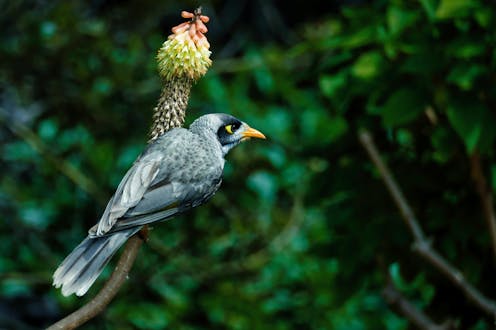
Noisy miners are complicated creatures. These Australian native honeyeaters live in large cooperative groups, use alarm calls to target specific predators, and sometimes help raise the young of other miners. But they’re perhaps best known for their aggressive and coordinated attacks on other birds – a behaviour known as “mobbing”.
We conducted a study investigating some of the possible factors that influence mobbing. We were interested in whether access to human food left on plates at cafes, or a high nectar supply thanks to planted gardens, might give urban miners extra energy and time to mob other species more often. We also examined whether miners were more aggressive towards some species over others.
Our study, published in the journal Emu - Austral Ornithology, found it wasn’t cafes with access to sugar-rich food that led to more miner aggression. In fact, gardens were where we recorded the highest amount of aggressive behaviour.
Understanding mobbing is important, because this behaviour can drive out other birds and reduce diversity. Smaller birds with a similar diet to noisy miners are particularly vulnerable.

What we did
The noisy miner’s preferred habitat is along the edges of open eucalypt forest, including cleared land and urban fringes. Their numbers have grown in recent decades, presenting a significant conservation problem.
We know from previous research that urban noisy miners tend to be more aggressive compared with rural populations.
But to examine mobbing behaviour more closely, we placed museum taxidermies (stuffed animals) of different species of birds in three different types of habitat around Canberra:
urban cafes with lots of food leftovers
urban gardens that had higher-than-usual supplies of nectar
bush areas more typical of “natural” miner habitat.
For each habitat, we then presented the resident noisy miners with three different types of museum taxidermy models of birds:
food competitors with a similar diet to miners, both of the same size (musk lorikeets) and a much smaller species (spotted pardalote)
potential predators, including a dangerous species that preys on miners (brown goshawk) and a species that robs nests but poses less of a risk to adult miners (pied currawong)
neutral species, meaning a bird that does not prey upon nor compete with miners for food (in our study, we used a model of an eastern rosella).
We wanted to see how miners responded to these “intruders” in various settings. We also set up a speaker nearby to broadcast alarm calls, to see how miners reacted.
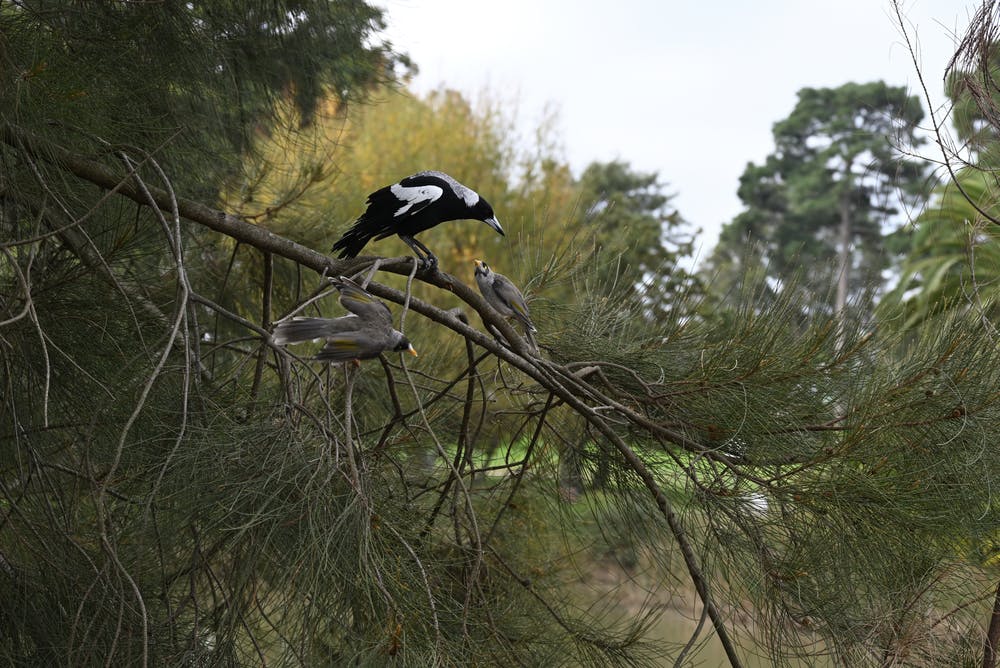 Noisy miners are known for their aggressive and coordinated attacks on other birds – a behaviour known as ‘mobbing’.
Shutterstock
Noisy miners are known for their aggressive and coordinated attacks on other birds – a behaviour known as ‘mobbing’.
Shutterstock
What we found
We found interesting differences in how miners responded to our taxidermy models and the broadcasted alarm calls.
Noisy miners exhibited aggressive behaviours for a much longer time in gardens and cafés in comparison to natural bush areas.
Surprisingly, however, access to sugar-rich food from cafes didn’t yield the most aggressive behaviour. Rather, we recorded the highest levels of aggressive behaviour near garden sites.
Nectar-rich plants (such as grevilleas and bottlebrushes) are attractive to birds with a sweet tooth, and miners are no exception. Newer cultivars flower for longer, meaning miners living in our gardens may have access to an almost year-round source of food.
Ready access to these flowering shrubs may affect aggression by providing more time, energy or reward to noisy miners defending these uber-rich resources.
The type of model presented also impacted miner response.
More miners were attracted to an area and mobbed the subject for longer when the model was of a predator.
Miners showed even greater aggression to food competitor models, however. They were more likely to physically strike food competitor models with a peck or swoop compared to predator models.
What can gardeners do with these findings?
Our research shows the importance of considering how gardens – whether in back yards, in parks or new housing estates – can affect local ecosystems, including bird behaviour. Previous studies have drawn a link between the types of plants humans choose to plant and the local mix of bird species.
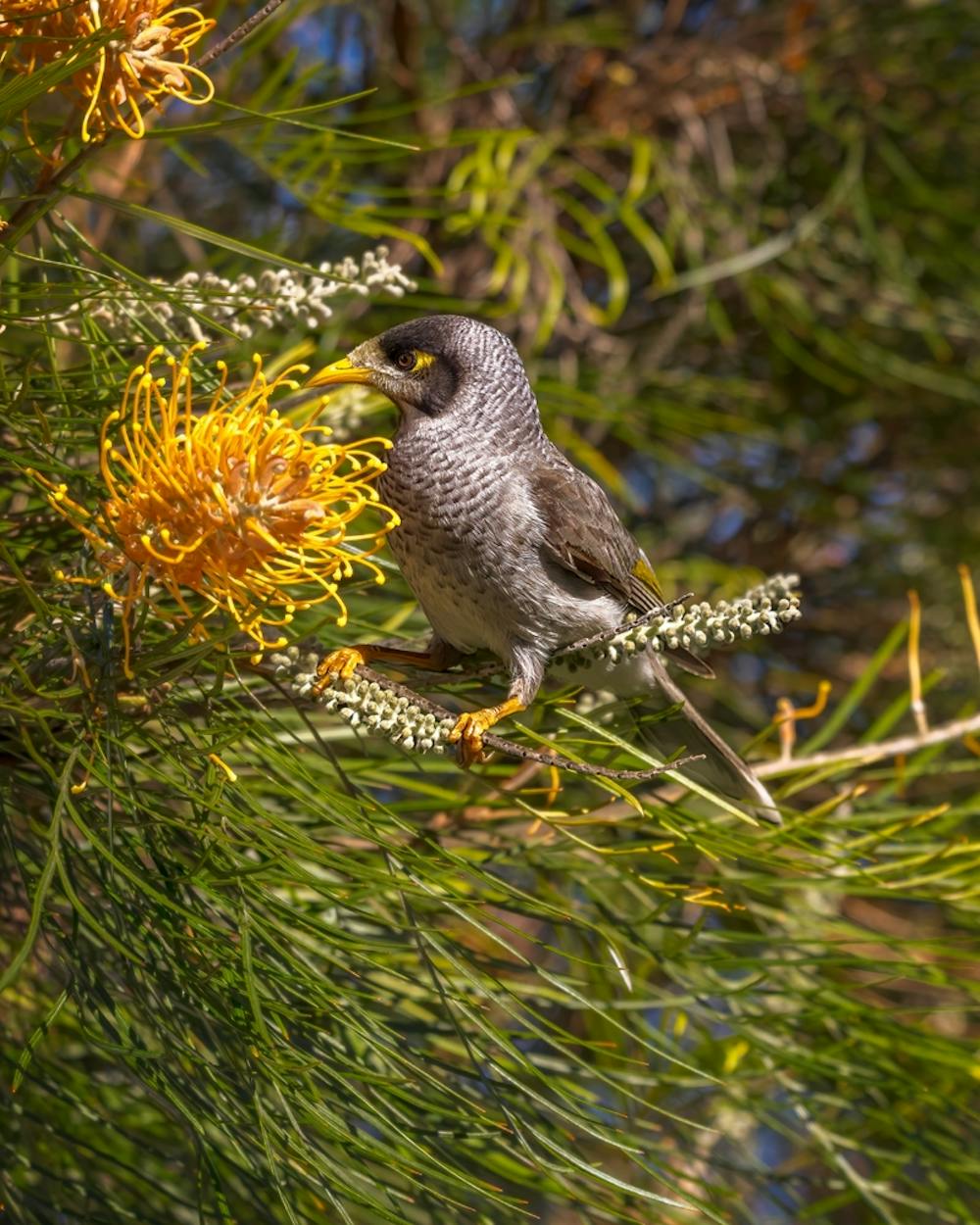 Grevilleas look lovely but how does their presence affect miner behaviour?
Shutterstock
Grevilleas look lovely but how does their presence affect miner behaviour?
Shutterstock
To reduce the risk of creating a perfect habitat for despotic miners in your garden, aim to:
plant multi-layered levels in your garden – that means including ground cover, small shrubs, medium shrubs and trees to provide shelter at different heights for various birds and animals
consider planting plenty of dense shrubs with small flowers to attract insects and provide shelter for small birds
use a mix of nectar-rich and non-flowering shrubs and grasses (instead of focusing too heavily on flowering plants)
try to avoid planting too many exotic species; opt instead for native plants local to your area and suited to the climate, as these benefit native plants and animals whilst minimising benefits to aggressive noisy miners.
Read more: Why we 'hate' certain birds, and why their behaviour might be our fault
Authors: Jade Fountain, PhD Student, University of Adelaide


















