

After the Voice, climate change commitments should be the next urgent constitutional reforms
- Written by: Ron Levy, Associate professor, Australian National University
After decades of foot-dragging on climate change, Australia has finally put significant commitments in national legislation. It joins other countries such as Canada and the United States that also recently took big new legal steps.
The new laws may still not be enough, but they mark real progress. Yet, will such progress last or be short-lived?
As we saw with Australia’s carbon price law, which passed in 2011, a change of government can lead to a change in direction. And that direction may be broadly backwards.
For this reason I have, in recent research, called for a new kind of commitment to climate change mitigation: a set of clear numeric targets entrenched in our highest laws, namely our constitutions. Constitutions spell out our most sacrosanct commitments. They are hard to budge once enacted.
At the moment, the focus of constitutional change in Australia is on the recognition of Indigenous people in the First Nations Voice to Parliament – as it should be.
But we must also look over the horizon to the next challenges. After the Voice, climate change commitments should be the next urgent constitutional reform. The republic can wait; climate change cannot.
What would it look like?
An ongoing emergency like climate change calls for an unwavering set of policy solutions well into the future. But a long-term policy – such as a target year for net-zero emissions – may struggle in a democratic system that can promise only occasional and precarious environmental protection.
Entrenching such policies in our national, state or territorial constitutions may help firm up our commitments to resolute action. But that depends on what constitutional climate action looks like.
Ideally it should specify a carbon emissions reduction target – as a minimum or “floor” – and a process for ratcheting up the target over time (similar to the international Paris Agreement). There should also be new enforcement bodies to review the carbon budgets of Australian governments.
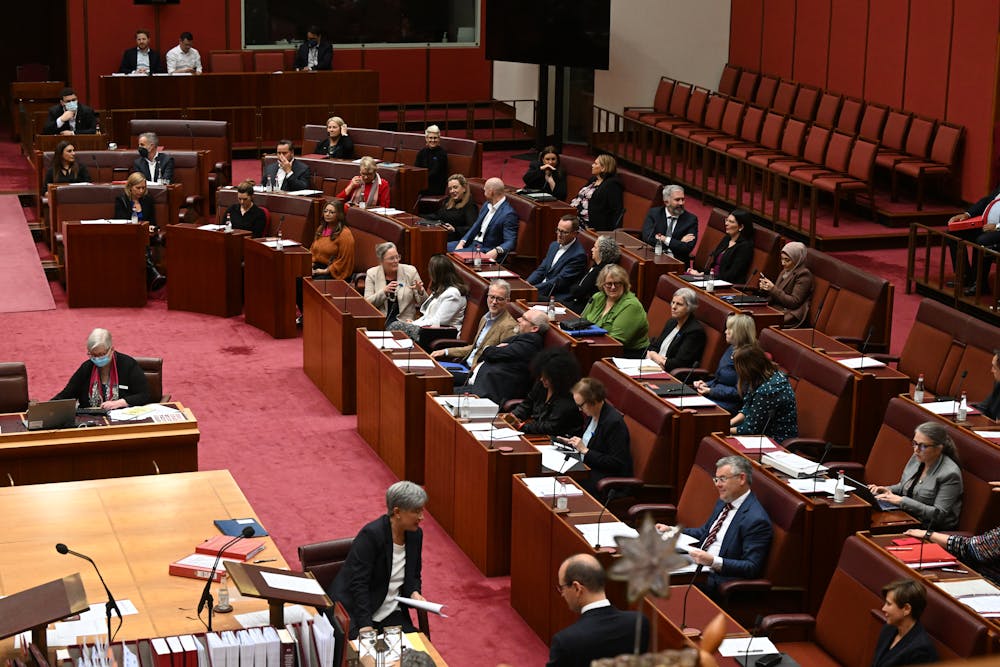
On the one hand, if we took these constitutional steps we would be in good company. A majority of national constitutions already protect the environment. On the other, what I suggest here goes beyond most past examples. Most have been decidedly vague.
South Africa’s Bill of Rights, for instance, guarantees everyone the “right (a) to an environment that is not harmful to their health or well-being; and (b) to have the environment protected”.
Elsewhere, we see rights to a “healthy” environment, or obligations to “protect and improve” the environment.
Unfortunately, these constitutional laws reflect only broad aspirations. They don’t always lead to meaningful environmental protection. This is largely because short-term, myopic economic concerns often act as counterweights blocking effective environmental action. South Africa itself provides one example where courts balance environmental ideals in the constitution against economic factors.
What I call “fixed constitutional commitments” are precise constitutional guarantees, like carbon reduction targets. Since they fix a specific quantity of commitment, they can be resistant to the judicial balancing that usually neuters environmental constitutional clauses.
Precedents abroad, and even in Australia
While this idea is largely novel, it has some precedents. Bhutan, Kenya and New York State each specify a minimum amount of forest coverage. On this, New York was the trailblazer: the state’s constitutional protections for forests date back to 1894.
Just last year in Australia, Victoria constitutionally entrenched a ban on fracking. To do this Victoria used a simple legislative process for constitutional entrenchment available to each state under the Australia Act 1986.
This makes Victoria one of a handful of jurisdictions that have also set precise environmental targets in constitutional law. In this case, a commitment to zero fracking.
 Victoria entrenched a ban on fracking into its constitution.
AAP Image/Joel Carrett
Victoria entrenched a ban on fracking into its constitution.
AAP Image/Joel Carrett
After the Victorian constitutional reform, one opposition member raised an important objection: that putting environmental policy in the constitution takes it out of the democratic sphere.
This is true to an extent. But there are important responses.
First, fixed constitutional commitments may correct failures of democracy. Elected representatives often represent the preferences of citizens on the environment weakly, at best.
And despite overwhelming popular support for a strong response to the climate emergency, many politicians worldwide oppose such responses – and not because they know better. Many believe their real constituents to be the businesses and other interests that underwrite electoral campaigns.
Moreover, the “climate wars” have long held Australia in legal limbo. We can’t take significant action on the climate as long as politicians can’t agree for long about what actions to take.
Before a community can begin to hash out new policy, it has to settle its basic policy priorities – such as net-zero carbon emissions by a given year. A democracy that’s stuck at the priority-setting stage can’t go on to work out the details of policy. And deliberation about policy details is where most of our democratic activity generally lies.
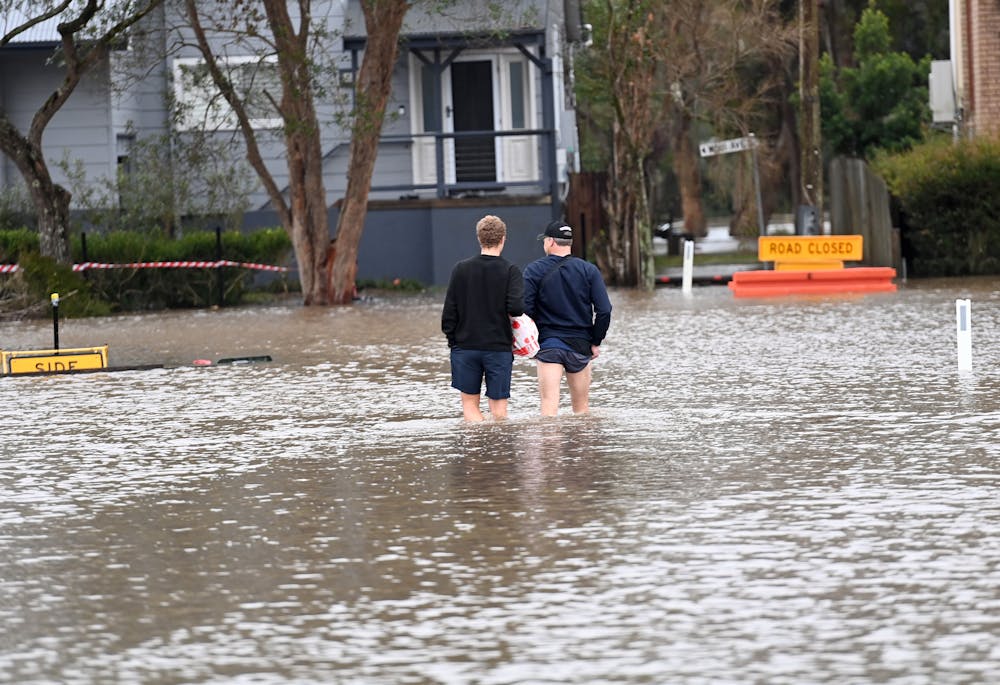 Taking meaningful action on climate change cannot wait.
AAP Image/Jeremy Piper
Taking meaningful action on climate change cannot wait.
AAP Image/Jeremy Piper
Fixing democratic failures on the environment
There has been much talk in recent years about whether the world’s remaining democracies are too prone to division, and too weak to take action against long-term problems.
Can democratic systems still adequately address challenges – such as climate change – almost tailor-made for disinformation, political polarisation and gridlock? Or do we need new tools to avoid the policymaking quagmires that have so often kept democracies from tackling complex problems?
The best solutions will invent new ways of getting things done while preserving, and even improving, democracy. Fixed constitutional commitments on climate change may demonstrate a democratic society can indeed remain responsive to our most complex and urgent problems.
Read more: Now, we begin: 10 simple ways to make Australia's climate game truly next-level
Authors: Ron Levy, Associate professor, Australian National University


















