

You don't have to be a cute koala to be an Instagram influencer. Give lizards and bugs a chance and we'll like them too
- Written by Meghan Shaw, PhD Student in Conservation Social Science, Deakin University
Remember the popularity contests of high school? Often our athletic, genetically gifted classmates got the most attention: the school captain, the footy team captain, the prom queen. But popularity contests don’t just exist in school. And in the world of conservation, it can be a matter of survival for the “winners” and “losers”.
If we asked you to list every animal species you can think of, chances are that list would be full of mammals and birds, with very few reptiles, fish, amphibians and invertebrates. So why do we focus so much on some species and so little on others?
Our recent study challenges assumptions that people simply find mammals and birds much more engaging than other species. When these neglected species were posted to Instagram by wildlife organisations and researchers, there were no great differences in the likes they attracted.
This has implications for which species we focus on to enlist public support for conservation. A more complete picture of the wildlife around us would help reduce glaring imbalances in conservation outcomes.
Survival of the cutest and fluffiest
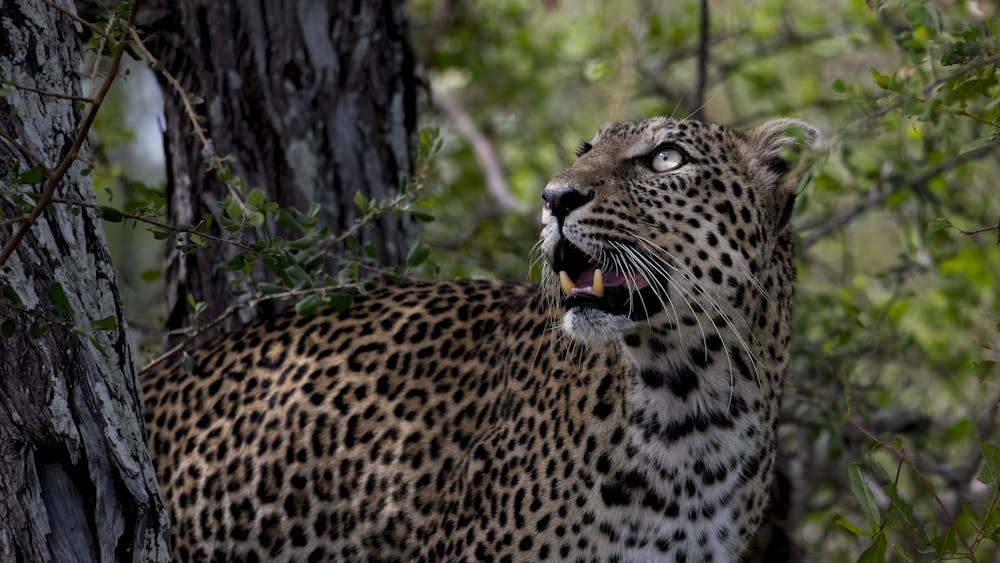
 Why have we heard of the koala, but not the two-line dragon?
Kelly Miller, Author provided (no reuse)
Why have we heard of the koala, but not the two-line dragon?
Kelly Miller, Author provided (no reuse)
For years, we’ve assumed humans engage more with the “cute and fluffy” species – often known as “charismatic megafauna” – and these are the animals that are shown to us on TV, film and advertising. There is evidence to support this preference. People will often choose to donate to mammals and birds over other species, and mammals and birds are mentioned more on social media.
However, mammals and birds make up less than 10% of all animals on Earth. With the media we’re consuming, we’re just not getting an accurate picture of the world of wildlife that surrounds us.Where this gets worrying is in the fight for species survival. Our planet is in an extinction crisis, with species becoming extinct at extraordinary rates.
However, our focus on mammals and birds means cute and fluffy animals receive more research attention and funding. Conservation outcomes for these species are better than for reptiles, amphibians and invertebrates. Tellingly, 94% of all threatened species on the IUCN Red List are reptiles, fish, amphibians and invertebrates.
Do people really prefer charismatic megafauna?
Our study suggests this issue may be more complex than first thought. Many Australian conservation organisations use social media platforms, such as Instagram, to share their work and connect communities with wildlife. But in the busy, ever-updating world of Instagram feeds, which images are the most effective at grabbing someone’s attention?
We set out to examine which Australian wildlife species were most often posted to Instagram and which had the highest levels of engagement. Based on the belief that people will engage more with charismatic megafauna, we expected mammals and birds to be shown more frequently and to elicit higher engagement than the “creepy crawlies” such as amphibians and insects.
We analysed 670 wildlife images posted to Instagram by wildlife organisations and research group accounts in 2020 and 2021. For each image, we noted the species posted in the image. As a measure of engagement, we recorded the number of “likes” the image received in proportion to each organisation’s follower count.
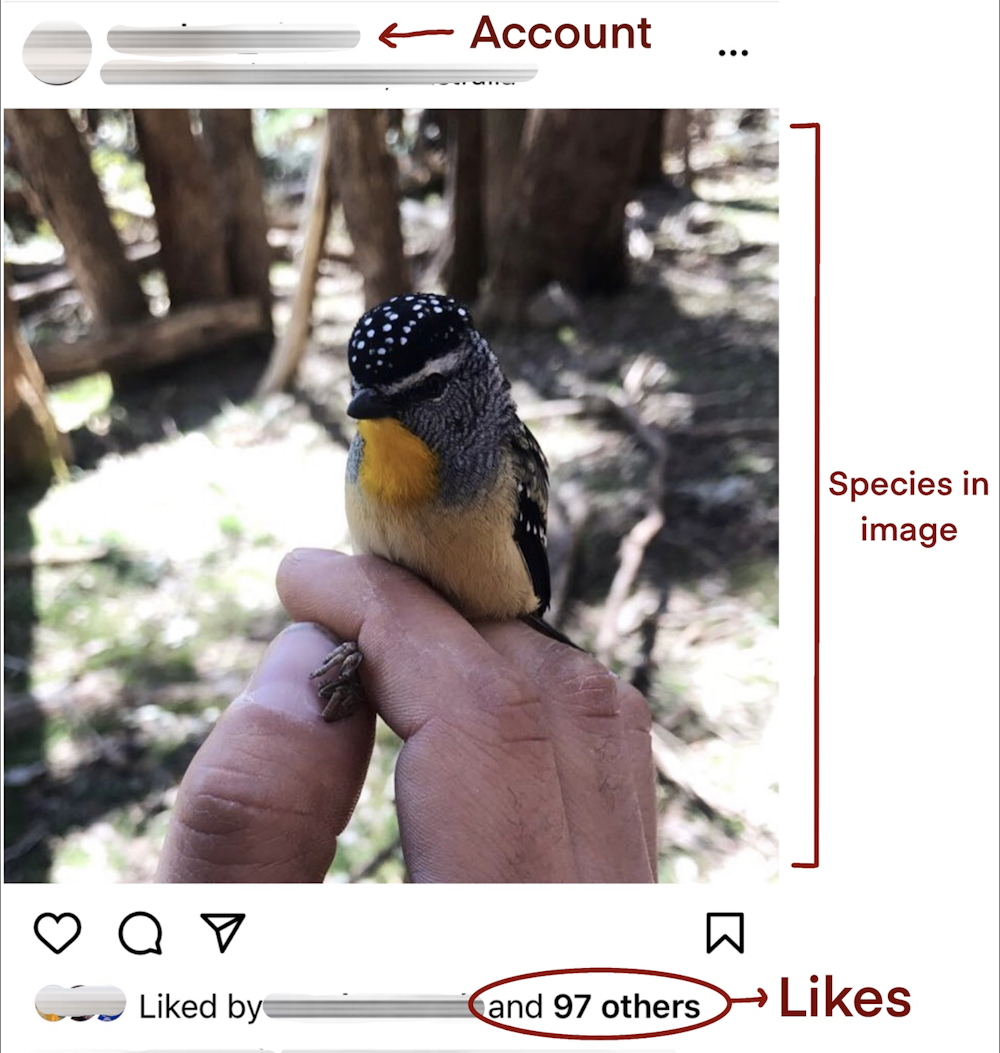 An example of the Instagram posts that were analysed, and the information collected.
Meghan Shaw, CC BY
An example of the Instagram posts that were analysed, and the information collected.
Meghan Shaw, CC BY
What did the study find?
Our results were surprising and provide hope for the future of underrepresented wildlife.
Although the majority of wildlife images posted to Instagram by these conservation organisations were of mammals and birds (73.7% to be precise), our analysis of image engagement uncovered a surprising and promising trend. Mammals were, indeed, more engaging than other species, but only by a tiny amount. We found birds, reptiles, invertebrates, amphibians and fish were all equally as engaging for Instagram users.
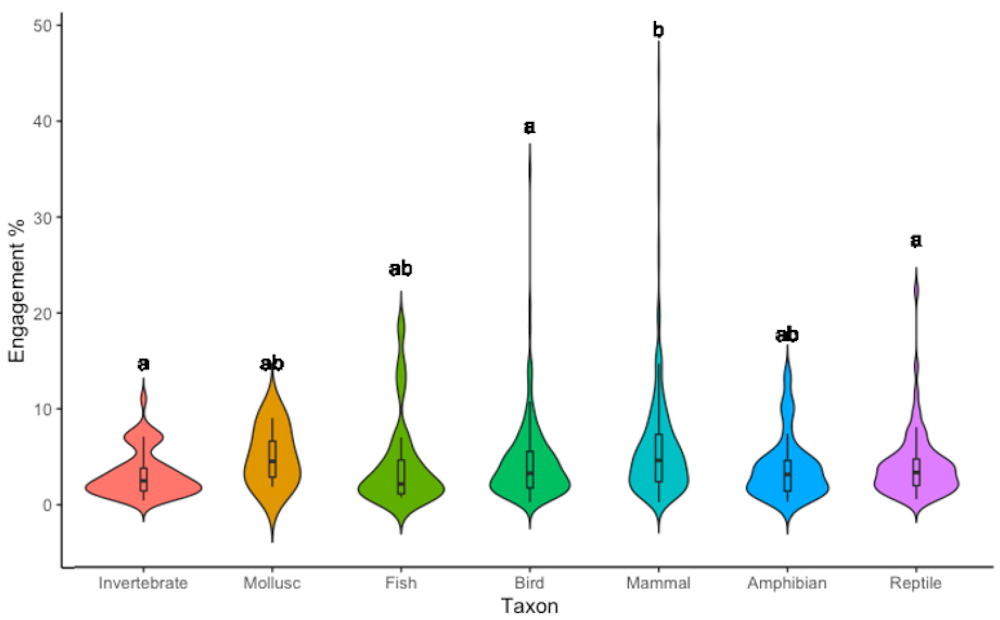 The amount of engagement posts featuring each group of animal (taxon) received. Categories that do not share letters are significantly different from each other, e.g. mammals (b) received higher engagement than invertebrates, birds and reptiles (a) but not molluscs, fish or amphibians (ab). All significant differences were relatively small (1-2%).
Author provided, CC BY
The amount of engagement posts featuring each group of animal (taxon) received. Categories that do not share letters are significantly different from each other, e.g. mammals (b) received higher engagement than invertebrates, birds and reptiles (a) but not molluscs, fish or amphibians (ab). All significant differences were relatively small (1-2%).
Author provided, CC BY
Are we ready to sympathise with weird bugs?
Perhaps it is time to give our creepy crawlies more of the media limelight. The more we see a wide diversity of animals, the more likely we are to support their conservation.
The Theory of Repeated Messaging suggests when we are repeatedly exposed to something, we are more likely to become familiar with, engage with and support it. Research has shown when we put effort into promoting underrepresented species, we can improve their chances of receiving a public donation by 26%.
Our findings suggest the media and conservation organisations can promote endangered species across all walks of life – from lizards to bugs and fish to frogs – without compromising viewer engagement. This will increase our knowledge of the amazing diversity of animals that we share this planet with. In turn, this will lead to underrepresented species receiving more of the conservation support they need to survive.
Zoos Victoria is already leading the way. The endangered native golden-rayed blue butterfly features in the new Totes for Wildlife campaign to conserve its natural habitat.
Perhaps we tend to prefer mammals and birds because we see them more, and not just because they look a certain way. After all, beauty is in the eye of the beholder.
Authors: Meghan Shaw, PhD Student in Conservation Social Science, Deakin University

















