

How did Victoria cut emissions by almost 30%
- Written by Tony Wood, Program Director, Energy, Grattan Institute
In the 15 years to 2020, Victoria’s emissions fell by almost 30%, according to a new government report. You might wonder how is this possible, given most of the state’s brown coal stations are still running and we’re still driving petrol cars.
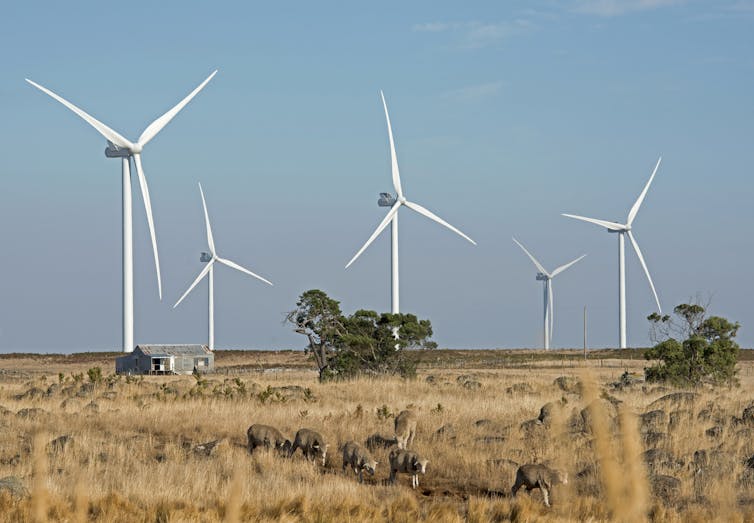
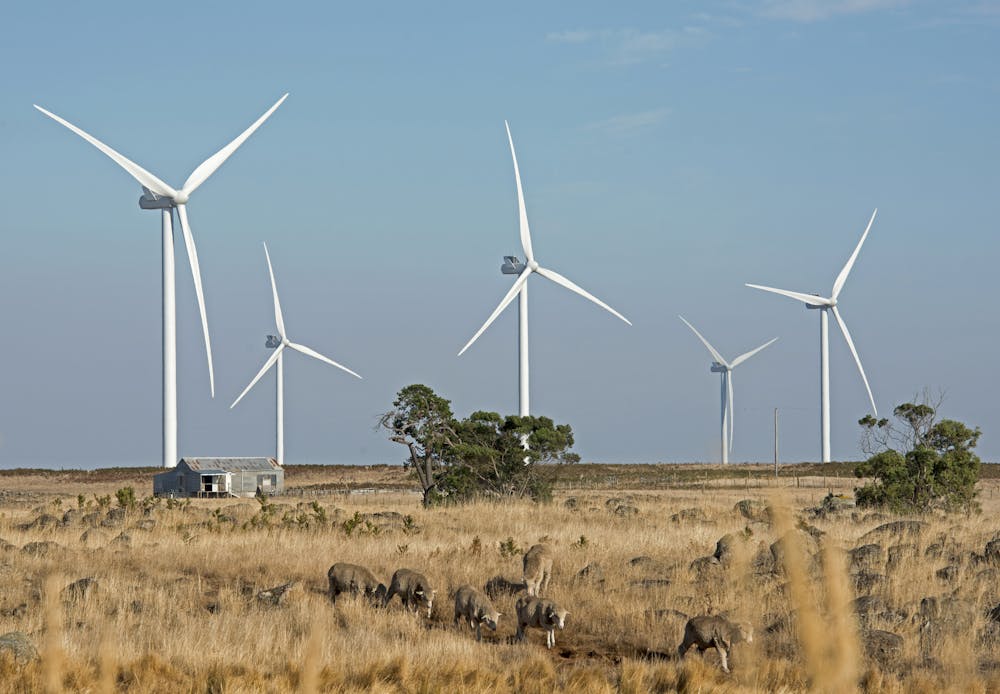
One reason: the closure of Hazelwood, a power station once responsible for up to 15% of the state’s emissions before it closed in 2017. Another is that renewable power has come gushing into the grid. Just under 30% of the state’s power was renewable in 2020-21.
Emissions covering land use, changes in land use and forestry can be confusing – or used to confuse – as this sector can sometimes be a source of emissions and at other times be a net sink depending on weather patterns and farming practices, including land–clearing. These changes are not always the result of government policies. If we exclude the land use sector, Victoria’s reductions still come in at 20 percent below 2005.
So Victoria’s numbers are compelling, and the progress has been substantial. That’s likely to continue, following the government’s pledge to build major new electricity storage.
How does Victoria compare to other states and territories?
Victoria’s economy is second only in size to New South Wales, at around 23% of the national economy to NSW’s 31%. The differing structure of state and territory economies offers a partial explanation of their differences in both absolute emissions and changes over the last couple of decades.
Despite the common belief Victoria’s economy is dirtier than average due to its reliance on very high polluting brown coal, it’s actually the least emissions intensive of the mainland states when measured as emissions per unit of gross state product. Despite these changes, the emissions intensity of Victoria’s electricity sector remains the highest in the country, by our calculations.
Over the 15-year period, emissions from Victoria’s brown coal generators fell by one-third, much higher than the national reduction of 13%. This was partly due to the closure of the Hazelwood generation plant in 2017 and to the growth in renewables from effectively zero in 2005 to 25% share of energy consumption by 2020.
Read more: Historic new deal puts emissions reduction at the heart of Australia's energy sector
Victoria’s transport sector contributes more to emissions than the national average, though this is offset by lower emissions from agriculture and fugitive emissions from coal mining and gas extraction than the average.
Across the country, COVID was responsible for a 6% fall in transport emissions from 2019 to 2020, although emissions had been slowly rising before that. Unlike many other countries, Australia didn’t see significant COVID-related emissions reductions in other sectors such as electricity or manufacturing.
Despite its reliance on brown coal for power generation, Victoria has made real progress – the most out of any of the eastern coal states. South Australia, which has been streaking ahead on renewables, reached a 31% cut in emissions in 2020.
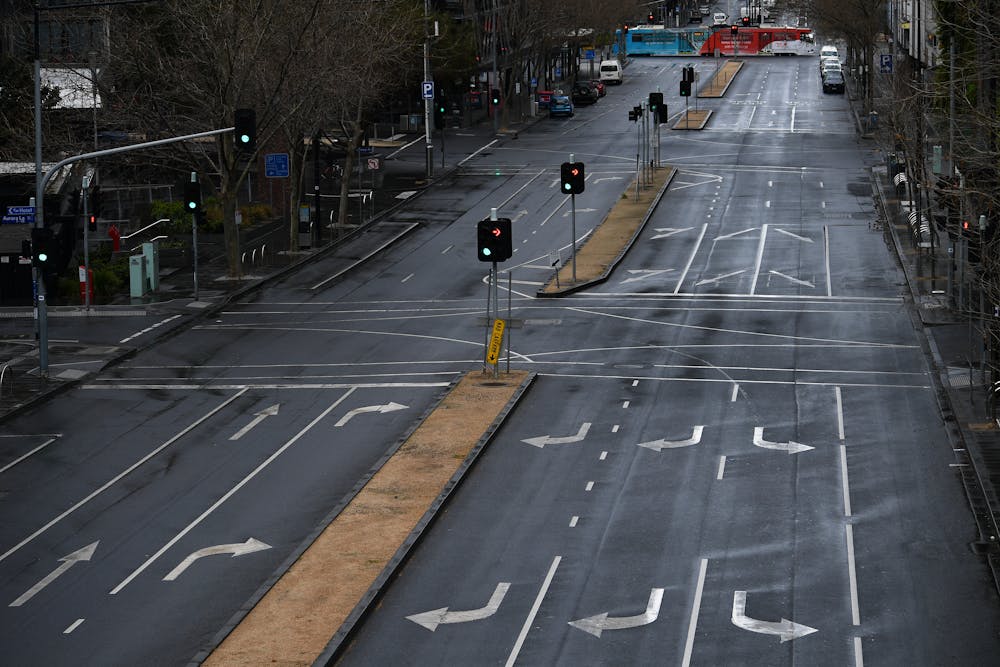 COVID lockdowns in Melbourne temporarily pushed transport emissions lower - but not by much.
James Ross/AAP
COVID lockdowns in Melbourne temporarily pushed transport emissions lower - but not by much.
James Ross/AAP
What’s next?
Nationally and at a state level, we have commitment to net zero emissions by 2050. Victoria has a target to cut emissions 50% by 2030, while the Commonwealth Government recently legislated a 43% target.
While that’s positive, neither the commonwealth or any state has a comprehensive policy framework to meet these targets. Given we have an interconnected grid across most of the country, nationally consistent policies should be a priority.
As with the rest of Australia, Victoria’s high-polluting electricity sector is projected to do more than its proportional share of meeting the target. In six years, the Yallourn power station will close – four years ahead of schedule. And in 2035, the huge Loy Yang A station will shut forever – ten years ahead of schedule.
The Australian Energy Market Operator is already planning for a future without the brown coal generators, possibly within 10 years time.
To replace them means major new growth in renewables. But there are several challenges we have to meet first.
First is building transmission lines to connect renewables in regional Victoria to the grid. The old grid isn’t up to the task, as renewable developers in Mildura have found.
Major increases in interstate transmission capacity will be required between Victoria and both New South Wales and Tasmania. It’s questionable whether all this infrastructure can be built on time and on budget.
The second challenge is ensuring supply remains reliable as coal closes.
Major investment is needed in energy storage, through grid scale and smaller batteries and pumped hydro to meet extended periods of low supply from renewables. The Victorian government this week made a pre-election pledge to fund short and long term storage, from batteries to pumped hydroelectricity to hydrogen. This could help, but it will also require collaboration. The state government is working with other energy ministers to develop policies to ensure reliability. It cannot be delivered too soon.
Getting fossil fuels out of electricity is low hanging fruit. To cut emissions outside this sector will be harder.
For Victoria, the role of natural gas is particularly difficult. Domestic use of gas is far more important than in other states. While the government has a gas substitution roadmap, it has yet to demonstrate it has a clear plan to encourage households and small businesses off gas. The winner of the November state election will inherit a tricky political problem if the state’s emission targets are to be met.
So spare a moment to appreciate the great progress Victoria has made – even though we know the hardest yards are ahead.
Read more: Now, we begin: 10 simple ways to make Australia's climate game truly next-level
Authors: Tony Wood, Program Director, Energy, Grattan Institute

















