

a claustrophobic portrait of a terrible pandemic year
- Written by Carol Lefevre, Visiting Research Fellow, Department of English and Creative Writing, University of Adelaide
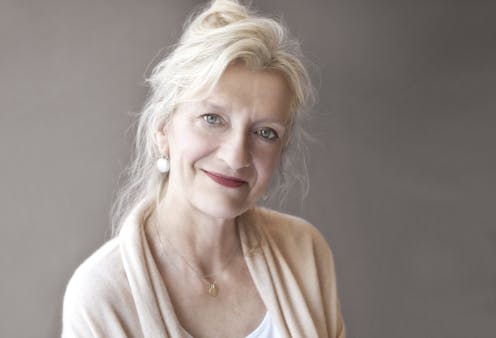
In her latest novel, Lucy by the Sea, Elizabeth Strout captures the bewilderment of us all at the onset of the pandemic. Her character Lucy Barton admits not only did she not see it coming, but even when she did notice the virus’s existence, she did not really believe it would ever reach New York.
Review: Lucy by the Sea – Elizabeth Strout (Penguin Random House)
It is March, 2020, and Lucy, a writer, had been scheduled to travel to Italy and Germany, a book tour which she had, with fortuitous prescience, cancelled back in December. Lucy is a woman who is given to sudden flashes of insight – much like her mother, who was known for having “visions” – which is why, looking back at those early days of the pandemic, not having sensed its threat surprises her.
Even when her ex-husband William’s oldest friend is put on a ventilator and subsequently dies, it is still difficult for her to accept that this is happening to people she knows. With hindsight, Lucy remarks: “It’s odd how the mind does not take in anything until it can.”
William has been quicker to spot the looming danger. He pleads with their two daughters Becka and Chrissy to leave New York city with their husbands, before hastily scooping up Lucy from her apartment and carrying her away to the town of Crosby on the coast of Maine.

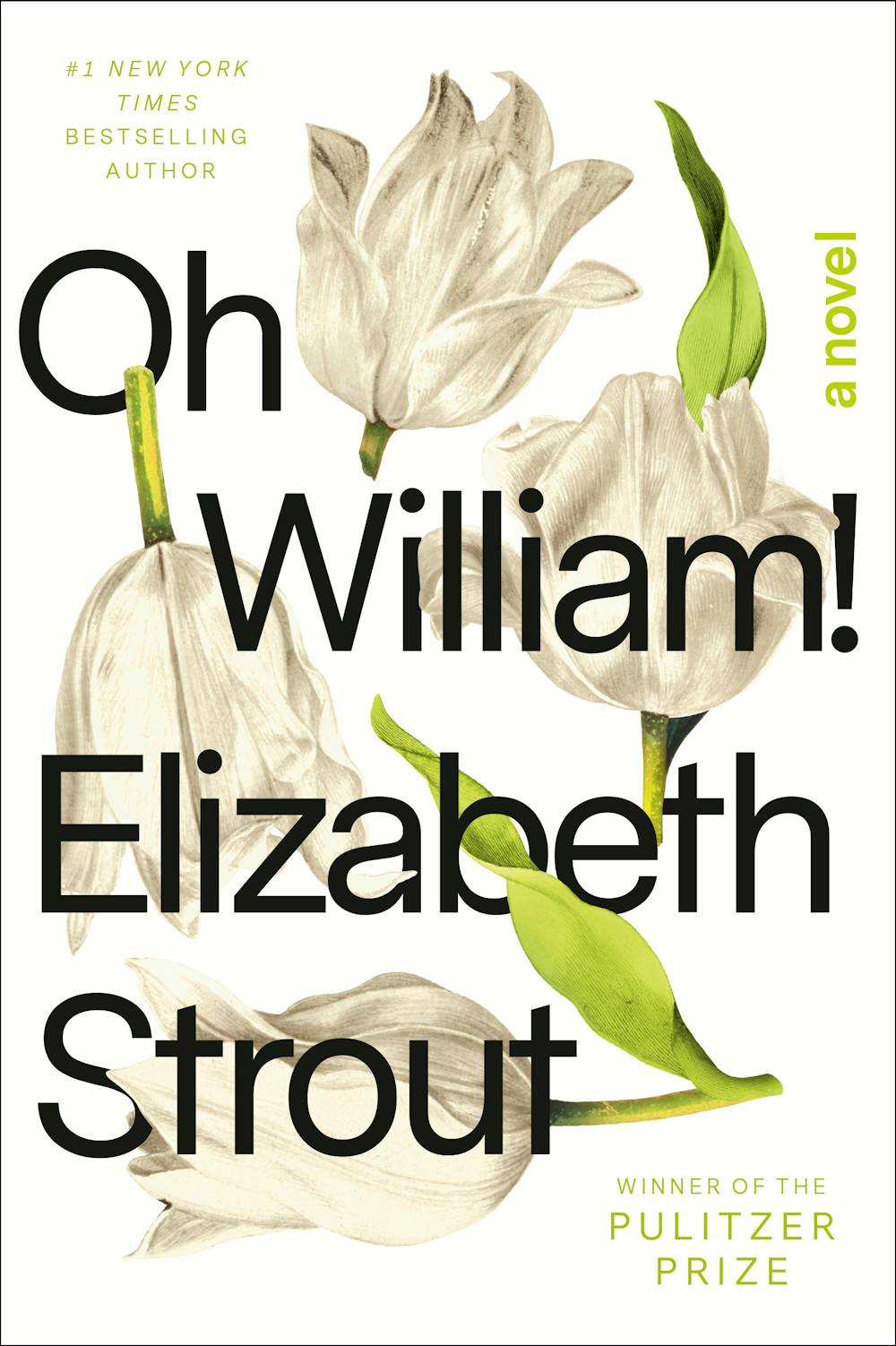 In Maine, unable to retreat into the activities that usually soothe her, Lucy is also grieving for her husband David, a cellist with the New York Philharmonic, who has died only a year earlier. William, too, is unexpectedly single since his wife, Estelle, walked out and took their daughter Bridget, along with a good bit of their furniture.
With no escape from the monotony of their self-isolation, Lucy, who in ordinary circumstances is endearingly quick to declare her love – especially for people – finds herself continually finding things to hate: she hates being in other people’s houses, hates the smell; she hates being cold, but hates sitting inside a house with a coat on; she hates the jigsaw puzzle of Van Gogh William insists they try; she hates snow, and she hates William after dinner when she suspects he is not really listening to her. With extraordinary patience, William tells Lucy to stop hating everything.
To make matters worse, far from being welcome in Maine, some locals are so antagonistic towards the couple that a message urging them to go back to New York is anonymously attached to their car. Then, on a visit to a grocery store, a woman shouts at Lucy: “You goddamn New Yorkers! Get the hell out of our state!”
When Lucy reproaches William for not being nice to her after the woman yelled, William, becoming uncharacteristically emotional, answers that hers is the life he has wanted to save.
‘My own life I care very little about these days. But Lucy, if you should die from this, it would –’ He shook his head with weariness. ‘I only wanted to save your life, and what if some woman yelled at you.’
When their daughters experience difficulties – one still in New York, the other in Connecticut – Lucy and William must support them as best they can from Maine. Many readers will recognise the torment of handling family crises at arm’s length, and of not being able to hug loved ones even when distance is finally overcome.
Not Olive
Elizabeth Strout has captured perfectly the fear, frustration, and boredom experienced by so many of us during the first year of Covid. Even her fragmentary writing style adds authenticity to a time when few of us could concentrate, when we flicked from news broadcast to news broadcast, to tallies of the latest case numbers, and deaths, while feeling that the very air we breathed carried risk.
Among Strout fans Lucy Barton is a much-loved character, but it is Olive Kitteridge who has most often made headlines, with the television mini-series based on the book, starring Frances McDormand, winning multiple awards. The polarising nature of Olive’s character stirs a strong response in readers, whereas the more reticent Lucy speaks quietly, like someone whispering in the reader’s ear.
Strout’s extraordinary achievement as a writer has been to illuminate so many flawed, ordinary, yet far from unremarkable lives, through a series of interconnected stories and novels. Though each book is complete, they work satisfyingly together as a cohesive whole, so that reading them we come to know not just a handful of characters but entire communities in a few small towns on the coast of Maine, and in New York and Illinois.
Olive Kitteridge and its sequel are elegantly wrought, with their third-person (and at times omniscient) point of view allowing for more nuanced storytelling. Lucy Barton’s intimate, first-person voice in the reader’s ear, with its tendency to speak in run-on sentences that often end with ‘"… is what I mean"’ or “‘… is what I’m saying"’, can become tiresome.
In the end, one feels as if one has spent a year in lockdown inside the head of a small, loving, anxious, slightly neurotic person named Lucy Barton.
Lucy By the Sea is a pitch-perfect portrait of a terrible year, and oh, how sweet it is to get out and about, to breathe fresh air, and to see the world from other, less claustrophobic angles, both for Lucy Barton and the reader.
Authors: Carol Lefevre, Visiting Research Fellow, Department of English and Creative Writing, University of Adelaide
In Maine, unable to retreat into the activities that usually soothe her, Lucy is also grieving for her husband David, a cellist with the New York Philharmonic, who has died only a year earlier. William, too, is unexpectedly single since his wife, Estelle, walked out and took their daughter Bridget, along with a good bit of their furniture.
With no escape from the monotony of their self-isolation, Lucy, who in ordinary circumstances is endearingly quick to declare her love – especially for people – finds herself continually finding things to hate: she hates being in other people’s houses, hates the smell; she hates being cold, but hates sitting inside a house with a coat on; she hates the jigsaw puzzle of Van Gogh William insists they try; she hates snow, and she hates William after dinner when she suspects he is not really listening to her. With extraordinary patience, William tells Lucy to stop hating everything.
To make matters worse, far from being welcome in Maine, some locals are so antagonistic towards the couple that a message urging them to go back to New York is anonymously attached to their car. Then, on a visit to a grocery store, a woman shouts at Lucy: “You goddamn New Yorkers! Get the hell out of our state!”
When Lucy reproaches William for not being nice to her after the woman yelled, William, becoming uncharacteristically emotional, answers that hers is the life he has wanted to save.
‘My own life I care very little about these days. But Lucy, if you should die from this, it would –’ He shook his head with weariness. ‘I only wanted to save your life, and what if some woman yelled at you.’
When their daughters experience difficulties – one still in New York, the other in Connecticut – Lucy and William must support them as best they can from Maine. Many readers will recognise the torment of handling family crises at arm’s length, and of not being able to hug loved ones even when distance is finally overcome.
Not Olive
Elizabeth Strout has captured perfectly the fear, frustration, and boredom experienced by so many of us during the first year of Covid. Even her fragmentary writing style adds authenticity to a time when few of us could concentrate, when we flicked from news broadcast to news broadcast, to tallies of the latest case numbers, and deaths, while feeling that the very air we breathed carried risk.
Among Strout fans Lucy Barton is a much-loved character, but it is Olive Kitteridge who has most often made headlines, with the television mini-series based on the book, starring Frances McDormand, winning multiple awards. The polarising nature of Olive’s character stirs a strong response in readers, whereas the more reticent Lucy speaks quietly, like someone whispering in the reader’s ear.
Strout’s extraordinary achievement as a writer has been to illuminate so many flawed, ordinary, yet far from unremarkable lives, through a series of interconnected stories and novels. Though each book is complete, they work satisfyingly together as a cohesive whole, so that reading them we come to know not just a handful of characters but entire communities in a few small towns on the coast of Maine, and in New York and Illinois.
Olive Kitteridge and its sequel are elegantly wrought, with their third-person (and at times omniscient) point of view allowing for more nuanced storytelling. Lucy Barton’s intimate, first-person voice in the reader’s ear, with its tendency to speak in run-on sentences that often end with ‘"… is what I mean"’ or “‘… is what I’m saying"’, can become tiresome.
In the end, one feels as if one has spent a year in lockdown inside the head of a small, loving, anxious, slightly neurotic person named Lucy Barton.
Lucy By the Sea is a pitch-perfect portrait of a terrible year, and oh, how sweet it is to get out and about, to breathe fresh air, and to see the world from other, less claustrophobic angles, both for Lucy Barton and the reader.
Authors: Carol Lefevre, Visiting Research Fellow, Department of English and Creative Writing, University of Adelaide 
















