

the tech bros trying to outsmart the end of the world
- Written by Tom Doig, Lecturer in Creative Writing, The University of Queensland
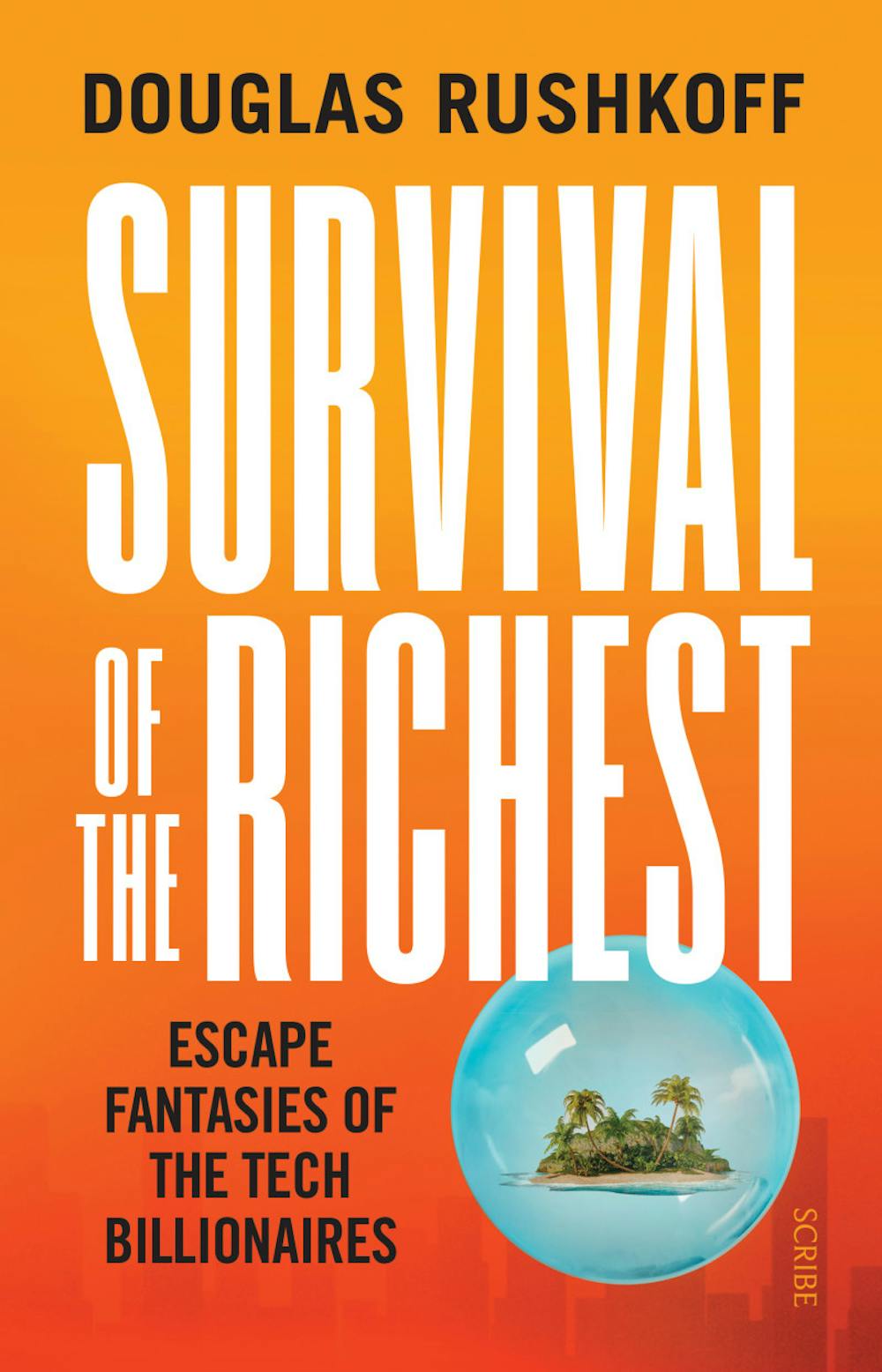
Douglas Rushkoff’s newest book, Survival of the Richest: Escape Fantasies of the Tech Billionaires, grew out of a brilliant 2018 Medium article of the same name, which went viral and had people (aka his US editor) clamouring for a full-length treatment.
Review: Survival of the Richest: Escape Fantasies of the Tech Billionaires – Douglas Rushkoff (Scribe Publications)
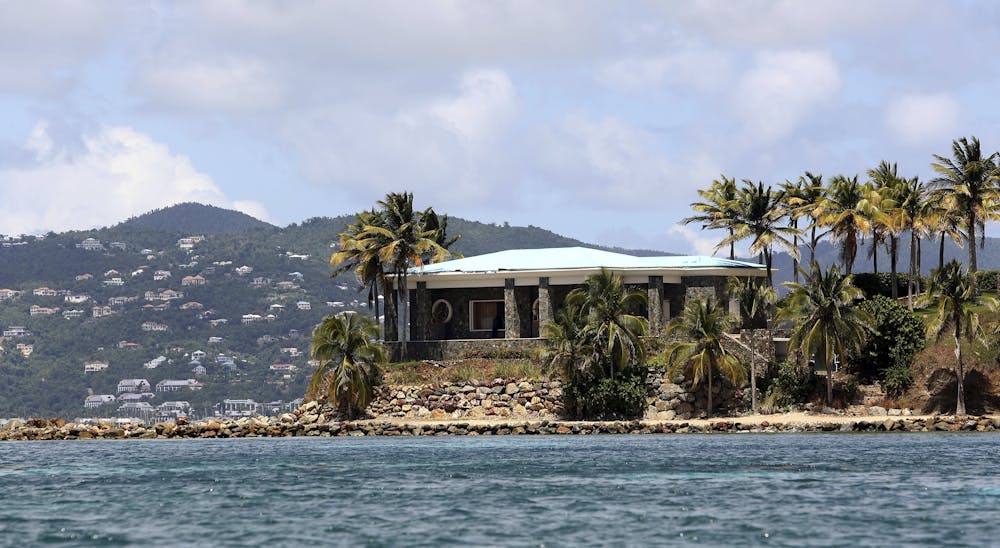 Jeffrey Epstein’s stone mansion on Little St James Island, in the US Virgin Islands.
Gabriel Lopez Albarran/AP
Read more:
How to survive a tactical nuclear bomb? Defence experts explain
Libertarian tech bros
Also, given how much other ground is covered, it is a little surprising that Rushkoff doesn’t name check that ur-text of cyber libertarianism, The Sovereign Individual: How to Survive and Thrive During the Collapse of the Welfare State (1997), by James Dale Davidson and William Rees-Mogg.
Davidson and Rees-Mogg dream of a time when individuals will be freed from the shackles of government, fiat currency (government-issued paper money, not backed by a commodity such as gold) and law in general. (William Rees-Mogg’s son, UK politician Jacob Rees-Mogg, was one of the most vocal cheerleaders for Brexit.)
In this thrilling new age, a “cognitive elite” will be able to rule – or ignore – the rest of the world, as they see fit. The Sovereign Individual is a hugely influential text in the start-up world; early Facebook backer, Paypal co-founder and conservative libertarian Peter Thiel, who is infamous in New Zealand for buying his citizenship and attempting to build luxury bunkers in the wilderness wrote the foreword to the 2020 reprint.
Survival of the Richest contains an excellent anecdote about Rushkoff being in a Zoom meeting with some tech developers on 6 January 2021, which is derailed by the breaking news of an attempted coup at the Capitol building (if you think that’s bad, wait till you hear how the programmers react!).
There’s this jaw-dropping factoid:
Jeff Bezos has a yacht with a helipad that serves as a companion yacht to his main yacht, which has large sails that would get in the way of his helicopter during takeoff and landing.
There are some extremely sharp reflections on artificial intelligence:
Whether AI will develop human and superhuman abilities in the next decade, century, millennium, if ever, may matter less right now than AI’s grip over the tech elite, and what this obsession tells us about The Mindset.
Regarding the prospect of artificial intelligence putting millions of people out of work in the near future, entrepreneurs such as Reid Hoffmann (LinkedIn CEO) and Mark Cuban (startup dude, billionaire) are worried that unemployed humans might coalesce into vengeful, billionaire-resenting mobs and attack them. Though they’re not worried about ruining all those people’s lives in the first place.
But – and this is a little ironic – there’s precious little biographical detail about Mark Cuban, or Reid Hoffmann, or any of the other bros in the book. Their function is purely as symbols of rapacious greed: embodiments of The Mindset. They are not examined as deeply flawed, but nonetheless complex human beings.
Journalist Baz MacDonald searches for evidence of the survival bunkers being shipped to New Zealand.
Read more:
What do we owe future generations? And what can we do to make their world a better place?
Dismissive rather than curious
In some ways, this is a question of method, and access. While Rushkoff mixes in some pretty wild company on his global speaking gigs, and has serendipitous encounters with some outlandish figures, he’s not doing any journalistic or enthnographic legwork here.
In short: he hasn’t interviewed any of tech billionaires he writes about. He doesn’t really know what motivates them – or at least, not all of it. When it comes to these wealthy, selfish people’s strategies to survive “the event”, Rushkoff is dismissive rather than curious. He is adamant that a billionaire’s prepper scheme – any scheme – just won’t work.
In Chapter One, he contends that “the probability of a fortified bunker actually protecting its occupants from the reality of, well, reality, is very slim”, because “the closed ecosystems of underground facilities are preposterously brittle”. If your underground hydroponic garden is overrun by mould or bacteria, there’s no “do-over”; you’ll just die.
Similarly,
small islands are utterly dependent on air and sea deliveries for basic staples […] the billionaires who reside in such locales are more, not less, dependent on complex supply chains than those of us embedded in industrial civilization.
Seasteading – the libertarian idea of building autonomous, floating mini-states, which operate outside of state control – is mentioned, but not discussed in any detail. And the modest proposals of Elon Musk, Richard Branson, Jeff Bezos et al. to commercialise space travel and colonise Mars are rejected with the observation “only trillionaires will actually make it to space to terraform planets, anyway”.
This might be true enough – but it’s also the ostensible subject of the book, and as such, perhaps worth spending a bit more time on.
How Space X and NASA plan to colonise Mars.Billionaire bunkers as metaphors
For Rushkoff, then, “the billionaire bunker strategy is less a viable strategy for apocalypse than a metaphor for this disconnected way of life” – a canny insight, to be sure. But those bunkers aren’t only metaphorical; they’re also very real, and large, and expensive, and fascinating in their logistic intricacies and (im)possibilities.
If Survival of the Richest had told us more about this insane infrastructure, and about the people who dreamed it up, we might be able to better understand the unmistakably phallic spaceships as symbols, too.
Jeffrey Epstein’s stone mansion on Little St James Island, in the US Virgin Islands.
Gabriel Lopez Albarran/AP
Read more:
How to survive a tactical nuclear bomb? Defence experts explain
Libertarian tech bros
Also, given how much other ground is covered, it is a little surprising that Rushkoff doesn’t name check that ur-text of cyber libertarianism, The Sovereign Individual: How to Survive and Thrive During the Collapse of the Welfare State (1997), by James Dale Davidson and William Rees-Mogg.
Davidson and Rees-Mogg dream of a time when individuals will be freed from the shackles of government, fiat currency (government-issued paper money, not backed by a commodity such as gold) and law in general. (William Rees-Mogg’s son, UK politician Jacob Rees-Mogg, was one of the most vocal cheerleaders for Brexit.)
In this thrilling new age, a “cognitive elite” will be able to rule – or ignore – the rest of the world, as they see fit. The Sovereign Individual is a hugely influential text in the start-up world; early Facebook backer, Paypal co-founder and conservative libertarian Peter Thiel, who is infamous in New Zealand for buying his citizenship and attempting to build luxury bunkers in the wilderness wrote the foreword to the 2020 reprint.
Survival of the Richest contains an excellent anecdote about Rushkoff being in a Zoom meeting with some tech developers on 6 January 2021, which is derailed by the breaking news of an attempted coup at the Capitol building (if you think that’s bad, wait till you hear how the programmers react!).
There’s this jaw-dropping factoid:
Jeff Bezos has a yacht with a helipad that serves as a companion yacht to his main yacht, which has large sails that would get in the way of his helicopter during takeoff and landing.
There are some extremely sharp reflections on artificial intelligence:
Whether AI will develop human and superhuman abilities in the next decade, century, millennium, if ever, may matter less right now than AI’s grip over the tech elite, and what this obsession tells us about The Mindset.
Regarding the prospect of artificial intelligence putting millions of people out of work in the near future, entrepreneurs such as Reid Hoffmann (LinkedIn CEO) and Mark Cuban (startup dude, billionaire) are worried that unemployed humans might coalesce into vengeful, billionaire-resenting mobs and attack them. Though they’re not worried about ruining all those people’s lives in the first place.
But – and this is a little ironic – there’s precious little biographical detail about Mark Cuban, or Reid Hoffmann, or any of the other bros in the book. Their function is purely as symbols of rapacious greed: embodiments of The Mindset. They are not examined as deeply flawed, but nonetheless complex human beings.
Journalist Baz MacDonald searches for evidence of the survival bunkers being shipped to New Zealand.
Read more:
What do we owe future generations? And what can we do to make their world a better place?
Dismissive rather than curious
In some ways, this is a question of method, and access. While Rushkoff mixes in some pretty wild company on his global speaking gigs, and has serendipitous encounters with some outlandish figures, he’s not doing any journalistic or enthnographic legwork here.
In short: he hasn’t interviewed any of tech billionaires he writes about. He doesn’t really know what motivates them – or at least, not all of it. When it comes to these wealthy, selfish people’s strategies to survive “the event”, Rushkoff is dismissive rather than curious. He is adamant that a billionaire’s prepper scheme – any scheme – just won’t work.
In Chapter One, he contends that “the probability of a fortified bunker actually protecting its occupants from the reality of, well, reality, is very slim”, because “the closed ecosystems of underground facilities are preposterously brittle”. If your underground hydroponic garden is overrun by mould or bacteria, there’s no “do-over”; you’ll just die.
Similarly,
small islands are utterly dependent on air and sea deliveries for basic staples […] the billionaires who reside in such locales are more, not less, dependent on complex supply chains than those of us embedded in industrial civilization.
Seasteading – the libertarian idea of building autonomous, floating mini-states, which operate outside of state control – is mentioned, but not discussed in any detail. And the modest proposals of Elon Musk, Richard Branson, Jeff Bezos et al. to commercialise space travel and colonise Mars are rejected with the observation “only trillionaires will actually make it to space to terraform planets, anyway”.
This might be true enough – but it’s also the ostensible subject of the book, and as such, perhaps worth spending a bit more time on.
How Space X and NASA plan to colonise Mars.Billionaire bunkers as metaphors
For Rushkoff, then, “the billionaire bunker strategy is less a viable strategy for apocalypse than a metaphor for this disconnected way of life” – a canny insight, to be sure. But those bunkers aren’t only metaphorical; they’re also very real, and large, and expensive, and fascinating in their logistic intricacies and (im)possibilities.
If Survival of the Richest had told us more about this insane infrastructure, and about the people who dreamed it up, we might be able to better understand the unmistakably phallic spaceships as symbols, too.
 Readers with specific interest in doomsday bunkers, and what they might represent in ideological terms, should seek out Bradley Garrett’s Bunker: Building for the End Times (2020). Mark O’Connell writes insightfully about Peter Thiel’s New Zealand boltholes as a symptom of extreme libertarian misanthropy in Notes from an Apocalypse: A Personal Journey to the End of the World and Back (2020).
Those wishing to learn more personal details about the computer nerds and venture captial bros who hold such outsized sway in contemporary life should read Max Chafkin’s 2021 biography The Contrarian: Peter Thiel and Silicon Valley’s Pursuit of Power, or Ashlee Vance’s 2015 book Elon Musk: How the Billionaire CEO of SpaceX and Tesla Is Shaping Our Future, as well as David Runciman and John Lanchester’s incisive essays about Thiel and Musk respectively in the London Review of Books.
Or, what the hell, rewatch The Social Network.
Authors: Tom Doig, Lecturer in Creative Writing, The University of Queensland
Readers with specific interest in doomsday bunkers, and what they might represent in ideological terms, should seek out Bradley Garrett’s Bunker: Building for the End Times (2020). Mark O’Connell writes insightfully about Peter Thiel’s New Zealand boltholes as a symptom of extreme libertarian misanthropy in Notes from an Apocalypse: A Personal Journey to the End of the World and Back (2020).
Those wishing to learn more personal details about the computer nerds and venture captial bros who hold such outsized sway in contemporary life should read Max Chafkin’s 2021 biography The Contrarian: Peter Thiel and Silicon Valley’s Pursuit of Power, or Ashlee Vance’s 2015 book Elon Musk: How the Billionaire CEO of SpaceX and Tesla Is Shaping Our Future, as well as David Runciman and John Lanchester’s incisive essays about Thiel and Musk respectively in the London Review of Books.
Or, what the hell, rewatch The Social Network.
Authors: Tom Doig, Lecturer in Creative Writing, The University of Queensland 
















