

Almost 200 nations are set to tackle climate change at COP27 in Egypt. Is this just a talkfest, or does the meeting actually matter?
- Written by Matt McDonald, Associate Professor of International Relations, The University of Queensland
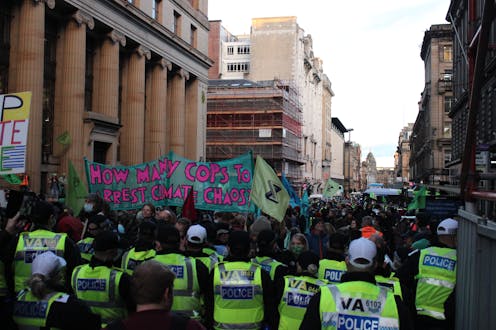
In a crucial meeting for tackling the climate crisis, almost 200 countries will come together in Egypt at the start of November for a “Conference of the Parties”, or COP27.
You may remember hearing about COP26 in Glasgow about this time last year. It was often hailed as our “last best chance” to keep global warming under 1.5℃ this century.
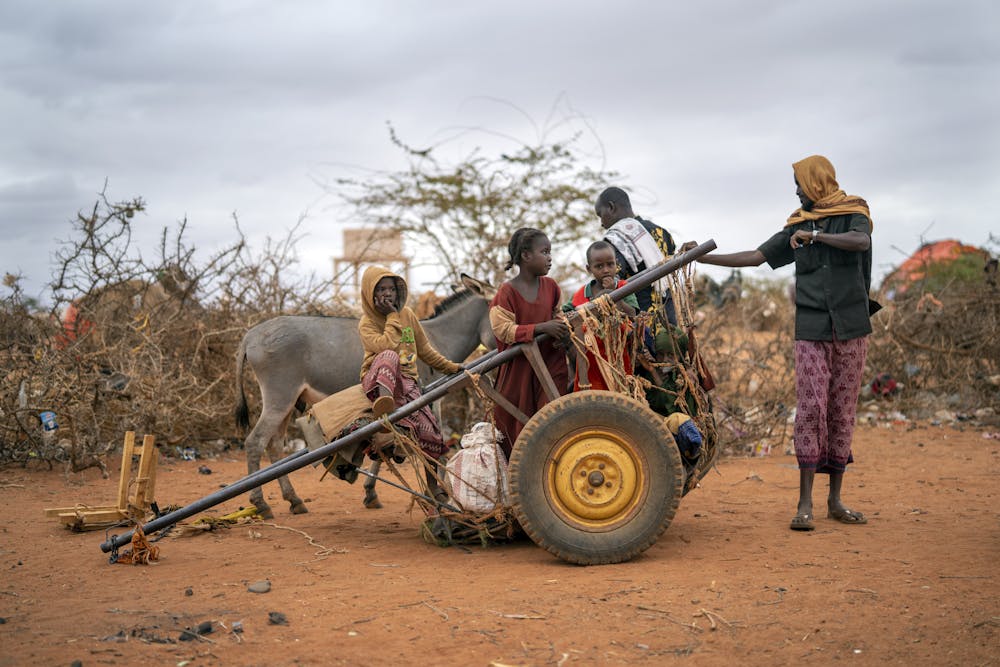
Since then, emissions have reached record levels after the pandemic downturn. And this year alone, we’ve seen dozens of catastrophic disasters ranging from drought in the Horn of Africa to floods in Pakistan, South Africa and Australia, and wildfires and heatwaves in Europe, the United States, Mongolia and South America, among others.
As United Nations Secretary-General António Guterres said this week:
On every climate front, the only solution is decisive action in solidarity. COP27 is the place for all countries […] to show they are in this fight and in it together.
So, as disasters intensify and war rages in Ukraine, what can we expect from this important summit?
What happens at COP meetings?
Conferences of the Parties are held under the United Nations Framework Convention on Climate Change (UNFCCC), and this year marks its 30th anniversary since it was established at the 1992 Rio Earth Summit. COP27 will be held in Egypt’s resort town of Sharm el-Sheikh.
COPs allow the international community to decide on a fair allocation of responsibility for addressing climate change. That is, who should lead in emissions reduction, who should pay for transitioning to new forms of energy production and who should compensate those already feeling the effects of climate change.
They also allow countries to agree on rules for meeting commitments, or processes to transfer funds and resources from wealthy countries to poorer ones. And they provide opportunities for sharing the latest climate change research.
Just as importantly, COP meetings focus international attention on the climate crisis and responses to it. This creates pressure for countries to make new commitments or, at least, to play a constructive role in negotiations.
Read more: We were at COP26: It had mixed results
Is COP27 less important than COP26?
In some ways, COP27 is less significant than COP26. That meeting, the first for two years after a COVID-19 delay, was the deadline for countries to commit new emissions reduction targets under the rules of the 2015 Paris Agreement.
The agreement allowed countries to make their own commitments, with the expectation these would be ratcheted up every five years. Glasgow was essentially a big test of whether the deal actually worked to increase commitments addressing climate change.
Glasgow was also significant because it was the first COP since the US returned to the fold after the Trump administration’s withdrawal.
By contrast, Sharm el-Sheikh is less a test of the agreement itself. It is more an opportunity for renewed commitment on mitigation and finance, and deciding on next steps for realising these commitments.
But there is still plenty at stake, and a few crucial points of debate loom.
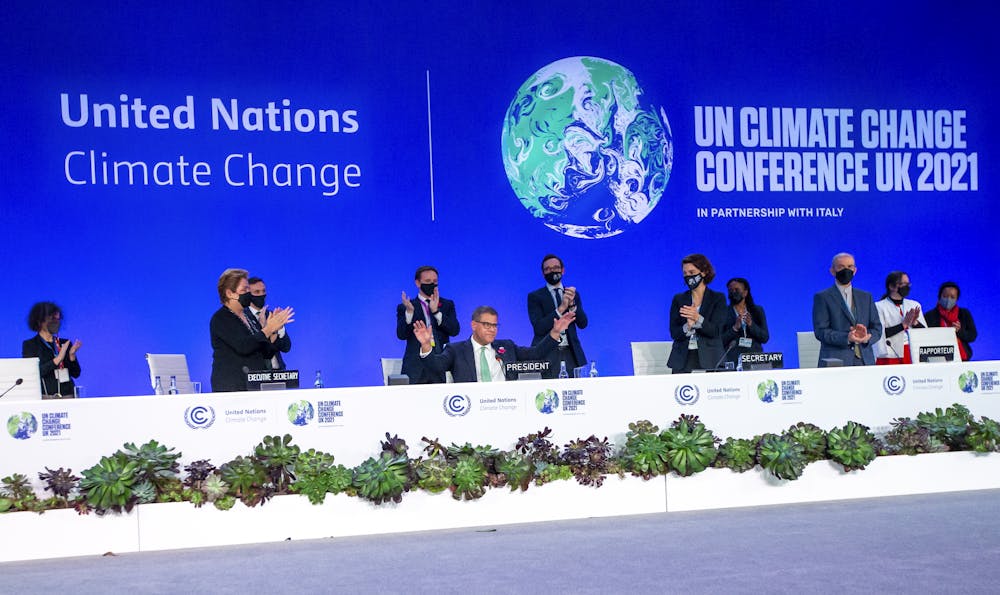 COP26 was the deadline for countries to commit new emissions reduction targets.
EPA/ROBERT PERRY
COP26 was the deadline for countries to commit new emissions reduction targets.
EPA/ROBERT PERRY
Will more countries make new commitments?
The first big test for COP27 will be whether countries make new emissions reduction commitments.
At Glasgow, more than 100 nations committed to new emissions reduction targets. But these commitments still fell well short of what’s needed to reach the goals agreed at Paris.
Instead of providing a pathway to limit global warming to 1.5℃ or 2℃, Glasgow commitments were shown to put the world on track for a 2.4℃ increase by the end of the century.
This would endanger people and ecosystems throughout the world. And that’s assuming those countries even meet the targets.
Despite this, in the lead up to COP27 fewer than 20 countries have provided updates, and only a handful of these have outlined new emissions reduction targets or net-zero commitments. Of these, only India and Australia are among emitters producing more than 1% of global carbon dioxide emissions.
Show us the money
Three big issues around climate finance – funds to support mitigation and adaptation – also loom in Egypt.
The first is the failure of developed states to make good on their 2009 commitment to provide US$100 billion per year in funds for developing states. This issue was raised at Glasgow, but hasn’t gone anywhere since. And there’s no prospect of this target being met in 2022.
Second, developing countries, including many Pacific nations, will call for greater focus on finance for adapting to the impacts of global warming.
So far, most of the funds have been channelled to mitigation projects, focused on helping developing states reduce their emissions. But as climate change becomes increasingly felt in developing states, funding for adaptation has become even more important.
Third, the Paris Agreement included recognition of likely “loss and damage”. This refers to destruction wreaked by climate change, where mitigation and adaptation efforts were insufficient to prevent that harm.
At the time, there was no commitment to provide compensation for loss and damage. In Egypt, developing states will likely push harder for financial commitments from the developed world.
The developed world has contributed most significantly to climate change and can better pay to insulate from its effects. But the developing world is least responsible, more likely to feel climate effects and least able to pay for managing those effects.
With the location of these talks in Africa, we can expect these issues to be particularly prominent at COP27.
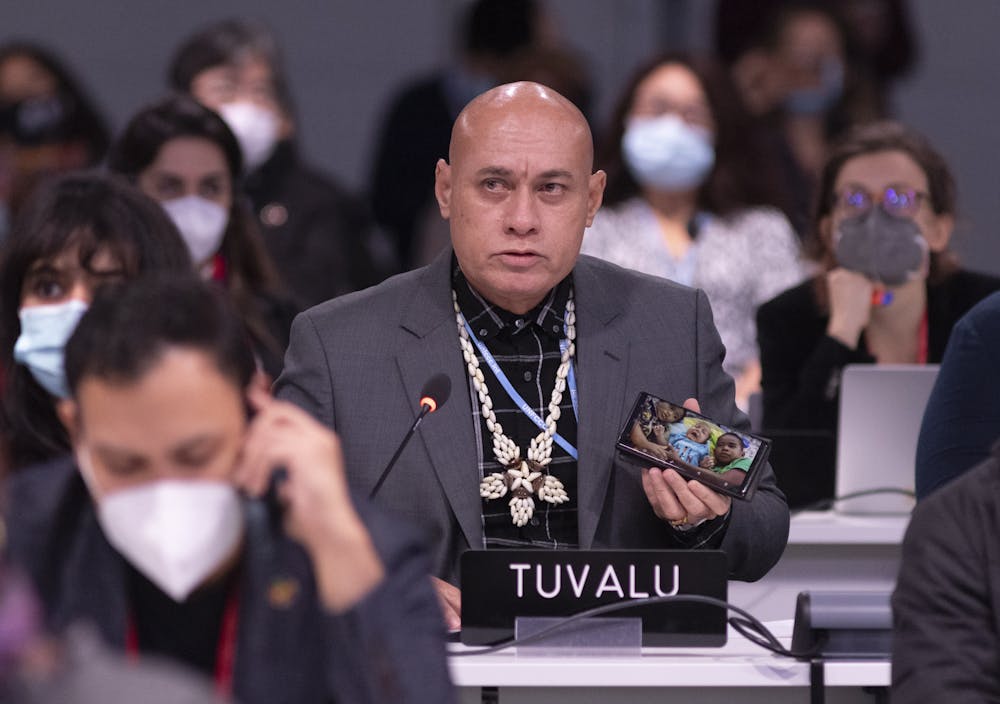 A Tuvalu delegate speaks during a plenary session at COP26 in Glasgow.
EPA/ROBERT PERRY
A Tuvalu delegate speaks during a plenary session at COP26 in Glasgow.
EPA/ROBERT PERRY
The storm clouds of international politics
While global agreement on climate action has been difficult to achieve in the past, recent international politics cast further shadow over the prospects for genuine cooperation at COP27.
First, Russia’s invasion of Ukraine has led to rising global inflation, soaring energy prices and increasing international concerns about energy access. All these have taken attention – and even potential funding – from the imperative of climate action.
It also has meant Russia, a key player in international climate talks, could play a spoiler role.
Second, China, the world’s largest emitter, looks similarly disaffected with current global politics. This has been evident in its approach to international climate politics.
For example, in Glasgow, China made a breakthrough agreement with the US on climate cooperation. But this was suspended soon after US House of Representative Speaker Nancy Pelosi visited Taiwan in August 2022.
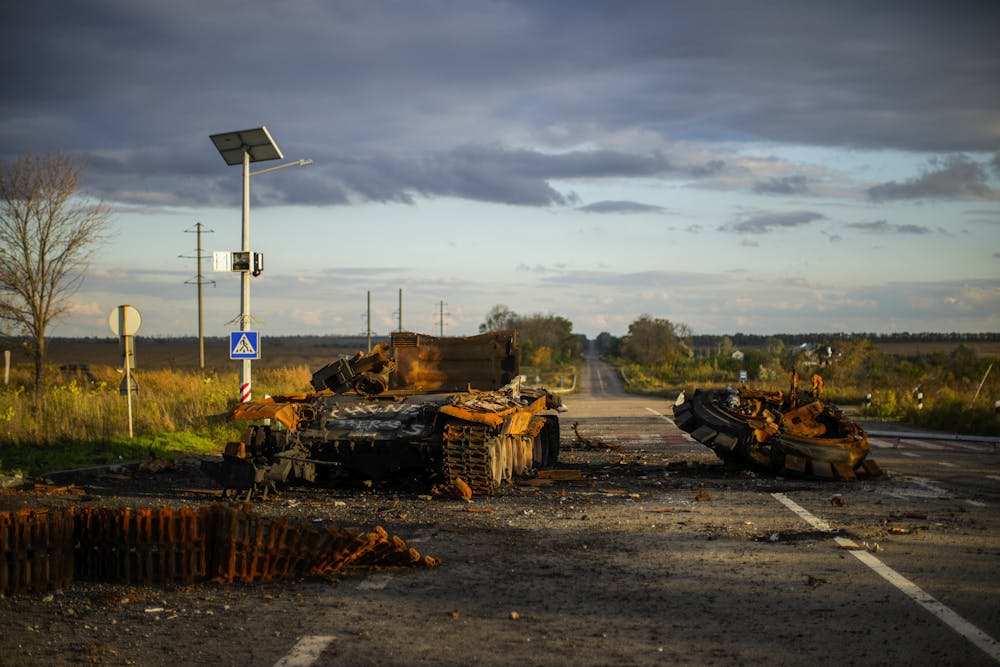 Russia’s invasion of Ukraine casts a shadow over COP27.
AP Photo/Francisco Seco
Russia’s invasion of Ukraine casts a shadow over COP27.
AP Photo/Francisco Seco
We’re running out of time
Egypt’s Minister for International Cooperation announced in May that the focus of international action at COP27 should be moving from “pledges to implementation”.
While this includes targets to reduce emissions, the hosts have also been clear about the need for developed states to make good on meeting their financial commitments. The onset of climate change has clearly made this an urgent concern for many in the developing world who are already feeling its effects.
And clearly, these talks are a pivotal moment for the planet, as we risk running out of time in our efforts to avoid climate catastrophe.
Authors: Matt McDonald, Associate Professor of International Relations, The University of Queensland

















