

global demand for exotic pets is driving a massive trade in unprotected wildlife
- Written by: Freyja Watters, PhD candidate, University of Adelaide
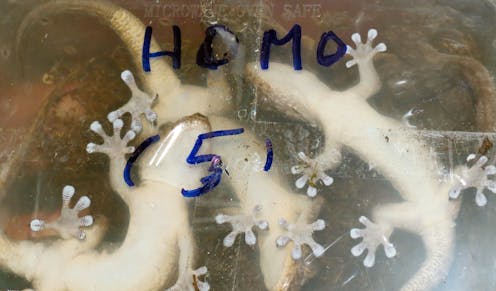
Global demand for exotic pets is increasing, a trend partly caused by social media and a shift from physical pet stores to online marketplaces.
The United States is one of the biggest markets for the wildlife trade. And our new research has identified an astonishing number of unregulated wild-caught animals being brought into the US – at a rate 11 times greater than animals regulated and protected under the relevant global convention.
Wildlife trade can have major negative consequences. It can threaten the wild populations from which animals and plants are harvested, and introduce novel invasive species to new environments. It can also lead to diseases transmitted from wildlife to humans and threaten the welfare of trafficked animals.
Tackling this problem requires an international effort – particularly by rich nations where the demand for exotic pets is greatest.
Shining a light on the pet market
Most live animals transported through the wildlife trade are destined for the global, multi-billion dollar exotic pet market. Captive breeding supplies a portion of this market, but many species are collected from the wild – often illegally.
Animals such as otters, slow lorises and galagos or “bushbabies” are frequently depicted on social media as cute, and with human-like feelings and behaviours. This helps create demand for such species as pets which drives both the illegal and legal wildlife trades.
Non-native animals frequently smuggled into Australia in the past, include the corn snake, leopard gecko and red-eared slider turtle. Reptiles and birds are among the most commonly trafficked species because they can be easily transported.
Species deemed at risk from international trade are regulated through the Convention on International Trade in Endangered Species of Wild Fauna and Flora (CITES). It aims to ensure sustainable and traceable legal international trade.
But the convention lists less than 10% of all described plants and terrestrial vertebrates, and less than 1% of all fish and invertebrate species. No international regulatory framework exists to monitor the trade of the many unlisted species.
Read more: Before you hit 'share' on that cute animal photo, consider the harm it can cause
Australia has rigorous regulations for exotic pet ownership and trade. Broadly, our native wildlife cannot be commercially exported.
However, Australia’s fauna is poached from the wild and illegally exported for the international pet market. Once the animal is smuggled out of Australia, its trade in recipient countries is often not monitored or restricted.
For example, research last year showed four subspecies of Australia’s shingleback lizard – one of which is endangered – were being illegally extracted from the wild and smuggled out of the country, to be sold across Asia, Europe and North America.
This lack of overseas regulation prompted the former Morrison government to push for 127 native reptile species targeted by international wildlife smugglers to be listed under CITES. They include blue tongue skinks and numerous gecko species.
But in the meantime, the global illegal wildlife trade continues. Our new research analysed the extent of this, by focusing on the movement of unlisted species to and from the US.
What we found
The US is one of the few countries that maintains detailed records of all declared wildlife trade, including species not listed under CITES.
We examined a decade of data on wild-harvested, live vertebrate animals entering the US. Most would have been headed for the pet trade. We found 3.6 times the number of unlisted species in US imports compared with CITES-listed species – 1,356 versus 378 species.
Overall, 8.84 million animals from unlisted species were imported – about 11 times more than animals from CITES-listed species. More than a quarter of unlisted species faced conservation threats – including those with declining populations and those threatened with extinction.
For example, we found a substantial trade of the unlisted Asian water dragon. These bright green lizards are native to Thailand, Vietnam, Cambodia, Laos, Burma and southern China, and are considered vulnerable.
In the decade to 2018, more than 575,000 Asian water dragons were imported to the US from Vietnam. The species has been proposed for inclusion in CITES. But decades of unregulated global trade poses a major threat to the survival of native populations.
Read more: Lizard in your luggage? We're using artificial intelligence to detect wildlife trafficking
How do we fix this?
Our study highlights the urgent need to monitor all traded wildlife species, not just those listed under CITES.
The biodiversity of life on Earth is under enormous pressure. Given this, and the other harms caused by the wildlife trade, this lack of regulation and monitoring is unacceptable.
For a species to be considered for listing under CITES, a national government must demonstrate that regulation is needed to prevent trade-related declines. But if trade in the species has never been monitored, how can that need be proven?
Sadly, the trade of many species is not formally regulated until it’s too late for their wild populations. Clearly, tighter regulation is needed to prevent this decline.
Traded wildlife predominantly flows from lower-income to higher-income countries. Many source countries do not possess the frameworks needed to monitor the harvest and export of unlisted species.
So what should be done? First, all nations should follow the lead of the US and record species-level data for all wildlife imported and exported. This information should be gathered as part of a standardised data management system.
Such a system would increase compliance with the rules and make the origin of wildlife easier to trace It would allow trade data to be shared and integrated between countries and allow timely assessment of species which may need further protection.
And second, affluent countries – where demand for exotic pets is largest – must take the lead on sustainable trade practices. This should include supporting supply countries and pushing for better data collection.
Such measures are vital to protecting both wildlife and human wellbeing.
Authors: Freyja Watters, PhD candidate, University of Adelaide


















