

My kid has gone vegetarian. What do I need to know (especially if they're a picky eater)?
- Written by: Evangeline Mantzioris, Program Director of Nutrition and Food Sciences, Accredited Practising Dietitian, University of South Australia

So your child has just announced they’ve gone vegetarian, on top of already being a picky eater. What now?
Generally, a well balanced vegetarian diet is low in saturated fat and rich in the vitamins, minerals, anti-oxidants and fibre.
Here are some evidence-based tips to ensure your growing child gets the nutrients they need, and how to help broaden their tastes.
What kind of vegetarian are they?
A vegetarian diet usually excludes all animal products except for dairy (milk, cheese, yoghurt) and eggs. However, there can be variations.
You might start by asking your child what’s in and what’s out according to their new diet. Will they still eat eggs, dairy, seafood or chicken? Don’t assume – your child’s interpretation of “vegetarian” may be slightly different to yours.
Read more: Ultra-processed foods: it's not just their low nutritional value that's a concern
Careful planning required
Meat provides some critical nutrients, so some careful planning will be required. Children are still growing and need more nutrients (relative to their bodyweight) than adults, even though they may consume less food overall.
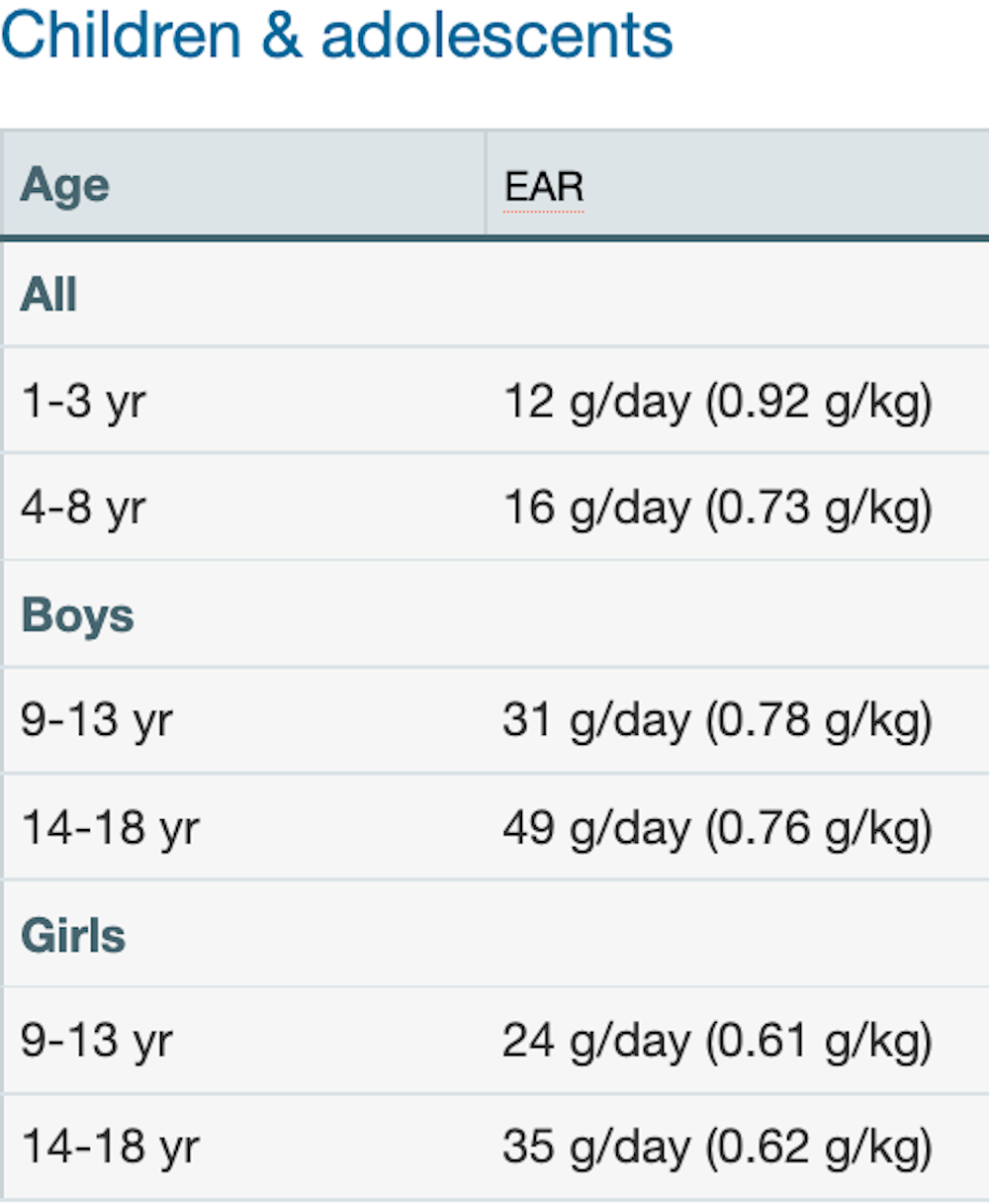
Let’s start with protein. In children aged 4-8yrs, the estimated average requirement (sometimes shortened to EAR) is 0.73 grams of protein per kilogram of body weight per day.
Boys aged between 9 and 13 years need about 0.78g of protein per kilogram of bodyweight, while boys aged between 14 and 18 years need about 0.76g of protein per kilogram of bodyweight per day.
Girls need about 0.61g of protein per kilogram of bodyweight between the age of 9 and 13 years and 0.62g of protein per kilogram of bodyweight between the ages of 14 and 18 years.
By contrast, men need about 0.68g of protein per kilogram of bodyweight and women need about 0.60g of protein per kilogram of bodyweight.
There are still many good sources of protein for vegetarians. Each of these contain about 10g of protein:
Meat is a good source of iron and zinc, so careful planning is needed to ensure vegetarians don’t miss out on these. Iron is of particular concern for menstruating girls, while zinc is of particular concern for boys for sexual maturation.
To maximise the intake of iron and zinc, try to ensure your child is eating wholegrain foods over refined grains. For example 100g of a multigrain bread roll contains 4.7mg of iron and 1.7mg of zinc. By contrast, 100g of a white bread roll contains 1.26mg of iron and 0.82mg of zinc.
Lentils, beans, nuts and fortified cereals like Weet-Bix are good sources of iron and zinc.
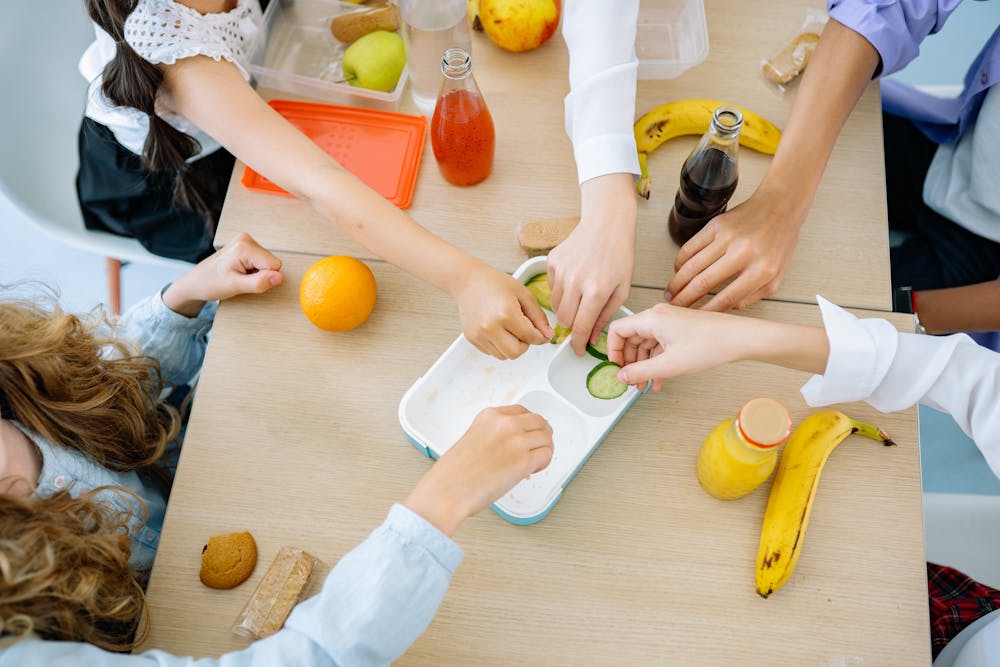 A healthy vegetarian diet does require some planning.
Photo by Yan Krukov/Pexels, CC BY
A healthy vegetarian diet does require some planning.
Photo by Yan Krukov/Pexels, CC BY
Read more: How to get the nutrients you need without eating as much red meat
Ask your child why they’ve gone vegetarian
It is important to explore your child’s reason for going vegetarian; it may allow for some compromises.
For example, if animal welfare is the top concern, see if your child might agree to a compromise whereby only one (large) animal is butchered and frozen, to be consumed as required. The rationale here is that only one animal has been killed rather than many if you buy meat from smaller animals weekly at the butcher or supermarket.
If your child is concerned about environmental impact and emissions, see if the whole family could cut back on meat so more emissions are saved and your child still consumes some meat occasionally.
Beef and lamb in particular are big contributors to greenhouse gas emissions, so swapping to fish and chicken may be another strategy. You can replace meat with beans, lentils and nuts. As well as containing protein, these are also high in fibre and anti-oxidants.
Or, you might consider getting backyard chickens so food scraps are used rather than going to land fill, which will further reduce emissions and provide the family with eggs (a good source of protein).
Reducing consumption of some processed and ultra-processed foods is another way to reduce environmental impact; the production, processing and transport of these foods requires a lot of energy. Cutting back on processed foods is also a healthier choice for the whole family.
If the reason is taste preferences, keep trialling various meats and different cuts. Your child’s tastes will fluctuate with time. You might try new cooking techniques, different flavours, or new herbs and spices.
Get the kids involved
Involving your child in grocery purchasing, recipe selection and cooking may help broaden their tastes and ensure they’re hitting the right food groups.
Depending on their age, you may also encourage your child to research evidence-backed and reliable websites to find ideal replacement foods.
The Australian Guide to Healthy Eating has good information on food groups and non-meat protein sources such as beans, lentils, nuts and tofu.
For more detailed information, try the Australian Food Composition Database (formerly known as NUTTAB), an Australian government site that outlines nutrient levels in food. The National Health and Medical Research Council website may also be helpful.
 Involving your child in grocery purchasing, selection of recipes and cooking may help broaden their tastes.
Shutterstock
Involving your child in grocery purchasing, selection of recipes and cooking may help broaden their tastes.
Shutterstock
Other tips for picky eaters?
There are some good, research based strategies to help with picky eating.
You might need to offer your child new and unfamiliar foods many times before they try it. Don’t pressure them to eat it, but do make sure it appears on the plate again in future.
Model eating new or unfamiliar foods yourself and make sure your family’s diet is balanced.
However, a vegetarian diet with too much processed and ultra-processed foods is still going to be unhealthy.
If you are still concerned about your child’s eating, consult an accredited practising dietitian for personalised advice.
Authors: Evangeline Mantzioris, Program Director of Nutrition and Food Sciences, Accredited Practising Dietitian, University of South Australia
&media=https://www.modernaustralian.com/https://images.theconversation.com/files/488455/original/file-20221006-22-fwbh49.jpg?ixlib=rb-1.1.0&rect=0%2C14%2C4874%2C2429&q=45&auto=format&w=496&fit=clip&description=My%20kid%20has%20gone%20vegetarian.%20What%20do%20I%20need%20to%20know%20(especially%20if%20they're%20a%20picky%20eater)? "Pin It")

















