

why Australia is the world leader in mammal extinctions, and what to do about it
- Written by: Euan Ritchie, Professor in Wildlife Ecology and Conservation, Centre for Integrative Ecology, School of Life & Environmental Sciences, Deakin University
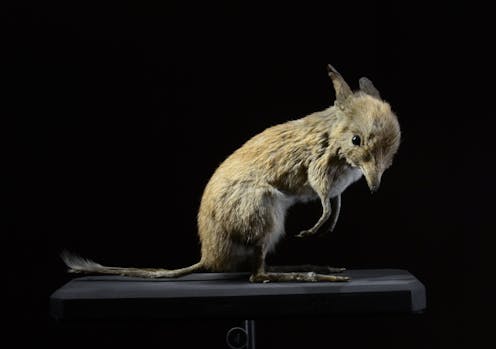
In fewer than 250 years, the ravages of colonisation have eroded the evolutionary splendour forged in this continent’s relative isolation. Australia has suffered a horrific demise of arguably the world’s most remarkable mammal assemblage, around 87% of which is found nowhere else.
Being an Australian native mammal is perilous. Thirty-eight native mammal species have been driven to extinction since colonisation and possibly seven subspecies. These include:
- Yirratji (northern pig-footed bandicoot)
- Parroo (white-footed rabbit-rat)
- Kuluwarri (central hare-wallaby)
- Yallara (lesser bilby)
- Tjooyalpi (lesser stick-nest rat)
- Tjawalpa (crescent nailtail wallaby)
- Yoontoo (short-tailed hopping-mouse)
- Walilya (desert bandicoot)
- toolache wallaby
- thylacine
This makes us the world leader of mammal species extinctions in recent centuries. But this is far from just an historical tragedy.
A further 52 mammal species are classified as either critically endangered or endangered, such as the southern bent-wing bat, which was recently crowned the 2022 Australian Mammal of the Year. Fifty-eight mammal species are classed as vulnerable.
Read more: 'The sad reality is many don't survive': how floods affect wildlife, and how you can help them
Many once-abundant species, some spread over large expanses of Australia, have greatly diminished and the distributions of their populations have become disjointed. Such mammals include the Mala (rufous hare-wallaby), Yaminon (northern hairy-nosed wombat), Woylie (brush-tailed bettong) and the Numbat.
This means their populations are more susceptible to being wiped out by chance events and changes – such as fires, floods, disease, invasive predators – and genetic issues. The ongoing existence of many species depends greatly upon predator-free fenced sanctuaries and offshore islands.
Without substantial and rapid change, Australia’s list of extinct mammal species is almost certain to grow. So what exactly has gone so horribly wrong? What can and should be done to prevent further casualties and turn things around?
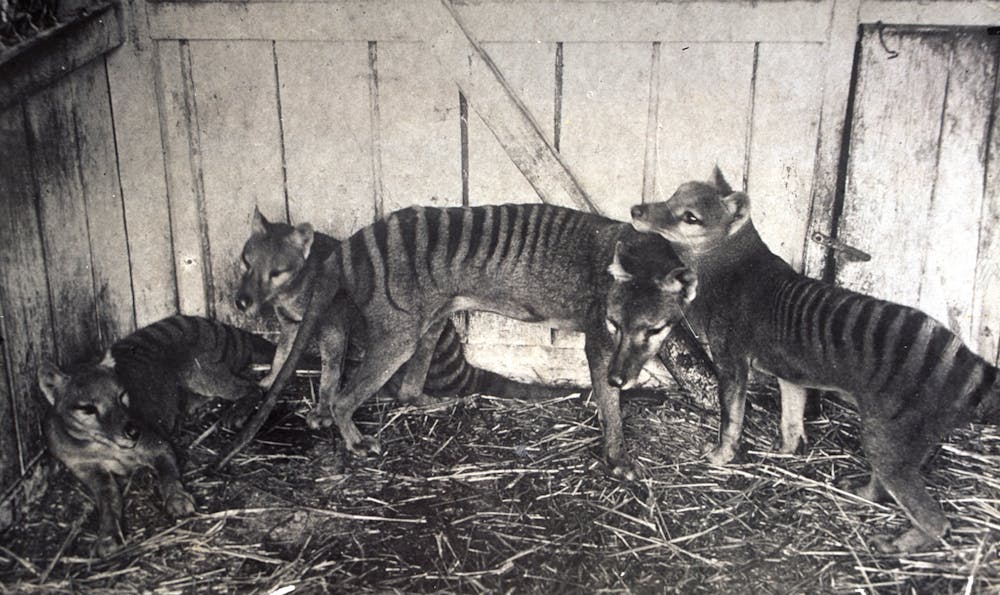
Up to two mammal species gone per decade
Australia’s post-colonisation mammal extinctions may have begun as early as the 1840s, when it’s believed the Noompa and Payi (large-eared and Darling Downs hopping mice, respectively) and the Liverpool Plains striped bandicoot went extinct.
Many extinct species were ground dwellers, and within the so-called “critical weight range” of between 35 grams and 5.5 kilograms. This means they’re especially vulnerable to predation by cats and foxes.
Small macropods (such as bettongs, potoroos and hare wallabies) and rodents have suffered most extinctions – 13 species each, nearly 70% of all Australia’s mammal extinctions.
Eight bilby and bandicoot species and three bats species are also extinct, making up 21% and 8% of extinctions, respectively.
The most recent fatalities are thought to be the Christmas Island pipistrelle and Bramble Cay melomys, the last known record for both species was 2009. The Bramble Cay melomys is perhaps the first mammal species driven to extinction by climate change.
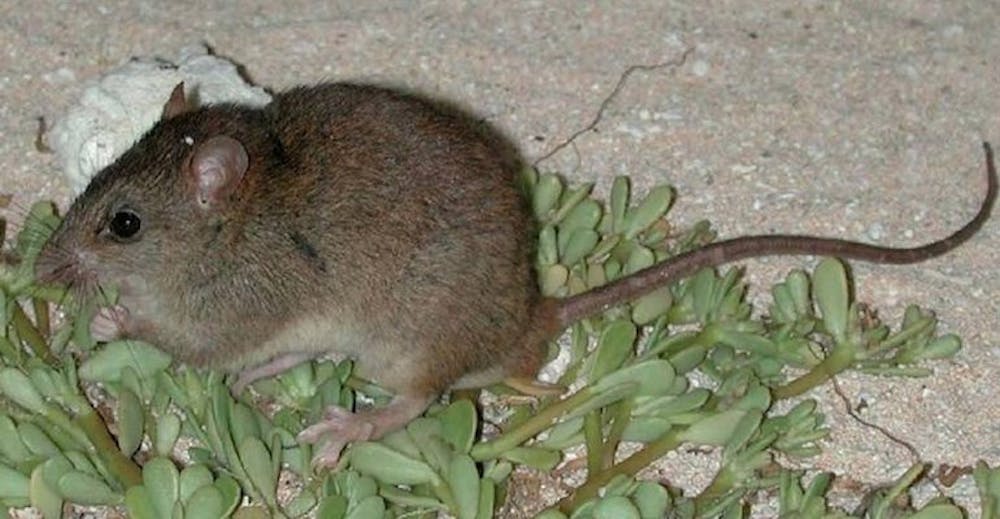 Bramble Cay melomys was declared extinct in 2019.
Ian Bell, EHP, State of Queensland, CC BY-SA
Bramble Cay melomys was declared extinct in 2019.
Ian Bell, EHP, State of Queensland, CC BY-SA
Overall, research estimates that since 1788, about one to two land-based mammal species have been driven to extinction each decade.
When mammals re-emerge
It’s hard to be certain about the timing of extinction events and, in some cases, even if they’re actually extinct.
For example, Ngilkat (Gilbert’s potoroo), the mountain pygmy possum, Antina (the central rock rat), and Leadbeater’s possum were once thought extinct, but were eventually rediscovered. Such species are often called Lazarus species.
Our confidence in determining whether a species is extinct largely depends on how extensively and for how long we’ve searched for evidence of their persistence or absence.
Read more: Meet the Lazarus creatures – six species we thought were extinct, but aren't
Modern approaches to wildlife survey such as camera traps, audio recorders, conservation dogs and environmental DNA, make the task of searching much easier than it once was.
But sadly, ongoing examination and analysis of museum specimens also means that we’re still discovering species not known to Western science and that tragically are already extinct.
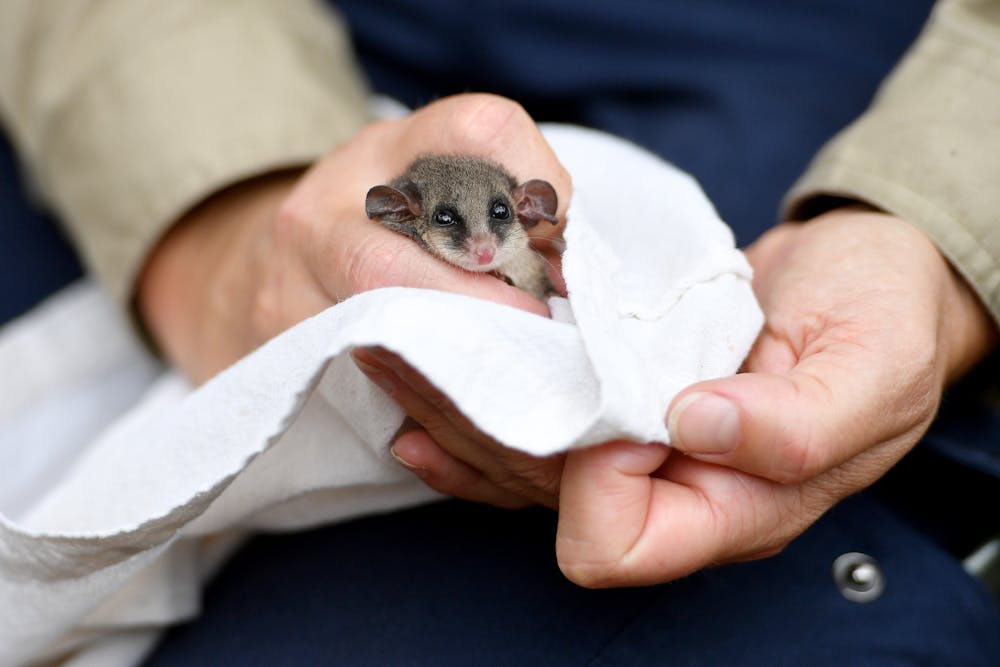 Mountain pygmy possums were once considered extinct.
AAP Image/Dan Himbrechts
Mountain pygmy possums were once considered extinct.
AAP Image/Dan Himbrechts
What’s driving their demise?
Following colonisation, Australia’s landscapes have suffered extensive, severe, sustained and often compounding blows. These include:
And importantly, the ongoing persecution of Australia’s largest land-based predator: the dingo. In some circumstances, dingoes may help reduce the activity and abundance of large herbivores and invasive predators. But in others, they may threaten native species with small and restricted distributions.
Read more: 1.7 million foxes, 300 million native animals killed every year: now we know the damage foxes wreak
Through widespread land clearing, urbanisation, livestock grazing and fire, some habitats have been obliterated and others dramatically altered and reduced, often resulting in less diverse and more open vegetation. Such simplified habitats can be fertile hunting grounds for red foxes and feral cats to find and kill native mammals.
To make matters worse, European rabbits compete with native mammals for food and space. Their grazing reduces vegetation and cover, endangering many native plant species in the process. And they are prey to cats and foxes, sustaining their populations.
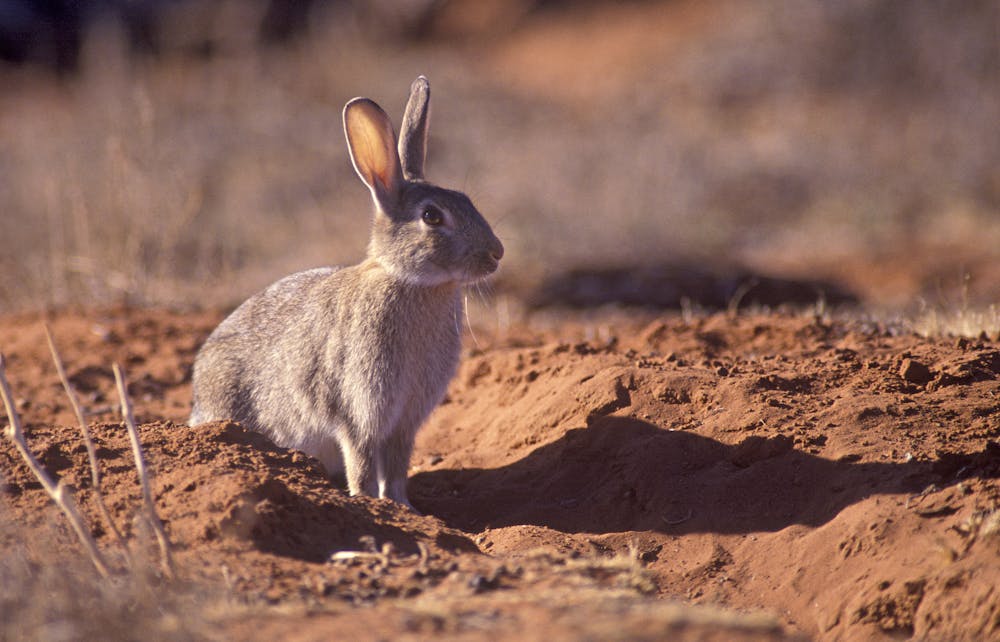 Feral rabbits reduce the ground cover of vegetation.
While cats and foxes, fire, and habitat modification and destruction are often cited as key threats to native mammals, it’s important to recognise how these threats and others may interact. They must be managed together accordingly.
For instance, reducing both overgrazing and preventing frequent, large and intense fires may help maintain vegetation cover and complexity. In turn, this will make it harder for invasive predators to hunt native prey.
Read more: Don't underestimate rabbits: these powerful pests threaten more native wildlife than cats or foxes
What must change?
Above all else, we genuinely need to care about what’s transpiring, and to act swiftly and substantially to prevent further damage.
As a mammalogist of some 30 years, the continuing demise of Australia’s mammals is gut-wrenching and infuriating. We have the expertise and solutions at hand, but the frequent warnings and calls for change continue to be met with mediocre responses. At other times, a seemingly apathetic shrug of shoulders.
So many species are now gone, probably forever, but so many more are hurtling down the extinction highway because of sheer and utter neglect.
Encouragingly, when we care for and invest in species, we can turn things around. Increasing numbers of Numbats, Yaminon and eastern-barred bandicoots provide three celebrated examples.
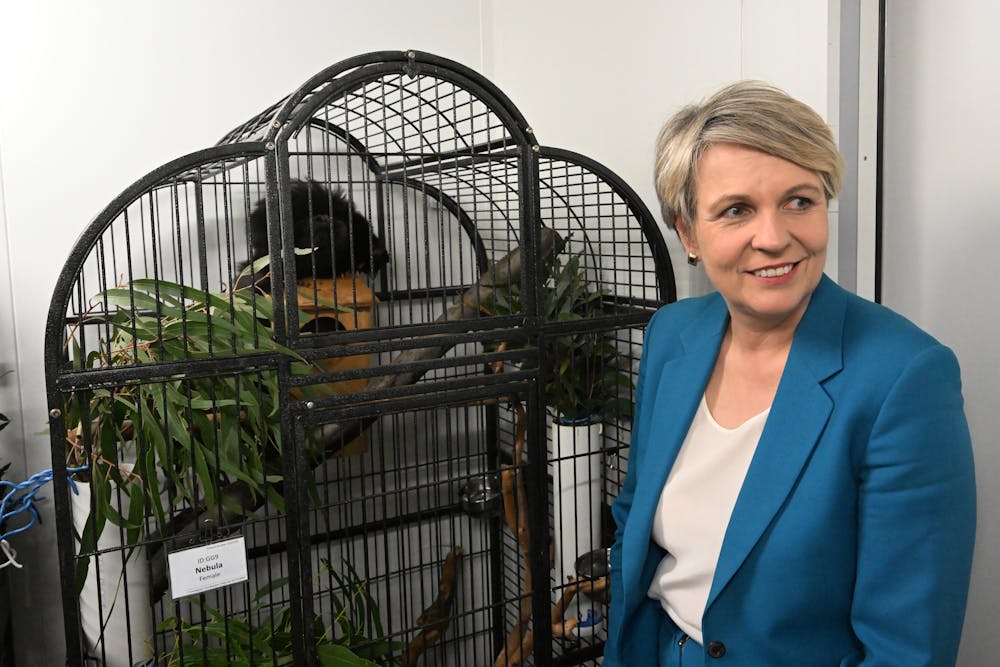 Environment minister Tanya Plibersek poses with a greater glider, a mammal in increasing danger of extinction as its forest habitat continues to be chopped down.
AAP Image/Mick Tsikas
Environment minister Tanya Plibersek poses with a greater glider, a mammal in increasing danger of extinction as its forest habitat continues to be chopped down.
AAP Image/Mick Tsikas
Improving the prognosis for mammals is eminently achievable but conditional on political will. Broadly speaking, we must:
- minimise or remove their key threats
- align policies (such as energy sources, resource use, and biodiversity conservation)
- strengthen and enforce environmental laws
- listen to, learn from and work with First Nations peoples as part of healing Country
- invest what’s actually required – billions, not breadcrumbs.
The recently announced Threatened Species Action plan sets an ambitious objective of preventing new extinctions. Of the 110 species considered a “priority” to save, 21 are mammals. The plan, however, is not fit for purpose and is highly unlikely to succeed.
Political commitments appear wafer thin when the same politicians continue to approve the destruction of the homes critically endangered species depend upon. What’s more, greenhouse gas emissions reduction targets are far below what climate scientists say are essential and extremely urgent.
There’s simply no time for platitudes and further dithering. Australia’s remaining mammals deserve far better, they deserve secure futures.
Authors: Euan Ritchie, Professor in Wildlife Ecology and Conservation, Centre for Integrative Ecology, School of Life & Environmental Sciences, Deakin University


















