

George Orwell is everywhere, but Nineteen Eighty-Four is not a reliable guide to contemporary politics
- Written by: Chris Fleming, Associate Professor in the School of Humanities and Communication Arts, Western Sydney University
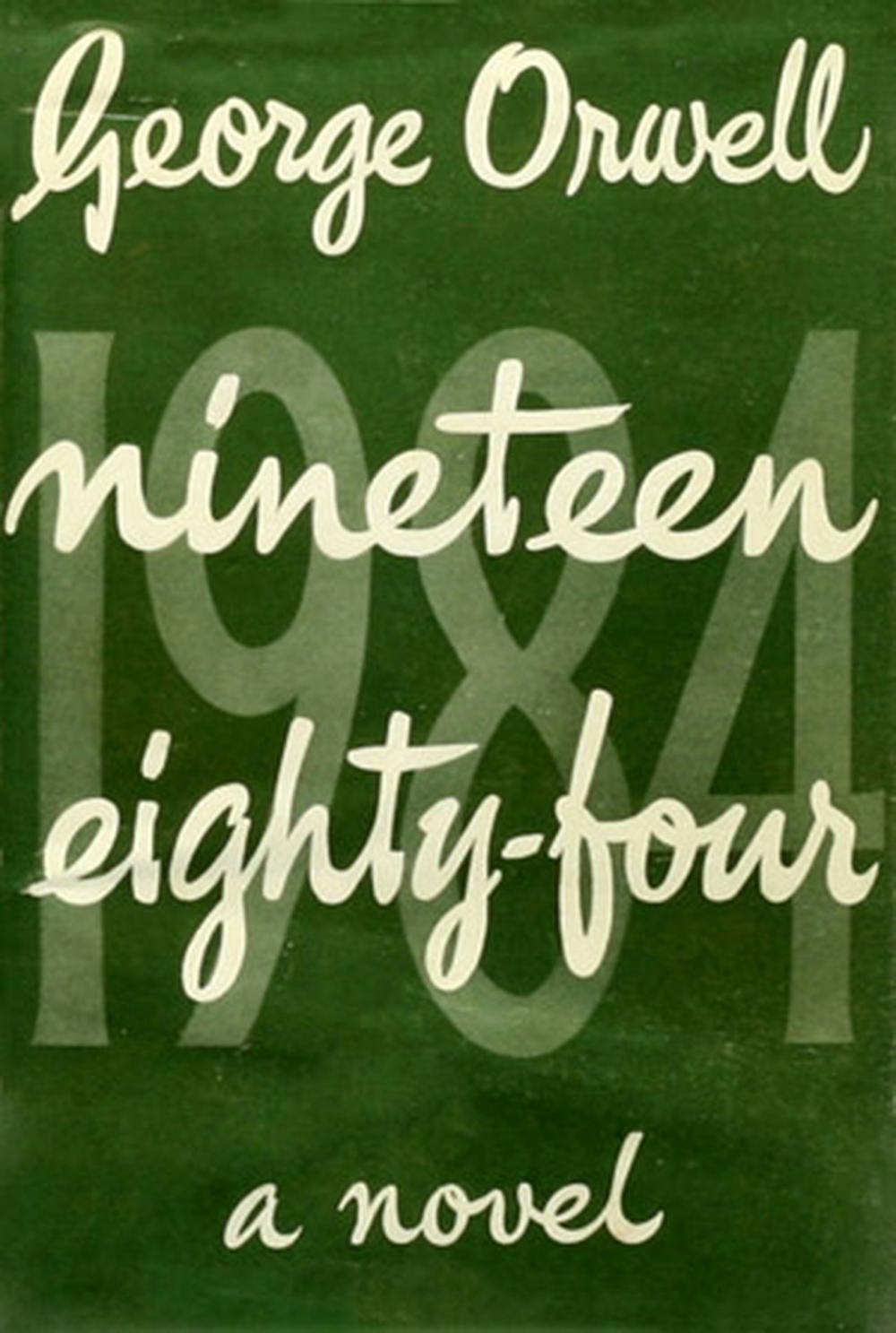
In January 2017, Donald Trump’s advisor Kellyanne Conway was quizzed on White House press secretary Sean Spicer’s false claims about the number of attendees at the president’s inauguration. When pressed on why Spicer would “utter a provable falsehood”, Conway said that Spicer was offering “alternative facts”.
Her wording was widely characterised as “Orwellian”. Everywhere from Slate to the New York Times to USA Today, journalists were linking the new administration to George Orwell’s dystopian fiction. Less than a week after Conway’s claim, the sales of Orwell’s Nineteen Eighty-Four had gone up an estimated 9,500%.
In a serious case of “I know you are but what am I?”, Republicans have gotten in on the act, accusing the left of being the fulfilment of Orwell’s dark prophesy. In April this year, for instance, Donald Trump Jr. tweeted: “Historically, was there ever a despotic regime that didn’t have the equivalent of a Ministry of Truth?”
Almost everyone in every quarter sees Orwellian undertones in the manoeuvrings of their opponents. Like Elvis, Orwell has been spotted everywhere.
But we should be suspicious, not simply because the designation is thrown around so freely and is plastic enough to fit almost all political phenomena indifferently, but because one of the legacies of Nineteen Eighty-Four itself is to leave us with a more finely tuned sense of what such propaganda looks like. Orwellian strategies are harder to propagate because of, well, the overwhelming success of Nineteen Eighty-Four.
The Orwellian paradox
Some historical nuance is required. Orwell was responding to mid-twentieth century political regimes – Stalinist Russia, in particular. He was ringing the alarm bells on a new phenomenon: state control had moved beyond speech to thought and perception. Winston Smith, the protagonist of Nineteen Eighty-Four, reflects:
The party told you to reject the evidence of your eyes and ears. It was their final, most essential command.
 Russian theorist Alexander Dugin, author of The Fourth Political Theory.
Mehdi Bolourian/Wikimedia Commons
If we want to understand what is going on here, Orwell is not our guide. We would do better to turn to the writings of Russian political theorist Alexander Dugin.
Dugin is an ideologue who aligns himself with Vladimir Putin’s visionary sense of Russian destiny. While he dismisses the suggestion that he is “Putin’s brain”, he is the most influential analyst of the cultural environment Putin has sought to create.
In his book The Fourth Political Theory, Dugin makes the case for a new political direction, one that moves away from the modernist regimes of Marxism and fascism, whose extremes of ideological conformity he calls “uninteresting” and “worthless”. The literalism of such regimes of control, he says, makes them “entirely useless”.
Without making direct reference to Nineteen Eighty-Four, Dugin’s critique at times echoes the debates at the core of Orwell’s novel. In Nineteen Eighty-Four, the Party official O'Brien makes an extended doctrinal statement. He foresees a world with no need for art, literature or science, a world where curiosity and all forms of “enjoyment of the process of life” are eliminated. Such a world would never endure, protests Winston Smith:
It would have no vitality. It would disintegrate. It would commit suicide.
Dugin would no doubt take Winston’s side in this exchange. He proposes a cultural model that is much more flexible, cunning and resourceful than anything O’Brien and his masters might envisage.
The Fourth Political Theory draws its “dark inspiration” from postmodernism, an ethos Dugin despises, but uses as a Trojan horse to penetrate the defences of the world of liberalism (Dugin’s anathema). All the pleasures and enjoyments banished from the world of Nineteen Eighty-Four come surging back.
“I do not really understand why certain people, when confronted with the concept of the Fourth Political Theory,” Dugin writes,
do not immediately rush to open a bottle of champagne, and do not start dancing and rejoicing, celebrating the discovery of new possibilities. After all, this is a kind of a philosophical New Year – an exciting leap into the unknown.
In this brave new world – which is not Aldous Huxley’s any more than it is Orwell’s – “nothing is true and everything is possible”.
The journalist Peter Pomerantsev, a more congenial guide for those who find Dugin’s new ideology hard to stomach, uses this phrase as the title of his book on the propaganda culture surrounding Russian television, where “Everything is PR” is a declared principle.
The “postmodern” influence here is, more specifically, the influence of French theorist Jean Baudrillard, who proposed that the “real” was no longer accessible in a world where layers of image replication – “simulacra” – had evolved into an autonomous pseudo-reality. This is the world in which a television celebrity becomes president and the presidency becomes a celebrity media game.
In such a world, propaganda thrives and manipulation is rife. With no shared or objective reality, the individual subject of liberalism can gain no traction. According to Dugin,
If we lose our identity, we will also lose alterity, the capacity for “otherness”, and the ability to distinguish between self and not-self, and consequently to assume the existence of any alternative viewpoint.
The image here is not one of a strong difference being asserted, but of a fragile and slender one under threat; and the threat is real. As alterity is lost, the obsession with creating antagonists increases, as if it were a mode of survival.
Russian theorist Alexander Dugin, author of The Fourth Political Theory.
Mehdi Bolourian/Wikimedia Commons
If we want to understand what is going on here, Orwell is not our guide. We would do better to turn to the writings of Russian political theorist Alexander Dugin.
Dugin is an ideologue who aligns himself with Vladimir Putin’s visionary sense of Russian destiny. While he dismisses the suggestion that he is “Putin’s brain”, he is the most influential analyst of the cultural environment Putin has sought to create.
In his book The Fourth Political Theory, Dugin makes the case for a new political direction, one that moves away from the modernist regimes of Marxism and fascism, whose extremes of ideological conformity he calls “uninteresting” and “worthless”. The literalism of such regimes of control, he says, makes them “entirely useless”.
Without making direct reference to Nineteen Eighty-Four, Dugin’s critique at times echoes the debates at the core of Orwell’s novel. In Nineteen Eighty-Four, the Party official O'Brien makes an extended doctrinal statement. He foresees a world with no need for art, literature or science, a world where curiosity and all forms of “enjoyment of the process of life” are eliminated. Such a world would never endure, protests Winston Smith:
It would have no vitality. It would disintegrate. It would commit suicide.
Dugin would no doubt take Winston’s side in this exchange. He proposes a cultural model that is much more flexible, cunning and resourceful than anything O’Brien and his masters might envisage.
The Fourth Political Theory draws its “dark inspiration” from postmodernism, an ethos Dugin despises, but uses as a Trojan horse to penetrate the defences of the world of liberalism (Dugin’s anathema). All the pleasures and enjoyments banished from the world of Nineteen Eighty-Four come surging back.
“I do not really understand why certain people, when confronted with the concept of the Fourth Political Theory,” Dugin writes,
do not immediately rush to open a bottle of champagne, and do not start dancing and rejoicing, celebrating the discovery of new possibilities. After all, this is a kind of a philosophical New Year – an exciting leap into the unknown.
In this brave new world – which is not Aldous Huxley’s any more than it is Orwell’s – “nothing is true and everything is possible”.
The journalist Peter Pomerantsev, a more congenial guide for those who find Dugin’s new ideology hard to stomach, uses this phrase as the title of his book on the propaganda culture surrounding Russian television, where “Everything is PR” is a declared principle.
The “postmodern” influence here is, more specifically, the influence of French theorist Jean Baudrillard, who proposed that the “real” was no longer accessible in a world where layers of image replication – “simulacra” – had evolved into an autonomous pseudo-reality. This is the world in which a television celebrity becomes president and the presidency becomes a celebrity media game.
In such a world, propaganda thrives and manipulation is rife. With no shared or objective reality, the individual subject of liberalism can gain no traction. According to Dugin,
If we lose our identity, we will also lose alterity, the capacity for “otherness”, and the ability to distinguish between self and not-self, and consequently to assume the existence of any alternative viewpoint.
The image here is not one of a strong difference being asserted, but of a fragile and slender one under threat; and the threat is real. As alterity is lost, the obsession with creating antagonists increases, as if it were a mode of survival.


















