

Ian McEwan's Lessons, his most autobiographical novel, is a new experiment in vulnerability
- Written by: Kate Flaherty, Senior Lecturer (English and Drama), Australian National University
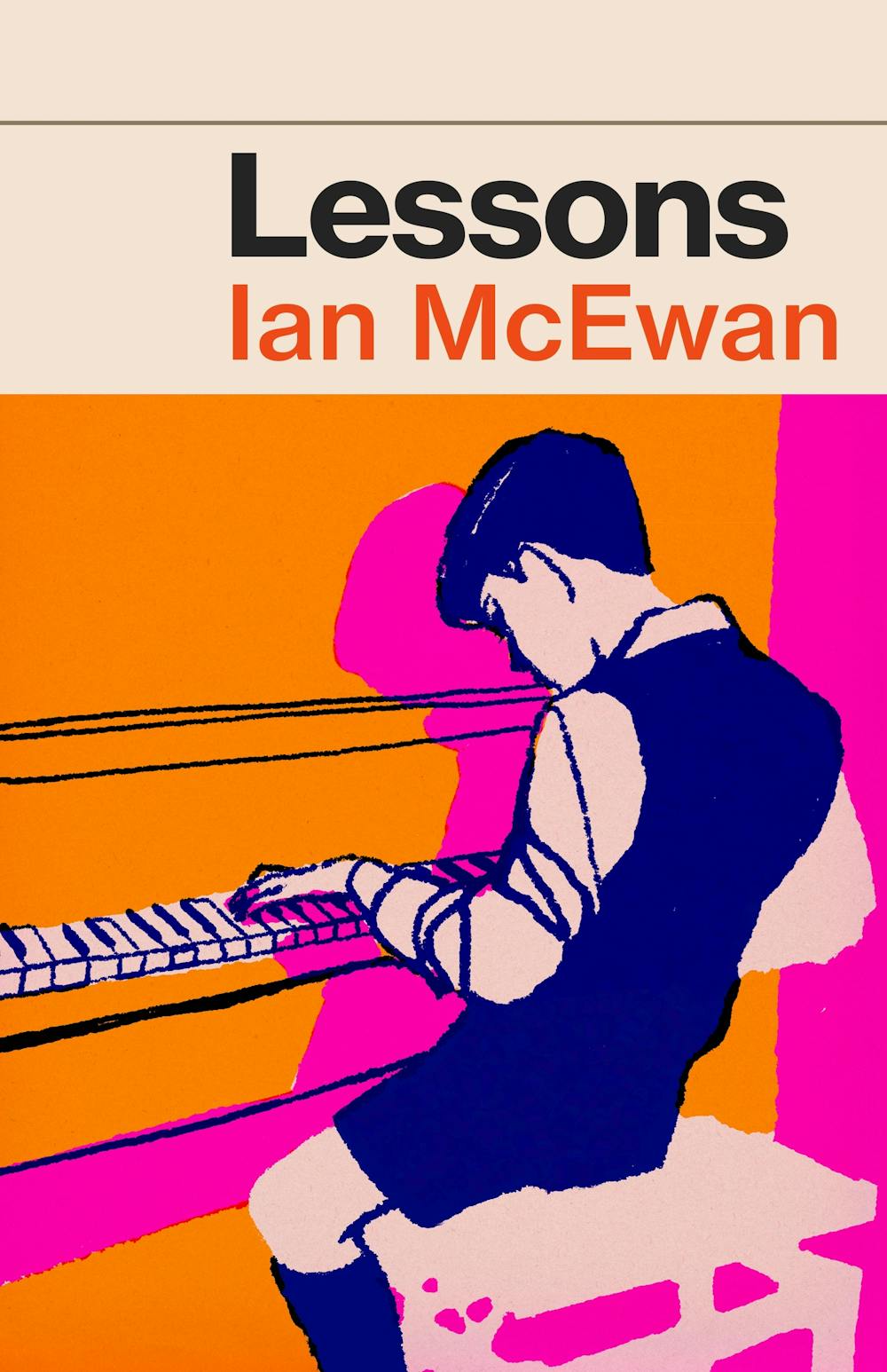
Lessons is Ian McEwan’s most autobiographical novel to date. It is the story of a man’s life, but it is also the story of a man making his life into a story. It exemplifies the risks and rewards of living a life shaped from within by the logic of literature.
Lessons – Ian McEwan (Jonathan Cape).
Anyone familiar with McEwan’s extensive, award-winning oeuvre will know that his resort to personal material is not for lack of imagination. He is, by any standard, a master of style and invention. It is hard to class his novels within a genre because he has forged his own – one that combines crisply realist surfaces with sudden excursions into the darkest corridors of the mind.
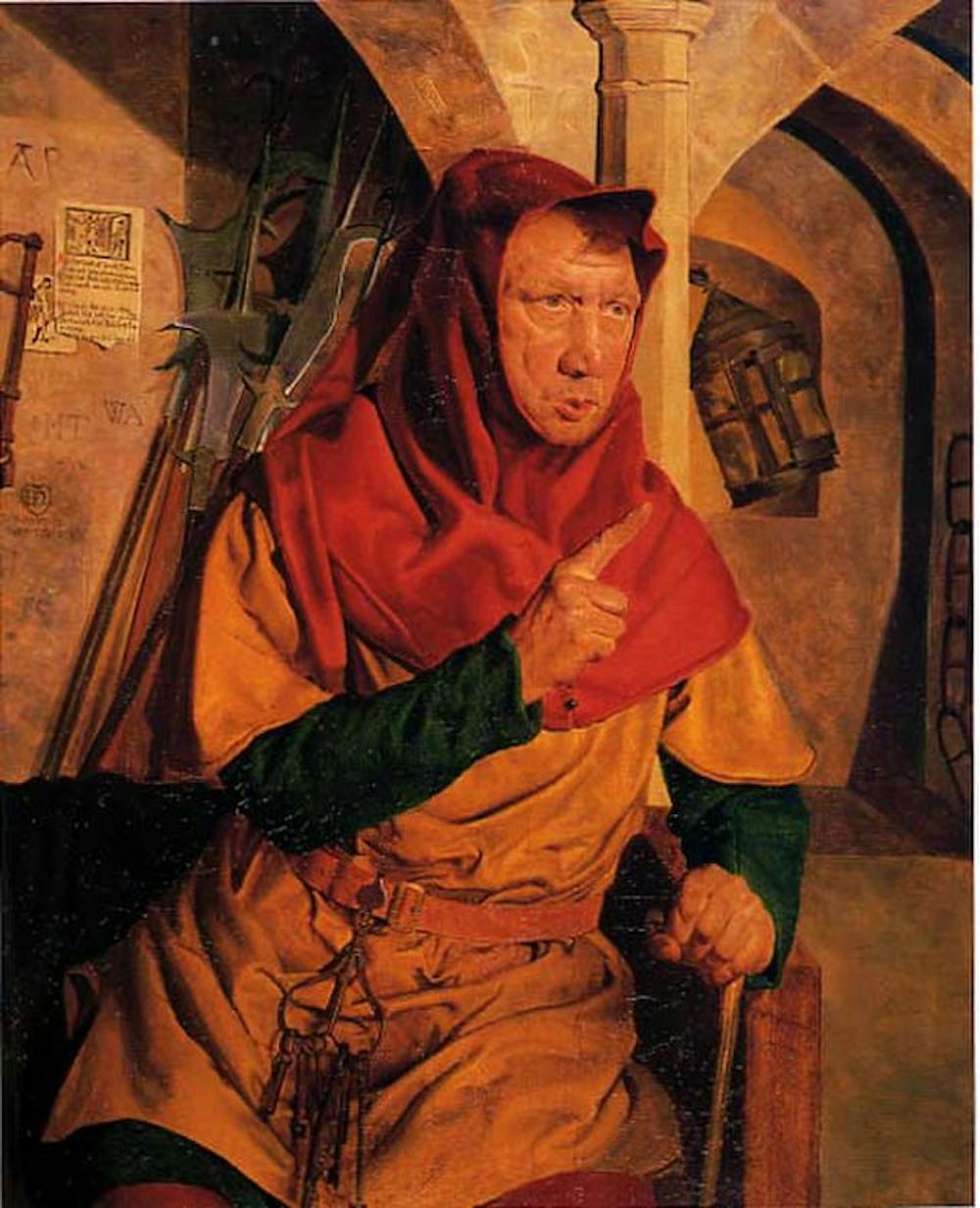 Dogberry – Henry Stacy Marks (1853)
Public domain
The passage throws suspicion on Roland. In Much Ado About Nothing, Dogberry’s police force does apprehend the villains, albeit accidentally. Moreover, Roland’s propensity to “work up” tales is laid bare. McEwan lets the author’s hand flicker into view.
Even more disconcertingly, Roland says to himself: “The grave containing her remains did not exist.” The plain meaning is clear: there is no grave. But the word-order puts “the grave” before the reader’s imagination before making it disappear. What, we wonder, is the extent of the damage done inwardly to Roland? Can this keeper of secrets keep secrets from himself? The sliver of doubt is thickened by self-questioning: “Why even tell himself this?”
Read more:
Philosophy, obsession and puzzling people: Julian Barnes' new novel explores big questions
A storytelling habit
Roland’s storytelling habit entails a desire for narrative epiphanies, as for sex, with unknown limits. Alissa’s wry comment – “this piano teacher […] rewired your brain” – raises the possibility that the novel’s shaping consciousness is indelibly damaged.
Roland might not be a murderer with a mind half in shadow, but he has a compulsive habit of burying and exhuming the past to make the present bearable. He is trying to mitigate life’s painful confusion. He shares this habit with most human beings, of course. The key difference is that Roland’s life, because it is a narrative invention, has more returns and more plot resolution than most real lives.
He eventually catches up with both Miriam and Alissa. From Miriam, he receives a pleading apology. He takes control of their story by deciding that he won’t bring a case against her because “this wasn’t the same woman”. Alissa, with her amputated foot and morbid addiction to nicotine, offers another scene of pathetic resolution. Roland sees that her choice of a writing life has cost her a relationship with their son. Both women are diminished by the narrative – a point sharpened by the title of Alissa’s award-winning novel: Her Slow Reduction.
Dogberry – Henry Stacy Marks (1853)
Public domain
The passage throws suspicion on Roland. In Much Ado About Nothing, Dogberry’s police force does apprehend the villains, albeit accidentally. Moreover, Roland’s propensity to “work up” tales is laid bare. McEwan lets the author’s hand flicker into view.
Even more disconcertingly, Roland says to himself: “The grave containing her remains did not exist.” The plain meaning is clear: there is no grave. But the word-order puts “the grave” before the reader’s imagination before making it disappear. What, we wonder, is the extent of the damage done inwardly to Roland? Can this keeper of secrets keep secrets from himself? The sliver of doubt is thickened by self-questioning: “Why even tell himself this?”
Read more:
Philosophy, obsession and puzzling people: Julian Barnes' new novel explores big questions
A storytelling habit
Roland’s storytelling habit entails a desire for narrative epiphanies, as for sex, with unknown limits. Alissa’s wry comment – “this piano teacher […] rewired your brain” – raises the possibility that the novel’s shaping consciousness is indelibly damaged.
Roland might not be a murderer with a mind half in shadow, but he has a compulsive habit of burying and exhuming the past to make the present bearable. He is trying to mitigate life’s painful confusion. He shares this habit with most human beings, of course. The key difference is that Roland’s life, because it is a narrative invention, has more returns and more plot resolution than most real lives.
He eventually catches up with both Miriam and Alissa. From Miriam, he receives a pleading apology. He takes control of their story by deciding that he won’t bring a case against her because “this wasn’t the same woman”. Alissa, with her amputated foot and morbid addiction to nicotine, offers another scene of pathetic resolution. Roland sees that her choice of a writing life has cost her a relationship with their son. Both women are diminished by the narrative – a point sharpened by the title of Alissa’s award-winning novel: Her Slow Reduction.
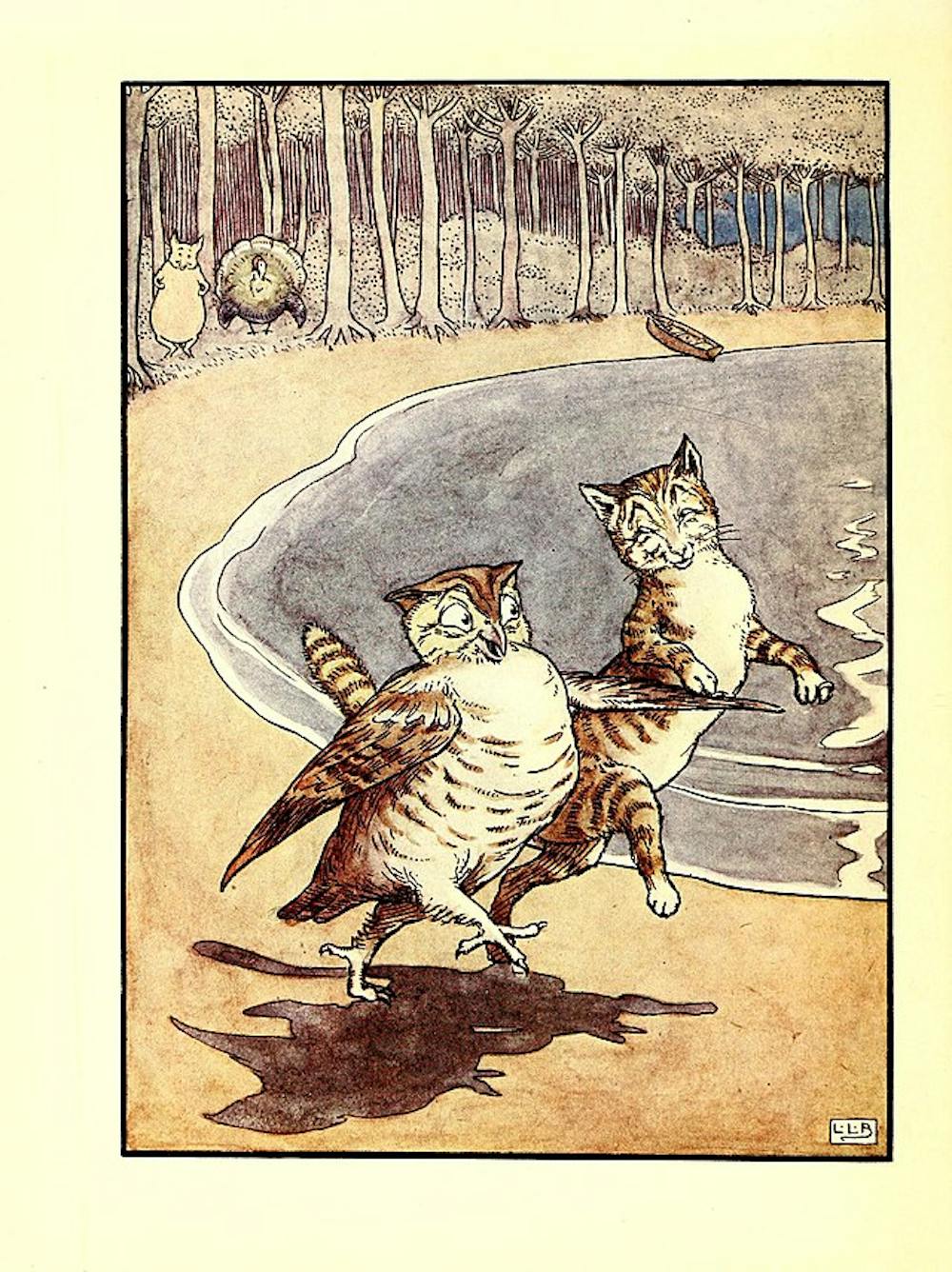 Illustration for Edward Lear’s Owl and the Pussycat by Leonard Leslie Brooke (1910).
Public domain
Roland’s granddaughter Stephanie enters late in the novel. As a new character, she permits fresh returns. Their shared story-within-the-story is Edward Lear’s The Owl and the Pussycat – a “beautiful impossible adventure” – which Roland had read to his son Lawrence, who in turn reads it to his seven-year-old daughter. Stephanie begins to learn and recite the poem during a COVID lockdown.
In the novel’s closing pages, Stephanie’s obliviousness to a heavy-handed message in a different bedtime story makes Roland reflect that it is a “shame to ruin a good tale by turning it into a lesson”. He then confides in her that
there’s a pretend book I want to read. It’s very interesting and so enormous that I don’t think I’ll ever get to read it all.
He tells her that it has “everyone in it, including you”.
Here is the familiar McEwan coup: a narrative bent back on itself. Before he is led off the stage of his own story by Stephanie, Roland (or McEwan) shows that the controlling hand of the narrative retains masterful control even when letting go.
The final return comes after the story is complete. In a postscript, McEwan reveals another inter-generational story of reading and writing: “Finally, my thanks to my English teacher, the late Neil Clayton, who insisted that I used his name unchanged”. Clearly, the lesson that has shaped McEwan’s literary imagination is the one same that sticks for Roland: in the patient processes of living and writing, epiphanies arrive rarely and unbidden. They are less like a lesson and more, like McEwan’s novel, a gift.
Authors: Kate Flaherty, Senior Lecturer (English and Drama), Australian National University
Illustration for Edward Lear’s Owl and the Pussycat by Leonard Leslie Brooke (1910).
Public domain
Roland’s granddaughter Stephanie enters late in the novel. As a new character, she permits fresh returns. Their shared story-within-the-story is Edward Lear’s The Owl and the Pussycat – a “beautiful impossible adventure” – which Roland had read to his son Lawrence, who in turn reads it to his seven-year-old daughter. Stephanie begins to learn and recite the poem during a COVID lockdown.
In the novel’s closing pages, Stephanie’s obliviousness to a heavy-handed message in a different bedtime story makes Roland reflect that it is a “shame to ruin a good tale by turning it into a lesson”. He then confides in her that
there’s a pretend book I want to read. It’s very interesting and so enormous that I don’t think I’ll ever get to read it all.
He tells her that it has “everyone in it, including you”.
Here is the familiar McEwan coup: a narrative bent back on itself. Before he is led off the stage of his own story by Stephanie, Roland (or McEwan) shows that the controlling hand of the narrative retains masterful control even when letting go.
The final return comes after the story is complete. In a postscript, McEwan reveals another inter-generational story of reading and writing: “Finally, my thanks to my English teacher, the late Neil Clayton, who insisted that I used his name unchanged”. Clearly, the lesson that has shaped McEwan’s literary imagination is the one same that sticks for Roland: in the patient processes of living and writing, epiphanies arrive rarely and unbidden. They are less like a lesson and more, like McEwan’s novel, a gift.
Authors: Kate Flaherty, Senior Lecturer (English and Drama), Australian National University 

















