

Geoengineering the Great Barrier Reef needs strong rules
- Written by: Kerryn Brent, Lecturer, Faculty of Law, University of Tasmania
The Great Barrier Reef has experienced extensive coral bleaching over the past two years. Faced with this reality, scientists are proposing a range of options to save the reef.
A recent conference showcased new possibilities for enhancing Reef resilience, including boosting coral abundance and geoengineering techniques that would manipulate local conditions to reduce ocean temperatures.
Read more: Great Barrier Reef bleaching would be almost impossible without climate change
These geoengineering approaches carry their own risks, and require careful management, even at the research and field testing stages.
Technology is needed to buy the reef time
Climate change is affecting the reef through bleaching events, species redistribution, and ocean acidification. Stabilising environmental conditions “to protect current reef biodiversity” requires that global temperatures stay below 1.2℃. Yet modelling of the global community’s current commitments under the Paris Climate Agreement suggests that global warming between 2.6-3.2℃ will occur by 2100. This would destroy the Great Barrier Reef as we know it.
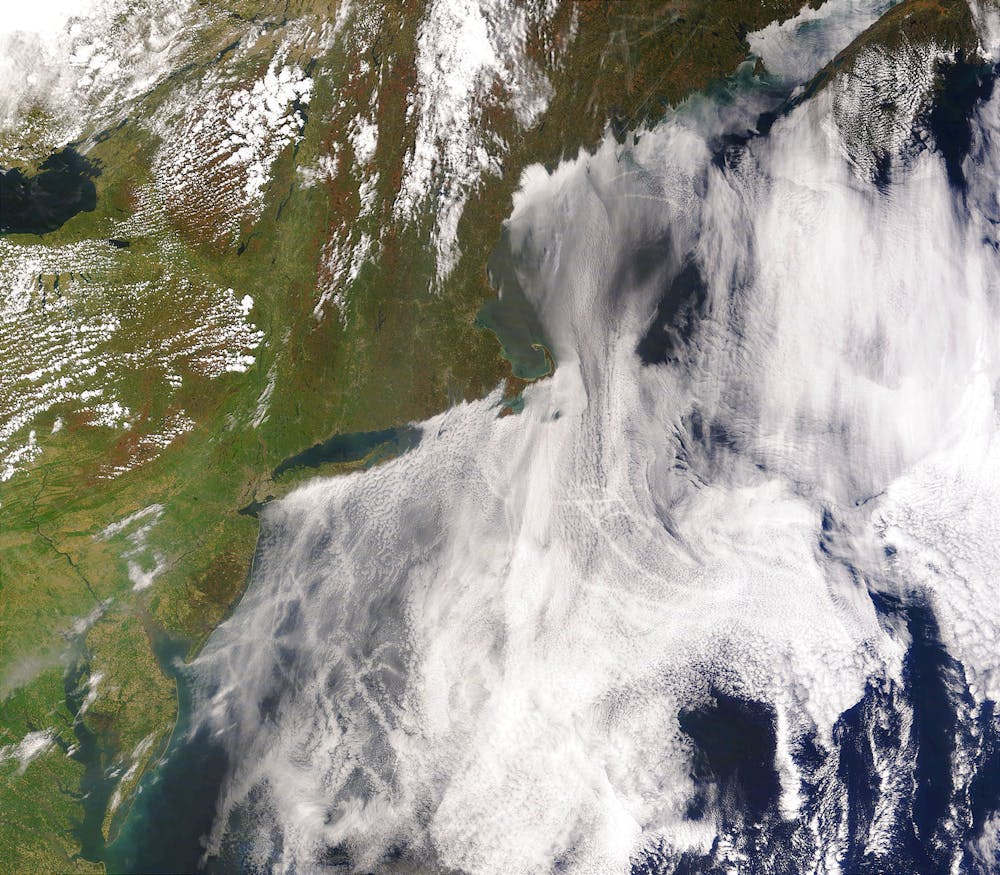 Artificial marine clouds already occur as a result of shipping exhaust. Scientists propose simulating this to cool the Reef.
Liam Gumley, Space Science and Engineering Center, University of Wisconsin-Madison
Artificial marine clouds already occur as a result of shipping exhaust. Scientists propose simulating this to cool the Reef.
Liam Gumley, Space Science and Engineering Center, University of Wisconsin-Madison
It is not surprising, then, that scientists are looking to buy the reef some time, while the international community works to stabilise and then reduce global greenhouse gas emissions. The Commonwealth and Queensland governments have announced funding for feasibility projects aimed at manipulating surface water temperatures using three different techniques:
Creating a reflective surface film that would float on the surface of the water. Made from calcium carbonate (the same mineral as coral), the film would reflect sunlight, thereby lowering water temperatures and ultraviolet radiation exposure.
Marine cloud brightening to also reflect more sunlight away from the reef. The plan is to spray microscopic salt particles into clouds using customised vessels or modified snow machines. This increases the concentration of droplets in clouds and encourages smaller, more reflective droplets to form.
Water-mixing units with large, slow moving fans that will draw cool water from 10-30 metres deep and deliver it to surface areas to limit coral heat stress. In 2017 this proposal received A$2.2 million in Commonwealth funding, to test eight water-mixing units over a 1km square area of Moore Reef, off the coast of Cairns.
Engineering the climate of Australia’s most iconic natural system carries obvious risks. Indeed, Australia has a history of well-intended attempts to manage nature that have backfired because the risks were not fully understood.
Read more: Everyone agreed: cane toads would be a winner for Australia
We must be confident that such technological interventions will protect the reef, not contribute to its destruction. This is a problem because scientific trials are supposed to identify and assess risks, so we won’t fully understand what impacts they have until such trials are undertaken.
Governance necessary for public confidence
Building public confidence that potential risks have been identified and addressed is essential to the long-term success of reef geoengineering proposals. Even feasibility studies can be derailed if they lack public support.
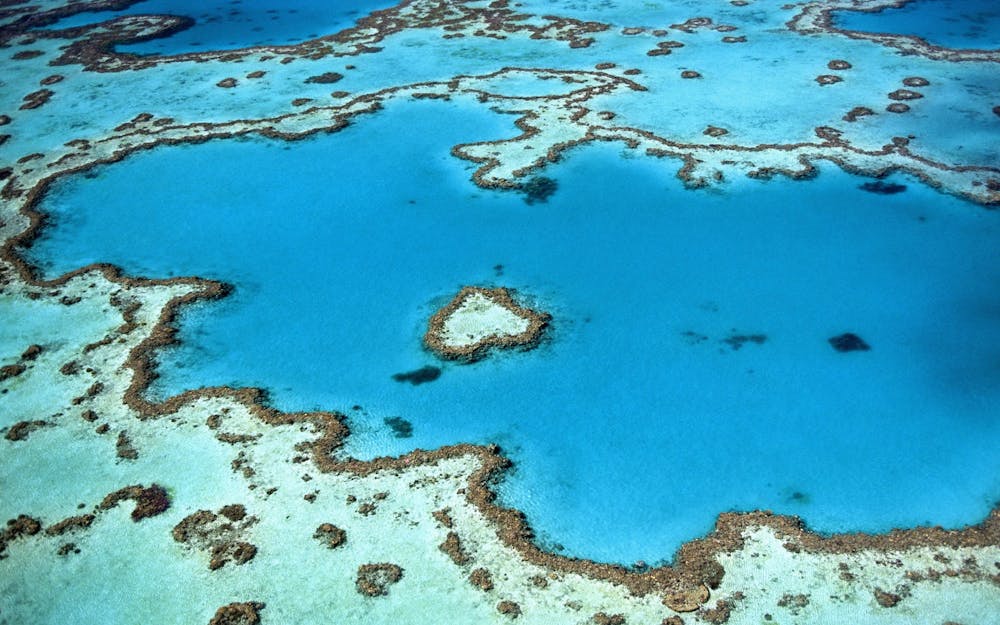 We need to develop governance frameworks to ensure we have the best possible chance of saving our most important natural wonder.
Yanguang Lan, Unsplash
We need to develop governance frameworks to ensure we have the best possible chance of saving our most important natural wonder.
Yanguang Lan, Unsplash
The legitimacy and ultimate acceptability of reef geoengineering technologies therefore demands robust and transparent processes for funding, research, field testing and eventual deployment. Drawing on the Oxford Principles for Geoengineering Governance, the minimum governance standards should include:
- criteria and clear processes for research funding decisions
- public access to information about planned field testing
- demonstrated compliance with Australia’s environmental laws.
Current environmental laws do not make special exemptions for scientific research or testing in areas of national environmental significance, such as the Great Barrier Reef. Any geoengineering trial that might have a “significant impact” on those areas is illegal without a permit from the Commonwealth Environment Minister. The Minister is guided by the precautionary principle and World Heritage obligations in issuing such permits.
The Great Barrier Reef Marine Park Act imposes separate approval requirements and makes protection of the reef the highest priority. This would suggest that the standard for environmental assessment for any proposal to run geoengineering trials on the Reef should be high.
It is unclear how the federal environment minister and the Great Barrier Reef Marine Park Authority will evaluate whether the risks of field testing are small enough to justify granting their approval. The position is made more uncertain by the fact that the authority is directly involved in at least one of the projects. This uncertainty risks poor environmental outcomes and erosion of public confidence.
We need a strong framework for assessing and managing the risks of geoengineering, to address legitimate public concerns.
As the stewards of the reef, the Marine Park Authority is ideally placed to take the lead on developing this framework, to ensure we have the best possible chance of saving our most important natural wonder.
Authors: Kerryn Brent, Lecturer, Faculty of Law, University of Tasmania
Read more http://theconversation.com/geoengineering-the-great-barrier-reef-needs-strong-rules-100674


















