

why women question health warnings linking alcohol with breast cancer
- Written by: Belinda Lunnay, Post-doctoral researcher in Public Health , Torrens University Australia
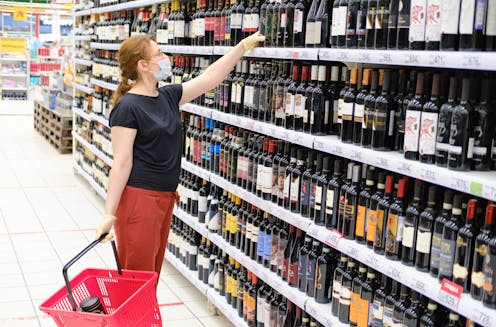
Up to one in ten cases of breast cancer in Australia is linked to drinking alcohol. Midlife women are already at increased risk for breast cancer because of their age, and tend to drink more than younger women. That means this group is at even more risk for breast cancer.
Health authorities have mostly so far dealt with this by telling women not to drink. But does this approach – which positions drinking as an individual’s “problem” based on their own “bad” choices – actually work?
In fact, our recent study found women aren’t necessarily aware of the link between alcohol and breast cancer. And even when they are, they aren’t always able to “choose” to quit.

What women told us
We wanted to better understand where women sought health information, how they accessed information specific to breast cancer risk as it relates to alcohol, and how they determined whether (or not) such information was trustworthy.
We interviewed 50 “midlife” women (aged 45-64) living in South Australia from different social classes.
Previous research has shown alcohol consumption performs a range of important functions for women, such as coping, socialising, networking and managing difficulties. Women often feel they cannot necessarily “choose” not to drink in these circumstances.
Women also face mixed messages about alcohol and cancer risk. Some alcohol brands display pink ribbons in an effort to “raise awareness” about breast cancer. And more broadly, media reports have come and gone over the years about the purported risks or benefits of alcohol for various illnesses.
Many women in our study did not know that alcohol causes breast cancer. But upon hearing about it, they mostly wanted to know more.
One woman told us:
I didn’t realise there was a link and I went on and interrogated it after that, because I do enjoy a glass of wine. And I wondered, what am I knowingly getting into here […] and to understand how alcohol affects your body, in terms of it increases the estrogen levels, and so that has a link to breast cancer.
Others thought if knowledge became more common, breast cancer risk messages might more likely be accepted (or, at least, be less likely to be rejected). One woman told us:
I think sometimes the more information comes out, or the more it’s repeated, the more it becomes common knowledge for people rather than easily dismissed.
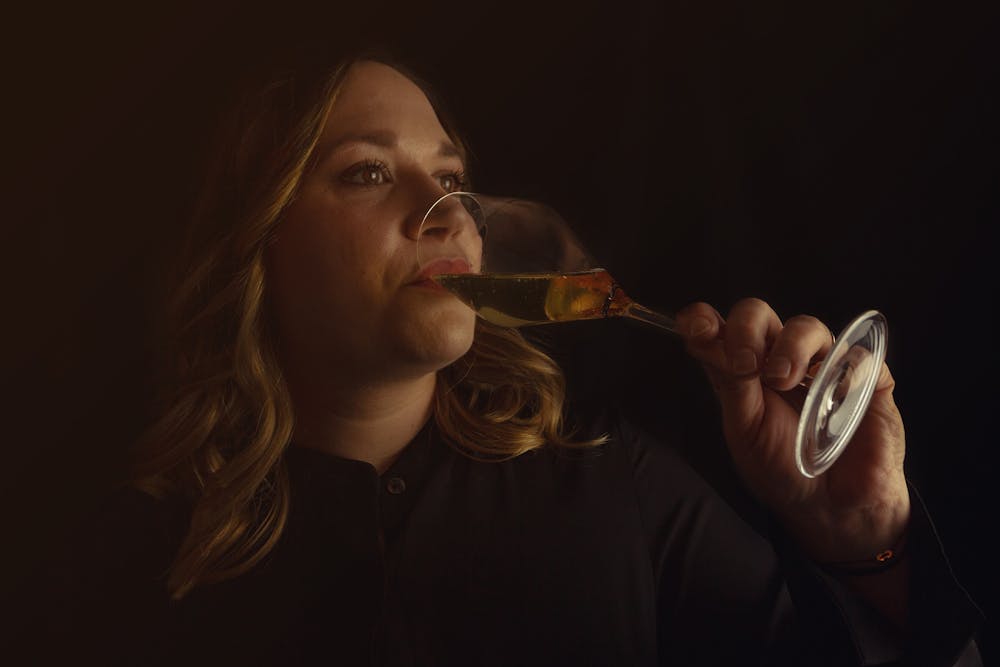 Many women in our study did not know that alcohol causes breast cancer.
Image by Bastian Riccardi from Pixabay, CC BY
Many women in our study did not know that alcohol causes breast cancer.
Image by Bastian Riccardi from Pixabay, CC BY
Read more: 'Oh well, wine o’clock': what midlife women told us about drinking – and why it's so hard to stop
Questioning the message and the messenger
But, even if women are aware, the message that alcohol causes breast cancer can be difficult and confusing to hear. In response, trust in the message can waver. As one woman said:
I do question quite a lot because I do think the media play it up […] I take it with a pinch of salt.
Messages that seem exaggerated were also off-putting. As one woman put it:
First of all, you just look at the tone of the way they wrote about things, you’d probably, if you thought it’d been sensationalised, or if they were axe-grinding.
Indeed, encountering conflicting information in daily life made some public health messages feel less believable to some women we spoke to. Some women instead preferred to rely on “gut feeling” to judge information.
Considering who and what to trust in terms of information about alcohol and breast cancer was key for women. Some want these complexities to be recognised and messages to be delivered in “even-handed” ways. As one woman told us:
You just listen to it, see if they’re going to be harping on a certain theme, maybe without having any basis for saying so, if they’re trying to push a certain point of view without having any basis or back-up for that. Rather than someone being even-minded about, you know, even-handed about things.
 Health messaging for women around alcohol breast cancer risk must acknowledge the social and commercial factors that encourage alcohol consumption.
Image by Engin Akyurt from Pixabay, CC BY
Health messaging for women around alcohol breast cancer risk must acknowledge the social and commercial factors that encourage alcohol consumption.
Image by Engin Akyurt from Pixabay, CC BY
Sceptical of experts
Some women, especially those living with disadvantage, were more likely to be sceptical of information and information sources, even if it is based on research from experts.
They described needing time to consider messages and judge them as trustworthy, with some feeling research evidence can be skewed to serve different interests. As one put it:
Well, I know there’s been various research done but I have to admit I tend to be rather sceptical about certain research […] things can be found that really say “Oh, yes, this is what [has been found] and then someone will come along and [say] "No, it’s not like that at all”.
We found women want to trust clear, consistent and non-judgemental messaging, otherwise distrust in the message and messenger might become the default position.
Health messaging for women around alcohol breast cancer risk must acknowledge the social and commercial factors that encourage alcohol consumption.
Too often, public health messaging asks women to take on the responsibility of reducing their alcohol consumption – without enough recognition that the same women are targeted by alcohol advertising and many see alcohol as a reliable “friend” in the absence of other social support.
If we don’t acknowledge that, we risk perpetuating the same stigma and blame that drives women to drink in the first place.
Read more: Did you look forward to last night's bottle of wine a bit too much? Ladies, you're not alone
Authors: Belinda Lunnay, Post-doctoral researcher in Public Health , Torrens University Australia


















