

how these 3 neighbourhood 'pests' deal with rainy days
- Written by: Elise Oakman, PhD Candidate, University of Sydney
Have you had a recent encounter with an animal you’d much rather avoid? As La Niña continues to give us rainy days, brush turkeys, bats, and cockroaches are emerging from their hide-outs.
We often think of them as pests, but these animals are just trying their best to cope in the heavy rain. They’re also crucial members of our urban ecosystems, and help keep the environment healthy.
Here’s what makes them so fascinating and important to your neighbourhood.
Bats: heavy rain hinders echolocation
Australia is home to multiple threatened species of fruit bats and microbats, such as grey-headed flying foxes, large bent-wing bats, and spectacled flying foxes.
They’re typically considered nuisances for their noise, mess and potential spread of diseases. But bats are often forgotten for their ability to control insect pests, disperse seeds, and pollinate plants.
Bats face some serious threats in La Niña conditions. They can respond to periods of heavy rain by using a special physiological adaptation called torpor. In torpor, bats will sleep more and lower their body temperature so they can use less energy.
Microbats are abundant throughout Australian cities. They use echolocation to see, but heavy rain likely reduces this ability.
In 2019, Smithsonian researchers played recordings of downpours near bat roosts, and found the bats delayed emerging from their roosts. Delayed emergence can lead to disorientated bats with a reduced capacity to find food.
In Australia, rain may affect microbats more than fruit bats because of where they live. Many species of microbats, such as the large bent-winged bat, live in culverts and under bridges, where higher water levels can rush through during heavy rain periods.
Fruit bats, such as flying foxes, don’t use echolocation, but rain can wet their fur and lower their body temperature. So they’ll often stay put in their roosts to keep warm during heavy rain.
It also costs a lot more energy for a bat to fly in the rain, making it harder to maintain a steady intake of food. If there is consecutive days of rain, bats may fall from their home due to starvation.
If you find a fallen bat, do not touch it. Instead, contact WIRES. Or, wait to see if they leave once the rain clears up.
Brush turkeys: reshape their mounds
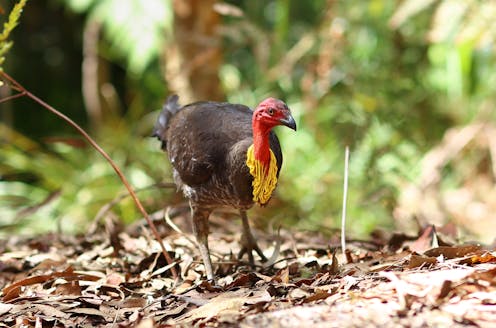
Brush turkeys are a type of ground nesting bird found along Australia’s east coast, from Cape York in Queensland down to Wollongong in NSW. They’re particularly vulnerable to the effects of heavy rain, which can damage or wash out their nests.
To incubate their eggs, brush-turkeys build enormous mounds of leaf litter and mulch. These mounds can weigh several tonnes, and can be as wide as 4 metres across and up to 1 metre high. These mounds often cause consternation among avid gardeners and frustrated suburbanites.
But brush-turkeys can benefit the environment. As they scratch for food and build mounds, the birds help break down leaf litter and aerate the soil. This helps water and nutrients move throughout your soil, which ultimately helps your garden.
Winter rainfall is the trigger for males to start building their mounds, as the increased soil moisture provides the heat that incubates their eggs. However, research shows males avoid constructing their nests during long periods of heavy rain.
Flood waters can sweep away existing mounds and, after multiple weeks of rain, mounds can become waterlogged. Floods can drown eggs or reduce mound temperatures below the levels necessary for incubation, preventing the chicks from developing properly.
Brush-turkeys are known to protect their mounds from heavy rain. Much anecdotal evidence suggests brush-turkeys can predict the weather in advance, and reshape their mound accordingly.
During light rain, male brush-turkeys open up their mound, letting much-needed moisture soak in to speed up decomposition of the leaf litter. But as strong rainfall approaches, they instead pile extra material on top of their mound, providing an extra layer of protection and creating a more conical shape so water can run off the sides.
Next time, consider tuning into your local brush turkeys for a weather forecast. If you see them doing a bit of extra raking in your garden on dismal grey days, it might be a scramble to protect their nests from approaching heavy rain.
When you spot one, use the opportunity to snap a photo and upload it to the Big City Birds app. This app tracks where birds such as brush-turkeys occur, and how they’re adapting to city life.
Native cockroaches: evacuate to drier areas
As we settle into another wet spring, our homes are becoming perfect breeding grounds for cockroaches. The humidity of a moist house combined with warmer weather, allows for cockroaches to grow quicker and thrive.
Only a small handful of cockroach species will survive in the average house, and they are all introduced species. After rain, it’s vital to make your house a little less cockroach friendly. Reduce humidity by keeping the house well ventilated, and make sure to remove any food scraps.
On the other hand, the waterlogged soil in your local green spaces are likely home to some of Australia’s 450 native species of cockroaches, so you might see some around your backyard after rain. Cockroaches play important roles in the ecosystem, breaking down nutrients in the soil.
Burrowing cockroaches can be spotted because they don’t have wings. Many of our other native cockroaches are obvious due to their beautiful colours and patterns.
One amazing example is the Lord Howe Island wood-feeding cockroach. Thought to be extinct for some 80 years due to rats, they have only recently been rediscovered. This species is important, because it recycles nutrients and is food for other animals.
While native cockroaches may enter your home in an attempt to find warm dry ground, they won’t thrive indoors. If you find a native cockroach inside your house, instead of reaching for the bug spray, it’s best to catch them and put them back outside.
So during wet weather, take the time to remember that these animals are trying their best. All have amazing ways of adapting to heavy rain, and we should cut them some slack – the environment, including our backyards, need them.
Authors: Elise Oakman, PhD Candidate, University of Sydney


















