

What's the connection between cosmetic procedures and mental health?
- Written by: Gemma Sharp, NHMRC Early Career Senior Research Fellow, Monash University
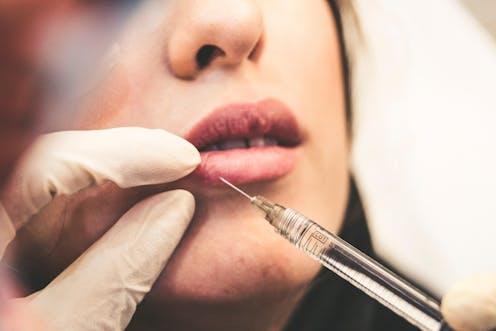
Although we cannot be sure of the exact numbers of Australians undergoing cosmetic procedures, as there is no requirement for health professionals to report their statistics, there is a consensus demand is on the rise.
In 2015, the Cosmetic Physicians College of Australasia found Australians were spending more than $1 billion a year on non-invasive cosmetic procedures like Botox and fillers. This is more than 40% higher, per capita, than in the United States.
In the US, where procedure statistics are reported, there was a 42% increase in the number of filler procedures and a 40% increase in Botox procedures performed in the last year alone.
Rates of mental health issues in this group may be higher than the general population, but seemingly not enough is being done to ensure the psychological safety of people requesting cosmetic procedures.
Read more: Thinking of getting a minor cosmetic procedure like botox or fillers? Here's what to consider first
Body dysmorphic disorder
Body image concerns are generally the main motivator for seeking cosmetic procedures of all kinds. These concerns are usually focused on the body part where the cosmetic intervention is sought, such as the nose for a rhinoplasty.
Severe body image concerns are a key feature of several mental health conditions. The most prevalent in people seeking cosmetic procedures is body dysmorphic disorder. In the general community, around 1-3% of people will experience body dysmorphic disorder, but in populations seeking cosmetic surgery, this rises to 16-23%.
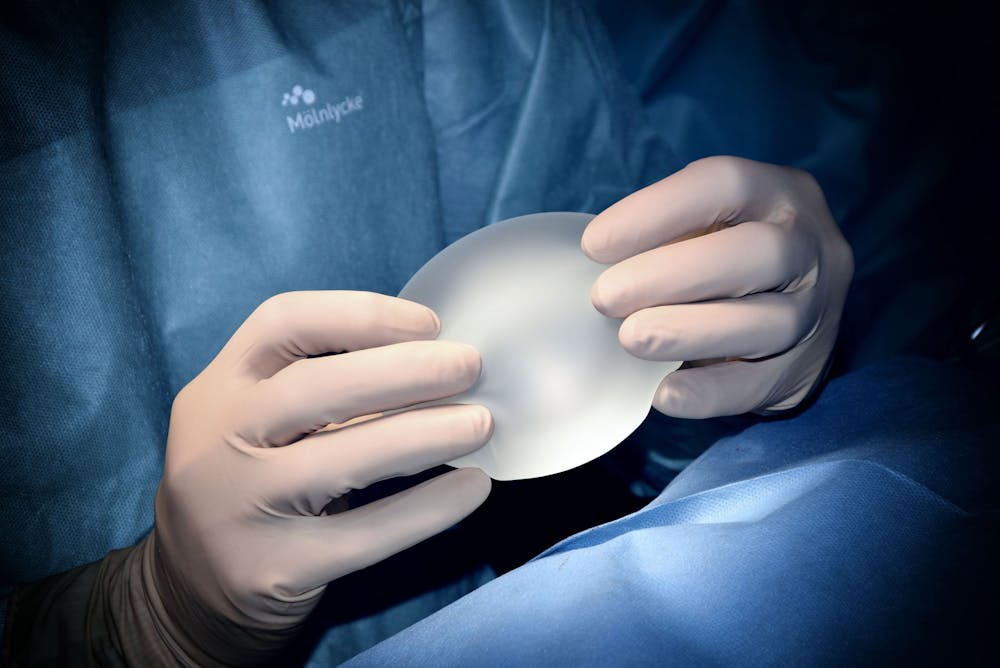
Body dysmorphic disorder involves a preoccupation or obsession with one or more perceived flaws in physical appearance which are not visible or seem minor to other people. In response to the distress regarding the flaw, the person with body dysmorphic disorder will perform repetitive behaviours (such as excessively checking body parts in the mirror) and mental acts (such as comparing their appearance with other people).
These concerns can have a significant negative impact on the person’s daily life, with some people too distressed to leave their home or even eat dinner with family members out of fear of being seen by others.
With the distress associated with body dysmorphic disorder seemingly stemming from physical appearance issues, it makes sense someone with body dysmorphic disorder is far more likely to turn up at a cosmetic clinic for treatment than a mental health clinic.
The problem is, cosmetic intervention usually makes the person with body dysmorphic disorder feel the same or worse after the procedure. They may become even more preoccupied with the perceived flaw and seek further cosmetic procedures.
Patients with body dysmorphic disorder are also more likely to take legal action against their treating cosmetic practitioner after believing they have not received the result they wanted.
For these reasons, body dysmorphic disorder is generally considered by health professionals to be a “red flag” or contraindication (a reason not to undergo a medical procedure) for cosmetic procedures.
However, this is not entirely clear-cut. Some studies have shown people with body dysmorphic disorder can improve their symptoms after cosmetic intervention, but the obsession may just move to another body part and the body dysmorphic disorder diagnosis remain.
Read more: New year, new you? Why we think a better body will be a better self
What about other mental health conditions?
Body dysmorphic disorder is by far the most well-studied disorder in this area, but is not the only mental health condition that may be associated with poorer outcomes from cosmetic procedures.
According to a recent systematic review, the rates of depression (5-26%), anxiety (11-22%) and personality disorders (0-53%) in people seeking cosmetic surgery may be higher than the general population (which are estimated to be 10%, 16% and 12% respectively).
However, these rates should be interpreted with some caution as they depend greatly on how the mental health diagnosis was made – clinician-led interview (higher rates) versus mental health questionnaire (lower rates). Some interview approaches can suggest higher rates of mental health issues as they may be quite unstructured and thus have questionable validity compared with highly structured questionnaires.
Besides body dysmorphic disorder, the research investigating other mental health conditions is limited. This may just be due to the fact body image focus is at the core of body dysmorphic disorder, which makes it a logical focus for cosmetic surgery research compared with other types of psychiatric disorders.
Read more: Body dysmorphia sufferers have abnormal visual processes
So what should happen?
Ideally, all cosmetic surgeons and practitioners should receive sufficient training to enable them to conduct a brief routine assessment of all prospective patients. Those with signs indicating they are unlikely to derive psychological benefit from the procedure should undergo a further assessment by a mental health professional before undergoing the procedure.
This could include an in-depth clinical interview about motivations for the procedure, and completing a range of standard mental health questionnaires.
If a person was found to have a mental health issue in the assessment process, it does not necessarily mean the mental health professional would recommend against pursuing the procedure. They may suggest a course of psychological therapy to address the issue of concern and then undergo the cosmetic procedure.
At the moment, assessments are only recommended rather than mandated for cosmetic surgery (and not at all for injectables like Botox and fillers). The guidelines say evaluation should be undertaken if there are signs the patient has “significant underlying psychological problems”.
This means we are relying on the cosmetic medical practitioner being capable of detecting such issues when they may have received only basic psychological training at medical school, and when their business may possibly benefit from not attending to such diagnoses.
An August 2022 independent review by the Australian Health Practitioner Regulation Agency and the Medical Board of Australia recommended the guidelines around mental health assessment should be “strengthened” and emphasised the importance of medical practitioners receiving more training in the detection of psychiatric disorders.
Ultimately, as cosmetic practitioners are treating patients who are seeking treatment for psychological rather than medical reasons, they must have the wellbeing of the patient front-of-mind, both out of professional integrity and to protect themselves from legal action. Mandatory evaluation of all patients seeking any kind of cosmetic procedure would likely improve patient satisfaction overall.
If this article has raised issues for you, or if you’re concerned about someone you know, visit the Butterfly Foundation or call the national helpline on 1800 33 4673.
Authors: Gemma Sharp, NHMRC Early Career Senior Research Fellow, Monash University


















