

Once again, wealthy nations are letting down poor nations at the Egypt climate talks
- Written by: Jacqueline Peel, Director, Melbourne Climate Futures, The University of Melbourne
Short of a miracle, it seems unlikely the COP27 climate change negotiations in Egypt will deliver any concrete action on loss and damage.
“Loss and damage” refers to the harms of climate change on human society and the natural environment that can’t be avoided by bringing down emissions or adapting. The costs of recovering from these harms, such as intensifying disasters, are climbing, and poor countries have been calling on wealthy countries to foot the bill.
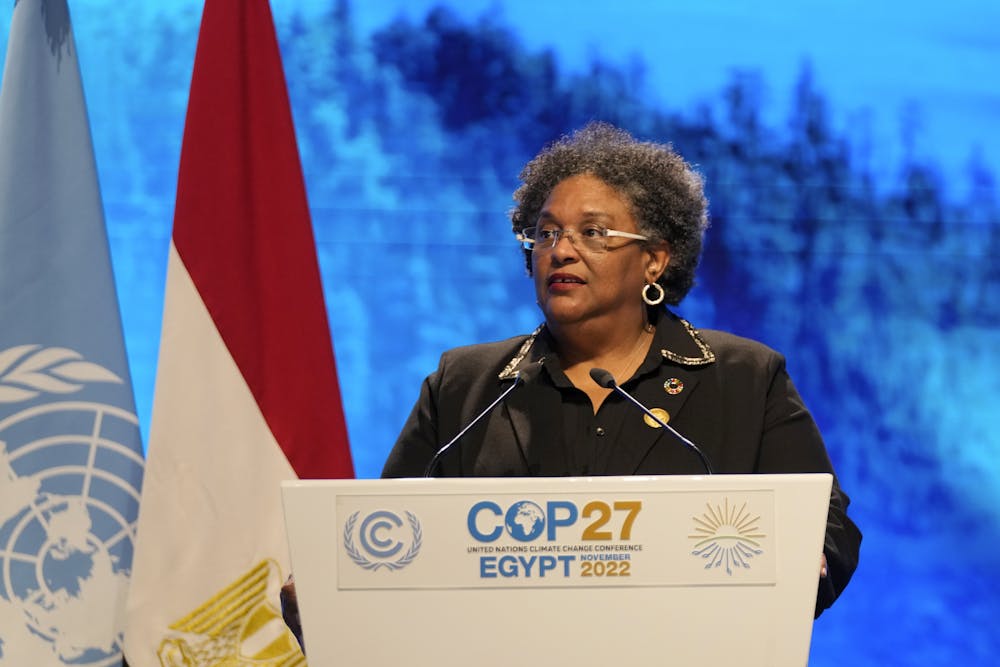
Barbados Prime Minister Mia Mottley has emerged as the leading advocate for loss and damage finance at COP27. She argues climate-vulnerable nations like hers “have a moral and just cause”.
At the start of COP27, she praised the inclusion of loss and damage on the negotiating agenda as a recognition that countries who have barely contributed to global warming shouldn’t be “choosing between the financing of education and health or the reconstruction of our societies”.
As we near the end of the summit, it looks like wealthy countries will be letting these vulnerable nations down. But negotiations are expected to drag on over the weekend, and surprise agreements might still emerge.
Read more: Famine should not exist in 2022, yet Somalia faces its worst yet. Wealthy countries, pay your dues
Ending in a fizz
Although billed as an “implementation” rather than an “ambition” conference, the inclusion of loss and damage on COP27’s negotiating agenda raised hopes progress might yet be achieved on this thorny issue.
Powerful speeches calling for climate justice from leaders such as Motley, as well as the Prime Minister of flood-ravaged Pakistan Shehbaz Sharif, saw a deal on loss and damage emerge as one of the main tests for success at this summit.
Yet rather than the hoped-for action, the negotiations seem more likely to reach a dead-end discussion. In a draft text setting out possible “elements” of a decision on loss and damage released on Monday in Egypt, two “options” were on the table: establishing a loss and damage fund by late 2024, or two years of technical work on whether the issue should ultimately be addressed through a “mosaic” of funding arrangements.
The first option would be difficult for developed countries to accept. The United States and European Union have indicated they’re opposed to any language on “reparations”, which might suggest they bear liability and must compensate for the damage caused by past emissions.
Within Europe, one of the biggest opponents on this seems to be Sweden, land of climate activist Greta Thunberg, which is putting the brakes on broader action.
With Sweden’s controversial Prime Minister Ulf Kristersson recently elected, the country’s environment minister queried the need for a loss and damage fund (earning Thunburg’s ire on Twitter).
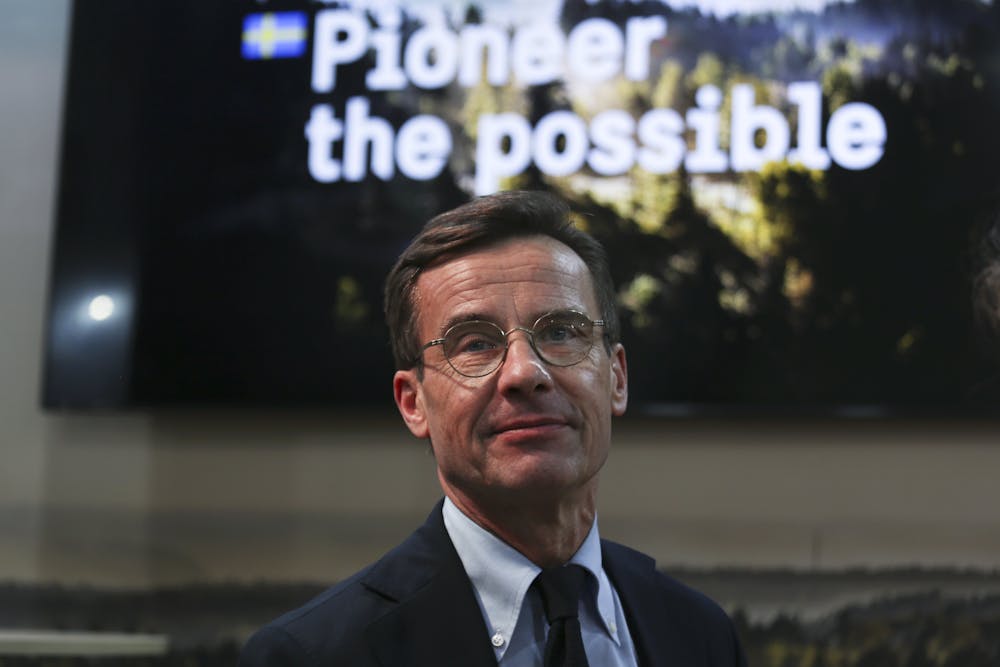 Prime Minister of Sweden Ulf Kristersson is backed by a far-right party.
AP Photo/Thomas Hartwell
Prime Minister of Sweden Ulf Kristersson is backed by a far-right party.
AP Photo/Thomas Hartwell
Likewise, major emerging economy emitters, China and India, are resisting calls from the US and some climate-vulnerable nations such as Mauritius to also contribute money to a loss and damage fund. China and India argue that the first to take on this responsibility should be the biggest historical and per capita emitters in the developed world.
We haven’t yet heard any Australian commitments on loss and damage funding or new commitments on climate finance more generally.
But energy minister Chris Bowen is now on the ground in Egypt and leading, with India, the broader negotiations on climate finance for energy transition and adaptation. So Australia is at least regarded as playing a more constructive role, compared to past COPs.
There were hopes for the German-led Global Shield announcement, which would give vulnerable countries funding for insurance and disaster protection support.
But this received strong push back from some vulnerable countries including Barbados and others in the Alliance of Small Island States, who questioned the effectiveness of the Global Shield as an insurance mechanism. Climate activist Mohamed Adow of Powershift Africa noted:
We can’t insure our way to climate protection. After all, climate change is getting so bad some communities will likely be uninsurable unless we see much more drastic emissions cuts.
The G77 – a group of more than 130 developing nations – together with China, have put forward a draft proposal for a loss and damage fund. Their proposal would see finance provided to countries hit by climate disasters, and would be set up before the next COP in Dubai in 2023. Some developed countries, however, want to move slower than the G77’s timeline.
Disappointment and bitterness
As calls for loss and damage finance continue, there will be a lot of disappointment and bitterness if nothing substantial comes out of Egypt.
Progress on loss and damage is regarded as the litmus test for COP27’s success by many climate-vulnerable nations. But if nothing eventuates, other options are being explored.
For example, Vanuatu is spearheading a campaign to get UN General Assembly support for putting an Advisory Opinion request. This could generate an authoritative statement by the International Court of Justice about who takes responsibility for climate damage.
It might break any stalemate in negotiations on a loss and damage fund, or lead to further litigation asking high-emitting rich countries to pay compensation for loss and damage.
UN climate conferences are always a roll-a-coaster ride with negotiations down to the wire and possibilities for twists and surprise endings.
Although the prospects for agreement on loss and damage finance at this COP seem remote at this point, it may not be the end of the story. And while the urgency of dealing with the unfairly distributed costs of climate disasters is only growing, at the very least this COP has started the conversation on solutions.
Authors: Jacqueline Peel, Director, Melbourne Climate Futures, The University of Melbourne


















