

If you care about nature in Victoria, this is your essential state election guide
- Written by: Sarah Bekessy, Professor in Sustainability and Urban Planning, Leader, Interdisciplinary Conservation Science Research Group (ICON Science), RMIT University
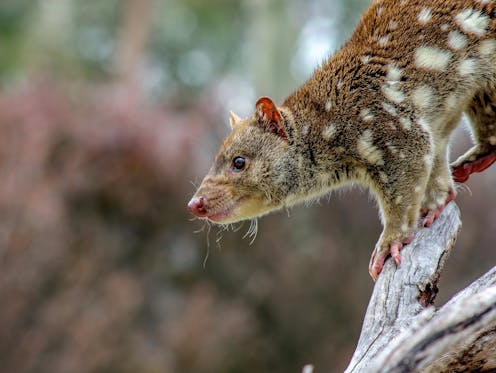
If we learnt anything from the past federal election, it’s that Australians care about climate change and nature. A survey released this week suggests the same dynamic is at play as we head into the Victorian state election.
The poll, prepared for the Victorian National Parks Association, found 36% of Victorians say their vote would be influenced by policy announcements regarding saving threatened species and stopping extinction.
The Victorian government’s own surveys have highlighted the enormous number of people who value nature. And research this year for the Australian Conservation Foundation found 95% of Australians agree it’s important to protect nature for future generations.
Despite the weight of public concern, Victoria is failing its wildlife. Last year the Victorian Auditor General’s Office handed down a damning report on biodiversity protection. It concluded that about a third of Victoria’s land-based plants, animals and ecological communities face extinction, their continued decline will likely have dire consequences for the state, and funding to protect them is grossly inadequate.
We know what’s primarily behind Australia’s extinction crisis: land clearing, invasive species and climate change-induced impacts such as extreme bushfires.
So, what have the different political parties promised in the lead up to the Victorian election, and how do they stack up? Here’s a brief guide to what’s on offer.
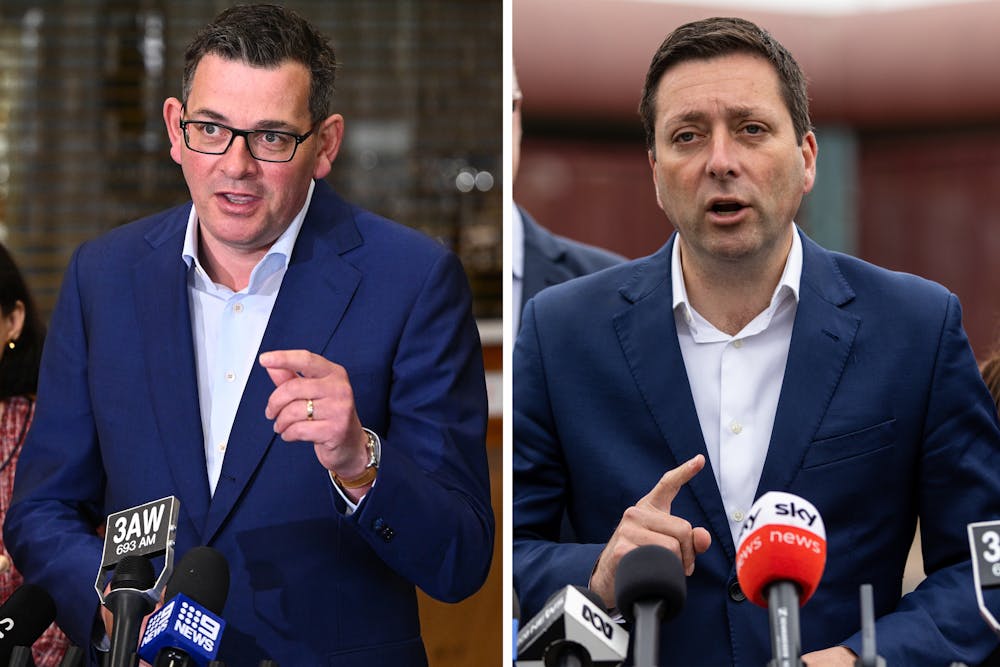
Funding and policy commitments
Let’s start with one of the key shortfalls discussed by the Auditor General – funding for biodiversity conservation. Labor has announced:
a $10 million nature fund to match biodiversity projects proposed by private or philanthropic groups
$2.8 million for Trust for Nature
$7.35 million for six large-scale conservation projects to reduce the impact of pests, predators and invasive weeds
$773,000 to extend Victoria’s Icon Species Program for another year
$160,000 for platypus conservation.
These funds don’t come close to the estimated annual shortfall of $38 million in ongoing funding needed for the government to deliver its biodiversity strategy, as identified by the Auditor General.
The Victorian Liberals have denounced Labor’s relatively dismal promises and their record of under-funding biodiversity. But, so far, new Liberal-National Coalition announcements have been limited. They include:
But the Coalition has also announced anti-environmental commitments, such as ending feral horse culling and $10 million to dredge Mordialloc Creek.
 Victorian Greens leader Samantha Ratnam.
AAP Image/James Ross
Victorian Greens leader Samantha Ratnam.
AAP Image/James Ross
The Greens plan is to create an ongoing, $1 billion per year “zero extinction” fund to support a Save our Species program.
This would double the funding for national parks and create a program to restore land, including through a First Nations Caring for Country investment. It would also fund Trust for Natures’s work to protect and restore private land and urban biodiversity.
The Greens also commit to reforming nature laws and to offer First Nations people greater rights and control over land, water and oceans.
Teal candidate Melissa Lowe supports significant investment towards reforestation and the rehabilitation of native habitats.
Response to native forest harvesting
Native forest timber harvesting continues to be a prickly issue in Victoria. This month the Supreme Court ruled state-owned logging company VicForests broke the law by failing to protect threatened species. Despite this, an ABC investigation this week found old growth forests continue to be cleared.
 The greater glider is Australia’s largest gliding mammal.
AAP Image/Supplied by Matt Wright
The greater glider is Australia’s largest gliding mammal.
AAP Image/Supplied by Matt Wright
Greater gliders, Leadbeater’s possums and other forest-dwelling animals are facing a greater risk of extinction, and logging is one of the key threats. Without a significant change in protection, their numbers will continue to decline.
Labor’s policy is to phase out native forest logging by 2030 – but this leaves plenty of time for a lot of damage to be done. Labor also hasn’t legislated this phase-out, nor has it responded to VicForests’ failure to protect biodiversity.
Other election commitments relating to forestry include increasing fines to protesters who disrupt native forest logging.
The Liberal-Nationals have pledged to immediately reverse both of the Andrews government’s 2019 decisions to end old-growth forest logging and to phase-out native forest logging by 2030. This would take us backwards in terms of biodiversity protection.
The Greens have committed to legislating an end to native forest logging in 2023. This includes a transition plan to move workers into new jobs and a shift towards greater use of plantations.
The Reason Party and two Teal candidates have also articulated commitments for an immediate end to native forest logging.
How about land clearing from other causes?
Proportional to its size, Victoria has the highest amount of cleared land than all other states and territories. According to the Victorian Auditor General, about 10,380 habitat hectares of native vegetation is removed from Victorian private properties each year.
The state government is a significant land clearer. This includes clearing for infrastructure projects, such as new highways (including 26,000 trees cleared for the Northeast Link, though this may be a gross underestimate), and, of course, enabling native timber harvesting via VicForests, a state-owned business.
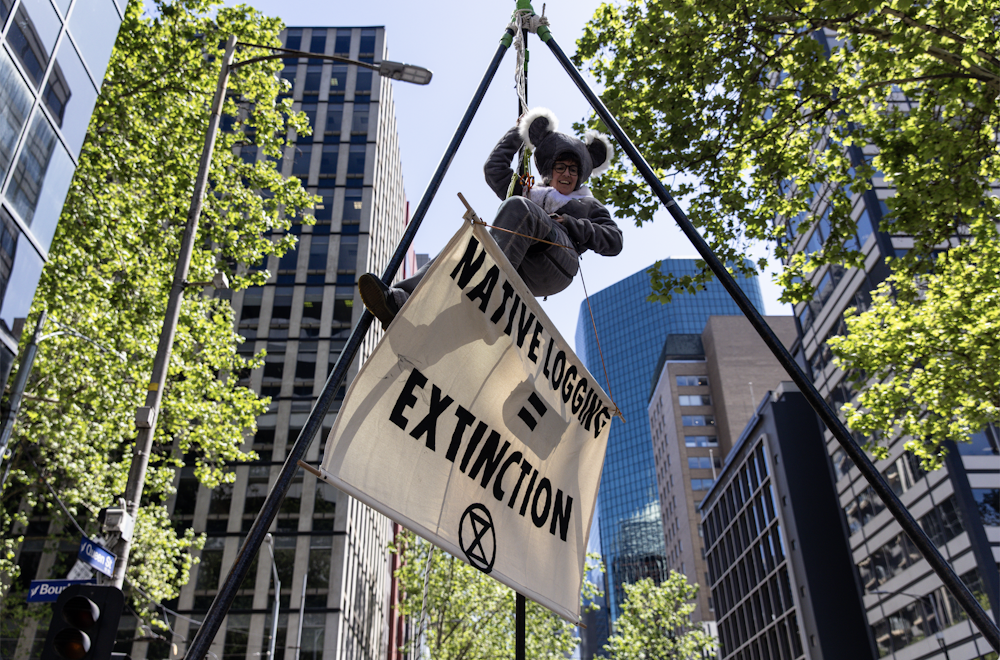 Native forest harvesting is a controversial issue in Victoria.
AAP Image/Diego Fedele
Native forest harvesting is a controversial issue in Victoria.
AAP Image/Diego Fedele
Substantial clearing also takes place under the state planning system, which the Auditor General said fundamentally fails to protect biodiversity on private land. In particular, critically endangered grasslands on Melbourne’s fringe continue to be lost at an alarming rate.
Further, the state’s planned 1,447 kilometres of strategic fuel breaks will occupy an area of around 5,790 hectares (equivalent to approximately 2,894 MCGs) of bushland that will be either cleared or altered.
Labor and the Coalition have both been silent on reforms to land clearing in the lead up to this election.
The Greens have committed to strengthening Victoria’s environmental assessment process so it can better protect the environment. Teal candidate Sophie Torney has committed to stopping the destruction of tree canopy in Kew by amending planning laws.
Links to climate change
Climate change is a key driver of extinction, so it’s also important to analyse political commitments on emissions reduction.
Labor has announced new targets for renewable energy in Victoria’s electricity supply of 65% by 2030, and 95% by 2035. It has also set an emissions reduction target of 75-80% by 2035, and brought forward its net-zero emissions target by five years to 2045.
The Liberal opposition has promised to legislate an emission reduction target of 50% by 2030 and is committing to a $1 billion hydrogen strategy. It also endorsed net-zero emissions by 2050.
The Greens have stepped up further, committing to replacing coal and gas with 100% renewable energy powering the state by 2030, committing to 75% carbon emissions reduction target by 2030, and net zero by 2035.
A net-zero by 2035 target is matched by all Teal candidates.
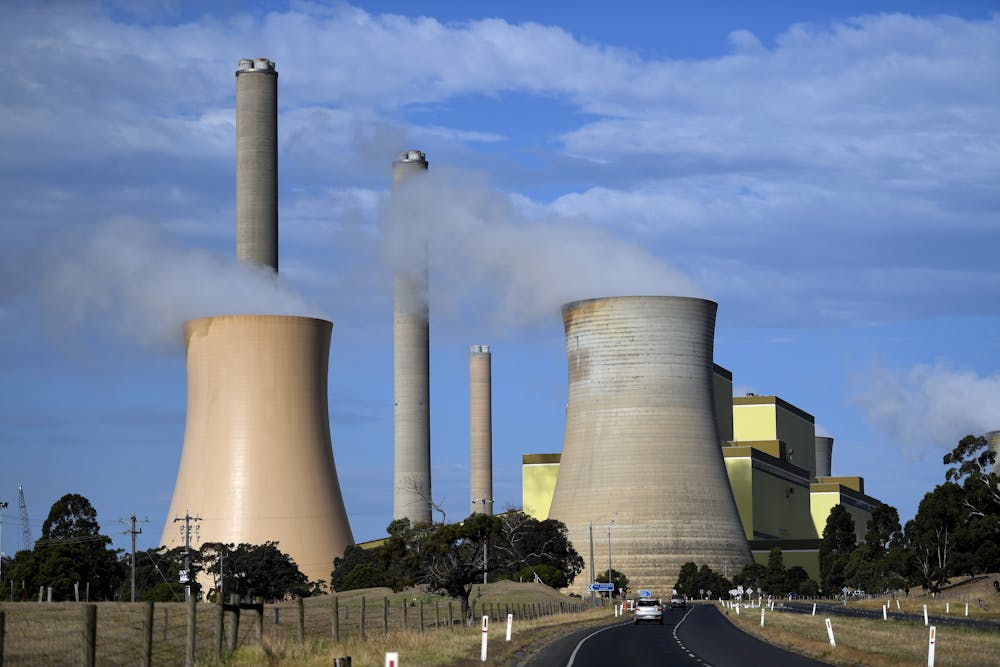 The Victorian Greens promise to replace coal and gas with 100% renewables by 2030.
AAP Image/Julian Smith
The Victorian Greens promise to replace coal and gas with 100% renewables by 2030.
AAP Image/Julian Smith
So, what would zero extinction commitments look like?
We know it would cost approximately $2 billion per year nationally to prevent future extinctions of Australia’s threatened plants and animals.
At least 270 (15%) of Australia’s threatened species live in Victoria. So it’s reasonable to assume around $300 million per year of focused threatened species recovery funding is required to prevent their extinction. This is likely a conservative estimate.
Regulatory reform to prevent further habitat loss, and a significant increase in spending on threatened species recovery are the two key actions to prevent further extinctions.
Preventing extinctions will also require a shift in thinking. While the major parties seem stuck in the biodiversity-versus-development mindset, others recognise development can occur in ways that enhance ecosystems.
Read more: 'Existential threat to our survival': see the 19 Australian ecosystems already collapsing
The natural world underpins our own health and prosperity via productive agriculture and liveable cities. Keeping it healthy is an enlightened act of self-interest.
Without adequate investment, regulatory reform and reframing nature as an asset rather than a problem, we’re likely to see more plants and animals on the threatened species list. Indeed, whole ecosystems may be lost.
Authors: Sarah Bekessy, Professor in Sustainability and Urban Planning, Leader, Interdisciplinary Conservation Science Research Group (ICON Science), RMIT University


















