

Hannah Arendt's Eichmann in Jerusalem and the problem of terrifying moral complacency
- Written by: Peter Christoff, Senior Research Fellow and Associate Professor, Melbourne Climate Futures initiative, The University of Melbourne
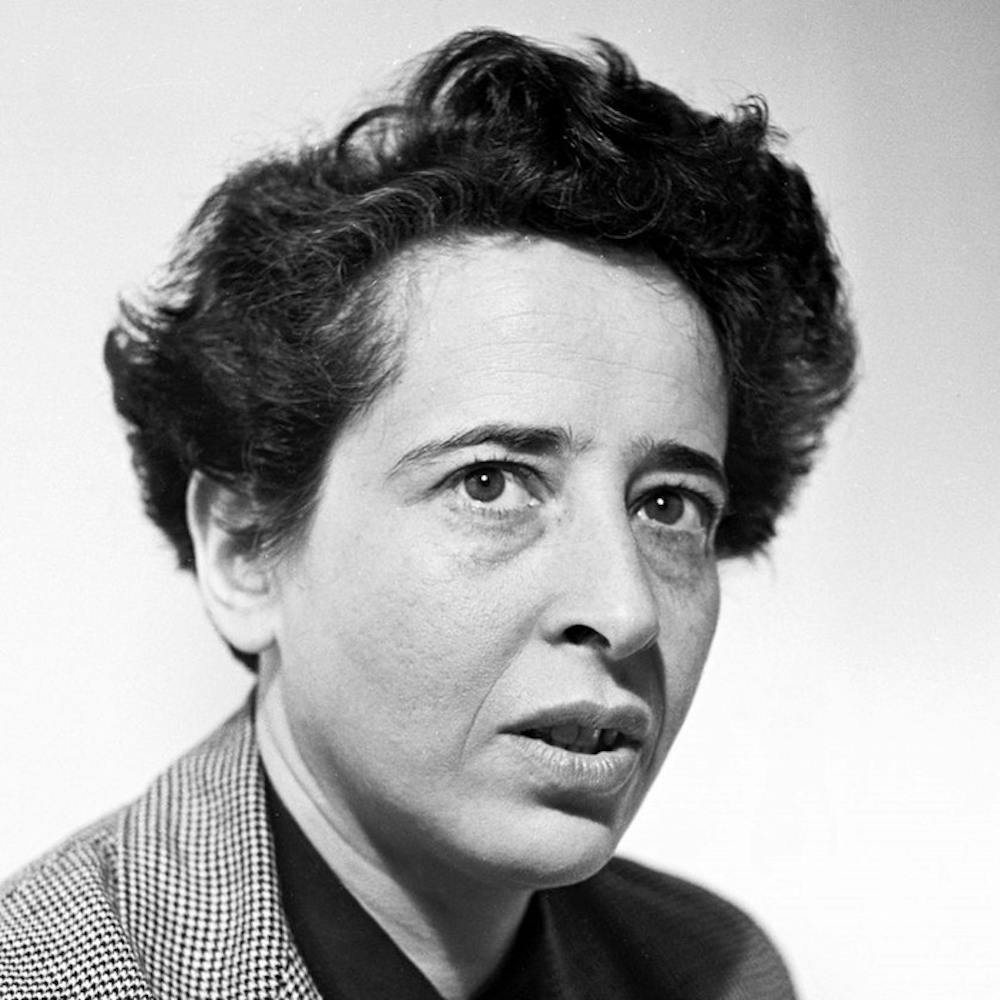
Hannah Arendt published Eichmann in Jerusalem: A Report on the Banality of Evil in 1963. Over the next two decades alone, it would be republished some 30 times, first in the United States and then Britain, as debate swirled around both its arguments and its author.
A Jewish refugee displaced from Nazi Germany, first to France and then the US, Arendt was among the 20th century’s greatest political philosophers.
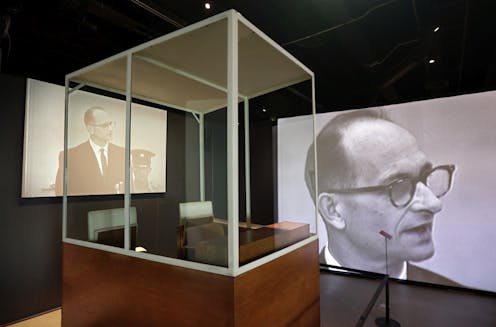
She had travelled to Israel in 1962 to cover the trial of Adolf Eichmann for The New Yorker, which first serialised her reports. Eichmann, kidnapped two years earlier from Argentina by Mossad agents, was a substantial contributor to the Holocaust. In Jerusalem, he would be found guilty and executed for his key role.
His trial was also a marker of national self-definition for Israel, which had been founded in 1948, three years after the war. The kidnapping and the trial’s location were justified, it was argued, because Eichmann had committed crimes against the Jewish people, which the Jewish state had therefore a preeminent right to judge.
Arendt was keenly interested not only in Eichmann as an individual, but also the underlying and larger questions about how – and where – one judges someone like him.
The ‘banality of evil’
The legal concept of “crimes against humanity” was formulated at the 1945-46 Nuremberg War Crimes Trials, in part to bring the perpetrators of The Holocaust to justice. Central to this later trial in Jerusalem was Eichmann’s involvement in this genocidal history.
Arendt’s book draws on Eichmann’s extensive and laborious self-justifications, on documentation and testimony by Holocaust survivors presented at the trial, and on seminal writings by historians such as Raul Hilberg.
It offers a gruelling summary of the history of Nazi German policies against the Jews as these slid from radical social exclusion to the attempted extermination embodied in the “Final Solution”.
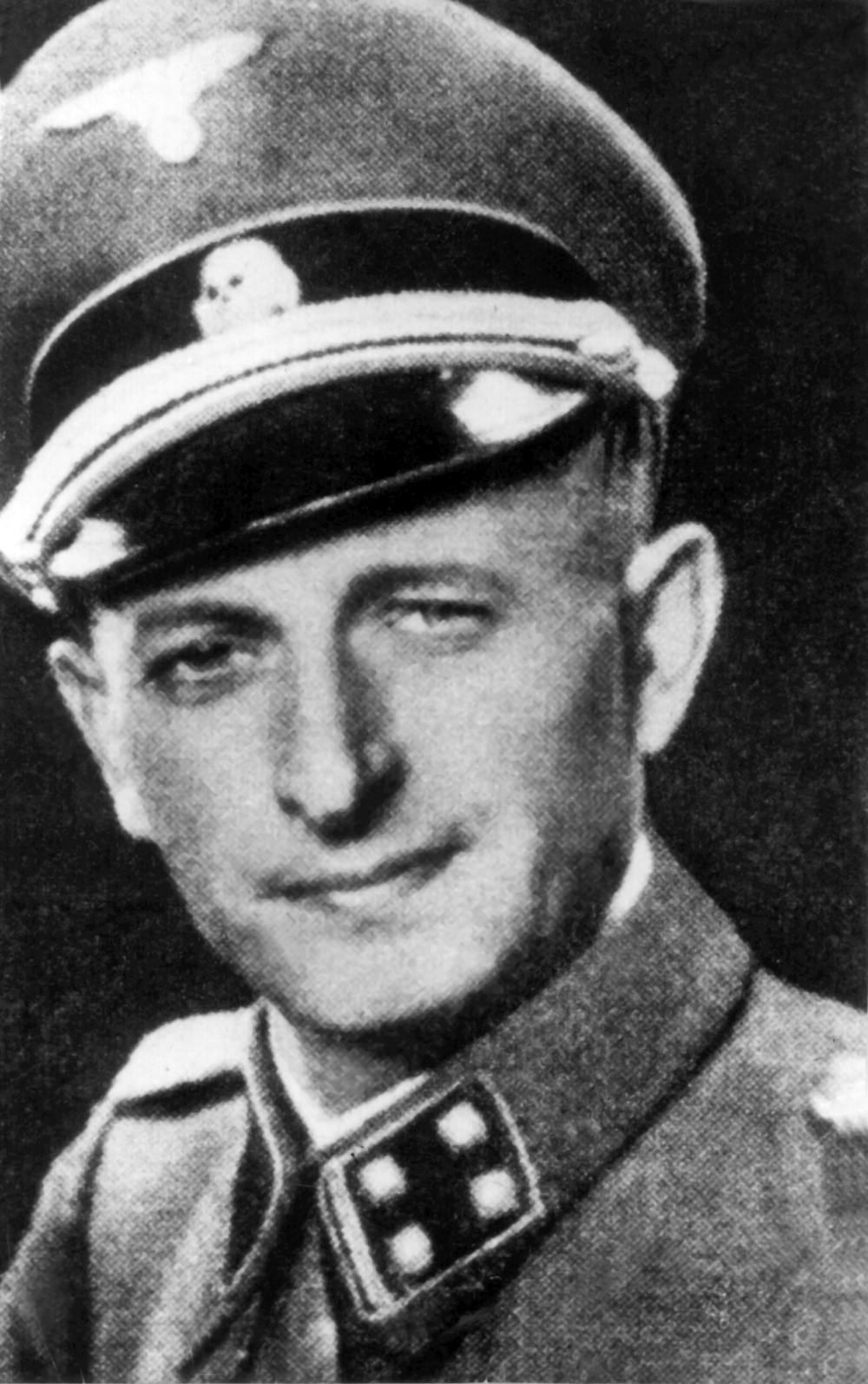 The young Eichmann.
AP
The young Eichmann.
AP
Her focus is on Eichmann, sometimes separate from the legal case and judgement against him, and also those – including Jews – who collaborated with him. Having joined the Nazi Security Service in 1934, he initially oversaw forced Jewish emigration. Then, from 1940, he coordinated deportations to killing centres in Poland and elsewhere.
Eichmann participated in high level discussions about the annihilation of the Jews in 1941 yet later repeatedly claimed he had no ill-will against them.
He sought to represent his directive role in the vast machinery of genocide as an accumulation of perfectly legal, almost mechanical, acts of bureaucratic service. He was merely “following orders”, he claimed, in facilitating the mass deportation of Jews to ghettos and then the death camps. Therefore – he argued – he should not be wrongly punished for being a dutiful functionary in the German state.
While accepting he was not motivated by fierce anti-Semitism (later evidence proved otherwise) and that he had killed no-one directly, Arendt concluded that Eichmann was so morally vacant in his eager adherence – indeed narcissistic devotion – to regulatory order that he was an almost comic figure.
For her he was neither symbol nor symptom nor scapegoat. Yet he also represented and embodied something more terrifying through his vacuous compliance. Her phrase for this vacuity, the “banality of evil”, did not trivialise the evil to which he contributed.
Fracturing the silence
In the late 1970s, I finished my undergraduate degree at Melbourne University and began tutoring about West German politics. Discussions in class quickly swept back to the Nazi State, the reasons for Hitler’s rise, and the question of popular complicity in, and responsibility for, the tragedy that followed.
 A new wave of research about this period was beginning in Germany. And for the first time, I read Arendt’s work on the Origins of Totalitarianism
and on Eichmann. These books raised for me issues of terrible personal relevance. Both my parents were Hungarian Jews whose lives and families were profoundly affected by the second world war.
In her book on Eichmann, Arendt’s attention moved from the early 1930s to the end of the war, and country by country, across Europe, to nations including Hungary.
To quash the possibility of Hungary capitulating to the Russians, Germany had invaded it on 19th March 1944 and installed an explicitly fascist puppet government. Although a deeply anti-Semitic society before the war, Hungary was not genocidally so until the German invasion. Almost overnight, it was transformed.
Eichmann was sent to Hungary to supervise deportations and established himself in central Budapest. His experience in making Austria, Germany and elsewhere judenrein – cleansed of Jews – was rapidly deployed.
By 1944, there was no pretence or consoling fabrication about Jews being “resettled” in the East. Everyone knew about the “Final Solution”. Yet within three months, some 434,000 Hungarian Jews were deported to Auschwitz. By the end of 1944, around 600,000 people – almost 70% of Hungary’s total Jewish population – had been murdered.
In many other countries the processes of herding, deporting and slaughtering had been far less “efficient”. In some – most notably in the Scandinavian states – these efforts were derailed by widespread public refusal and resistance. So why did this catastrophe happen so thoroughly in Hungary?
Arendt’s book spoke directly to me about my Hungarian family and our close Hungarian family friends. I knew some bare facts. Who had survived the camps. Who had lost some, many or all family members.
But I grew up in a family without a history, one utterly silent about anything that preceded emigration to Australia in 1951. I was born in 1955, merely 11 years – literally to the day – after the German invasion of Hungary.
A new wave of research about this period was beginning in Germany. And for the first time, I read Arendt’s work on the Origins of Totalitarianism
and on Eichmann. These books raised for me issues of terrible personal relevance. Both my parents were Hungarian Jews whose lives and families were profoundly affected by the second world war.
In her book on Eichmann, Arendt’s attention moved from the early 1930s to the end of the war, and country by country, across Europe, to nations including Hungary.
To quash the possibility of Hungary capitulating to the Russians, Germany had invaded it on 19th March 1944 and installed an explicitly fascist puppet government. Although a deeply anti-Semitic society before the war, Hungary was not genocidally so until the German invasion. Almost overnight, it was transformed.
Eichmann was sent to Hungary to supervise deportations and established himself in central Budapest. His experience in making Austria, Germany and elsewhere judenrein – cleansed of Jews – was rapidly deployed.
By 1944, there was no pretence or consoling fabrication about Jews being “resettled” in the East. Everyone knew about the “Final Solution”. Yet within three months, some 434,000 Hungarian Jews were deported to Auschwitz. By the end of 1944, around 600,000 people – almost 70% of Hungary’s total Jewish population – had been murdered.
In many other countries the processes of herding, deporting and slaughtering had been far less “efficient”. In some – most notably in the Scandinavian states – these efforts were derailed by widespread public refusal and resistance. So why did this catastrophe happen so thoroughly in Hungary?
Arendt’s book spoke directly to me about my Hungarian family and our close Hungarian family friends. I knew some bare facts. Who had survived the camps. Who had lost some, many or all family members.
But I grew up in a family without a history, one utterly silent about anything that preceded emigration to Australia in 1951. I was born in 1955, merely 11 years – literally to the day – after the German invasion of Hungary.
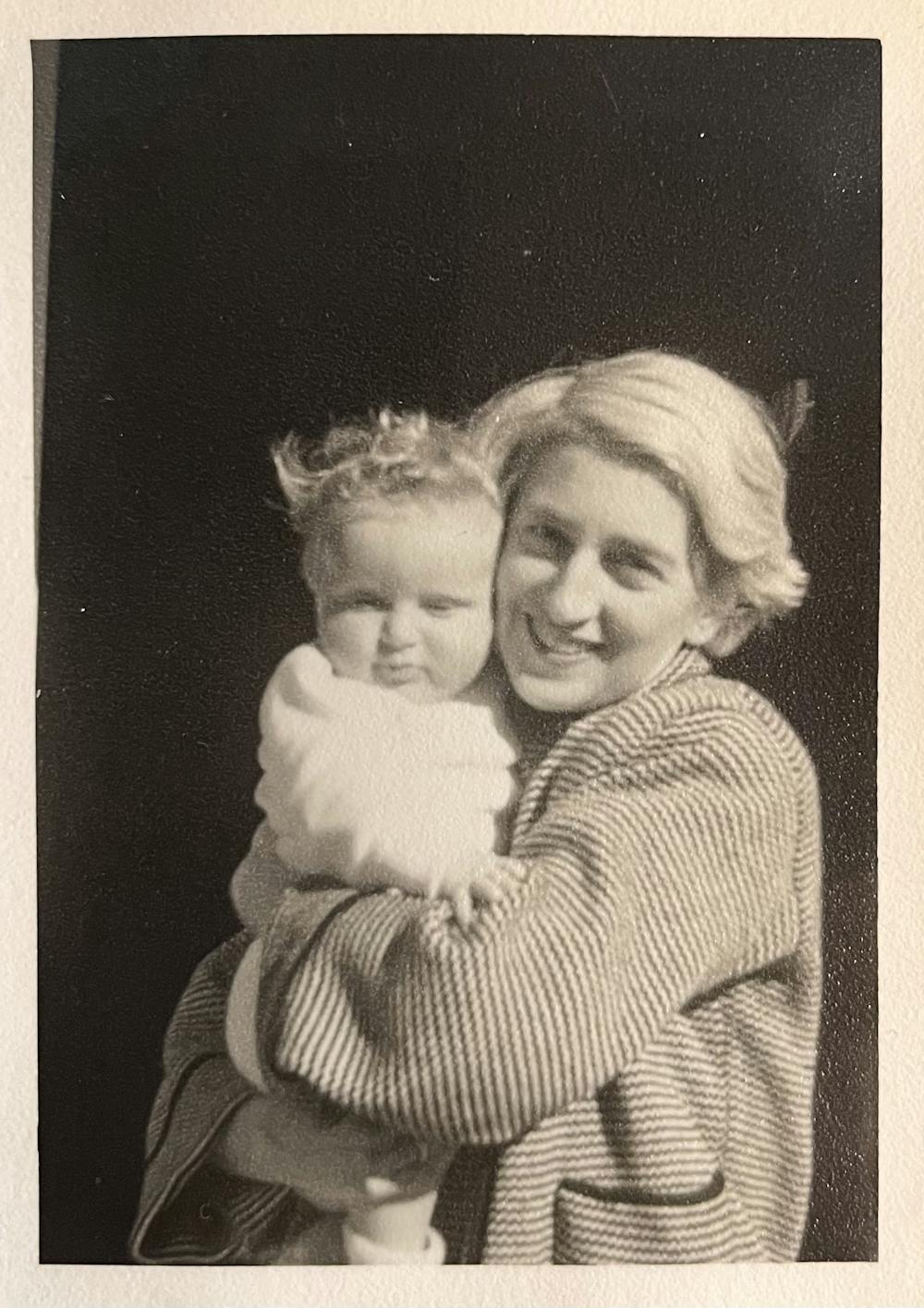 The author with his mother.
Vera Christoff
At home, in leafy Camberwell, the past wasn’t another country. It didn’t exist. I didn’t know how and why my mother and grandmother had avoided the ghetto or being herded into houses “marked” for Jews alone, from which death so easily followed.
Reading Arendt helped me ask new questions. Her book became a device for luring the occasional story to the surface. And so I learned about the faked identity papers and the Swedish “passport” my mother obtained, her refusal to wear the yellow star, the months she and her mother spent hiding in a cellar.
Inevitably, the view from the ground – or beneath it – was fragmented and confused. Bravery involved an accumulation of small, almost accidental acts countering betrayals as Hungarian society fell apart.
Mostly, however, the past remained sealed by trauma.
Moral complacency and climate crimes
As important for me was Arendt’s portrait of Eichmann as a person. How does someone like him come into being?
Eichmann was unique – yet his terrifying moral complacency was reflected in the lives of those around him, Germans of his generation especially.
However the desire to keep one’s head down and not cause trouble, and to benefit passively or actively from small wrongs and larger evils, was not merely a matter for Germans in Nazi Germany.
At the heart of the “Eichmann problem” are larger questions about the nature of wilful blindness, and the sources of compromise, complicity, and collaboration with forms of evil in complex bureaucratic societies.
Arendt’s underlying question about “How should we behave?” became, for me, a question about how ordinary people – like me – can participate in awful things and contribute to terrible outcomes, sometimes knowingly, using exculpatory stories to salve their consciences.
I reread her book a few months ago and the idea of the banality of evil seems to me as vital now as it was in 1963. These days the “Eichmann problem” of criminal disregard returns to us in other forms.
The use of fossil fuels continues despite clear, incontrovertible and widespread knowledge of the lethal catastrophe this is producing.
Here I am not focusing on individuals’ small and often largely unavoidable everyday activities – for instance, using petrol-powered cars to get to work. Instead I am concerned with the actions of those with significant decision-making power in corporations and governments, who directly and indirectly profit from practices they know to be terribly harmful over time.
Arendt invites us to ask: given what we know about climate change, at what point does enabling the exploitation of coal, oil and gas resources – through exploration, mining, direct use or export – embody culpable moral complacency?
Such decision makers will defend their actions as legal, state-sanctioned, pragmatic, based on market signals, meeting social need. They are presently afforded legal immunity because of their apparent distance in space and time from the devastation they are causing but don’t “intend”.
Yet perhaps they should be considered responsible, in Eichmann-like ways, for these new crimes against humanity and against other species.
Authors: Peter Christoff, Senior Research Fellow and Associate Professor, Melbourne Climate Futures initiative, The University of Melbourne
The author with his mother.
Vera Christoff
At home, in leafy Camberwell, the past wasn’t another country. It didn’t exist. I didn’t know how and why my mother and grandmother had avoided the ghetto or being herded into houses “marked” for Jews alone, from which death so easily followed.
Reading Arendt helped me ask new questions. Her book became a device for luring the occasional story to the surface. And so I learned about the faked identity papers and the Swedish “passport” my mother obtained, her refusal to wear the yellow star, the months she and her mother spent hiding in a cellar.
Inevitably, the view from the ground – or beneath it – was fragmented and confused. Bravery involved an accumulation of small, almost accidental acts countering betrayals as Hungarian society fell apart.
Mostly, however, the past remained sealed by trauma.
Moral complacency and climate crimes
As important for me was Arendt’s portrait of Eichmann as a person. How does someone like him come into being?
Eichmann was unique – yet his terrifying moral complacency was reflected in the lives of those around him, Germans of his generation especially.
However the desire to keep one’s head down and not cause trouble, and to benefit passively or actively from small wrongs and larger evils, was not merely a matter for Germans in Nazi Germany.
At the heart of the “Eichmann problem” are larger questions about the nature of wilful blindness, and the sources of compromise, complicity, and collaboration with forms of evil in complex bureaucratic societies.
Arendt’s underlying question about “How should we behave?” became, for me, a question about how ordinary people – like me – can participate in awful things and contribute to terrible outcomes, sometimes knowingly, using exculpatory stories to salve their consciences.
I reread her book a few months ago and the idea of the banality of evil seems to me as vital now as it was in 1963. These days the “Eichmann problem” of criminal disregard returns to us in other forms.
The use of fossil fuels continues despite clear, incontrovertible and widespread knowledge of the lethal catastrophe this is producing.
Here I am not focusing on individuals’ small and often largely unavoidable everyday activities – for instance, using petrol-powered cars to get to work. Instead I am concerned with the actions of those with significant decision-making power in corporations and governments, who directly and indirectly profit from practices they know to be terribly harmful over time.
Arendt invites us to ask: given what we know about climate change, at what point does enabling the exploitation of coal, oil and gas resources – through exploration, mining, direct use or export – embody culpable moral complacency?
Such decision makers will defend their actions as legal, state-sanctioned, pragmatic, based on market signals, meeting social need. They are presently afforded legal immunity because of their apparent distance in space and time from the devastation they are causing but don’t “intend”.
Yet perhaps they should be considered responsible, in Eichmann-like ways, for these new crimes against humanity and against other species.
Authors: Peter Christoff, Senior Research Fellow and Associate Professor, Melbourne Climate Futures initiative, The University of Melbourne 

















