

First Nations kids are more active when their parents are happy and supported
- Written by: Rona Macniven, Research Fellow, UNSW Sydney
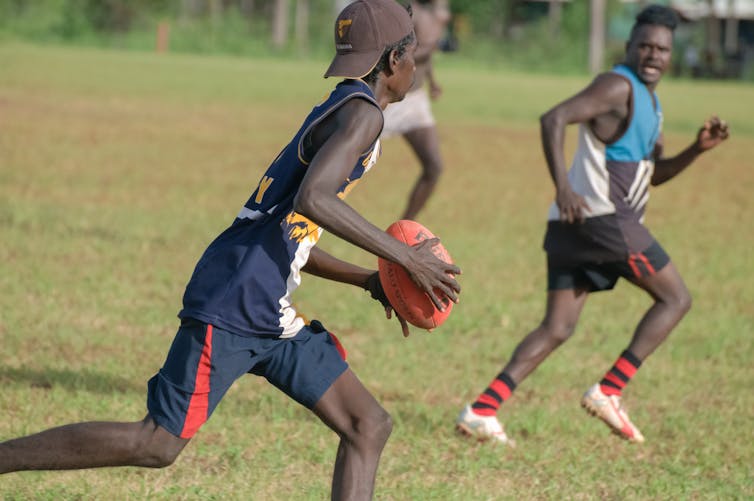
For Aboriginal and Torres Strait Islander people, being physically active has been a part of culture for many thousands of years, through traditional active lifestyles.
These activities are still relevant today. Having a spiritual connection to Country, or caring for Country, provides opportunities for physical activity. This is essential for health and wellbeing.
Physical activity guidelines recommend children do at least 60 minutes of moderate-to-vigorous activity every day. This means activity that makes their heart beat faster and might include teams sports like football or netball as well as cycling, swimming, or active play.
First Nations children tend to be more active than non-Indigenous children. Around half of Aboriginal and Torres Strait Islander children do at least 60 minutes of physical activity a day, compared with one-third of non-Indigenous children.
But evidence from international studies and our previous research shows physical activity levels tend to drop during teenage years for both Indigenous and non-Indigenous children, leading to lower levels in adulthood. So it’s important to provide children with opportunities to be active as they get older.
Helping kids grow up strong
The longitudinal study of Indigenous children, Footprints in Time, aims to help Indigenous children “grow up strong”. The study collects annual data from around 1,700 Indigenous children, who were 0-5 years at the start of the study in 2008, in urban, rural and remote areas of Australia.
Most of the data are collected through a survey competed by the child’s parent, usually their biological mother. Early on, parents were asked culturally relevant questions about their social and emotional wellbeing, their child’s engagement with culture and community, screen time and family circumstances such as employment and source of income.
Parents’ postcode was also used to calculate the socioeconomic status of where they lived and how remote it was.
In 2016, parents were asked whether their child (who was then aged 8-13 years) did at least 60 minutes each day of moderate-to-vigorous physical activity. Half the children met the physical activity guidelines.
Out latest study
In our most recent study, we looked at what was happening in the children’s lives aged 0-5 and whether this was linked to their physical activity at age 8-13.
In assessing parental wellbeing when the children were aged 0-5, parents were asked about a range of factors, including their level of connection with their family and community, loneliness, having interests, and feelings of anger and worry.
We found that when the parent (who was usually the birth mother) had high levels of wellbeing when the child was aged under five, their child was more likely to do at at least 60 minutes each day of moderate-to-vigorous physical activity at age 8-13. This was regardless of family employment status, income or the socioeconomic or geographical area they lived in.
So higher parent wellbeing during the early years was linked to higher physical activity of their child eight years later.
Read more: Kids' screen time rose by 50% during the pandemic. 3 tips for the whole family to bring it back down
Children were more likely to meet the physical activity guidelines at age 8-13 if they hadn’t played electronic games as a family between age 0-5 years. Again, this was regardless of the family’s employment status, income, or their socioeconomic or geographical area. But the study didn’t ask about the amount of time spent playing electronic games.
Boosting parents’ welling pays dividends for kids
Finding ways to promote parent wellbeing and reduce levels of family screen time during the early years is important for Aboriginal and Torres Strait Islander children’s future physical activity levels.
There may be stronger benefits from family cultural engagement, particularly in cultural practices that involve physical activity such as hunting and fishing.
A number of programs are already doing this across Australia. But they need careful evaluation, including hearing about Aboriginal and Torres Strait Islander people’s experiences of them. First Nations families should also be included in the design and implementation of future programs.
While our study didn’t examine the drivers of wellbeing among parents, it’s clear we need to find ways to improve parent wellbeing, which could impact physical activity levels among children in early adolescence.
Read more: Are sports programs closing the gap in Indigenous communities? The evidence is limited
Authors: Rona Macniven, Research Fellow, UNSW Sydney

















