

How to feed your garden birds if you want to attract and support native species
- Written by: Daria Erastova, Doctoral researcher, University of Auckland
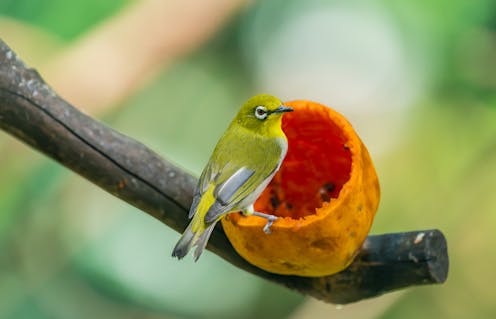
As vegetation is removed to make way for urban development, wild species experience a dramatic loss of habitat, making it more difficult for city dwellers to interact with wildlife.
Studies show a lack of connection to nature might lead to anxiety and depression for people in cities. Birds are among the most accessible and aesthetically attractive connection points. Hence, thriving bird communities in cities can have a positive effect on people’s health and wellbeing.
Feeding birds is popular in Aotearoa. About half of New Zealand households feed birds in their gardens, predominately with bread and seed. Unfortunately, this mainly attracts introduced grain-eating species such as house sparrows, starlings, blackbirds and spotted doves. They are likely to compete for space and habitat with native birds, which feed on invertebrates, flower nectar, fruits or leaves.
Attracting nectar-feeding birds
Sugar water serves as an alternative supplementary food for nectar-sipping birds such as tūī, korimako/bellbirds and tauhou/silvereye. It likely benefits native birds over winter when nectar is scarce and it improves their chances of a successful breeding season come spring.
But there are concerns that sugar feeding may lead to an accumulation of pathogens, create health problems and make birds dependent on supplementary feeding. It may also reduce pollination and seed dispersal by reducing bird visits to native plants, and put birds at greater risk of predation.
Our study is the first in New Zealand to determine how sugar water feeding affects backyard bird communities. We explored which birds are visiting and how they interact with each other as well as their overall physical health.
Read more: It's OK to feed wild birds – here are some tips for doing it the right way
Using the right feeders
We analysed 990 responses from an online New Zealand-wide survey to explore current sugar-water feeding practices. We found a large variety of feeding approaches, but the crucial aspect that affected which bird species visited backyards was the feeder type.
Feeders specifically designed for nectar-eating species were successful in attracting natives, while non-specific feeders (open dishes or simple containers) also attracted introduced birds.
In feeders designed for nectar feeders, the bird must push aside the guard with its narrow bill and protrude its tongue under the feeder’s cover to drink the sugar water. Introduced birds (not nectar-feeding specialists) do not have the right-shaped tongues and bills or behaviour to do this and are excluded from using these feeders.
Winter frenzy
Next, we explored how seasons affected bird foraging behaviour and aggressiveness. In winter, birds visited feeders more often, spent a longer time foraging and were more aggressive to other birds using the feeder. This suggests winter feeding helps survival when natural foods are scarce.
We also observed Auckland tūī in winter in backyards where we experimentally added feeders with either low (half a cup of sugar per litre of water) or high (one cup/litre) sugar concentrations. Tūī spent longer foraging at low-concentration feeders but were more aggressive at high-concentration ones.
This suggests birds must forage on low-calorie solutions for longer to gain energy, while high-calorie sugar water is a fiercely defended valuable source. However, feeder presence did not change the overall number of backyard birds.
Read more: Canaries in the coal mine: why birds can tell us so much about the health of Earth
Bird health
Finally, we evaluated how the presence of sugar-water feeders, seasons and climate affected the birds’ body condition and disease prevalence. Similarly to findings from previous overseas studies, individuals had better body conditions in non-feeding gardens than in those that provided a feeder.
But in gardens with feeders, body condition of birds was better in Auckland (milder climate), in summer (warmer temperatures) and at high-sugar concentration feeders (more calories).
Sugar-water feeding was also associated with a higher risk of coccidia infection which can lead to loss of pigmentation, diarrhoea and even kill birds in severe cases. Fortunately, our screening did not detect salmonella in any individuals or feeding stations.
However, in a similar study on backyard feeding in Auckland using bread and seeds, 7% of birds at feeders tested positive for salmonella. This suggests that birds such as house sparrows, which visit feeders with simple designs that can be accessed by most birds, contribute to pathogen transmission risks for nectar-eating birds and, possibly, people.
Recommended bird-feeding guidelines
Based on our study, we make several recommendations:
do not feed bread and seeds to birds, as this only encourages highly abundant introduced species
rather than using open dishes, choose commercially available sugar-water feeders designed for native birds (Tui Nectar Feeder™, Topflite Nectar Nutra feeder™, PekaPeka™) to exclude introduced bird species
provide sugar water only in winter and stop feeding in spring and summer to let birds use natural foods, pollinate plants and minimise the risk of bacterial growth in hot weather
in winter, use about one cup of sugar per litre of water, as we linked this sugar concentration to better bird body condition than lower-sugar solutions
clean all structures used in feeding thoroughly at least two times a week by scrubbing with hot water to minimise the risk of bird disease outbreaks
attach the feeder to a tall post away from trees and fences to minimise chances of predation by cats.
Providing birds with supplementary food is an affordable and appealing way to interact with wildlife. However, it is important to state that supplemental feeding alone is not the solution for urban bird populations.
The long-term answer is to transform our backyards and urban parks into bird-friendly habitats. Nectar-feeding birds need protein from insects found on plants and native vegetation provides essential food, shelter and nesting sites.
Clean water baths can help during prolonged summer droughts. But perhaps most importantly, backyard pest control of rodents, possums and hedgehogs is essential if we want to increase native bird numbers and diversity in a way that will benefit both birds and people.
Authors: Daria Erastova, Doctoral researcher, University of Auckland


















