

how Babylon captures Hollywood in the 1920s
- Written by: Jennifer Frost, Associate Professor, University of Auckland
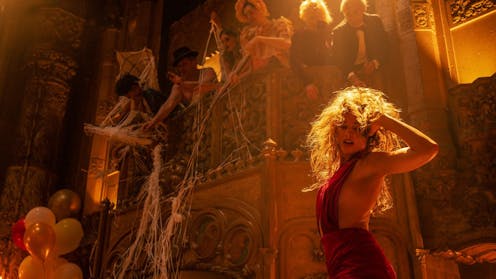
In his latest film, Babylon, director Damien Chazelle presents a very different vision of the home of America’s motion picture industry than he did in his Oscar-winning 2016 film, La La Land.
Instead of a romantic, wistful homage to the dream of Hollywood stardom and success, Babylon reveals the nightmarish underside of the dream factory in the 1920s. In telling the rise-and-(mostly)-fall stories of a group of striving movie celebrities against the backdrop of social, cultural and technological change in the new, modern, 20th-century America, the movie has both relevance and resonance today.
Hollywood in the roaring twenties
The Roaring Twenties – an era of affluence and consumption, of cultural ferment and innovation – put Hollywood on the map. Movie-making became an economic powerhouse. With the financial centre in New York and the production centre in California, the industry consolidated from many small firms to eight major companies, such as Warner Brothers, Paramount and Twentieth Century-Fox. The big studios achieved near-monopolistic control, extending from production through distribution to exhibition, and churned out thousands of movies for an ever-growing audience at home and abroad.
Chazelle gets a lot right about the history of Hollywood in this decisive decade. The development of the star system, which produced and sold the movies as star vehicles and created celebrity icons with millions of fans, is shown right from the start, with an over-the-top party that is at once lavishly ostentatious and garishly outrageous. At the party, we meet Nellie LaRoy (Margot Robbie), a young starlet about to get her big break, and Jack Conrad (Brad Pitt), an established star, two characters loosely based on the tragic lives of Clara Bow and John Gilbert.
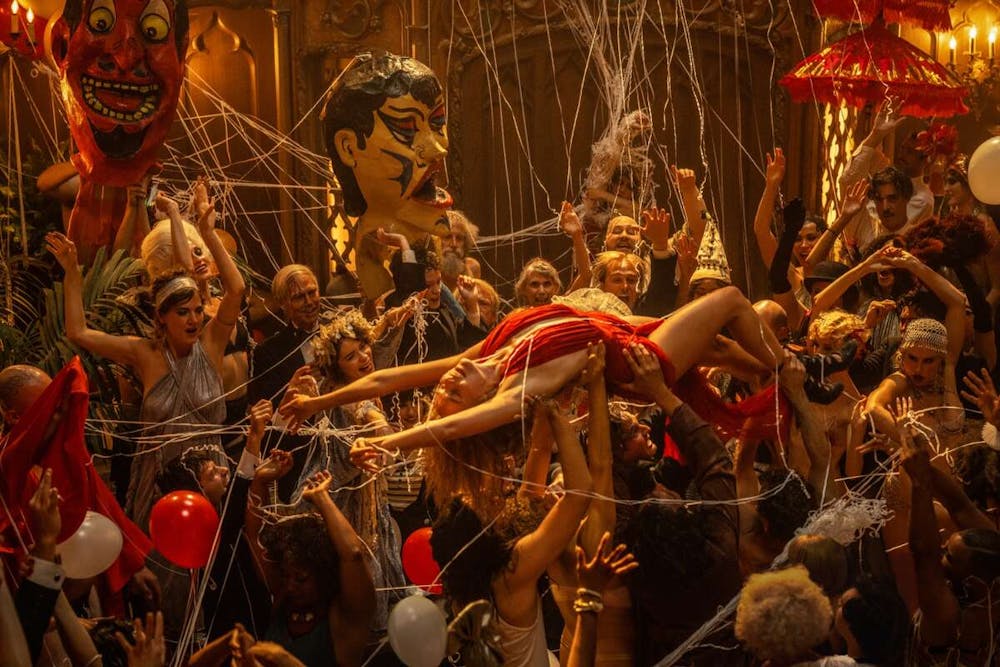
Drugs, drinking and sexual debauchery are on full display at the party and lead to the death of a young actress, a tragedy that recalls the Roscoe “Fatty” Arbuckle scandal of 1921. At the time an incredibly popular and highly paid comedy star, Arbuckle was accused of rape and tried for manslaughter in the death of Virginia Rappe. Although he was eventually exonerated, the scandal ended Arbuckle’s career and exposed the seamy behind-the-scenes reality of what came to be called “Hollywood Babylon.”
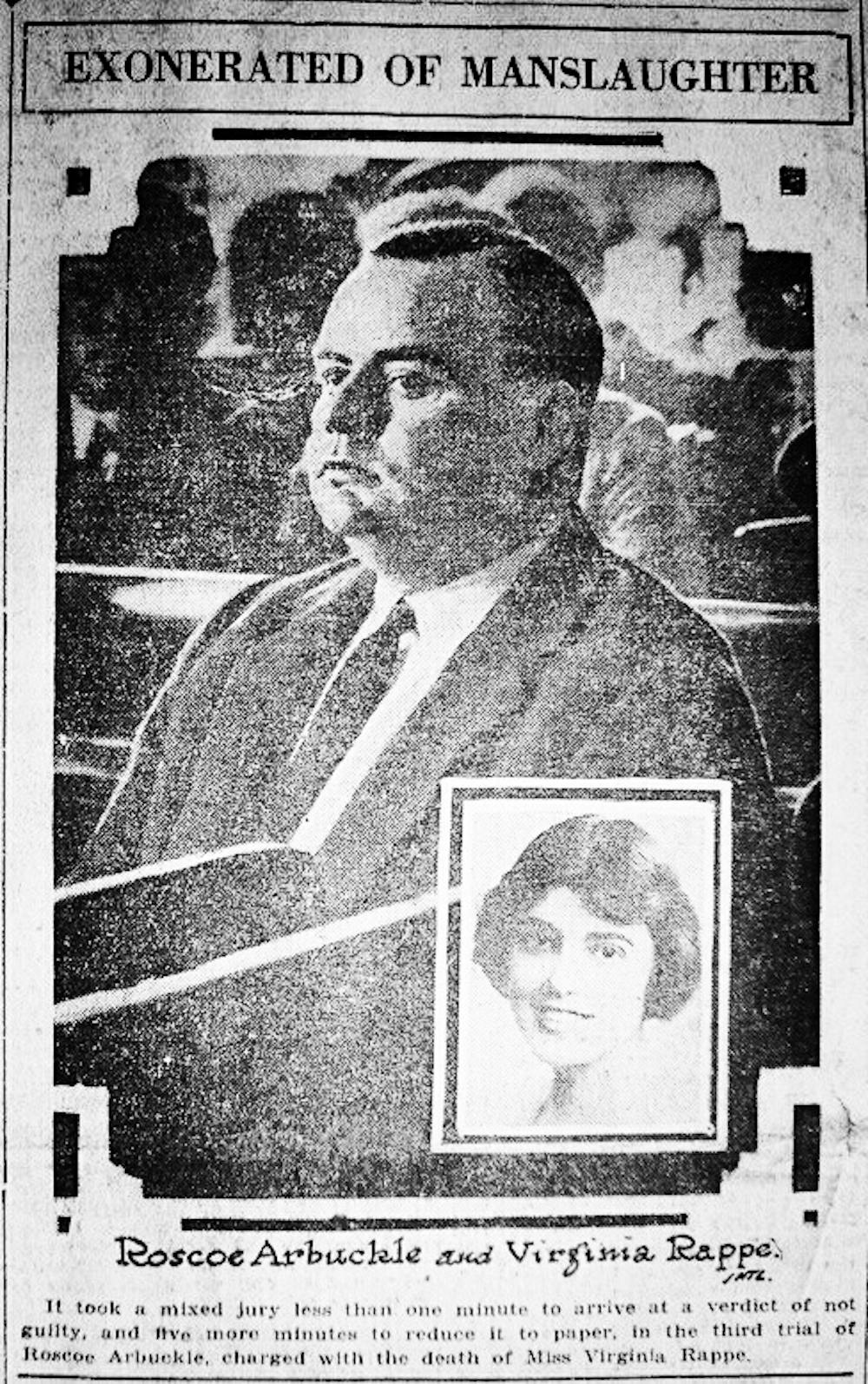 Newspaper scan of the outcome of the infamous Roscoe Arbuckle third trial.
Wikimedia Commons
Morality and scandal in Hollywood
The Arbuckle scandal and others that followed led to public outcry and political calls for a “moral makeover” in Hollywood. The studios inserted “morals clauses” into employees’ contracts, allowing the studios to fire an employee for social or sexual impropriety or causing a public scandal.
They formed a trade association, the Motion Picture Producers and Distributors of America, and hired to head it Will Hays, the former chairman of the Republican National Committee. Promising to clean up the movies, Hays promoted a list of “Don’ts and Be Carefuls” and then the Production Code of 1930 (informally known as the Hays Code), to prevent profanity, nudity, sex and “ridicule of the clergy” from appearing on screen.
This crackdown on movie content was part of a wider conservative backlash, as the United States entered the modern era. By 1920, most Americans were living in cities. Consumer and popular culture were thriving. Women had the right to vote. And European immigration and African American migration had made evident a more multicultural America. Many Americans feared and resisted these changes, and they sought to reestablish cultural homogeneity and control, including over the motion picture industry.
From silence to sound
These culture wars profoundly mirror our current ones, whereby social groups – in this case, conservative and liberal Americans – compete and conflict over whose values and beliefs will dominate the culture.
But Babylon’s plot focuses instead on the movie industry’s transition from silent to sound film and the impact of that change for stars of the silent era. Chazelle accurately introduces sound by featuring Al Jolson in the 1927 film The Jazz Singer. The wildly enthusiastic audience reception for the film dashed the confident assumption of those who thought sound would be a passing fad.
The industry shifted to the new technology, at great cost, and right before the Great Depression hit. Investment in microphones, sound-proofing studios, and wiring movie theatres and hiring new technicians and screenwriters proceeded. Actors without the right voice, accent, or diction didn’t make the cut. Chazelle covers this history well with a mix of humour, showing the difficulties of filming on the new sound stages, and heartbreak, as the careers of the main characters, Robbie’s LaRoy and Pitt’s Conrad, crash and burn.
Rags to riches
Babylon’s other characters represent significant aspects of the movies in the 1920s. The rise of Manny Torres (Diego Calva) from studio gofer to producer conveys the opportunities available to Latino filmmakers, such as René Cardona, and that rags-to-riches could still happen in the studio era. Ruth Adler (Olivia Hamilton), a director modelled on the pioneering Dorothy Arzner, alludes to the prominence of women as writers, editors, and directors in early Hollywood.
Chazelle also highlights the vital role that gossip columnists played in publicising Hollywood, its movies, stars, and fantasies. Elinor St John (Jean Smart) unsentimentally agrees with being characterised as a “cockroach”. Although the real-life inspiration for her character, British novelist Elinor Glyn, wouldn’t have agreed, gossips did feed off the crumbs of the industry and outlasted even the most celebrated stars.
Two additional characters matter very much for the film and its larger historical meaning. An African-American jazz musician, Sidney Palmer (Jovan Adepo), and Lady Fay Zhu (Li Jun Li) pay respects to Louis Armstrong and Anna Mae Wong. The characters’ egregious treatment by the studios in the film – Palmer is required to perform in blackface and Lady Zhu can’t get cast as an actress – exposes the racism and sexism that dominated Hollywood for most of its history.
 Mexican actor Ramón Novarro and Chinese-American actress Anna May Wong in a publicity photo for the film Across to Singapore (1928).
As a result of pressure from inside and outside, the industry is starting to change. However, these small steps have infuriated today’s cultural conservatives. For example, the casting of Halle Bailey, an African-American actress-singer in the live-action The Little Mermaid coming out this year, catalysed a storm of racist reaction. As was true 100 years ago, Hollywood is once again at the centre of America’s culture wars.
Authors: Jennifer Frost, Associate Professor, University of Auckland


















