

Kath O'Connor was writing a novel about her grandmother's ovarian cancer when she was diagnosed, too. She died before it was published
- Written by Jen Webb, Dean, Graduate Research, University of Canberra
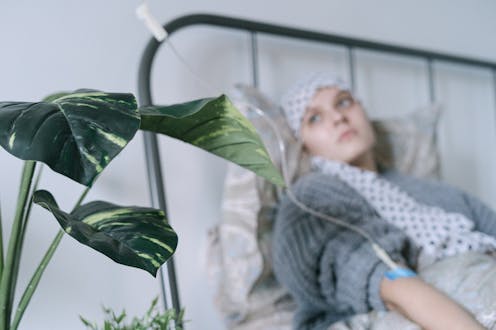
The concept of death has preoccupied people for probably as long as people have existed. Nonetheless, we are are practised at avoiding, forgetting or suppressing the inevitability of our own death. We write about death in philosophy and medicine and sociology, and in fiction too. But typically, these writings locate death “out there”, as an event or a case.
It is rarer for literature to focus on a person who is confronting their own death. George Eliot’s Middlemarch provides one famous example of this approach. Casaubon, on receiving his hopeless prognosis, becomes aware of the heartwrenching difference between “we must all die”, and “I must die – and soon”.
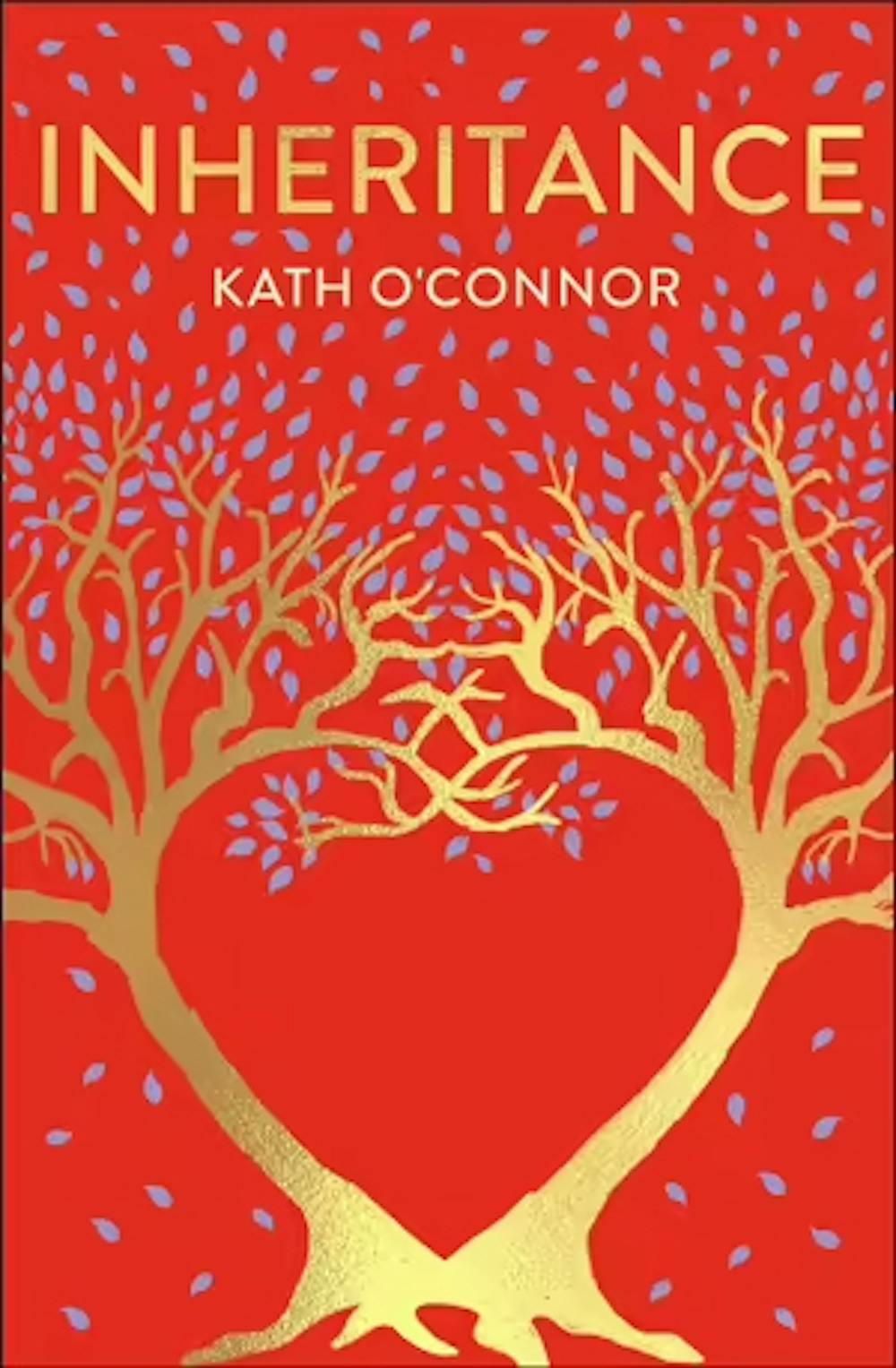
Review: Inheritance – Kath O'Connor (Affirm Press)
In recent years, several Australian novels have explored this topic. I think here of Debra Adelaide’s 2008 novel The Household Guide to Dying, in which the narrator spends her own terminal cancer writing a “guide” to the long, complicated process of becoming dead.
I think too of Georgia Blain’s 2016 novel Between a Wolf and a Dog, which similarly traces what Hilary, the central character, does to wrap up her life after being diagnosed with aggressive cancer. (Cruelly, Blain was herself diagnosed with the cancer that would kill her just as she was working on the edits of the manuscript.)
Read more: Goodbye Georgia Blain: a brave and true chronicler of life
Fiction, but close to memoir
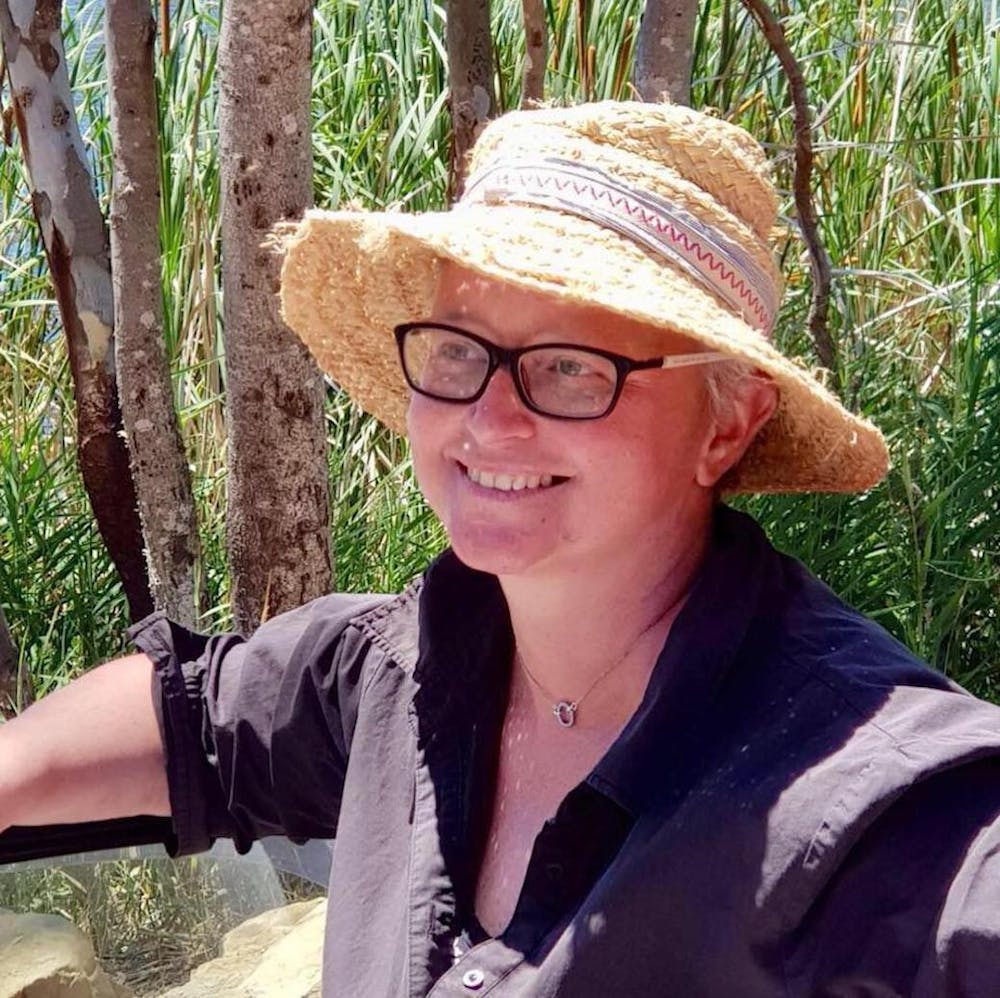
Now we have Kath O’Connor’s debut novel, Inheritance, a work of fiction that is very close to being memoir. O’Connor’s grandmother, we learn in the opening notes, carried the BRCA1 gene mutation, which caused her death from ovarian cancer. O’Connor, who carried the same mutation, was diagnosed with the same disease, and wrote this novel during her treatment.
Tragically, she died shortly before completing the work, leaving it to her partner, her writing mentor Inga Simpson, and family members to bring it to publication.
The novel works across two stories, and two voices. The first is that of Rose, a contemporary woman living in Melbourne with her partner Salima. In her professional life she is an oncologist, who works to heal cancer patients, or help them to die. In her private life she is rather resentfully caring for her difficult drunken father, Eddie, and more optimistically contemplating IVF so she and Salima can start a family.
But in the very first chapter, Rose gets a call from the fertility specialist to confirm that her BRCA test was positive. That is to say, without a total hysterectomy and a bilateral mastectomy, she is at risk of dying early.
The other voice and story belong to Rose’s grandmother, Nellie. The second chapter, in which Nellie’s narrative begins, is a portrait of rural life: of rhubarb chutney, of chickens and fresh-laid eggs, of a determination to be satisfied in her unsatisfactory marriage to a taciturn husband.
Nellie lives in 1945 regional Victoria with John and their two little sons. After a youth of political activism, higher education and making plans for a career, she now busies herself with the daily tasks of cooking and cleaning and managing her family. And she does not know that she carries what Rose calls the BCRA “sleeping time-bomb”, or that she already has the beginnings of the ovarian cancer that will kill her.
Read more: Angelina Jolie has had a double mastectomy, so what is BRCA1?
Cancer in the 1940s, and 2016
This opening links the two women, and simultaneously, in its shifting voice, setting and points of view, teases out the difference that some 80 years can make to a life, its prospects and opportunities. Nellie, for instance, speaks to us directly, while Rose comes to us only through the third person. Nellie is self-deprecating and diffident, while Rose is – at least in her professional self – all cool medical precision.
Nellie is an object of the system: not trusted to make her own decisions; subjected to the horrors of 1940s cancer treatment; separated from her beloved little sons, on the basis this is no place for children. Rose, by contrast, is directly informed about her genetic inheritance, and trusted to make her own decision about treatment. And yes, 2016 cancer treatment is still brutal, but Rose’s patients are more likely to be treated as individuals, to be honestly informed about their situation, to be given the presumption of agency.
I am usually very reluctant to draw a connection between an author and their characters, but given O’Connor’s history as a GP, it’s easy to hear in the narrator’s reflections the professional training the author brings to the story. It’s also easy to see the shift from the scientific gaze to that of the sometimes frightened, sometimes fractious human being.
Plenty of passages show the confident articulation of the medical professional. But plenty of passages, too, show the anxious, generous, resentful, loving, complex mix of qualities that make up most individuals – that make up Rose, and Nellie, and the other characters, and indeed the whole social realm.
Read more: Brace yourself, genetic testing might give you more than you bargained for
Inheriting a social conscience
I’ve read this as a novel about death and dying; but it is equally a novel about society, and social justice – and this is another inheritance Nellie passes on to her descendants. Nellie’s dearest childhood friend Ruth is a political activist, and was a dedicated Communist until disillusioned by the Party’s refusal to “put women’s rights on the agenda”.
Nellie too briefly joined the Party, but discovered the consolations of being ordinary and withdrew to a quieter life. Ruth, though, retained a powerful voice for women’s rights and human rights, and this becomes the germ of the social conscience possessed by Nellie’s descendants.
 During Nellie’s illness, Ruth took up a role in the family. She visited Nellie, read her stories and poems, fed her small treats, played with the boys, and most importantly, saw her as herself, Nellie, and not as a dying patient.
Her involvement with the boys influenced Eddie – Nellie’s younger son, Rose’s father – to take up the cudgels of social change. He became a human rights lawyer specialising in refugee cases, and however distressing he might be as a retired drunk, he still maintains the energy to support refugees in the community. And Rose, too, inherited a sense of social justice – enough to feel guilty that she elected to work in the private rather than the public health sector.
Rose justifies her choice on the basis that “suffering from cancer is essentially no different in the world of the privileged”. But then she reflects on her own risk of cancer, on how illness “overrides everything else”, how it will reduce her to sickness, pain, to being just “the mastectomy in Bed Four”.
Though cancer treatment is radically different now from 1945, still – as Rose notes – it reduces patients to categories: “newbies” identifiable by their “full heads of hair and terrified faces”; “seasoned members” who seem bored by or resigned to their treatment; the “sicker ones in wheelchairs”.
But she also knows her patients as individuals; knows their lives and fears as well as their diseases. She is willing to sit with them and listen to them; to offer, where she can, some comfort. She can ease their pain. She can ease them into death when it comes.
I read this novel aware that its author has herself gone into death; that she wrote this while going through treatment and facing this new, and final, stage of life. The tenderness, the professionalism, and the careful eye on what it is to be a person in relation to other people is, at least for me, immensely moving.
It’s a dense novel, written with close attention to detail and clear-eyed understanding of the complexities of life, of living and of dying. In this, it is an exemplar for how fiction can travel alongside other specialist languages – here, the language of medicine – to illuminate things that matter, and to normalise things we dread.
Authors: Jen Webb, Dean, Graduate Research, University of Canberra
During Nellie’s illness, Ruth took up a role in the family. She visited Nellie, read her stories and poems, fed her small treats, played with the boys, and most importantly, saw her as herself, Nellie, and not as a dying patient.
Her involvement with the boys influenced Eddie – Nellie’s younger son, Rose’s father – to take up the cudgels of social change. He became a human rights lawyer specialising in refugee cases, and however distressing he might be as a retired drunk, he still maintains the energy to support refugees in the community. And Rose, too, inherited a sense of social justice – enough to feel guilty that she elected to work in the private rather than the public health sector.
Rose justifies her choice on the basis that “suffering from cancer is essentially no different in the world of the privileged”. But then she reflects on her own risk of cancer, on how illness “overrides everything else”, how it will reduce her to sickness, pain, to being just “the mastectomy in Bed Four”.
Though cancer treatment is radically different now from 1945, still – as Rose notes – it reduces patients to categories: “newbies” identifiable by their “full heads of hair and terrified faces”; “seasoned members” who seem bored by or resigned to their treatment; the “sicker ones in wheelchairs”.
But she also knows her patients as individuals; knows their lives and fears as well as their diseases. She is willing to sit with them and listen to them; to offer, where she can, some comfort. She can ease their pain. She can ease them into death when it comes.
I read this novel aware that its author has herself gone into death; that she wrote this while going through treatment and facing this new, and final, stage of life. The tenderness, the professionalism, and the careful eye on what it is to be a person in relation to other people is, at least for me, immensely moving.
It’s a dense novel, written with close attention to detail and clear-eyed understanding of the complexities of life, of living and of dying. In this, it is an exemplar for how fiction can travel alongside other specialist languages – here, the language of medicine – to illuminate things that matter, and to normalise things we dread.
Authors: Jen Webb, Dean, Graduate Research, University of Canberra 
















