

RBA warns of at least 2 more interest rate rises in coming months, as the economic outlook worsens
- Written by Peter Martin, Visiting Fellow, Crawford School of Public Policy, Australian National University
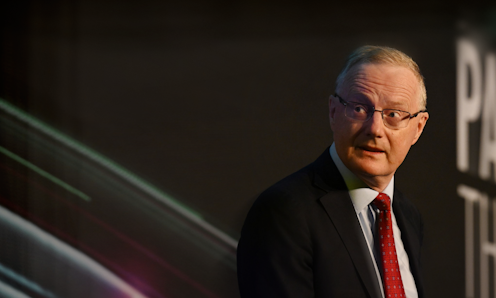
Australia’s cash rate has hit 3.35%, after the Reserve Bank raised interest rates for the ninth time in a row – and signalled more interest rate pain ahead. The 0.25 percentage point rise adds A$90 a month to a $600,000 variable mortgage.
Ahead of Tuesday’s statement from the Reserve Bank board, there was talk of just one more 0.25 point rate hike this year.
That was the view of traders in the money market, who had priced loans on the basis that the bank’s cash rate would climb just 0.35 points further after being lifted to 3.35% on Tuesday, before plateauing and then falling.
No longer. The statement released after Tuesday’s board meeting included this carefully-considered plural:
The Board expects that further increases in interest rates will be needed over the months ahead to ensure that inflation returns to target and that this period of high inflation is only temporary.
The reference was to “increases”, not an “increase”, and to those increases in the months ahead, implying (at least) two more increases within months.
Within minutes, traders adjusted their prices to a peak in the cash rate of 3.9%, rather than 3.7% – which coincidentally was around the average forecast of participants in The Conversation’s economic survey at the start of the week.
The bank is lifting rates even though it thinks inflation is heading down.
In a preview of its full set of forecasts to be released on Friday, it said it expected inflation to slide from its present 7.8% to 4.74% by the end of this year, and to around 3% by mid-2025, which is also in line with the forecasts of the Conversation’s panel.
The steam is coming out of inflation partly because of interest rate hikes here and overseas, and partly because the global effects of Russia’s invasion of Ukraine are fading.
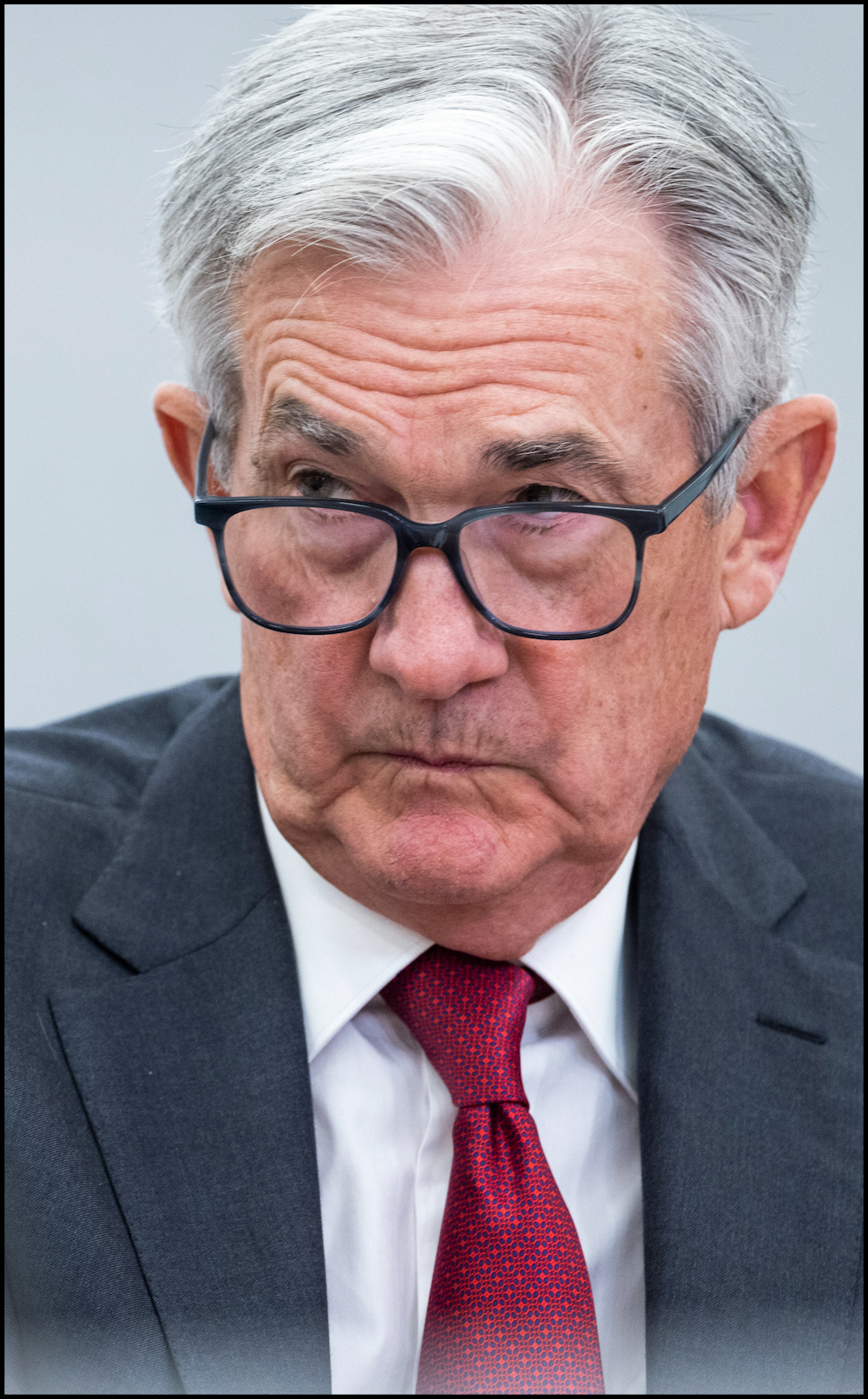
Last Wednesday, the head of the US Federal Reserve Jerome Powell (the equivalent of Australia’s Reserve Bank Governor Philip Lowe) began talking about “disinflation”.
“We can now say, I think for the first time, that the disinflationary process has started,” he told a press conference, and to underline the point he used the word “disinflation” ten more times in 44 minutes.
US inflation has been falling since the middle of last year, from a peak of 9.1% in June to 6.5% in December.
Powell says inflation is falling mainly because the global shortages of goods and commodities caused by Russia’s invasion of Ukraine have been “fixed”.
But inflation is also falling because of the work Powell has done. In the US, the Federal Funds rate (similar to our Reserve Bank cash rate) has climbed from something near zero to 4.5% in the space of a year, denting consumer spending.
Disinflation abroad, weak wage pressure at home
In Australia, figures released by the Bureau of Statistics on Monday show spending fell in the three months to December – not in absolute dollar terms, because December is always a big month, but compared to what would have been expected given the end of the year.
Continuing to hold up inflation in the US and in the UK – but not in Australia – has been very high wages growth. Higher prices have become baked into higher wages, which have been fed into higher prices, which have in turn fed back into higher wages.
Not here. Whereas in the US and the UK wage growth has topped 6%, here it is officially 3.1% – way below what would be needed to hold up inflation.
In part, we’ve a former Labor government to thank for the absence of a wage-price spiral.
Prime Minister Paul Keating steered Australia toward enterprise bargaining at the start of the 1990s, locking many of us into wage agreements that are only struck once every three or so years, and are unable to respond quickly to prices.
So why is the Reserve Bank determined to whack inflation further, rather than watch it slowly die?
Perhaps to send a message that it is really, really serious, and that it is not a good idea to get relaxed about spending, thinking the worst will soon be over.
Bleak times ahead
Between the lines though, the bank is hinting it’s likely to soon ease off.
Its statement says rate increases affect the economy “with a lag” and that Australians on fixed-rate mortgages have yet to feel the full effect of the cumulative increases since May.
The bank’s assessment of the economy after the increases are over is bleak.
It says it expects GDP growth to slow to only 1.5% during 2023 and 2024, which is an even more dismal forecast than the International Monetary Fund’s, which has economic growth of just 1.6% this year, climbing to a historically-low 2.2% by 2026. The Conversation’s forecasters expect 1.7%, climbing to 2.5%.
The RBA’s forecast would mean income per person barely increases for years to come (although the unemployment rate would stay below 5%), a condition that before COVID was known as secular stagnation.
This would mean the economic resources Australian governments needs to provide the services we’re likely to need (such as to get to net zero emissions, and to deal with climate change) are going to be harder to come by.
It’s what Treasurer Jim Chalmers intends to spend much of 2023 readying us for.
Later this month Chalmers will release a revamped tax expenditures statement, setting out the scope to wind back tax breaks, including those for profits made selling high-end family homes. That’s something Chalmers says he isn’t considering, but which the IMF has recommended.
And then later in the year, he will release the first intergenerational report to properly spell out the financial costs of climate change – right through to 2063.
2023 is going to be quite a year.
Authors: Peter Martin, Visiting Fellow, Crawford School of Public Policy, Australian National University

















