

Edward Said's groundbreaking book explained
- Written by Cyma Hibri, PhD, University of Sydney
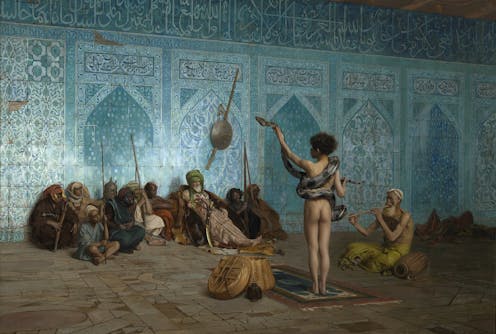
Whether you’re conscious of it or not, you likely have a vivid mental image of what the Middle East looks and sounds like. You might envision a sparse landscape, the air warped by heat and yellowed with flurries of sand. You might hear the plucking of an oud, or a haunting voice singing in a double harmonic scale.
This viral TikTok video captures just how salient these tropes are in our collective awareness and in popular media. Here, TikTokers collaboratively satirise features commonly found in Hollywood films about the Middle East, such as Beirut (2018), American Sniper (2014), and Argo (2012).
The video spoofs “the yellow filter”, a colour-grading style used when depicting places perceived as impoverished or rife with conflict. We also hear a crude rendition of “Arabic” music, and someone poses as a “lady in lots of fabric staring at the camera”, parodying the unsettling mystique attributed to Middle Eastern women.
Read more: Shantaram – the Black white man's burden
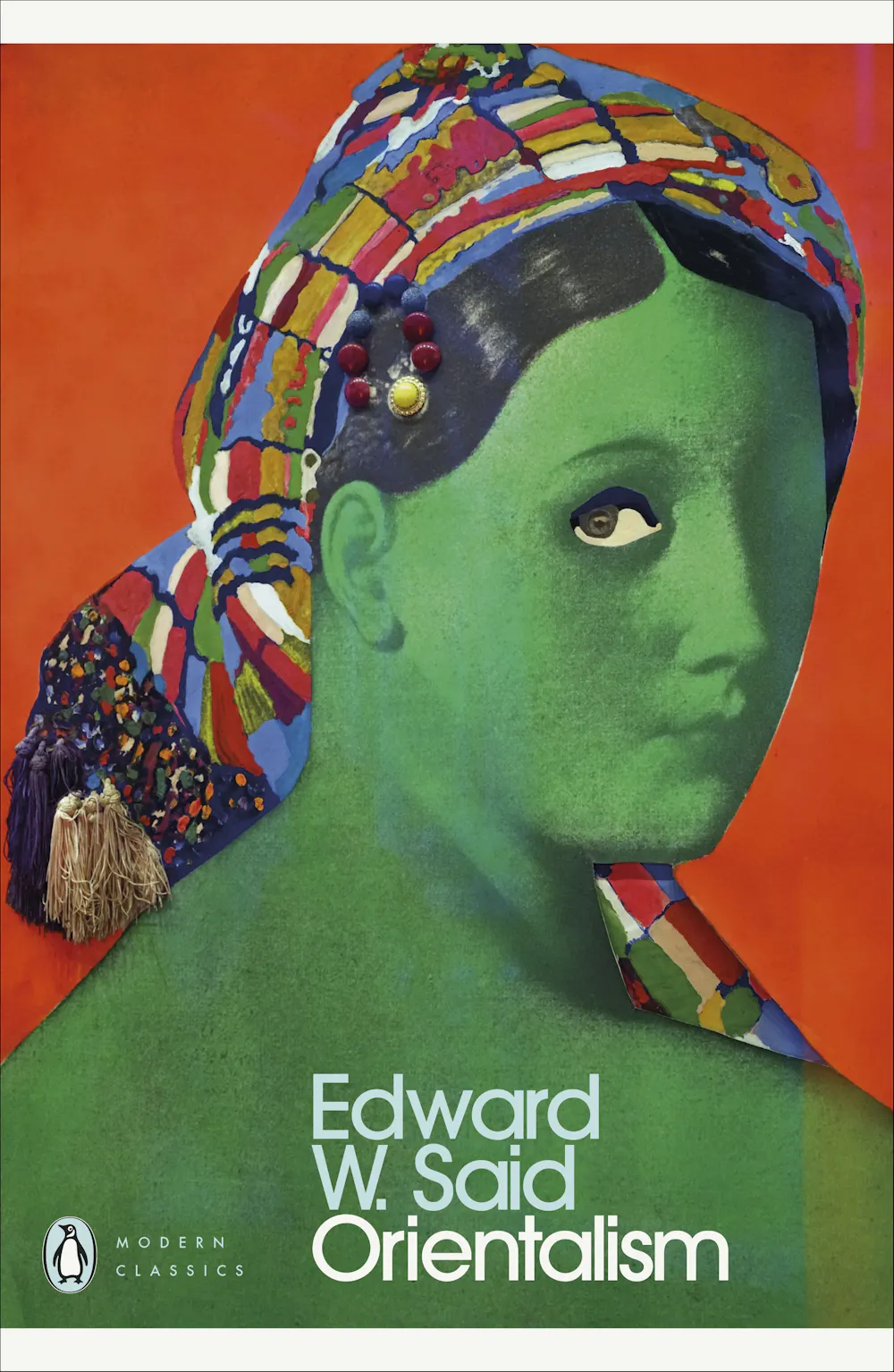
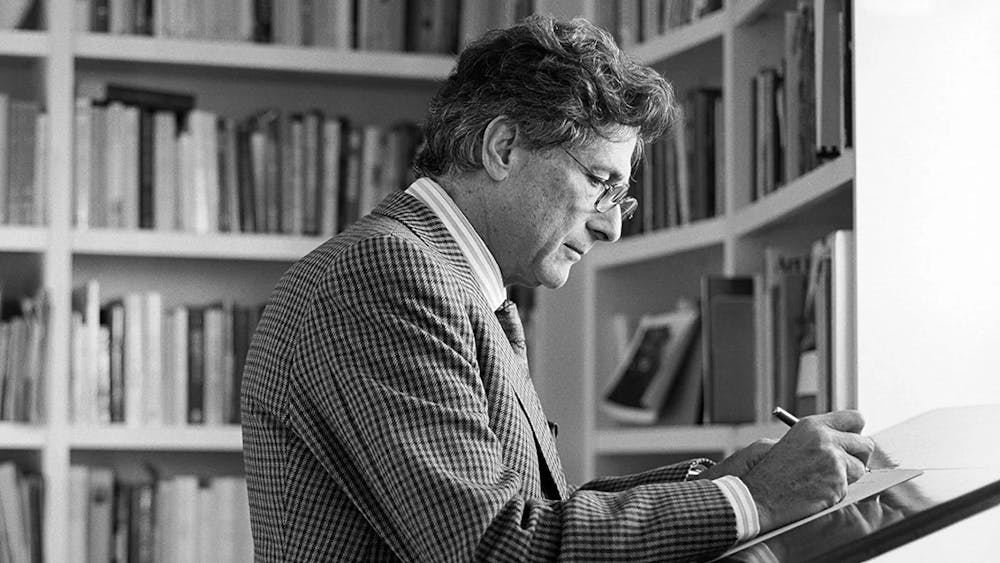 Edward Said shows how Orientalist writings and ideologies perpetuate views of Middle Eastern people as inferior, subservient, and in need of saving.
Barenboim-Said Foundation (USA)
What is “the Orient”?
According to Said, the Orient is a “semi-mythical construct” imposed on a set of countries east of Europe. While the term has been used to describe countries in East and South Asia, Said mainly focuses on how it’s used in relation to Southwest Asia and North Africa, or the Middle East.
Indeed, the Orient doesn’t have a stable set of geographical bounds. Orientalists might write about countries as varied as Lebanon, Turkey and Iraq with little distinction. Consequently, the geographical vagueness of “the Orient” works to conflate a vast and diverse array of landscapes, peoples and cultures into a single, unchanging unit.
Orientalists often describe parts of Southwest Asia and North Africa with the intention of representing the entire Orient, and a wide range of moral attitudes, religions, languages, cultures and political structures are folded into one.
As such, the idea of the Orient functions more as an abstract antithesis the West defines itself against than as an accurate descriptor of a region.
Who are “the Orientals”?
The term “Oriental” was often used to describe any person or group of people east of Europe, usually from Arab and/or Islamic countries. Like “the Orient”, this term reduces a variety of peoples to a discrete set of traits and temperaments.
In his book, Said observes a spate of harmful and sometimes contradictory stereotypes of so-called Oriental peoples, who are described as lazy, suspicious, gullible, mysterious or untruthful.
Edward Said shows how Orientalist writings and ideologies perpetuate views of Middle Eastern people as inferior, subservient, and in need of saving.
Barenboim-Said Foundation (USA)
What is “the Orient”?
According to Said, the Orient is a “semi-mythical construct” imposed on a set of countries east of Europe. While the term has been used to describe countries in East and South Asia, Said mainly focuses on how it’s used in relation to Southwest Asia and North Africa, or the Middle East.
Indeed, the Orient doesn’t have a stable set of geographical bounds. Orientalists might write about countries as varied as Lebanon, Turkey and Iraq with little distinction. Consequently, the geographical vagueness of “the Orient” works to conflate a vast and diverse array of landscapes, peoples and cultures into a single, unchanging unit.
Orientalists often describe parts of Southwest Asia and North Africa with the intention of representing the entire Orient, and a wide range of moral attitudes, religions, languages, cultures and political structures are folded into one.
As such, the idea of the Orient functions more as an abstract antithesis the West defines itself against than as an accurate descriptor of a region.
Who are “the Orientals”?
The term “Oriental” was often used to describe any person or group of people east of Europe, usually from Arab and/or Islamic countries. Like “the Orient”, this term reduces a variety of peoples to a discrete set of traits and temperaments.
In his book, Said observes a spate of harmful and sometimes contradictory stereotypes of so-called Oriental peoples, who are described as lazy, suspicious, gullible, mysterious or untruthful.
 The 2018 film Beirut was shot mostly in Tangier in Morocco: part of the reason it received backlash for its inaccurate, Orientalist depiction of the Lebanese Civil War and 1982 Israeli invasion.
IMDB
Said argues that by minimising the rich diversity of Southwest Asian and North African peoples, Orientalists turn them into a “contrasting image” against which the West seems culturally superior.
The peoples of the Middle East are often portrayed as weak, barbaric and irrational. Westerners, in comparison, are made to seem strong, progressive and rational. This style of thinking, in which East and West, or Orient and Occident, are placed into a mutually exclusive binary, is central to Orientalist thought.
What is an “Orientalist”?
Said mounts much of his study of Orientalism on analyses of academic research. In his book, Said mainly focuses on academics working in philology and anthropology: those who wrote about the languages and cultures of Southwest Asia and North Africa.
He shows how these researchers fashioned their highly selective, biased observations into supposedly “scientific” findings, thus positioning themselves as objective authorities on Southwest Asia and North Africa.
But Orientalists aren’t exclusively tucked away in ivory towers. Said also explores the work of authors, poets, painters, philosophers and politicians, citing figures as varied as Arthur Balfour, Victor Hugo and Eugène Delacroix.
Edward Said on Orientalism.More than “a mere collection of lies”
It’s important to note that, for Said, Orientalism isn’t just a set of myths. He understood it as an interconnected system of institutions, policies, narratives and ideas.
Said referred to this as the interaction between “latent Orientalism” (the system of implicit ideas and beliefs about Southwest Asia and North Africa) and “manifest Orientalism” (explicit policies and ideologies acted upon by institutions).
What keeps Orientalism flourishing and relevant is its consistent and active traffic between a variety of fields. Findings in academia inform foreign and domestic policies. Portrayals in popular culture influence the framing of news about Southwest Asia and North Africa, and vice versa. Seeing the links between culture, knowledge and power is fundamental to understanding the reach of Orientalism.
Read more:
Friday essay: 5 museum objects that tell a story of colonialism and its legacy
What does Orientalism do?
Orientalism served as an ideological basis for French and British colonial rule. But Orientalist perceptions didn’t simply disappear after the colonial period. In fact, they continue to be used as justification for contemporary foreign and domestic policies.
And this, Said stresses, is how Orientalism sustains its power: through repetition. Orientalist ideas, stereotypes and approaches have been renewed and reiterated over the past two centuries, and we can still see them in circulation today.
For instance, we can see them at work in the ways the United States and European Union have endowed themselves with the authority to impose what a 2022 UN report called “suffocating” economic sanctions against Syria.
The 2018 film Beirut was shot mostly in Tangier in Morocco: part of the reason it received backlash for its inaccurate, Orientalist depiction of the Lebanese Civil War and 1982 Israeli invasion.
IMDB
Said argues that by minimising the rich diversity of Southwest Asian and North African peoples, Orientalists turn them into a “contrasting image” against which the West seems culturally superior.
The peoples of the Middle East are often portrayed as weak, barbaric and irrational. Westerners, in comparison, are made to seem strong, progressive and rational. This style of thinking, in which East and West, or Orient and Occident, are placed into a mutually exclusive binary, is central to Orientalist thought.
What is an “Orientalist”?
Said mounts much of his study of Orientalism on analyses of academic research. In his book, Said mainly focuses on academics working in philology and anthropology: those who wrote about the languages and cultures of Southwest Asia and North Africa.
He shows how these researchers fashioned their highly selective, biased observations into supposedly “scientific” findings, thus positioning themselves as objective authorities on Southwest Asia and North Africa.
But Orientalists aren’t exclusively tucked away in ivory towers. Said also explores the work of authors, poets, painters, philosophers and politicians, citing figures as varied as Arthur Balfour, Victor Hugo and Eugène Delacroix.
Edward Said on Orientalism.More than “a mere collection of lies”
It’s important to note that, for Said, Orientalism isn’t just a set of myths. He understood it as an interconnected system of institutions, policies, narratives and ideas.
Said referred to this as the interaction between “latent Orientalism” (the system of implicit ideas and beliefs about Southwest Asia and North Africa) and “manifest Orientalism” (explicit policies and ideologies acted upon by institutions).
What keeps Orientalism flourishing and relevant is its consistent and active traffic between a variety of fields. Findings in academia inform foreign and domestic policies. Portrayals in popular culture influence the framing of news about Southwest Asia and North Africa, and vice versa. Seeing the links between culture, knowledge and power is fundamental to understanding the reach of Orientalism.
Read more:
Friday essay: 5 museum objects that tell a story of colonialism and its legacy
What does Orientalism do?
Orientalism served as an ideological basis for French and British colonial rule. But Orientalist perceptions didn’t simply disappear after the colonial period. In fact, they continue to be used as justification for contemporary foreign and domestic policies.
And this, Said stresses, is how Orientalism sustains its power: through repetition. Orientalist ideas, stereotypes and approaches have been renewed and reiterated over the past two centuries, and we can still see them in circulation today.
For instance, we can see them at work in the ways the United States and European Union have endowed themselves with the authority to impose what a 2022 UN report called “suffocating” economic sanctions against Syria.
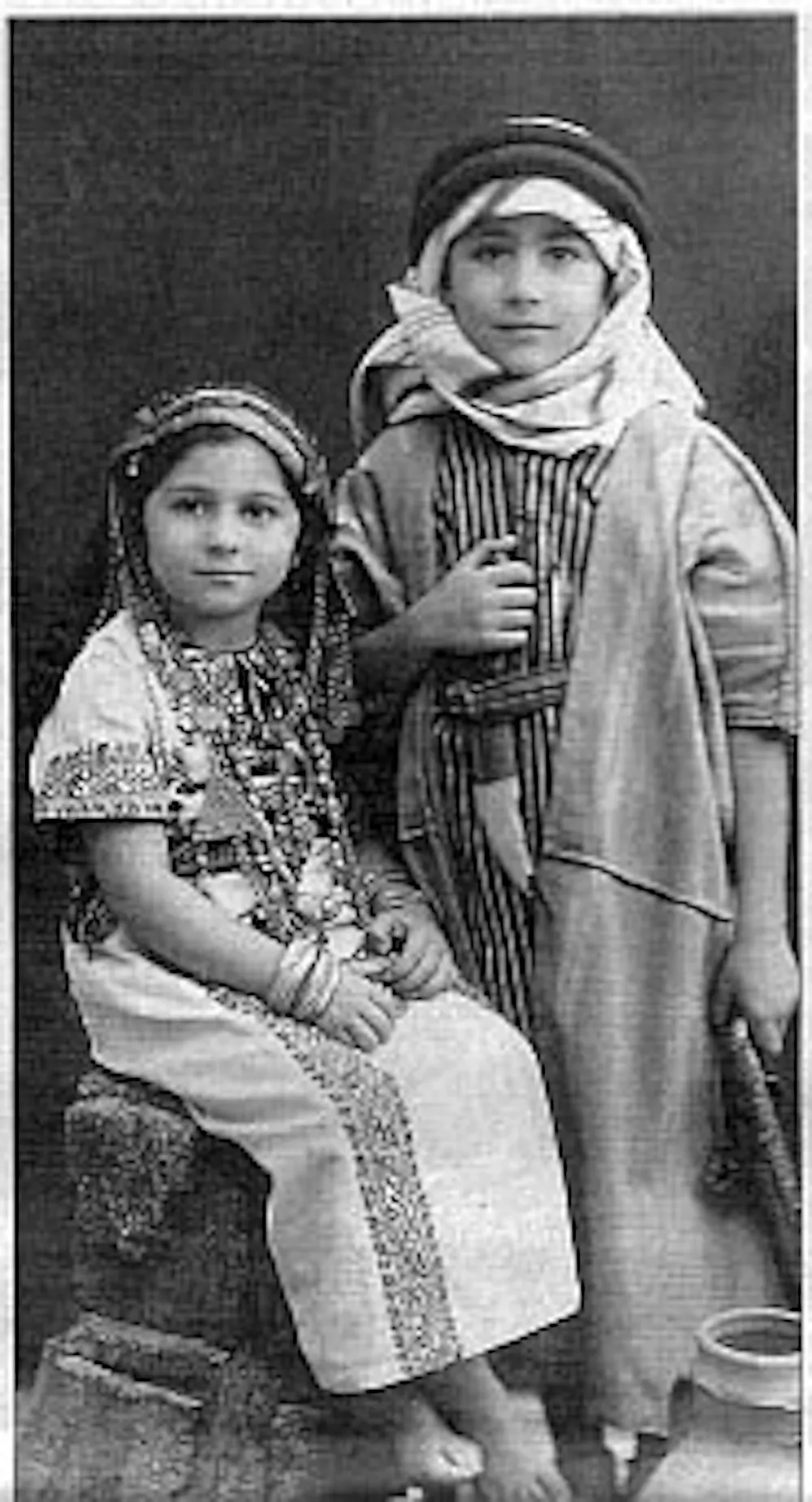 Edward Said and his sister.
Wikipedia
Many scholars note that Said’s lived experience offered him a unique perspective in writing “Orientalism”. Said himself acknowledged this. In his 2003 preface, he wrote, “much of the personal investment in this study derives from my awareness of being an ‘Oriental’ as a child growing up in two British colonies”.
His family was exiled from Mandate Palestine during the 1948 Nakba, and he went on to live in Lebanon, Egypt and the United States. Educated in British colonial schools and elite US universities, Said linked the experience of being at once an insider and an outsider to the disparity he felt between his own identity as a Palestinian Arab and how Arabs are represented by the West.
Read more:
The Whitewash is a scathing, hilarious satire of Asian misrepresentation in Hollywood
Why is Orientalism important?
The impact of “Orientalism” is monumental. Said is often credited with founding the field known as postcolonial studies, and his work has significantly influenced fields across the humanities: including cultural studies, anthropology, comparative literature and political science.
We can also attribute the growing awareness of Orientalist tropes to his book’s vast popularity. “Orientalism” has been translated into 36 languages (as of 2003) and remains a classic available in most bookstores.
While media literacy about Orientalism is increasing, these tropes remain as relevant as ever in the Western popular imagination. We should continue to challenge the ways Orientalism shapes our perception of Southwest Asia and North Africa countries and peoples.
Authors: Cyma Hibri, PhD, University of Sydney
Edward Said and his sister.
Wikipedia
Many scholars note that Said’s lived experience offered him a unique perspective in writing “Orientalism”. Said himself acknowledged this. In his 2003 preface, he wrote, “much of the personal investment in this study derives from my awareness of being an ‘Oriental’ as a child growing up in two British colonies”.
His family was exiled from Mandate Palestine during the 1948 Nakba, and he went on to live in Lebanon, Egypt and the United States. Educated in British colonial schools and elite US universities, Said linked the experience of being at once an insider and an outsider to the disparity he felt between his own identity as a Palestinian Arab and how Arabs are represented by the West.
Read more:
The Whitewash is a scathing, hilarious satire of Asian misrepresentation in Hollywood
Why is Orientalism important?
The impact of “Orientalism” is monumental. Said is often credited with founding the field known as postcolonial studies, and his work has significantly influenced fields across the humanities: including cultural studies, anthropology, comparative literature and political science.
We can also attribute the growing awareness of Orientalist tropes to his book’s vast popularity. “Orientalism” has been translated into 36 languages (as of 2003) and remains a classic available in most bookstores.
While media literacy about Orientalism is increasing, these tropes remain as relevant as ever in the Western popular imagination. We should continue to challenge the ways Orientalism shapes our perception of Southwest Asia and North Africa countries and peoples.
Authors: Cyma Hibri, PhD, University of SydneyRead more https://theconversation.com/orientalism-edward-saids-groundbreaking-book-explained-197429

















