ChatGPT is confronting, but humans have always adapted to new technology – ask the Mesopotamians, who invented writing
- Written by: Louise Pryke, Honorary Research Associate, University of Sydney
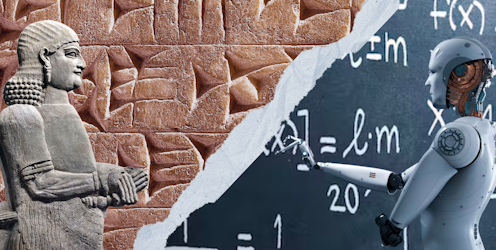
Adapting to technological advances is a defining part of 21st-century life. But it’s not unique to us: it’s been part of the human story since our earliest written records – even featuring in the plotlines of ancient myths and legends.
While ChatGPT threatens to change writing (and writing-related work) as we know it, the Mesopotamians, who lived 4,000 years ago (in a geographical area centred in modern-day Iraq), went through this kind of seismic change before us. Their civilisation is credited with the invention of writing.
Living in changing times
Just two months after launching in November 2022, OpenAI’s ChatGPT has already reached an audience of over 100 million people.
The large language model (LLM), sometimes called “autocomplete on steroids”, has drawn attention for its capacity to create human-like answers to queries. Its work has received passing grades on university law and business exams, and been used in a Colombian court to help decide a legal ruling.
Responses to ChatGPT and its competitors have vacillated between recognising the potential risks of the chatbot and extolling its possible benefits. We’re flooded with theories on how new advances in AI may change how we work, study and live.
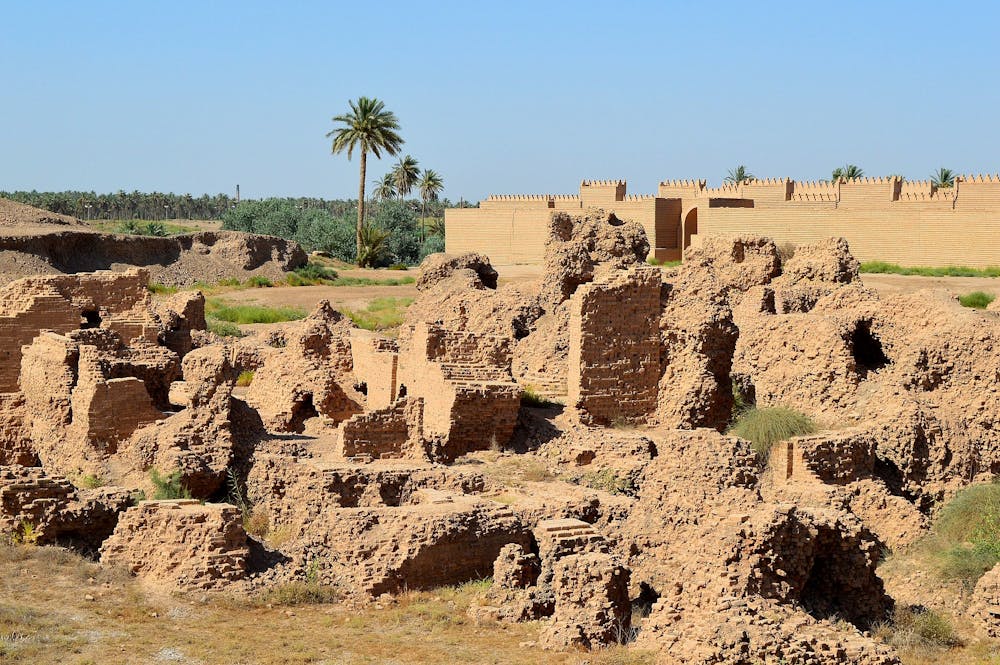
Ancient Mesopotamia was home to many of civilisation’s early developments. Its people were world leaders in adapting to technological and cultural change.
Mesopotamians invented the wheel and agriculture, and pioneered advances in mathematics, urbanisation and transportation. These breakthroughs are reflected in cuneiform literature, one of the oldest known forms of writing.
The history of cuneiform writing is complex, but it seems to have initially developed to record economic data, such as debts that were owed. Over time, however, the Mesopotamians widened their use of signs inscribed into clay tablets to record a variety of information, in numerous languages. New uses covered everything from diplomatic correspondences to omen texts, to some of the world’s oldest literary masterpieces.
Read more: Guide to the classics: the Epic of Gilgamesh
Tech-assisted heroes
In the world’s earliest known written epic, Gilgamesh, the eponymous hero is shown inventing and using technologies, such as diving weights and a sail, to further his journey to the edges of the world – and beyond.
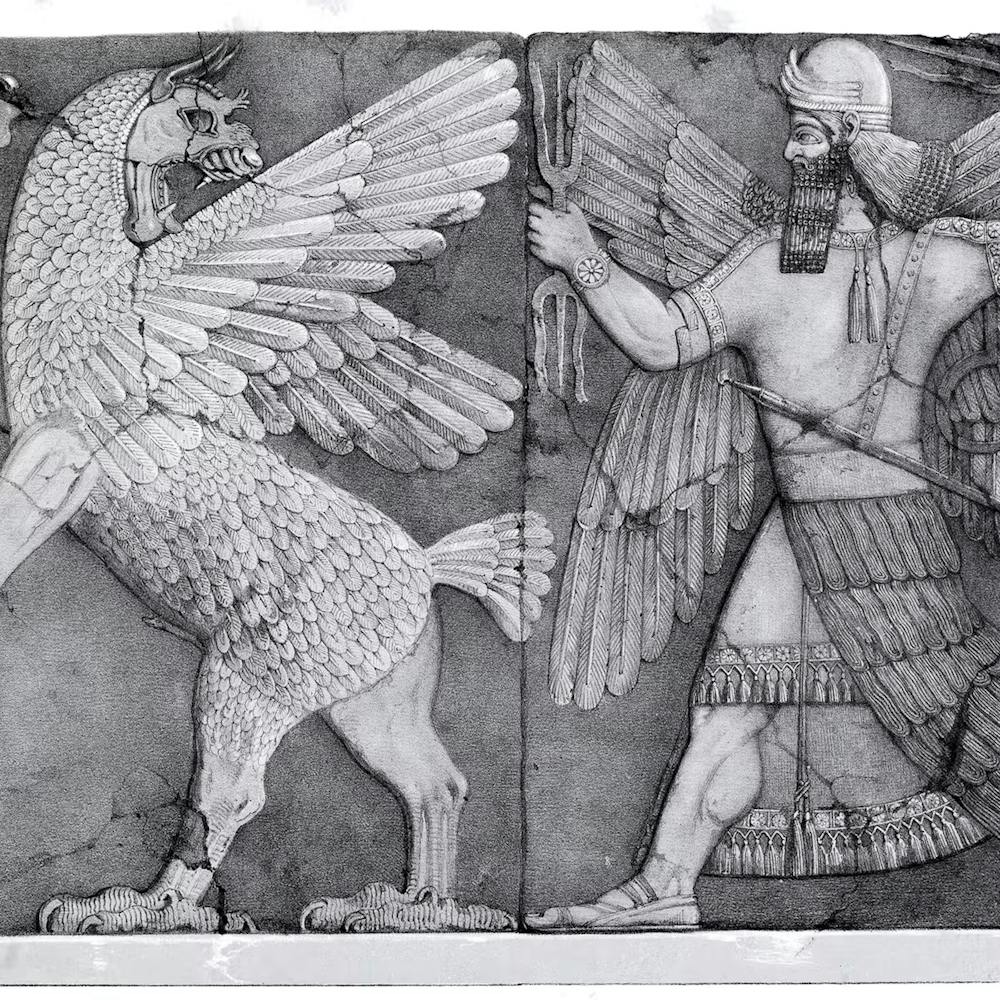 Mesopotamian epics feature numerous battles, some using technology such as advanced weaponry.
Wikimedia Commons
Mesopotamian epics feature numerous battles, some using technology such as advanced weaponry.
Wikimedia Commons
As noted by Assyriologist Andrew George, the young hero develops new technologies to help his quest for fame and immortality. These advances allow him to engage in previously unknown activities, such as sailing and deep-sea diving.
Another royal hero from Mesopotamia, Lugalbanda (sometimes known for his super speed) is also credited with technological advancement. Lugalbanda improves the technique of fire-starting by using flint to spark embers and bake bread. The heroes’ use of new tools emphasises their exceptionalism.
Read more: How a handful of prehistoric geniuses launched humanity's technological revolution
Inventions and ambiguity
Mesopotamian epics don’t present cultural and technological advances as unambiguously and uniformly beneficial. In Gilgamesh, the benefits of civilisation and urbanisation, such as advances in wall-building technology, are juxtaposed with their costs – such as environmental destruction and alienation from the wild.
Indeed, the epics often represent new technologies being harnessed in the service of human conflict – and disproportionately serving the interests of those with high social status. In the Sumerian epic Enmerkar and the Lord of Aratta, the heroic king defeats his enemy by inventing and using superior technology: the ability to write on clay tablets.
This invention is also thought to be referenced in the Epic of Sargon, where Sargon appears to dodge a murder attempt through his epic reading skills. The text notes that while writing on tablets had been developed at that stage, the use of envelopes to hide their contents had not (perhaps luckily for Sargon).
In some ways, the representation of new technologies in cuneiform literature echoes contemporary concerns about AI: fears of increasing social inequalities and its potential use in cyberwarfare.
 In Gilgamesh, the benefits of civilisation and urbanisation are juxtaposed with their costs, like environmental destruction. This clay tablet is inscribed with part of the epic of Gilgamesh.
Zunkir/Wikimedia Commons, CC BY
In Gilgamesh, the benefits of civilisation and urbanisation are juxtaposed with their costs, like environmental destruction. This clay tablet is inscribed with part of the epic of Gilgamesh.
Zunkir/Wikimedia Commons, CC BY
The future of history
Studying the past can deepen our understanding of how humans have adapted to modern technology over thousands of years. Conversely, modern technology continues to broaden our understanding of history.
In recent years, AI – the newest form of writing – has been used to decipher the oldest: cuneiform literature. The Fragmentarium project, for example, uses sophisticated algorithms to determine which fragments of shattered cuneiform texts belong together; these algorithms predict the text that once filled the missing sections.
AI will likely continue to alter the way historians analyse the past. This will require new considerations around familiar issues – such as how to represent the past accurately in light of possibly biased evidence, and the need to critically evaluate sources of information.
In the broader field of academia, the boundaries of how AI may be used have not yet been clearly explained. In January, for example, a top international AI conference banned the use of AI tools for writing scientific papers – though its use in editing papers was accepted.
Read more: Marvel meets Mesopotamia: how modern comics preserve ancient myths
Considering the limits of technology
Even those early tech adapters, the Mesopotamians, ran into problems the technology of the day could not address.
Climate change is thought to have resulted in the downfall of the Akkadian Empire, sometimes called the world’s first multi-national political entity. And even the crafty Gilgamesh couldn’t escape his own mortality.
Humans have been grappling with how to invent, use and adapt to technology since our earliest civilisations. In Mesopotamian epic literature, new technology helps heroic individuals travel beyond accepted limitations and develop new skills. But the technology and resulting knowledge are not always evenly distributed.
Knowing how we adapted to changing technology in the past helps us more fully understand the human condition – and may even help us prepare for the future.
Authors: Louise Pryke, Honorary Research Associate, University of Sydney