The worthless life and the worthy death: euthanasia through the ages
- Written by: Hugh Breakey, Deputy Director, Institute for Ethics, Governance & Law. President, Australian Association for Professional & Applied Ethics., Griffith University
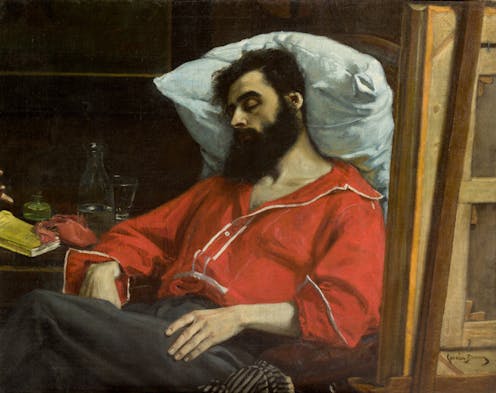
Are our moral judgements about euthanasia a product of our time? If we came from a different culture, might our changed views about the worth of life and death lead us to opposite judgements?
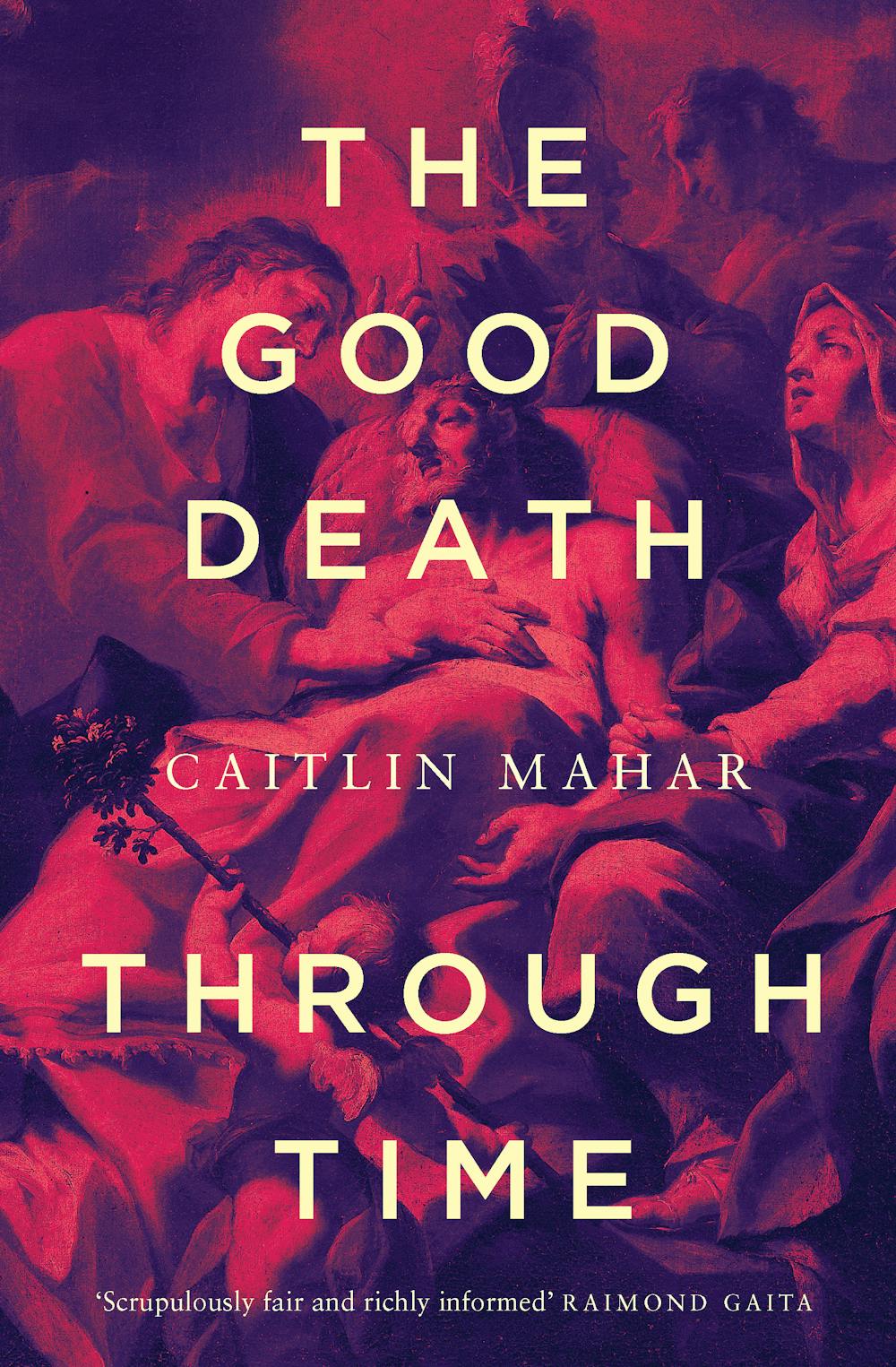
Caitlin Mahar’s The Good Death Through Time takes us on an intriguing journey through the recent history of our changing ideas about dying well. Mahar focuses on the last 200 years, paying particular attention to developments and debates in England and Australia.
Review: The Good Death Through Time – Caitlin Mahar (Melbourne University Publishing).
This attention will no doubt be of special interest to Australian readers. It reminds us that Australia has played a significant role in the development of euthanasia law and practice.
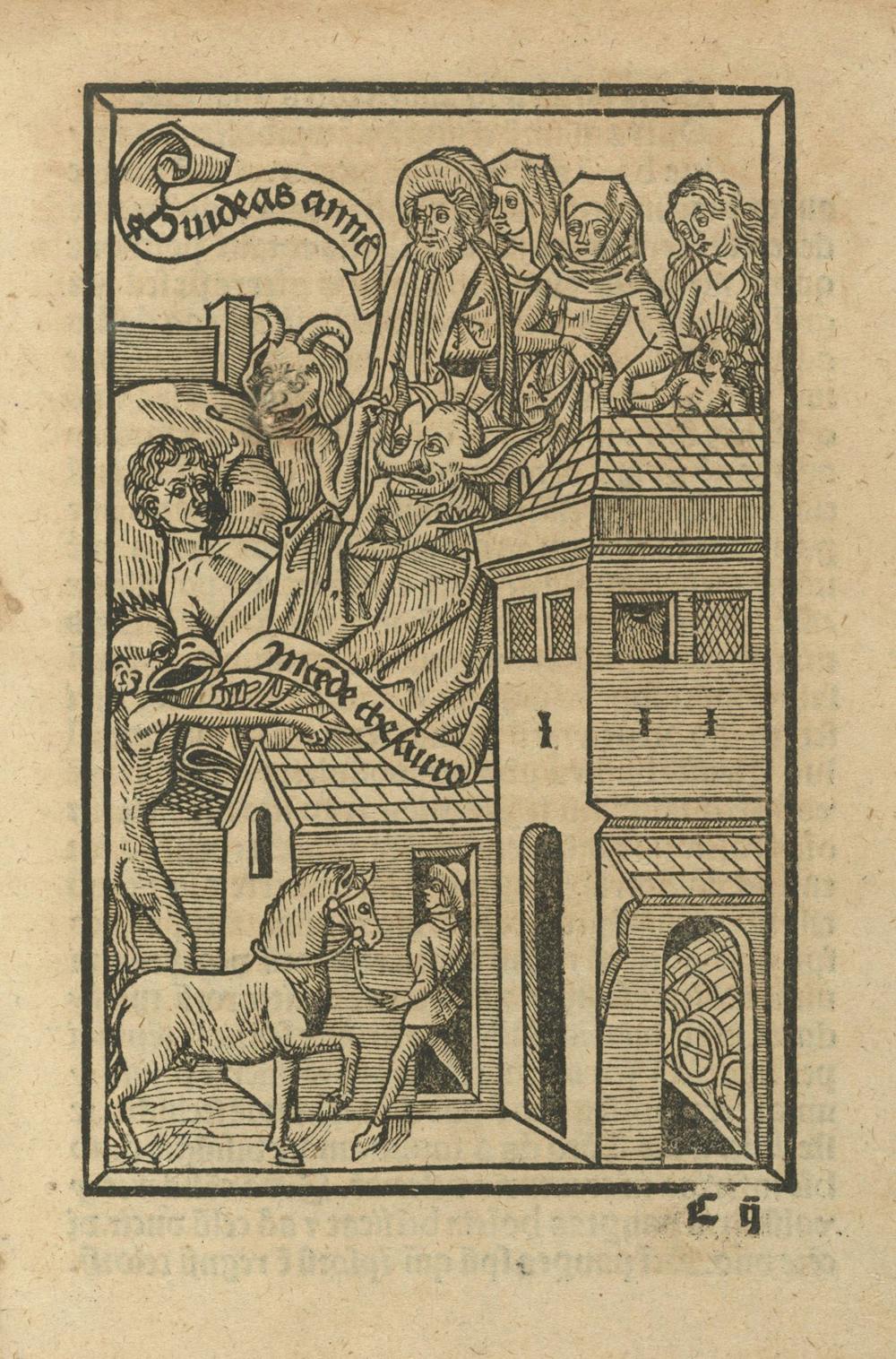 Engraving from an edition of Ars Moriendi c.1495.
Moreover, suffering could be understood as a test and preparation for dying. A part of God’s plan, it was a trial that could be overcome through faith. This trial could be guided by formal religious texts, such as the Ars Moriendi on the art of dying.
The reigning model of the good death was Jesus’ patience and humility on the cross. A child facing death with courage and faith could even be seen as uplifting for the family. Books of the time told stories of the young dying bravely, lauding the elevating spiritual effect this had on those around them.
For these reasons, dying was a ritualised and highly social affair. A priest was often present at the bedside and communities undertook “visiting” duties. Living in a time when enormous suffering and early death was commonplace, dying was not something strange, unimaginable or hidden away; it was a part of cultural life. The invalid was an ever-present figure.
Mistaken priorities or strange wisdom?
From the perspective of a more secular age, this can all seem strange and wrongheaded – a horrifyingly mistaken sacrifice of earthly wellbeing to a speculative hereafter and a mystifying appeal to God’s “plan”. It is quite possible to wonder how much the popular discourse and published work of the time failed to genuinely engage with the true hardship of many deaths.
At the same time, Mahar’s sympathetic treatment urges us to consider the possibility that some wisdom was lost as the faith that underpinned these practices began to shift. The cultural convictions of the age made pain understandable and meaningful, at least to some extent. When those convictions and priorities started to change in the late Victoria era, this meaning eroded.
The problem with making pain pointless is that, well, it makes pain pointless. In more spiritual times, suffering was at once less important (compared to the hereafter’s stakes), but more meaningful (as a trial ordained by God). As the modern secular worldview took hold, present suffering became more important and less meaningful.
Engraving from an edition of Ars Moriendi c.1495.
Moreover, suffering could be understood as a test and preparation for dying. A part of God’s plan, it was a trial that could be overcome through faith. This trial could be guided by formal religious texts, such as the Ars Moriendi on the art of dying.
The reigning model of the good death was Jesus’ patience and humility on the cross. A child facing death with courage and faith could even be seen as uplifting for the family. Books of the time told stories of the young dying bravely, lauding the elevating spiritual effect this had on those around them.
For these reasons, dying was a ritualised and highly social affair. A priest was often present at the bedside and communities undertook “visiting” duties. Living in a time when enormous suffering and early death was commonplace, dying was not something strange, unimaginable or hidden away; it was a part of cultural life. The invalid was an ever-present figure.
Mistaken priorities or strange wisdom?
From the perspective of a more secular age, this can all seem strange and wrongheaded – a horrifyingly mistaken sacrifice of earthly wellbeing to a speculative hereafter and a mystifying appeal to God’s “plan”. It is quite possible to wonder how much the popular discourse and published work of the time failed to genuinely engage with the true hardship of many deaths.
At the same time, Mahar’s sympathetic treatment urges us to consider the possibility that some wisdom was lost as the faith that underpinned these practices began to shift. The cultural convictions of the age made pain understandable and meaningful, at least to some extent. When those convictions and priorities started to change in the late Victoria era, this meaning eroded.
The problem with making pain pointless is that, well, it makes pain pointless. In more spiritual times, suffering was at once less important (compared to the hereafter’s stakes), but more meaningful (as a trial ordained by God). As the modern secular worldview took hold, present suffering became more important and less meaningful.
 Caitlin Mahar.
Melbourne University Publishing, Author provided
It was more important because ethical concerns with suffering began to take centre-stage. Influential ideas announced in the late 18th century – Thomas Jefferson’s “pursuit of happiness”, Jeremy Bentham’s utilitarianism – began to augment the long-held moral virtues of compassion and benevolence. Social attention turned to the horrifying conditions in prisons and asylums, and to the suffering of the dying and diseased. The view that such suffering was a part of God’s plan started to lose ground.
Perplexingly, the result of magnifying the importance of suffering while stripping away its meaning may have – at least in some cases – made people’s suffering worse. The changes undermined the ways in which pain could be rationalised and upset the social rituals that attended it. As the 19th century drew to a close, Mahar notes, some commentators voiced the curious belief that modern people actually feel more pain.
Eugenics, trust and law
Victorian views on death and dying are just one of the captivating cultural moments Mahar explores as she traces euthanasia’s waxing and waning prospects through the generations.
There is a necessary discussion of the troubling link between euthanasia and eugenics. The Nazis’ sterilisation, separation and then execution of people with disabilities presaged the Holocaust’s horrors. Many (but not all) euthanasia advocates only argued for voluntary euthanasia that was carried out with the subject’s express consent. Yet the broad euthanasia view – that there are lives not worth living – shared a troubling association with Nazi rhetoric that compromised euthanasia advocacy in post-war Europe.
Mahar also traces the curious mid-20th century moment when the overwhelming trust in doctors pressed against calls to legalise euthanasia. Lawmakers feared legislation would see state bureaucracy intrude on the wisdom of the family doctor making contextual judgements in intimate settings. Surprisingly, euthanasia was resisted in law precisely to allow the continuance of euthanasia as a matter of professional practice.
Then there are the legal cases that established precedents and captured public interest. In England, R v Adams saw a general practitioner put on trial for murder, only for the court to establish a doctor’s legal right to shorten a life, providing they were aiming to relieve pain or distress.
But it was the case of the “girl in a coma” that seized worldwide attention. In 1975, a young American woman, Karen Ann Quinlan, collapsed and suffered permanent brain damage. She ended up on life-support with no prospect of recovery. Her tragic situation dramatised the need for a right to die, or at least to pull the plug on life-sustaining medical treatment in certain circumstances.
Read more:
Disabled people were Holocaust victims, too: they were excluded from German society and murdered by Nazi programs
Argument, activism, story, strategy
In each of these cases – and many more besides – Mahar invites the reader to see opposing perspectives and understand the larger cultural forces that shaped them.
As a philosopher, I was intrigued by how important argument remained throughout the history. Across the generations, advocates and critics alike tried to persuade audiences about their proposal’s reasonableness. But argument was only one feature of euthanasia’s long journey from heresy, to serious proposition, to widespread acceptance, and on to legal reality.
Stories – especially when they could seize the popular imagination – were crucial. People imagined themselves trapped on respirators. They were appalled by the injustice of putting a caring mother on trial for the murder of her mentally impaired son. The heady cocktail of death, illegality and mercy enticed audiences to devour these stories, and encouraged the news media to supply them.
Pictures mattered too. Photos of the grey buses the Nazis used to transport the disabled to their deaths fuelled the visceral German reaction against Peter Singer’s euthanasia advocacy. But the image of a solitary body connected by a tangle of tubes to sterile machines did not fit anyone’s mental picture of a good death.
Strategy also played a crucial role. Advocates and civil society groups have worked patiently and intelligently to develop social awareness, acceptance and support for euthanasia, and to convert that support into tangible legislative outcomes.
Caitlin Mahar.
Melbourne University Publishing, Author provided
It was more important because ethical concerns with suffering began to take centre-stage. Influential ideas announced in the late 18th century – Thomas Jefferson’s “pursuit of happiness”, Jeremy Bentham’s utilitarianism – began to augment the long-held moral virtues of compassion and benevolence. Social attention turned to the horrifying conditions in prisons and asylums, and to the suffering of the dying and diseased. The view that such suffering was a part of God’s plan started to lose ground.
Perplexingly, the result of magnifying the importance of suffering while stripping away its meaning may have – at least in some cases – made people’s suffering worse. The changes undermined the ways in which pain could be rationalised and upset the social rituals that attended it. As the 19th century drew to a close, Mahar notes, some commentators voiced the curious belief that modern people actually feel more pain.
Eugenics, trust and law
Victorian views on death and dying are just one of the captivating cultural moments Mahar explores as she traces euthanasia’s waxing and waning prospects through the generations.
There is a necessary discussion of the troubling link between euthanasia and eugenics. The Nazis’ sterilisation, separation and then execution of people with disabilities presaged the Holocaust’s horrors. Many (but not all) euthanasia advocates only argued for voluntary euthanasia that was carried out with the subject’s express consent. Yet the broad euthanasia view – that there are lives not worth living – shared a troubling association with Nazi rhetoric that compromised euthanasia advocacy in post-war Europe.
Mahar also traces the curious mid-20th century moment when the overwhelming trust in doctors pressed against calls to legalise euthanasia. Lawmakers feared legislation would see state bureaucracy intrude on the wisdom of the family doctor making contextual judgements in intimate settings. Surprisingly, euthanasia was resisted in law precisely to allow the continuance of euthanasia as a matter of professional practice.
Then there are the legal cases that established precedents and captured public interest. In England, R v Adams saw a general practitioner put on trial for murder, only for the court to establish a doctor’s legal right to shorten a life, providing they were aiming to relieve pain or distress.
But it was the case of the “girl in a coma” that seized worldwide attention. In 1975, a young American woman, Karen Ann Quinlan, collapsed and suffered permanent brain damage. She ended up on life-support with no prospect of recovery. Her tragic situation dramatised the need for a right to die, or at least to pull the plug on life-sustaining medical treatment in certain circumstances.
Read more:
Disabled people were Holocaust victims, too: they were excluded from German society and murdered by Nazi programs
Argument, activism, story, strategy
In each of these cases – and many more besides – Mahar invites the reader to see opposing perspectives and understand the larger cultural forces that shaped them.
As a philosopher, I was intrigued by how important argument remained throughout the history. Across the generations, advocates and critics alike tried to persuade audiences about their proposal’s reasonableness. But argument was only one feature of euthanasia’s long journey from heresy, to serious proposition, to widespread acceptance, and on to legal reality.
Stories – especially when they could seize the popular imagination – were crucial. People imagined themselves trapped on respirators. They were appalled by the injustice of putting a caring mother on trial for the murder of her mentally impaired son. The heady cocktail of death, illegality and mercy enticed audiences to devour these stories, and encouraged the news media to supply them.
Pictures mattered too. Photos of the grey buses the Nazis used to transport the disabled to their deaths fuelled the visceral German reaction against Peter Singer’s euthanasia advocacy. But the image of a solitary body connected by a tangle of tubes to sterile machines did not fit anyone’s mental picture of a good death.
Strategy also played a crucial role. Advocates and civil society groups have worked patiently and intelligently to develop social awareness, acceptance and support for euthanasia, and to convert that support into tangible legislative outcomes.
 Controversial philosopher Peter Singer.
Joel Travis Sage/Wikimedia Commons, CC BY
Euthanasia now
Mahar’s work matters to all of us today, quite apart from the fascinating history it relates. Euthanasia is an issue in Australia in 2023. Voluntary dying will soon be available in all Australian states. The debate is again starting to attract global attention.
For a long time, critics of euthanasia spoke of a slippery slope, arguing that once a clear rule prohibiting (even merciful) killing was removed and the idea that some lives are not worth living became widely accepted, it would be hard to stop the line moving in ever more lenient directions.
They turned out to be right. While current levels of euthanasia in Australian states hover between 0.5% and 1%, Mahar notes the rising number of cases in the Netherlands, where euthanasia makes up 4% of all deaths. Canada, where the rate is 3%, provides a similarly confronting example. Worrying stories have emerged of the ease of access to lethal services, and the scheduled opening of access to “mature minors” as young as twelve.
Perhaps these are good news stories, ethically justified by the right to die and mercifully reducing human fear and suffering. But as we weigh up current controversies, Mahar’s book helps us to place ourselves in a larger history. It reminds us that there are different perspectives on what it means to live well and to die with dignity.
Concerns raised by contemporary disability advocates about euthanasia contain echoes of the old Victorian view. They recast the idea that suffering and disability, and the interdependence they force upon us, might have their own meaning and virtue.
Mahar’s history enriches our understanding as we confront these contemporary challenges, but admirably leaves us free to make up our own minds.
Authors: Hugh Breakey, Deputy Director, Institute for Ethics, Governance & Law. President, Australian Association for Professional & Applied Ethics., Griffith University
Controversial philosopher Peter Singer.
Joel Travis Sage/Wikimedia Commons, CC BY
Euthanasia now
Mahar’s work matters to all of us today, quite apart from the fascinating history it relates. Euthanasia is an issue in Australia in 2023. Voluntary dying will soon be available in all Australian states. The debate is again starting to attract global attention.
For a long time, critics of euthanasia spoke of a slippery slope, arguing that once a clear rule prohibiting (even merciful) killing was removed and the idea that some lives are not worth living became widely accepted, it would be hard to stop the line moving in ever more lenient directions.
They turned out to be right. While current levels of euthanasia in Australian states hover between 0.5% and 1%, Mahar notes the rising number of cases in the Netherlands, where euthanasia makes up 4% of all deaths. Canada, where the rate is 3%, provides a similarly confronting example. Worrying stories have emerged of the ease of access to lethal services, and the scheduled opening of access to “mature minors” as young as twelve.
Perhaps these are good news stories, ethically justified by the right to die and mercifully reducing human fear and suffering. But as we weigh up current controversies, Mahar’s book helps us to place ourselves in a larger history. It reminds us that there are different perspectives on what it means to live well and to die with dignity.
Concerns raised by contemporary disability advocates about euthanasia contain echoes of the old Victorian view. They recast the idea that suffering and disability, and the interdependence they force upon us, might have their own meaning and virtue.
Mahar’s history enriches our understanding as we confront these contemporary challenges, but admirably leaves us free to make up our own minds.
Authors: Hugh Breakey, Deputy Director, Institute for Ethics, Governance & Law. President, Australian Association for Professional & Applied Ethics., Griffith University