

Before The Last of Us, I was part of an international team to chart the threat of killer fungi. This is what we found
- Written by: Justin Beardsley, Associate Professor in Infectious Diseases, Sydney Institute for Infectious Diseases Westmead Clinical School, University of Sydney

Fungal infections have received a frenzy of attention thanks to the popularity of HBO’s The Last of Us. The show depicts a fungal pandemic caused by the real-life zombie-ant fungus, Ophiocordyceps unilateralis. It imagines the outcome of society’s collapse and a brutal approach to maintaining public health.
But in (real-life) laboratories, hospitals and public health units around the world, researchers have been warning about the rise of potentially deadly fungal infections for years.
With few drugs to treat major fungal infections, and no vaccines on the horizon, the potential harm caused by fungal infections have raised alarms at the highest levels of public health.
I was part of a large international team of researchers commissioned by the World Health Organization (WHO) to understand which fungal pathogens we most needed to research and which posed the greatest public health threat. This is what its report found.
Read more: The Last of Us: fungal infections really can kill – and they’re getting more dangerous
Fungi back in the spotlight
The Last of Us reminds us how deadly some fungi can be.Before The Last of Us, many people thought “fungus” meant mushrooms or something mouldy in the compost heap. If they thought of fungi in relation to health, they thought of athlete’s foot or toenail infections – familiar, but not frightening.
However, fungi do cause serious infections, especially in people with other health conditions. People living with cancer, HIV, or diabetes are especially at risk of these infections, but they can also strike those who have had major surgery, ended up in an intensive care unit, or who have experienced another serious infection. This is because their immune system is weakened or distracted, opening up a space for “opportunistic infections”.
We’ve seen this in India where black mould infections (mucormycosis) complicated cases of COVID, resulting in thousands of deaths.
Read more: What is mucormycosis, the fungal infection affecting COVID patients in India?
A threat and becoming more so
Well before The Last of Us, health authorities had been starting to take notice of serious fungal infections.
In 2019 the US Centers for Disease Control designated the deadly yeast Candida auris – which appeared out of nowhere in 2009 – as an “urgent threat” because of its resistance to many (and sometimes all) known antifungal drugs.

Read more: Explainer: what is Candida auris and who is at risk?
A drug-resistant strain of Aspergillus fumigatus, which arose from overuse of antifungal chemicals in agriculture, made the “watch” list.
New and increasingly drug-resistant pathogens like these are one challenge to public health. Another is the increasing number of people at risk of these infections.
Rich countries are delivering ever-more sophisticated health care, resulting in more people vulnerable to serious fungal infections. Chemotherapy, organ transplants, major surgery, extra healthy years lived with diabetes all give opportunities for fungi to take hold.
Although the risk factors in lower income settings are different, the numbers tell the same story – rates of serious fungal infections globally are rising.
Read more: Why the CDC warns antibiotic-resistant fungal infections are an urgent health threat
Then we worked with the WHO
I was part of a large team of international researchers commissioned by the WHO to analyse the past ten years of research on fungal pathogens.
We conducted a worldwide survey of fungal disease experts to understand which pathogens were most in need of research and which posed the greatest public health threat. The WHO published the results in a report released last year.
They highlighted four critical priority pathogens:
Candida auris, which is resistant to most antifungals and is a problem for vulnerable patients in hospitals
Aspergillus fumigatus, which mainly affects the lungs. Infections can be deadly, even more so when drug-resistant strains are involved
Candida albicans, which can cause cause invasive infections, typically in vulnerable patients
Cryptococcus neoformans, which can infect the brain, especially in immunocompromised people. This is especially the case in people with HIV, where it’s a leading killer.
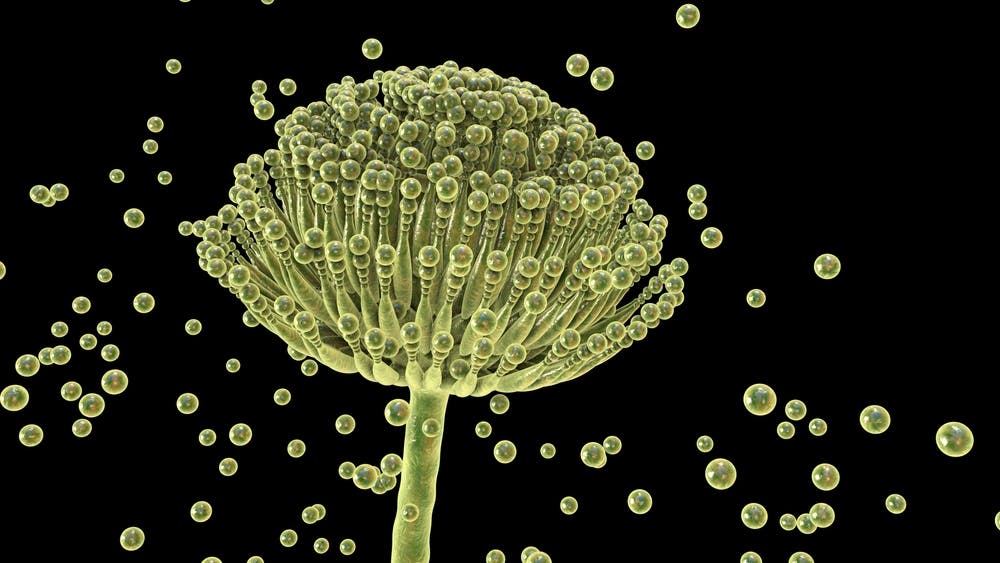 Aspergillus fumigatus mainly affects the lungs.
Kateryna Kon/Shutterstock
Aspergillus fumigatus mainly affects the lungs.
Kateryna Kon/Shutterstock
The WHO report calls for enhanced surveillance, a focus on research and development, and improvements in public health interventions, such as improved prophylaxis (preventive treatments) or infection prevention strategies.
Viewers of The Last of Us will understand why these are so important. We need surveillance so we know where threats are coming from before they arrive, otherwise we cannot prepare.
We need more research and development to develop vaccines and new treatments.
So far, we have failed to develop any anti-fungal vaccines and there is no chance we could produce and distribute one as we did for COVID.
Although some new anti-fungals have become available, the range is still too small, and some strains of fungi are resistant to all available drugs.
Developing vaccines and drugs is hard because fungal cells are similar to human ones. So basic laboratory research is vital to identify ways we can kill fungal cells without harming our own.
Without giving any spoilers, it’s safe to say the public health interventions in The Last of Us are pretty extreme. So research on how to contain and control fungal pathogens is also vital to avoid such draconian and ineffective measures.
Read more: Curious Kids: Are zombies real?
Are fungal pandemics possible?
The fungal frog plague, chytrid disease, has killed countless amphibians. Researchers say it has caused the greatest loss of biodiversity from a single disease ever recorded.
Is a fungal zombie apocalypse possible? Not for humans. The fungus in The Last of Us evolved over millennia to infect a specific ant species and influence its behaviour. There is no realistic prospect of this organism crossing over into humans and controlling us.
However, we do face very real threats from fungi if we don’t work hard to understand them better – threats to our health, to biodiversity, even food security. By taking action now, we can prevent a potential public health crisis.
Authors: Justin Beardsley, Associate Professor in Infectious Diseases, Sydney Institute for Infectious Diseases Westmead Clinical School, University of Sydney


















