

From the dingo to the Tasmanian devil
- Written by: Euan Ritchie, Professor in Wildlife Ecology and Conservation, School of Life & Environmental Sciences, Deakin University
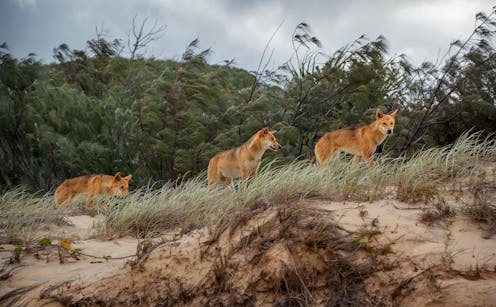
No matter where you live, apex predators and large carnivores inspire awe as well as instil fear.
Large predators have been heavily persecuted and removed from areas where they once lived because of conflict with livestock graziers.
Beyond their large teeth, sharp claws and iconic status, research is finding they are crucially important in ecosystems. So there is considerable interest in returning large carnivores to areas where they once lived, as part of a shift towards rewilding.
Bringing back carnivores is not without risk, but it’s a potentially powerful conservation tool.
Rewilding dingoes and Tasmanian devils in Australia could benefit many of our troubled ecosystems, by keeping herbivore numbers down, keeping feral cats and foxes fearful, and triggering a rebound in vegetation and small animal populations.
Predators vs prey
Predators can affect their prey’s behaviour. When prey species know a predator is around and perceive risk to their survival, they change how they behave.
The landscape of fear predators create can make it harder for prey species to survive.
That’s often good for ecosystems. The effect of dingoes in reducing, say, kangaroo and wallaby populations and changing their behaviour, can actually help bring back plants and smaller animals through a “trophic cascade”. For example, wolves chasing, eating and scaring deer can lead to an increase in the growth of plants, which can benefit other species.
Predators also affect other predators. If humans poison, shoot, trap and exclude top predators like dingoes, smaller predators can increase in number and get bolder, in a phenomenon called mesopredator release. In California, when coyotes disappeared due to habitat destruction, populations of smaller predators such as cats grew and songbird numbers fell.
How is it done?
Rewilding can occur passively, by changing laws to stop the exclusion or killing of large carnivores and making areas more favourable for carnivores to live. When this happens, species often move back by themselves. Encouragingly, this is happening in many parts of the world, including a recent sighting of a wolf in Brandenburg, Germany.
In other cases, rewilding may need a more active approach, such as physically moving animals to an area. The return of wolves to Yellowstone National Park and the ecological transformation that followed is a famous example of this, although in recent times the details of this story have been questioned.
When does rewilding work best? Recent research shows wild-born animals fare better than captive-born animals, though the results are far from conclusive. Wild-born animals may have an edge due to their skills in hunting and defending territories critically important for survival.
Rewilding in Australia means bringing back dingoes
Once carnivores are killed or fenced off from an area, the ecosystem changes. Will we restore nature by bringing them back? Potentially – but it’s not guaranteed. Australia’s controversial canine, the dingo, is a perfect example. Aside from humans, dingoes are Australia’s only living land predator over 15 kilograms.
Dingoes have a vital role in Australian ecosystems, such as keeping populations of kangaroos and emus under control. They can also take down feral goats. Their natural control of herbivores means plants can bounce back, as well as making room for smaller animals. Their effect on plant life may even affect the height and shape of sand dunes.
In some parts of Australia, kangaroo populations have exploded. Land clearing for pasture favours kangaroos, as do the dams and water troughs for livestock, the killing off of dingoes and the ending of First Nations Peoples’ cultural practices and hunting.
At times, these population booms have led to sudden crashes, with widespread starvation in droughts. Harvesting kangaroos is one response, but this is often controversial and unpopular. Bringing dingoes back would help reduce kangaroo numbers in a way more palatable to many people.
When present, dingoes also keep a lid on our worst introduced predators, feral cats and foxes, either by eating them or forcing them to alter their behaviour. If cats and foxes have to be more careful, it may benefit their smaller prey.
We could rewild dingoes very easily by removing large barriers like the dingo fence. This, of course, would trigger pushback from livestock graziers worried about attacks on their stock.
Read more: The dingo fence from space: satellite images show how these top predators alter the desert
It doesn’t have to be this way though. We’ve learned a lot about ways to reduce conflict between farmers and predators. It’s now entirely possible for livestock producers and top predators to coexist. Western Australian farmers are already using guardian animals such as Maremma dogs to protect livestock.
So should we do it?
Australia has been slow to support and attempt large carnivore rewilding. But we can learn valuable lessons from the relocation of Tasmanian devils to an offshore haven, Maria Island.
Devils were introduced to safeguard the species against the severe population decline from devil facial tumour disease. These predators were not native to Maria Island, but they’ve flourished. One unexpected side effect was the devastating impact on the island’s little penguin population.
Rewilding comes with risks. But it also comes with major benefits, which may help our collapsing ecosystems and threatened species.
Time is short. Conservation must take calculated and informed risks to achieve better outcomes. Rewilding attempts are valuable, even when things don’t go entirely as planned.
What else could we do? Discussions over the carefully planned reintroduction of Tasmanian devils to mainland Australia continue. If the devils come back to the mainland for the first time in thousands of years, they might help to manage herbivore and feral cat populations.
Rewilding is not about recreating the mythical idea of wilderness. Humans have shaped ecosystems for millennia.
If rewilding and ecological restoration is to succeed, communities and their values, including First Nations groups, must be involved.
Authors: Euan Ritchie, Professor in Wildlife Ecology and Conservation, School of Life & Environmental Sciences, Deakin University


















