

Is there a vaccine for RSV or respiratory syncytial virus? After almost 60 years, several come at once
- Written by: Lara Herrero, Research Leader in Virology and Infectious Disease, Griffith University
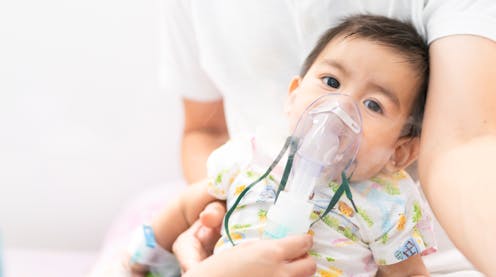
You might not have heard of respiratory syncytial virus, or RSV. But it caused more than 100,000 global deaths in 2019, making it a leading cause of death in children under one year old.
In Australia, child deaths are thankfully rare. But infection sends thousands to hospital each year, particularly babies and young children.
So for kids, this virus is a very big deal. And despite almost 60 years of research, there are no licensed vaccines to prevent it.
That may change soon. We’ve recently had results of late-stage clinical trials of RSV vaccines from Pfizer, Moderna and GSK. These vaccines are being assessed (or will be shortly) for regulatory approval in the United States.
However, these trials were conducted in adults and pregnant women, not children. So we still have a way to go before RSV vaccines are tested in children, shown to be safe and effective, are approved for use, then become widely available.
Here’s why it’s taken so long to develop a RSV vaccine and what we can expect next.
Read more: RSV: experts explain why rates of this virus are surging this year
What is RSV?
RSV is a contagious virus causing respiratory infections in both adults and children.
The virus is transmitted from person to person by droplets when someone coughs or sneezes, or by touching their nose or eyes after touching contaminated surfaces.
Infections usually surge in winter, causing symptoms such as a runny nose, sneezing, sore throat, fever, headache and cough. Adults and children can be hospitalised with RSV and its complications, which include pneumonia and bronchiolitis.
Read more: RSV FAQ: What is RSV? Who is at risk? When should I seek emergency care for my child?
We’ve had a few setbacks
The first RSV vaccine was given to infants and children in the mid-1960s.
Although this inactivated vaccine (composed of dead RSV particles) seemed to be well tolerated, it later caused a rare side effect called vaccine-enhanced disease. This is where the vaccine caused more serious RSV symptoms when infants and toddlers caught the virus, instead of protecting them.
This was almost 60 years ago, and the science of vaccine development has come a long way. Even though scientists later found new vaccine strategies, this disaster has unfortunately slowed down RSV vaccine research and development.
Read more: Randomised control trials: what makes them the gold standard in medical research?
Newer technologies, fresh hope
Advances in what we know about the virus, and newer vaccine technologies, mean researchers are now more optimistic about the prospect of a RSV vaccine.
Ten years ago, scientists identified the structure of the RSV viral protein it uses to attach and enter human host cells. This allowed scientists to change strategies and develop protein-based RSV vaccines.
Protein-based vaccines consist of injecting a purified protein from the target virus that stimulates the immune cells. This technology is used in many existing vaccines, such as those for hepatitis B and pertussis (whooping cough).
But it’s not been plain sailing for protein-based vaccines either.
In 2019, Novavax announced its prototype protein-based RSV vaccine (ResVax) failed to prevent “medically significant” RSV in babies born to mothers who had been given the vaccine as part of a late-stage clinical trial.
Although the vaccine was shown to be safe, and protected babies from severe RSV, including hospitalisations, the vaccine has not yet made it to market, and further clinical trials are ongoing.
In recent years, we’ve seen another major technology development – mRNA vaccines. These have proved effective and robust during the COVID pandemic.
These mRNA vaccines involve injecting the information required for the human host cells to produce the viral protein, to later stimulate immune cells.
The front-runner RSV candidate vaccines – from GSK, Pfizer and Moderna – are either protein-based or use mRNA technology.
Read more: The fascinating history of clinical trials
The GSK vaccines
GSK is going with protein-based technology for two of its candidate RSV vaccines.
One (known as RSVPreF3 OA), has had good results in late-stage clinical trials in adults 60 years or older, with data published in recent weeks. The US Food and Drug Administration (FDA) is reviewing the vaccine, with results expected in May.
Another of GSK’s candidate RSV vaccines (GSK3888550A, RSVPreF3) is taking a different approach. The idea is to vaccinate pregnant women to confer immunity to the unborn baby.
Results of late-stage trials in healthy pregnant women aged 18-49 years are set to report in 2024. Earlier studies in non-pregnant women showed the vaccine was well tolerated and activated a good immune response.
The Pfizer vaccine
Pfizer has also gone with a protein-based RSV vaccine (RSVpreF). But this time it’s a bivalent vaccine. It contains proteins to stimulate immune protection against two types of RSV – RSV A and B. Again, the idea again is to vaccinate pregnant women to immunise their babies in the womb.
In November 2022, Pfizer announced interim results of its late-stage clinical trial showing 81.8% efficacy in protecting against severe disease in babies (one to 90 days old) of vaccinated pregnant women. Over time, that immunity decreased.
Final clinical trial results are expected any day now, and the vaccine is being submitted to the FDA for priority review, with a result expected in August.
The Moderna vaccine
Moderna is using mRNA technology for its candidate RSV vaccine (called mRNA-1345). It uses similar technology to its COVID mRNA vaccines.
It has been tested in late-stage clinical trials in people over the age of 60. The company announced earlier this year that the vaccine was mostly well tolerated and had an efficacy of 83.7%.
The company is set to make a full submission to the FDA in the first half of 2023.
Read more: 3 mRNA vaccines researchers are working on (that aren't COVID)
Several hurdles ahead
Another candidate vaccine, from Janssen, uses a different type of technology (adenovirus vector technology), and is not so far advanced through clinical trials as the others. But it has shown promising preliminary results to date in adults.
And that’s the sticking point with all the RSV vaccines mentioned. They’ve only been tested in adults. To have the greatest impact, the vaccines must also be evaluated in young children and infants.
The biggest question is what age should a baby be vaccinated against RSV once it loses the immunity from its mother?
While we wait for RSV vaccines, the best way of slowing the spread of this viral illness are measures we’ve become used to during COVID. If you or your children have RSV, make sure you wear a mask, wash your hands and maintain your distance from others.
We would like to thank Masters (Doctor of Medicine) student Chloe Scott from Griffith University for her critical review and assistance with this article.
Authors: Lara Herrero, Research Leader in Virology and Infectious Disease, Griffith University


















