

Older women are doing remarkable things – it's time for the putdowns to end
- Written by: Maggie Kirkman, Senior Research Fellow, Global and Women's Health, School of Public Health and Preventive Medicine, Monash University
It’s not easy to claim being an old woman. To start with, how can I be 75 when I feel about 40? And isn’t it shameful to be old when youth is valued? People proudly parrot statements such as, “I’m growing older but not getting old” (meaning, “How terrible to be old!”). I even heard that line quoted approvingly by one of the middle-aged hosts of the recent Australia Day Award ceremony.
Then there are shop assistants who serve an old person by asking, “What can I do for you, young lady/man?” (i.e. “I see that you’re old and will mock it by calling you young”). When author Jane Caro wrote about her husband’s angry response to this example of ageism it created quite a Twitter storm. Can’t you take a joke? But, as Caro replied, “Benign ageism, hostile ageism. One often turns into the other and both make the recipients feel diminished”.
Benign ageism applies as much to the stereotyping of young people (wasting their money on smashed avocado), as it does to the old.
Ageism is bad enough, but it’s often compounded by sexism. It is humiliating for a boy to be told he’s playing like a girl but even worse for a man expressing doubts or concerns to be called an old woman. The stereotype of the old woman is anxious, dependent, useless, and a burden – if she isn’t a nasty, bitter old witch. Dismissing old women in this way renders them invisible because they are considered of no use to society.
Read more: Men and young people more likely to be ageist: study
Women experience a sense of invisibility from late middle age: being overlooked in shops, ignored in restaurants. People walk into me in the street as though I’m incorporeal. Of course, it can be liberating to be ignored, not to be constantly assessed for one’s looks as young women are, and I try to make as much lemonade as possible from life’s lemons. Nevertheless, I’d prefer not to be completely disregarded.
When Jane Fisher and I interviewed Baby Boom women (born 1946 to 1964), we found that they wanted to be treated with respect, which doesn’t seem like much to ask. They said that respect includes requiring we all challenge – and refuse to perpetuate – these harmful stereotypes.
Ageist stereotypes reinforce age-based discrimination. An Australian survey of more than 2000 people aged over 60 found experiences of ageism have an adverse effect on mental health, prompting depression and anxiety.
Challenging stereotypes
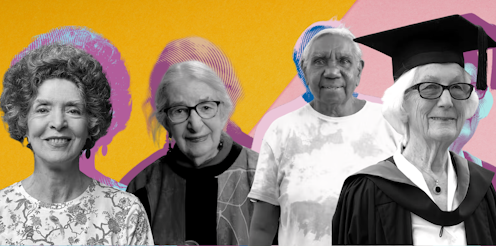
My recent interviews with women from the previous generation, dolefully named the Silent Generation (born before 1946), challenge these stereotypes. In their late seventies, eighties, and nineties, these women are leading fulfilling lives; contributing to their communities and to the wider society.
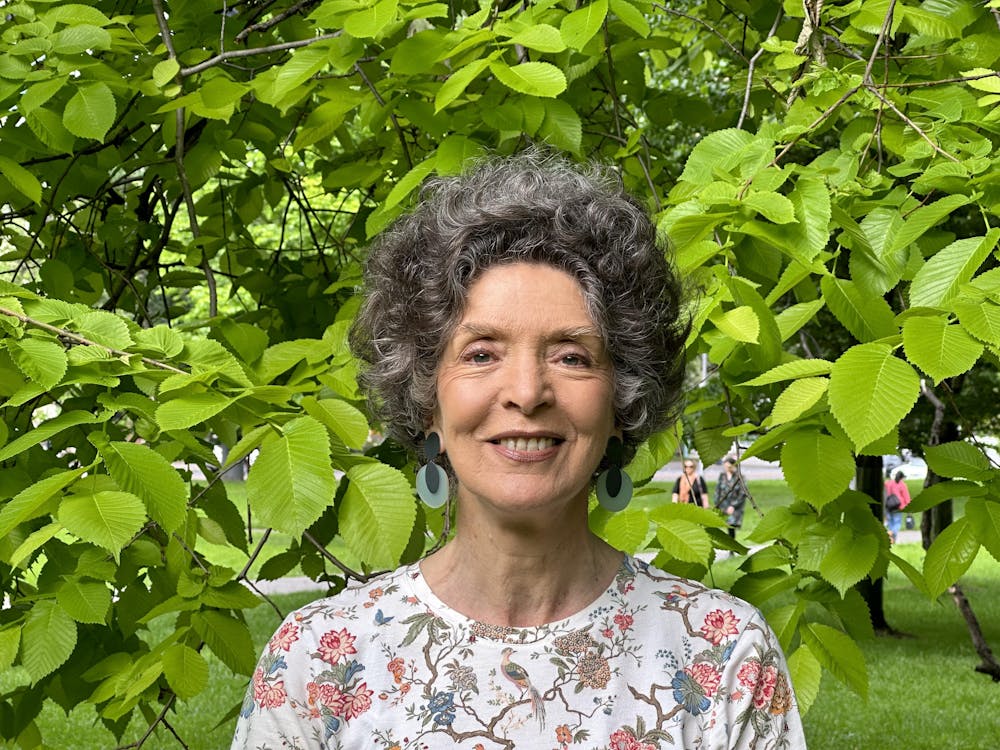
There is Mig Dann, whose PhD was conferred in her early eighties. Her thesis explored memory and trauma through art theory and practice. Exhibitions of her work are breathtaking.
Olive Trevor OAM developed her love of plants as her five children grew up and, in her eighties, was recognised as a world expert in bromeliads.
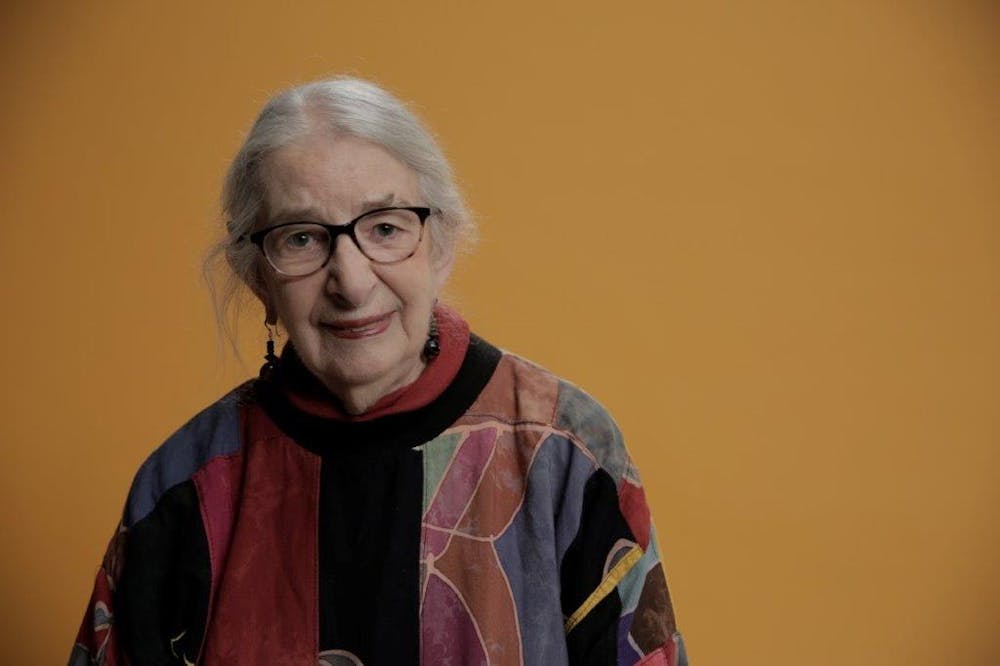 Eudcational coach Lester Jones.
Family collection.
Eudcational coach Lester Jones.
Family collection.
Lester Jones runs an educational coaching business, specialising in people with learning difficulties. She is in her nineties.
Jacqueline Dwyer was ANU’s oldest successful postgraduate student when she became a Master of Arts at 90; a book about her research was published when she was 92.
After a difficult young adulthood as an itinerant worker, Raylee George found her vocation in typesetting. When she was made redundant, an employer who values older people took George on in her seventies as a specialist call-centre operator.
As she approaches 80, environmental scientist and climate campaigner Dr Sharron Pfueller continues to set an example of how we should all be living sustainably.
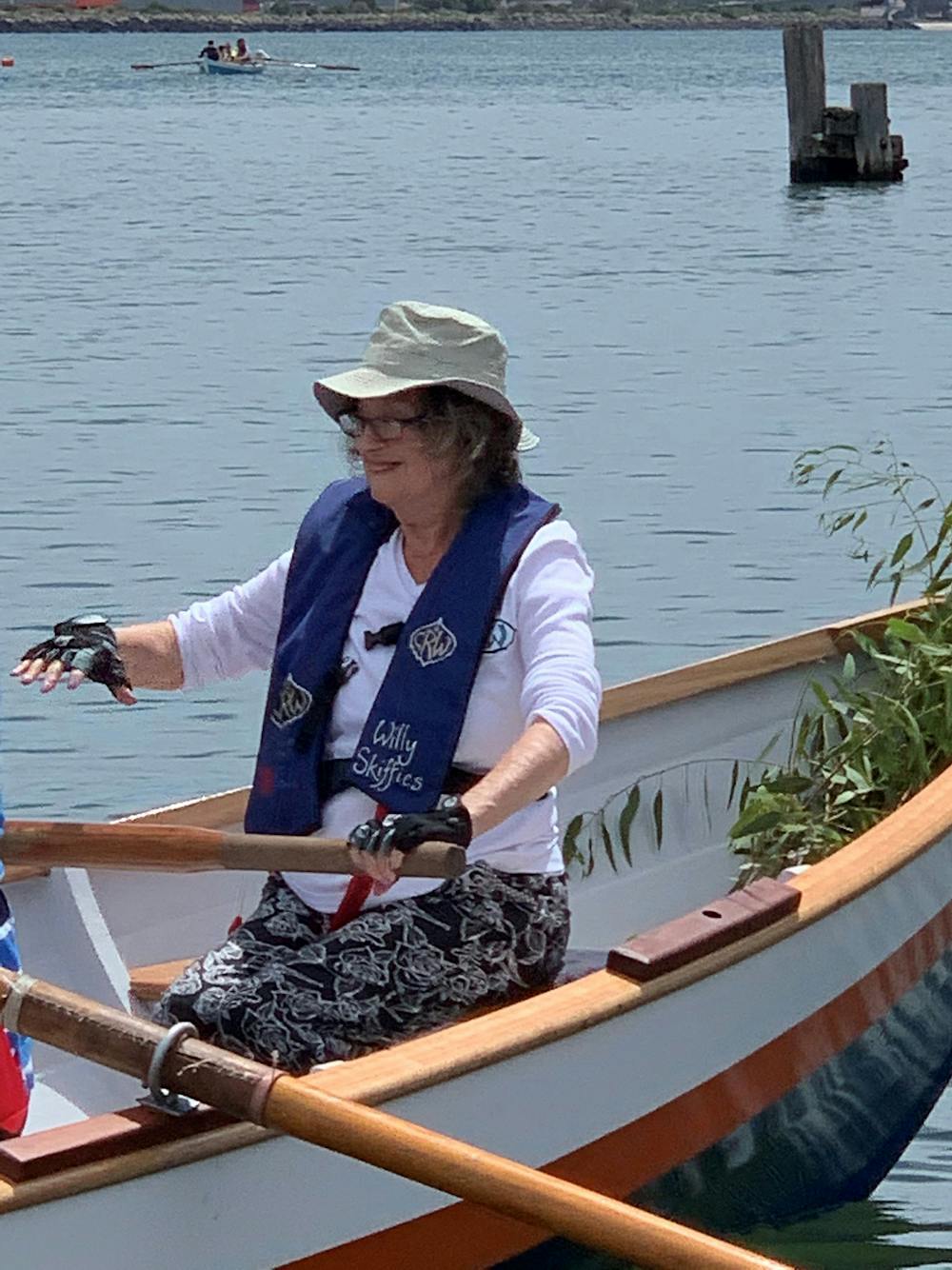 Robina Rogan.
Author provided
Robina Rogan.
Author provided
After working as a TV make-up artist and in managerial roles, as well as doing voluntary work, Robina Rogan at 76 joined a team that built a boat and rowed it around Port Phillip Bay. In her eighties, she’s still rowing.
Dr Miriam Rose Ungunmerr Baumann AM was Senior Australian of the Year in 2021; her life is committed to supporting Indigenous youth and to maintaining bridges that unite Indigenous and non-Indigenous cultures and people. These are just a few examples.
It was Ungunmerr Baumann who led me to ponder the contrast between the way in which so many of us (appropriately) pay our respects to First Nations Elders past and present while disrespecting old people in general. As she says to audiences of people in late adulthood, “You are all Elders”.
The life stories of these women reveal they endured hardship and grief while displaying resilience and determination. But personal qualities can’t fully account for lives that continue to have meaning. It isn’t enough to tell women to exercise, eat more vegetables, do lots of puzzles, and volunteer at the local op shop. We live in communities and societies in which we are all interdependent.
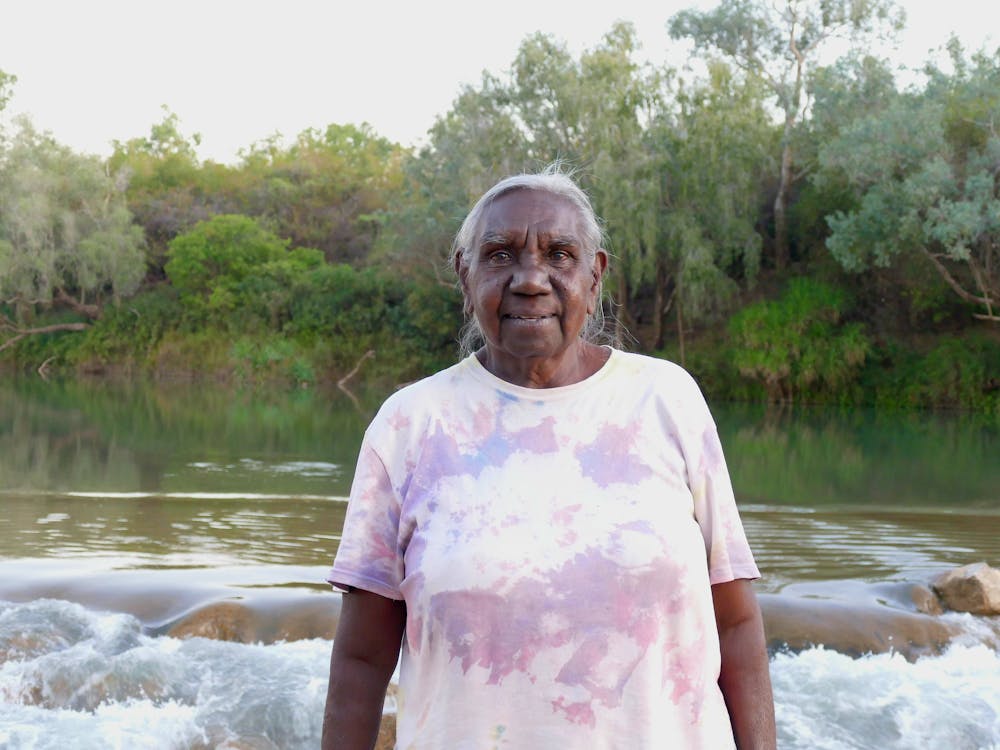 Miriam Rose Ungunmerr Baumann: ‘you are all Elders’.
Eleesa Zlatic
Miriam Rose Ungunmerr Baumann: ‘you are all Elders’.
Eleesa Zlatic
The Baby Boom women demonstrated that their whole life course influenced their experience of ageing, including their mental health. Were they adequately parented? Disadvantaged? Victims of violence? Well nourished in body and mind? Did they have good health? And, crucially, were there people, policies, and a culture that valued and supported them?
A social responsibility
Women may have qualities that help them to live productive and satisfying lives, but they can achieve their potential only in a milieu that enables, rather than inhibits, them.
The milieu includes other people (family, friends, workmates, the community), the built environment and social policies. Ageing well is a social responsibility, to be shouldered by everyone – not only because it is the right thing to do but because we all stand to benefit.
Preparations for old age begin with care and support for parents and infants and even with preconception healthcare: anything that contributes to physical and mental health and to parents’ capacity to nurture children. It includes financial support, adequate housing, early identification and treatment of postnatal depression, good childcare and high-quality education for all.
Anti-discriminatory policies, informed and inclusive healthcare, and social structures that support and enhance the lives of girls and women – as well as boys and men – will benefit everyone, not only older women.
Read more: Giving out flowers on TikTok: is this a 'random act of kindness' or just benevolent ageism?
The United Nations has declared the years 2021 to 2030 to be the Decade of Healthy Ageing: a time for worldwide collaboration to promote longer and healthier lives. Physical health is emphasised not as an end but as a necessary condition for full participation in society. This endeavour is part of a magnificent movement towards creating age-friendly neighbourhoods. The World Health Organization has taken the lead through its age-friendly cities framework.
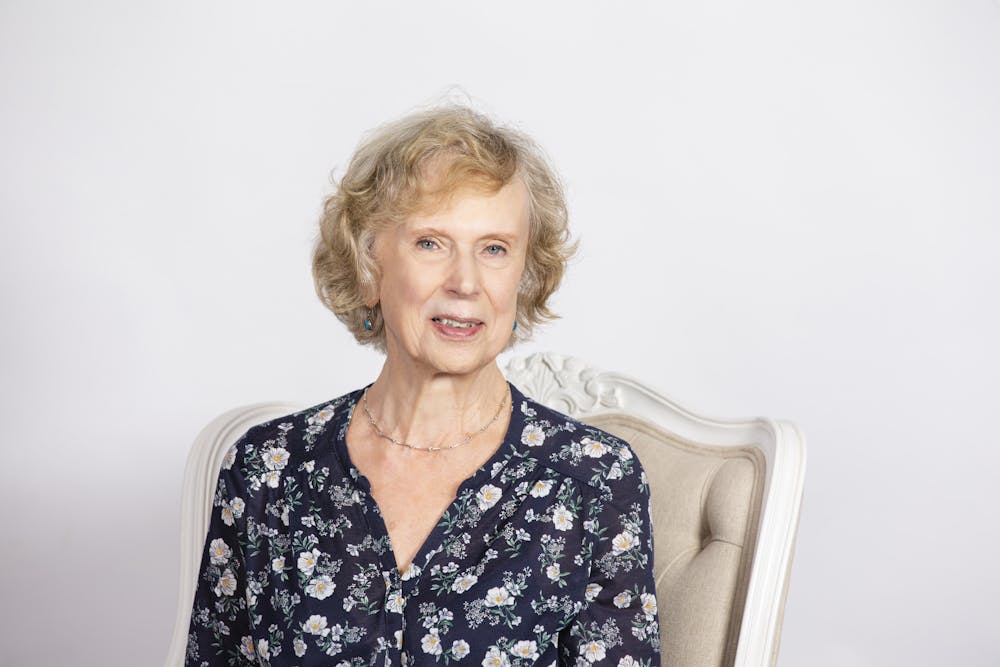 Sharron Pfueller: environmental scientist and climate campaigner.
Author provided from family collection.
Sharron Pfueller: environmental scientist and climate campaigner.
Author provided from family collection.
The eight areas in the framework are community and healthcare, transportation, housing, social participation, outdoor spaces and buildings, respect and social inclusion, and civic participation and employment. These areas are interconnected. They encompass the physical, psychological and social components of life, all of which are implicated in ageing. We need to develop and maintain a world in which everyone, of any age, feels welcome and is encouraged to participate.
Socially constructed ideas of ageing can similarly be socially dismantled.
I’m proud to be old, but my age is not what I want you to see first, especially when “old” means useless, past it, of no interest to anyone else. A woman of 25 might have firm flesh and a future full of possibilities, but she doesn’t have all the decades of life experience embodied by a wrinkly woman of 75.
I’d like people to be interested in old women’s stories, to be prepared to learn about their lives: not only their past, but what they’re doing now, what they plan to do in the time to come.
This isn’t a whinge. I enjoy getting old. I love birthdays and cake. But I would like old age to be valued. It seems perverse for those who are not yet old to condemn their own futures.
Maggie Kirkman’s book Time of Our Lives: Celebrating Older Women is out on 1 March.
Authors: Maggie Kirkman, Senior Research Fellow, Global and Women's Health, School of Public Health and Preventive Medicine, Monash University


















