

Sanctions rarely work, but are they still the least worst option?
- Written by: Mark Beeson, Adjunct professor, University of Technology Sydney

How do we encourage states – or more specifically the people who run them – to behave well, or at least not badly?
The “we” in this context is the fabled “international community”, which usually amounts to little more than the United States and a few trusty allies.
Review: Backfire: How Sanctions Reshape the World Against US Interests – Agathe Demarais (Columbia University Press).
As Agathe Demaris makes clear in her excellent, insightful and rather sobering book Backfire: How Sanctions Reshape the World Against US Interests, American policymakers have been prepared to act unilaterally when it suits their perceived national interests, which turns out to be most of the time.
Despite Washington’s continuing enthusiasm for sanctions, however, the results of American policies have often been counterproductive. Not only has the unilateral and arbitrary use of sanctions undermined the international standing of the US, it has had material consequences.
In retrospect, such an outcome seems inevitable. As Demarais points out,
typically effective sanctions are in place for the short term, have a narrow goal, target a democracy that has significant ties with the United States, and are backed by American allies. This is the exact opposite of most US sanctions programs.
Could do better?
The apparent failure of American foreign policy in general and sanctions in particular is of more than academic interest.
Unbelievably, Europe is hosting an old fashioned inter-state war of a sort that many of us thought was a thing of the past. If Europe, with all its contemporary advantages and blood-soaked past, can’t learn the lessons of history, where can?
Of the many questions Putin’s invasion of Ukraine poses, the most immediate is how he might be forced or persuaded to stop. One thing is already painfully apparent: the logic of deterrence and the theories about the balance of power that underpin them look threadbare and inadequate.
Clearly, Putin was not deterred by NATO or the prospect of American opposition. Even if he made a “rational” calculation that neither the US nor NATO had the stomach for direct conflict with Russia, it is evident that all the West’s expensive military hardware was not enough to deter someone bent on righting perceived historical wrongs.
Xi Jinping may be equally impervious to the assumed strategic calculus.
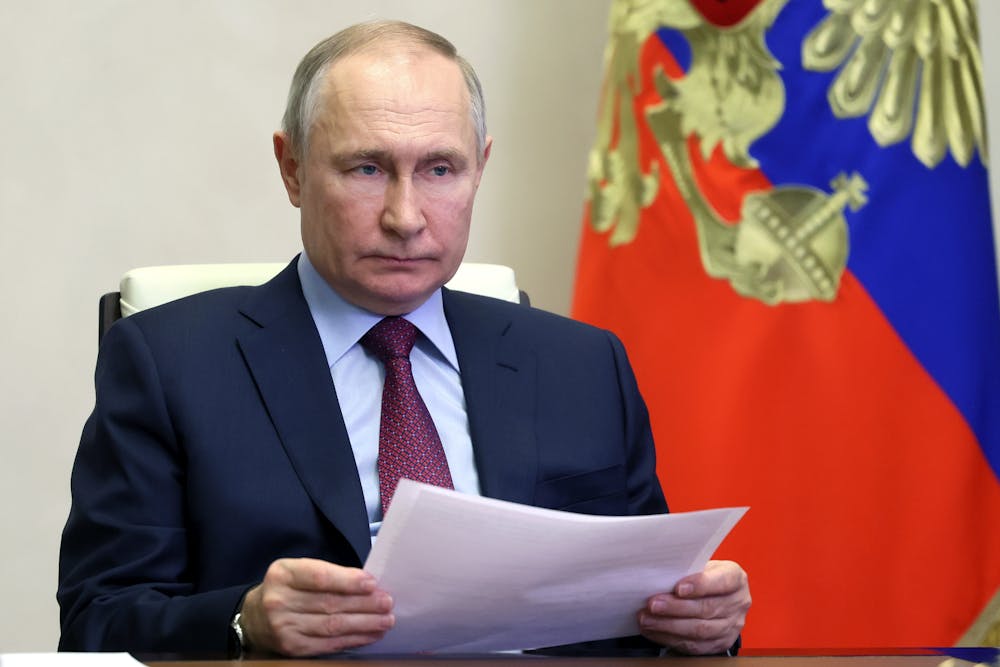
Read more: How the Russian economy is defying and withstanding western sanctions
This is why – in theory, at least – sanctions are so attractive. Sanctions are intended to “inflict economic, financial, and social pain on a country to make it change its behaviour”. In theory, when successfully applied, they can bring about the non-violent resolution of conflicts, stop human rights violations, or any other actions that outrage the sanctioning countries.
In practice, successes – such as the UN mandated sanctions against Muammar Gaddafi’s Libya in the 1990s – are thin on the ground. In reality,
Libya was an exception. In most cases, sanctions do not work. In some instances, they may even backfire and hurt US interests.
According to Demarais, Gaddafi was not the only one feeling the effects of American policy during the 1990s. Over half the world’s population was subject to US sanctions. Instruments don’t get much blunter. Little wonder so many came to resent the ubiquitous influence of American power, even if that power was invariably incapable of achieving the desired results. More recent efforts have generally not been more successful.
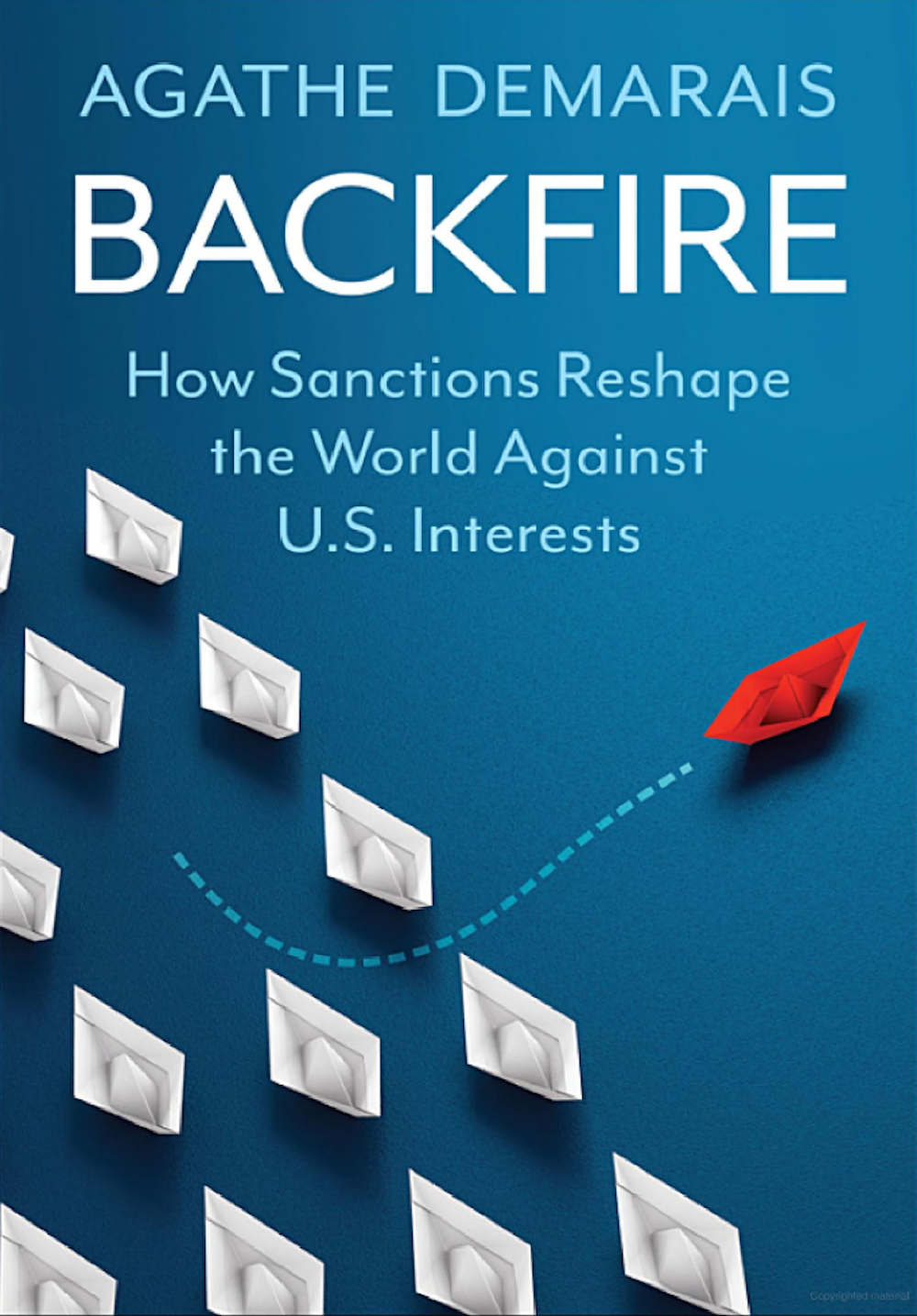 Demarais examines a number of the more prominent attempts to use sanctions to influence “rogue” states. One of the distinguishing features of American policy is the use of so-called secondary sanctions, such as threatening to deny access to the US financial system and the use of the dollar if countries or companies contravene American interests.
For example, the French energy company Total abandoned major investments in Iran rather than risk being sanctioned by the US. Not only did this episode poison US relations with France and the European Union, but it actually reinforced the influence of the hardliners in Iran.
The net effect of the unilateral deployment of sanctions, especially under the erratic leadership of Donald Trump, has been to reinforce the perception that the US is an increasingly unreliable partner that cares little about the collateral damage its policies inflict on even its closest allies. Little wonder that the Europeans in particular, and central bankers more generally, have been working to limit their exposure to the US dollar.
Most importantly, in the context of Europe’s current travails, Russia has “effectively disarmed the threat of US sanctions, leaving Washington with little leverage in negotiations with Moscow”. To its credit, a group of 10 EU states has recognised the limitations of the existing sanctions regime, and is attempting to to target vital, difficult to replace, western components in the supply chains that produce Russian weaponry. It will be an important test of both the efficacy of sanctions and European solidarity.
Read more:
All told, Australian sanctions will have almost zero consequences for Russia
The China challenge
Even without policy activism on the part of other countries, the reality is that American economic primacy – the very thing that makes it a potentially powerful actor – has been eroding, not least because of the rise of China.
The re-emergence of China as a great power has become the single biggest challenge to American preeminence. Not only is China rapidly becoming a strategic “peer competitor”, it will soon overtake the US as the world’s largest economy. It has already “grown far too big for America to sanction Beijing with its usual toolkit”.
This underlying material reality has forced American policymakers to think of other ways to try to contain Chinese power – not that they would actually describe it that way.
It’s worth emphasising just what a profound change this represents in American policy. Less than 20 years ago, the conventional wisdom was that China’s integration into a global capitalist economy, predicated on American normative preferences and practices, would socialise Chinese elites into “good” behaviour. It took a while for American policymakers to recognise that China’s version of state capitalism was not only different and unlikely to change, but that it was beginning to challenge US dominance in key areas of the global economy.
Demarais examines a number of the more prominent attempts to use sanctions to influence “rogue” states. One of the distinguishing features of American policy is the use of so-called secondary sanctions, such as threatening to deny access to the US financial system and the use of the dollar if countries or companies contravene American interests.
For example, the French energy company Total abandoned major investments in Iran rather than risk being sanctioned by the US. Not only did this episode poison US relations with France and the European Union, but it actually reinforced the influence of the hardliners in Iran.
The net effect of the unilateral deployment of sanctions, especially under the erratic leadership of Donald Trump, has been to reinforce the perception that the US is an increasingly unreliable partner that cares little about the collateral damage its policies inflict on even its closest allies. Little wonder that the Europeans in particular, and central bankers more generally, have been working to limit their exposure to the US dollar.
Most importantly, in the context of Europe’s current travails, Russia has “effectively disarmed the threat of US sanctions, leaving Washington with little leverage in negotiations with Moscow”. To its credit, a group of 10 EU states has recognised the limitations of the existing sanctions regime, and is attempting to to target vital, difficult to replace, western components in the supply chains that produce Russian weaponry. It will be an important test of both the efficacy of sanctions and European solidarity.
Read more:
All told, Australian sanctions will have almost zero consequences for Russia
The China challenge
Even without policy activism on the part of other countries, the reality is that American economic primacy – the very thing that makes it a potentially powerful actor – has been eroding, not least because of the rise of China.
The re-emergence of China as a great power has become the single biggest challenge to American preeminence. Not only is China rapidly becoming a strategic “peer competitor”, it will soon overtake the US as the world’s largest economy. It has already “grown far too big for America to sanction Beijing with its usual toolkit”.
This underlying material reality has forced American policymakers to think of other ways to try to contain Chinese power – not that they would actually describe it that way.
It’s worth emphasising just what a profound change this represents in American policy. Less than 20 years ago, the conventional wisdom was that China’s integration into a global capitalist economy, predicated on American normative preferences and practices, would socialise Chinese elites into “good” behaviour. It took a while for American policymakers to recognise that China’s version of state capitalism was not only different and unlikely to change, but that it was beginning to challenge US dominance in key areas of the global economy.
 President Xi Jinping delivers a speech in the Great Hall of the People in Beijing, January 20, 2023.
Li Xueren/AP
The eventual US response has been very different from the older form of sanctions applied to lesser powers. “Decoupling” has entered the lexicon of political economy as shorthand for policies designed to restrict China’s access to American technology.
Although there are key manufacturing hubs in Taiwan and South Korea, the US remains the dominant player in global microchip production, providing crucial software and equipment for downstream companies. Consequently, export controls limiting access to innovative technology are the key element in the US’s updated toolkit.
As Demarais points out, given that semiconductors are currently China’s largest single import item, this is a potentially serious problem – at least in the short-term.
According to The Economist, the recently inaugurated Foreign Direct Product Rule
attempts to weaponise the ubiquity of American technology. It lets the government claim jurisdiction over almost every chip factory in the world.
In the longer term, however, the consequences of decoupling look uncertain. On the one hand, China is rapidly moving to expand its domestic capacity for microchip production. Its rapid economic transformation over the last 20 or 30 years suggests that this ambition is likely to be realised. Demarais claims that China’s investment plans in this sector are 50 times greater than those of the American government.
The consequences for American firms are potentially dire: not only do US-based companies have some $700 billion invested in the People’s Republic, but they may lose access to a crucial market. As a result, Demarais argues that “decoupling is both a bad idea and poor policy”. More specifically she claims that
the danger that decoupling poses stems from the loss in revenues that not being able to serve the Chinese market and losing contracts in other countries would entail. With profits severely curtailed, US technology firms would probably struggle to remain ahead of the global game for semiconductor innovation.
Even more fundamentally, perhaps, the division of the world into disconnected rival camps with different operating systems may force other countries to make invidious choices between competing great powers at a time of heightened strategic tension.
Many countries have been scarred by America’s unilateral use of sanctions. Indeed, the collateral damage inflicted by the Trump era, in particular, means it is not obvious that even Western allies such as the EU will automatically side with the US against China in a contest for economic supremacy.
President Xi Jinping delivers a speech in the Great Hall of the People in Beijing, January 20, 2023.
Li Xueren/AP
The eventual US response has been very different from the older form of sanctions applied to lesser powers. “Decoupling” has entered the lexicon of political economy as shorthand for policies designed to restrict China’s access to American technology.
Although there are key manufacturing hubs in Taiwan and South Korea, the US remains the dominant player in global microchip production, providing crucial software and equipment for downstream companies. Consequently, export controls limiting access to innovative technology are the key element in the US’s updated toolkit.
As Demarais points out, given that semiconductors are currently China’s largest single import item, this is a potentially serious problem – at least in the short-term.
According to The Economist, the recently inaugurated Foreign Direct Product Rule
attempts to weaponise the ubiquity of American technology. It lets the government claim jurisdiction over almost every chip factory in the world.
In the longer term, however, the consequences of decoupling look uncertain. On the one hand, China is rapidly moving to expand its domestic capacity for microchip production. Its rapid economic transformation over the last 20 or 30 years suggests that this ambition is likely to be realised. Demarais claims that China’s investment plans in this sector are 50 times greater than those of the American government.
The consequences for American firms are potentially dire: not only do US-based companies have some $700 billion invested in the People’s Republic, but they may lose access to a crucial market. As a result, Demarais argues that “decoupling is both a bad idea and poor policy”. More specifically she claims that
the danger that decoupling poses stems from the loss in revenues that not being able to serve the Chinese market and losing contracts in other countries would entail. With profits severely curtailed, US technology firms would probably struggle to remain ahead of the global game for semiconductor innovation.
Even more fundamentally, perhaps, the division of the world into disconnected rival camps with different operating systems may force other countries to make invidious choices between competing great powers at a time of heightened strategic tension.
Many countries have been scarred by America’s unilateral use of sanctions. Indeed, the collateral damage inflicted by the Trump era, in particular, means it is not obvious that even Western allies such as the EU will automatically side with the US against China in a contest for economic supremacy.
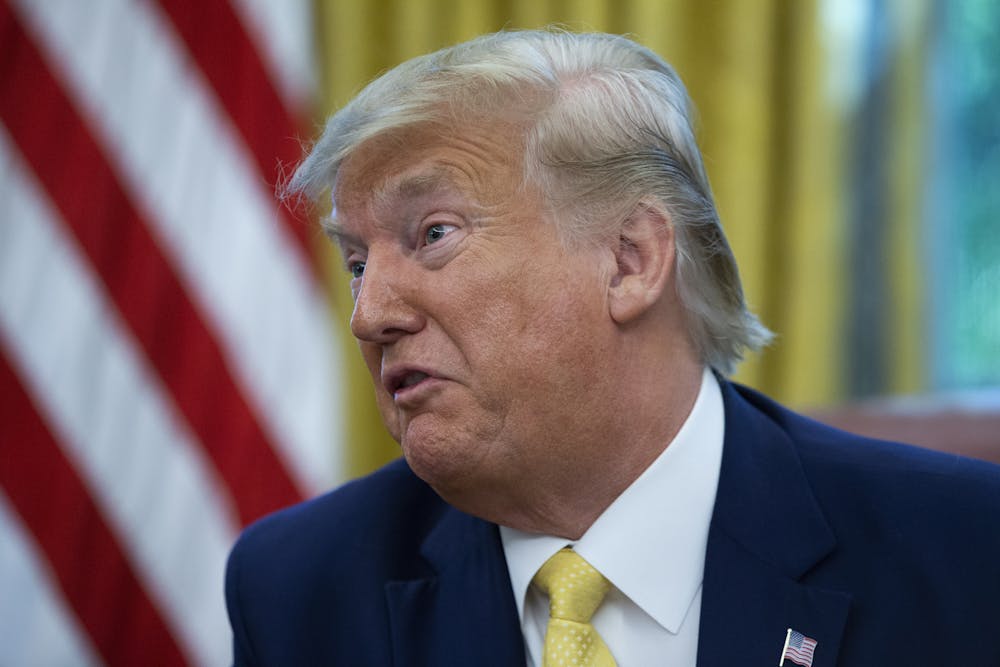 Donald Trump’s use of sanctions caused collateral damage.
Michael Reynolds/EPA
What’s the alternative?
The key message from this book is that sanctions are a bad idea in principle and not very effective in practice.
Perhaps so, but it’s worth asking what other options are available to policymakers, short of direct coercion and military might. After all, Putin’s current war of choice demonstrates that deterrence is not the force many of its advocates hoped or expected. This makes the expenditure on mountains of munitions harder to justify. If nothing else, sanctions are cheaper to apply and don’t risk cataclysmic conflicts when they fail.
It’s also worth remembering that sanctions do work sometimes. Coalitions of like-minded states operating together are likely to be more successful than the unilateral actions, especially when applied to poorer, less powerful states. Finely tuned sanctions that target individuals rather than entire populations are also potentially attractive, if relatively easy to evade.
Part of the problem here, of course, has been the willingness of people and even other governments to facilitate the avoidance schemes of bad actors. Britain’s role in assisting Russia’s kleptocracy to manage its wealth is perhaps the most egregious case in point.
The good news, such as it is, may be that “the days of unilateral US sanctions are numbered”. American unilateralism has generally been ineffective and self-serving, and has inflicted massive collateral damage on allies and the long-suffering populations of targeted states.
But if we are to persist with sanctions as a tool of international diplomacy – which perhaps we should, given the potentially limited and violent alternatives – we need to remember the other vital lesson from this important book: sanctioned states have to believe there is a reward for good behaviour. As Demarais concludes,
lack of trust undermines the effectiveness of sanctions, which are not meant to be used as sticks to punish rogue countries, but as carrots to reward those foes that change their ways.
Whether this logic will prove attractive to Putin is a moot point, given the existential stakes in that active conflict. But sanctions still might work against the likes of Iran and perhaps even North Korea. Persuasion still looks better than coercion.
In an ideal world some UN-sponsored mechanism to coordinate international efforts and sanction bad actors might be optimal. Unfortunately, we do not inhabit such a world. Perhaps the best we can hope for is that like-minded states will cooperate for the greater good.
Admittedly, such an outcome looks unlikely and partial at best. And yet if the “international community” cannot act against the most flagrant acts of aggression and violations of international humanitarian norms, what hope is there for cooperation over even more existentially threatening issues like climate change? A rhetorical question to which I fear we all know the answer.
Authors: Mark Beeson, Adjunct professor, University of Technology Sydney
Donald Trump’s use of sanctions caused collateral damage.
Michael Reynolds/EPA
What’s the alternative?
The key message from this book is that sanctions are a bad idea in principle and not very effective in practice.
Perhaps so, but it’s worth asking what other options are available to policymakers, short of direct coercion and military might. After all, Putin’s current war of choice demonstrates that deterrence is not the force many of its advocates hoped or expected. This makes the expenditure on mountains of munitions harder to justify. If nothing else, sanctions are cheaper to apply and don’t risk cataclysmic conflicts when they fail.
It’s also worth remembering that sanctions do work sometimes. Coalitions of like-minded states operating together are likely to be more successful than the unilateral actions, especially when applied to poorer, less powerful states. Finely tuned sanctions that target individuals rather than entire populations are also potentially attractive, if relatively easy to evade.
Part of the problem here, of course, has been the willingness of people and even other governments to facilitate the avoidance schemes of bad actors. Britain’s role in assisting Russia’s kleptocracy to manage its wealth is perhaps the most egregious case in point.
The good news, such as it is, may be that “the days of unilateral US sanctions are numbered”. American unilateralism has generally been ineffective and self-serving, and has inflicted massive collateral damage on allies and the long-suffering populations of targeted states.
But if we are to persist with sanctions as a tool of international diplomacy – which perhaps we should, given the potentially limited and violent alternatives – we need to remember the other vital lesson from this important book: sanctioned states have to believe there is a reward for good behaviour. As Demarais concludes,
lack of trust undermines the effectiveness of sanctions, which are not meant to be used as sticks to punish rogue countries, but as carrots to reward those foes that change their ways.
Whether this logic will prove attractive to Putin is a moot point, given the existential stakes in that active conflict. But sanctions still might work against the likes of Iran and perhaps even North Korea. Persuasion still looks better than coercion.
In an ideal world some UN-sponsored mechanism to coordinate international efforts and sanction bad actors might be optimal. Unfortunately, we do not inhabit such a world. Perhaps the best we can hope for is that like-minded states will cooperate for the greater good.
Admittedly, such an outcome looks unlikely and partial at best. And yet if the “international community” cannot act against the most flagrant acts of aggression and violations of international humanitarian norms, what hope is there for cooperation over even more existentially threatening issues like climate change? A rhetorical question to which I fear we all know the answer.
Authors: Mark Beeson, Adjunct professor, University of Technology SydneyRead more https://theconversation.com/sanctions-rarely-work-but-are-they-still-the-least-worst-option-199494


















