

We thought the first hunter-gatherers in Europe went missing during the last ice age. Now, ancient DNA analysis says otherwise
- Written by: Adam "Ben" Rohrlach, Mathematics Lecturer and Archaeogeneticist, University of Adelaide
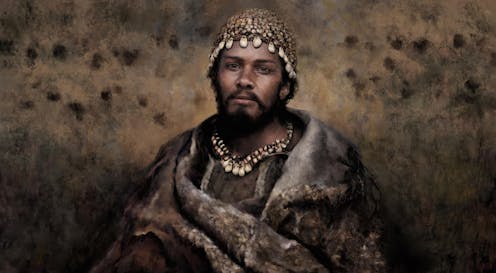
Hunter-gatherers took shelter from the ice age in Southwestern Europe, but were replaced on the Italian Peninsula according to two new studies, published in Nature and Nature Ecology & Evolution today.
Modern humans first began to spread across Eurasia approximately 45,000 years ago, arriving from the near east. Previous research claimed these people disappeared when massive ice sheets covered much of Europe around 25,000–19,000 years ago. By comparing the DNA of various ancient humans, we show this was not the case for all hunter-gatherer groups.
Our new results show the hunter-gatherers of Central and Southern Europe did disappear during the last ice age. However, their cousins in what is now France and Spain survived, leaving genetic traces still visible in the DNA of Western European peoples nearly 30,000 years later.
Two studies with one intertwining story
In our first study in Nature, we analysed the genomes – the complete set of DNA a person carries – of 356 prehistoric hunter-gatherers. In fact, our study compared every available ancient hunter-gatherer genome.
In our second study in Nature Ecology & Evolution, we analysed the oldest hunter-gatherer genome recovered from the southern tip of Spain, belonging to someone who lived approximately 23,000 years ago. We also analysed three early farmers who lived roughly 6,000 years ago in southern Spain. This allowed us to fill an important sampling gap for this region.
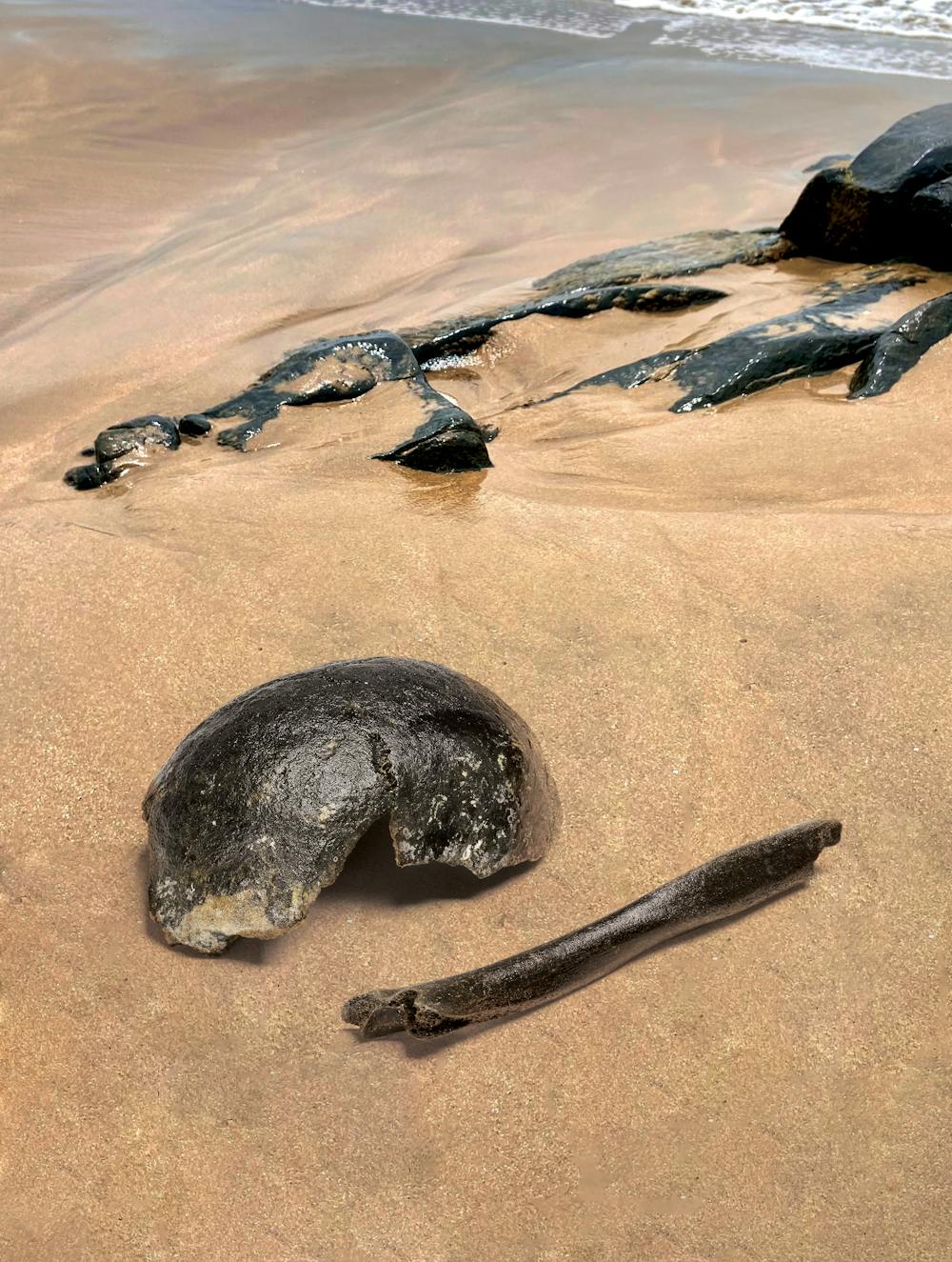
By combining results from these two studies, we can now describe the most complete story of human history in Europe to date. This story includes migration events, human retreat from the effects of the ice age, long-lasting genetic lineages and lost populations.
Post-ice-age genetic replacement
Between 32,000 and 24,000 years ago, hunter-gatherer individuals (associated with what’s known as Gravettian culture) were widespread across the European continent. This critical time period ends at the Last Glacial Maximum. This was the coldest period of the last ice age in Europe, and took place 24,000 to 19,000 years ago.
Our data show that populations from Southwestern Europe (today’s France and Iberia), and Central and Southern Europe (today’s Italy and Czechia), were not closely genetically related. These two distinct groups were instead linked by similar weapons and art.
We could see that Central and Southern European Gravettian populations left no genetic signal after the Last Glacial Maximum – in other words, they simply disappeared. The individuals associated with a later culture (known as the Epigravettian) were not descendants of the Gravettian. According to one of my Nature co-authors, He Yu, they were
genetically distinct from the area’s previous inhabitants. Presumably, these people came from the Balkans, arrived first in northern Italy around the time of the Last Glacial Maximum, and spread all the way south to Sicily.
In Central and Southern Europe, our data indicate people associated with the Epigravettian populations of the Italian peninsula later spread across Europe. This occurred approximately 14,000 years ago, following the end of the ice age.
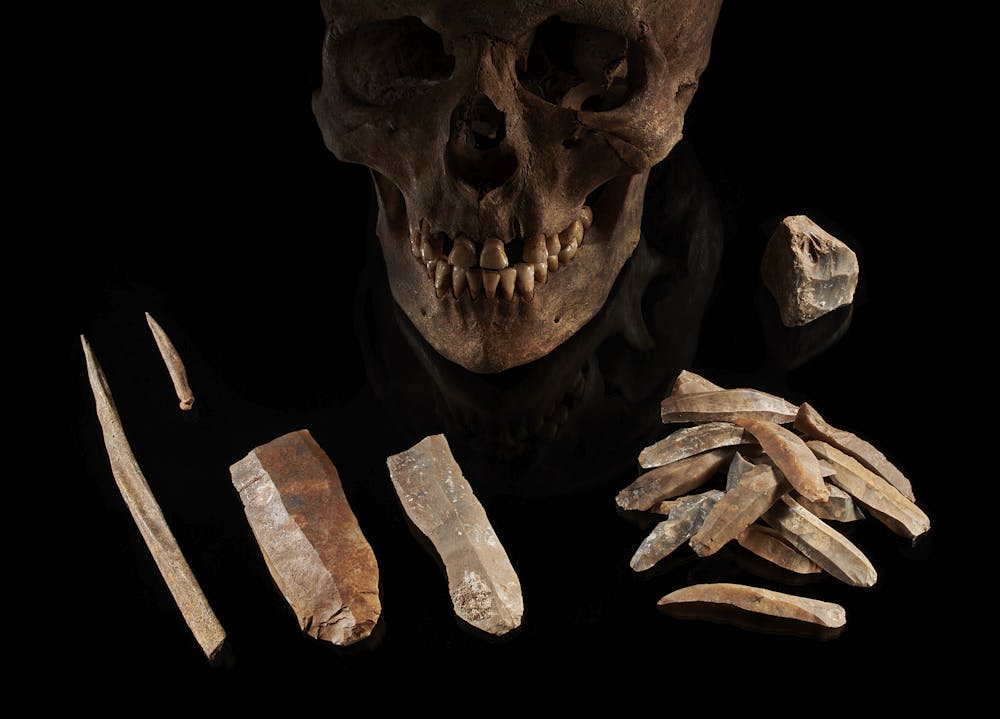 Male skull and stone tools from Groß Fredenwalde (Germany), dated to 7,000 years ago. This individual’s population lived side-by-side with the first European farmers without mixing. (Cooperation with Brandenburgisches Landesamt für Denkmalpflege)
Volker Minkus
Male skull and stone tools from Groß Fredenwalde (Germany), dated to 7,000 years ago. This individual’s population lived side-by-side with the first European farmers without mixing. (Cooperation with Brandenburgisches Landesamt für Denkmalpflege)
Volker Minkus
Climate refuge
While the Gravettian populations of Central and Southern Europe disappeared, the fate of the Southwestern populations was not the same.
We detected the genetic profile of Southwestern Gravettian populations again and again for the next 20,000 years in Western Europe. We saw this first in their direct descendants (known as Solutrean and Magdalenian cultures). These were the people who took refuge and flourished in Southwestern Europe during the ice age. Once the ice age ended, the Magdalenians spread northeastward, back into Europe.
Remarkably, the 23,000-year-old remains of a Solutrean individual from Cueva de Malalmuerzo in Spain allowed us to make a direct link to the first modern humans that settled Europe. We could connect them to a 35,000-year-old individual from Belgium, and then to hunter-gatherers who lived in Western Europe long after the Last Glacial Maximum.
Sea levels during the ice age were lower, making it only 13 kilometres from the tip of Spain to Northern Africa. However, we observed no genetic links between individuals in southern Spain and northern Morocco from 14,000 years ago. This showed that while European populations retreated south during the ice age, they surprisingly stopped before reaching Northern Africa.
Our results show the special role the Iberian peninsula played as a safe haven for humans during the ice age. The genetic legacy of hunter-gatherers would survive in the region after more than 30,000 years, unlike their distant relatives further east.
Post ice-age interaction
Some 2,000 years after the end of the ice age, there were again two genetically distinct hunter-gatherer groups. There was the “old” group in Western and Central Europe, and the “more recent” group in Eastern Europe.
These groups showed no evidence of genetic exchange with southwestern hunter-gatherer populations for approximately 6,000 years, until roughly 8,000 years ago.
At this time, agriculture and a sedentary lifestyle had begun to spread with new peoples from Anatolia into Europe, forcing hunter-gatherers to retreat to the northern fringes of Europe.
Authors: Adam "Ben" Rohrlach, Mathematics Lecturer and Archaeogeneticist, University of Adelaide


















