

We now have a treaty governing the high seas. Can it protect the Wild West of the oceans?
- Written by: Dr Sarah Lothian, Lecturer and Academic Barrister, Australian National Centre for Ocean Resources and Security, University of Wollongong, University of Wollongong
Delegates gave a jubilant cheer at United Nations Headquarters in New York on Saturday night, as nations reached an agreement on ways to protect marine life in the high seas and the international seabed area.
It has been a long time coming, debated for almost two decades. It took nine years of discussions by an Informal Working Group, four sessions of a Preparatory Committee, five meetings of an Intergovernmental Conference and a 36-hour marathon final push to reach agreement.
So why was it so hard to achieve? And what does it do?
In short, the Biodiversity Beyond National Jurisdiction agreement paves the way for the establishment of more high seas marine protected areas. Only 1% of the high seas are currently fully protected, so the new agreement is a vital step towards achieving the recently adopted Kunming-Montreal biodiversity pact, which pledges to protect 30% of terrestrial and marine habitats by 2030.
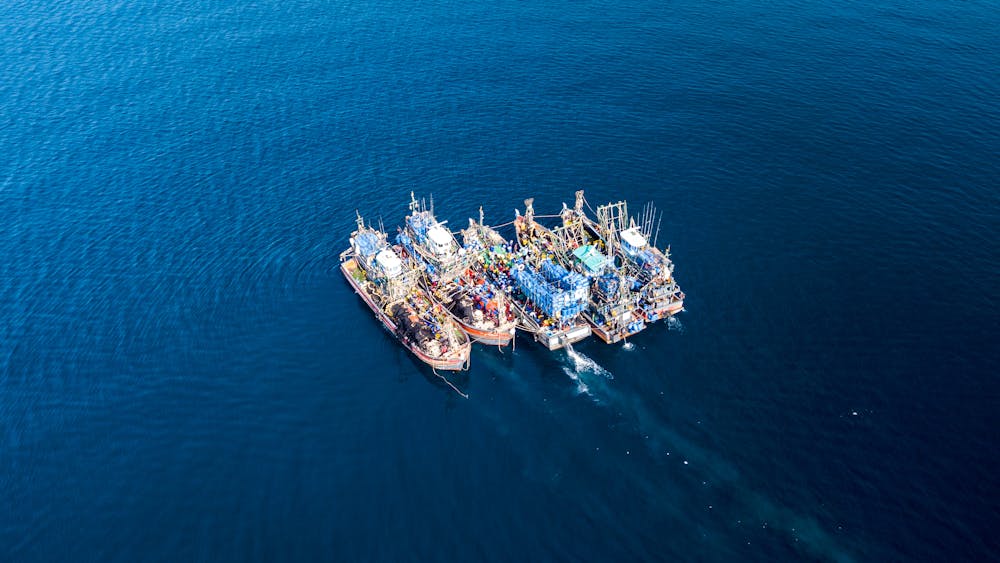
In turn, the designation of more high seas marine protected areas could assist in curbing fishing activities in these waters. At present, distant water fleets can scoop up almost everything that swims or scuttles thousands of kilometres from their home country. As the high seas are also teeming with marine life, the new agreement also ensures this genetic wealth is shared fairly and equitably among the international community.
It’s not too much to say this agreement marks a significant turning point in the protection of our deep oceans.
Where are we talking about?
Nations have rights to marine resources out to 200 nautical miles (370 kilometres) from their coastline. After that? It’s almost completely unregulated, much like the Wild West. It’s a huge area, representing over 60% of our oceans.
But this agreement doesn’t just cover what lives in the high seas water column. It also covers the seabed, ocean floor and subsoil beyond a coastal country’s continental shelf.
Read more: When fishing boats go dark at sea, they're often committing crimes – we mapped where it happens
Major discoveries on the ocean floor have dispelled the long perceived myth that the deep seabed is a barren desert and featureless plain. One important breakthrough has been the discovery of hydrothermal vents and their rich biological community. These seabed habitats, have been labelled one of the richest nurseries of life on Earth and harbour unique organisms of particular interest to science and industry alike. These organisms may offer a limitless catalogue of medical, pharmaceutical and industrial applications. They may even hold the cure for cancer.
Isolation is no longer protection
Due to their remote nature, the high seas were long considered protected from human impact. But only 13% of the ocean is now classified as marine wilderness, completely free from human disturbance, with most being located in the high seas.
International law, as it stands, is not up to the task of protecting this region. Regulations and rules are haphazard, with some regions and resources (like marine genetic resources) not protected at all. Enforcement is weak, and cooperation lacking, as I have found in my research.
Without adequate regulation, the high seas are being heavily exploited with 34% of all fished species now overfished. Illegal, unregulated and unreported fishing is also a serious problem on the high seas.
There is also growing interest in deep-sea mineral resources. The International Seabed Authority has entered into contracts with companies to mine deep-seabed areas, but the long term impacts of this mining activity are difficult to predict and its effects could have irreversible consequences for marine ecosystems. Marine pollution is also a growing problem with approximately 6.4 million tonnes of litter entering our oceans every year.
 Many companies are eyeing off rich mineral deposits on the seafloor, as in this photo of experimental mining off Papua New Guinea in 2009.
AAP
Many companies are eyeing off rich mineral deposits on the seafloor, as in this photo of experimental mining off Papua New Guinea in 2009.
AAP
What solutions does this agreement offer?
Under this agreement, the door is open to establish marine parks and sanctuaries covering key areas of the high seas. Fishing could be banned or heavily restricted in these areas along with other activities that could have a detrimental impact on marine life.
You might have expected fishing to be a key reason for the long delay in getting this agreement across the line. However, one of the main stumbling blocks was how to share the genetic wealth of the high seas. Under the agreement, all countries will have to share benefits – financial and otherwise – from efforts to harness the benefits to be derived from these resources. Think of the possible new cancer treatments coming from compounds in sponges and starfish.
Why was this a challenge? It was difficult to find common ground on how to share benefits from this genetic wealth, with a clear divide between developed and developing nations. But it was achieved and now data, samples and research advances will need to be shared with the world.
What’s next?
Reaching agreement has been achieved. To make it legally binding, it must be adopted and ratified by countries. Will the world’s nations sign up? We’ll need as close to universal participation as possible to make this work. The first part is done. But getting States to sign on, ratify and follow the agreement is likely to be a harder task.
Read more: The UN Ocean Decade: can a UN resolution turn into a scientific revolution?
Authors: Dr Sarah Lothian, Lecturer and Academic Barrister, Australian National Centre for Ocean Resources and Security, University of Wollongong, University of Wollongong


















