

Crocodiles are uniquely protected against fungal infections. This might one day help human medicine too
- Written by: Scott Williams, PhD Candidate in Biochemistry, La Trobe University
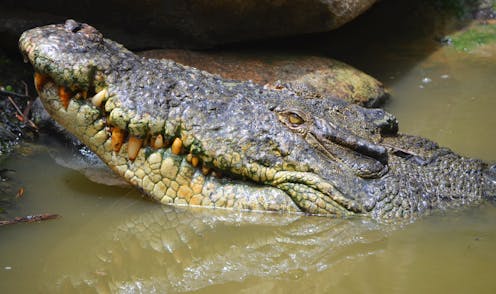
Over the millions of years crocodiles and their relatives have roamed our planet, they have evolved robust immune systems to help combat the potentially harmful microbes in the swamps and waterways they call home.
Our study, recently published in Nature Communications, takes a closer look at antimicrobial proteins called defensins, found in saltwater crocodiles. These proteins play a key role in the reptiles’ first line of defence against infectious disease.
As the threat of antibiotic-resistant microbes grows, so does our need for new and effective treatments. Could the defensins of these beasts hold the answers to help create a new wave of life-saving therapeutics?
What are defensins?
Defensins are small proteins produced by all plants and animals. In plants, defensins are usually made in the flowers and leaves, whereas animal defensins are made by white blood cells and in mucous membranes (for example in the lungs and intestines). Their role is to protect the host by killing infectious organisms.
Research into the defensins of different plant and animal species has found they can target a broad range of disease-causing pathogens. These include bacteria, fungi, viruses and even cancer cells.
The most common way defensins kill these pathogens is by attaching themselves to the outer membrane – the layer that holds the cell together. Once there, defensins create holes in the membrane, causing the cell contents to leak out, killing the cell in the process.
What’s special about crocodile defensins?
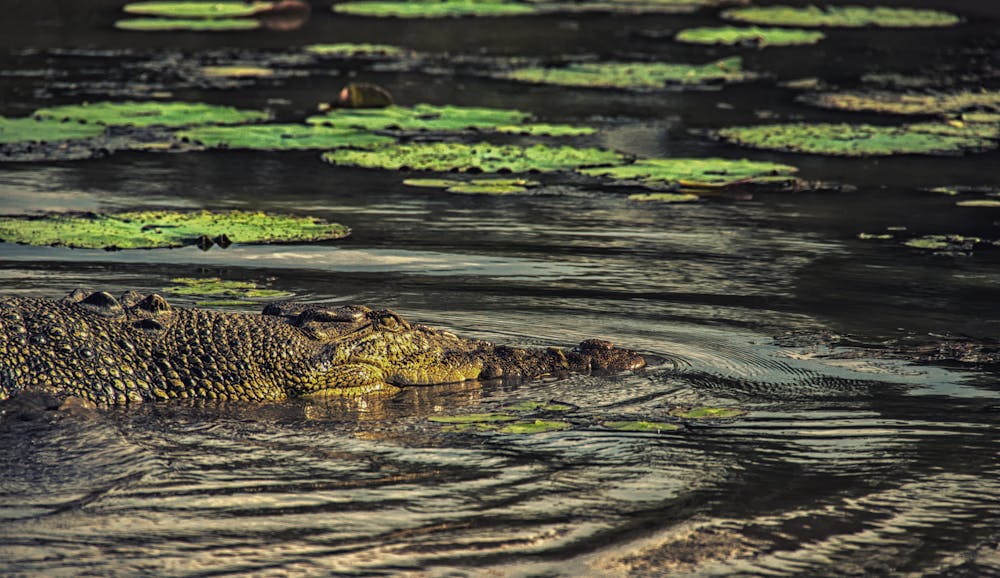
Despite living in dirty water, crocodiles rarely develop infections even though they often get wounded while hunting and fighting for territory. This suggests crocodiles have a potent immune system. We wanted to better understand how their defensins have adapted over time to protect them in these harsh environments.
By searching through the genome of the saltwater crocodile, we found that one particular defensin, named CpoBD13, was effective at killing the fungus Candida albicans – the leading cause of human fungal infections worldwide. Although some plant and animal defensins have previously been shown to target Candida albicans, the mechanism behind CpoBD13’s antifungal activity is what makes it unique.
That’s because CpoBD13 can self-regulate its activity based on the pH of the surrounding environment. At neutral pH (for example, in the blood) the defensin is inactive. However, when it reaches a site of infection which has a lower, acidic pH, the defensin is activated and can help clear the infection. This is the first time this mechanism has been observed in a defensin.
Our team discovered this mechanism by revealing the structure of CpoBD13 using a process called X-ray crystallography. This involves “shooting” lab-grown protein crystals with high-powered X-rays, which we were able to do at the Australian Synchrotron.
Are fungi really a threat to human health?
In comparison to bacterial and viral infections, fungal infections are often not seen as serious. After all, pandemics throughout human history have only ever been caused by the former. Indeed, fungi are most commonly known in the general public for causing athlete’s foot and toenail infections – hardly life-threating conditions.
But fungi can pose severe problems to human health, particularly in people with impaired immune systems. Globally, approximately 1.5 million deaths per year are attributed to fungal infections.
Our current arsenal of antifungals is limited to only a handful of drugs. Furthermore, we haven’t had a new class of antifungal treatments since the early 2000s. To make matters even worse, overuse of the antifungal medicines we do have has led to some drug-resistant fungal strains.
Rising global temperatures have also made once cooler regions more hospitable to pathogenic fungi. Climate change has even been linked with the emergence of new drug-resistant species, such as Candida auris.
Read more: Explainer: what is Candida auris and who is at risk?
A long way from crocs to the clinic
In the hunt for new medicines, our study and those like it are important for finding potential future antibiotics. By characterising the defensins of crocodiles, we have provided the groundwork needed to develop CpoBD13 into an effective antifungal. However, undertaking clinic trials is a long and costly process. From the initial discovery, it can take between five and 20 years to get a new drug approved.
Currently, protein-based treatments can sometimes unintentionally harm a person’s healthy cells. By using our knowledge of the crocodile’s defensins, we could potentially engineer other proteins to take on CpoBD13’s pH-sensing mechanism. Thus, they would only “turn on” upon reaching the infection.
Although there is much work to do before we see crocodile defensins in the clinic, we hope to one day harness the unique primal power of the crocodile’s immune system to aid in the global fight against infectious disease.
Authors: Scott Williams, PhD Candidate in Biochemistry, La Trobe University


















