

Disputes over COVID's origins reveal an intelligence community in disarray. Here are 4 fixes we need before the next pandemic
- Written by: Patrick F Walsh, Professor Intelligence and Security Studies, Charles Sturt University
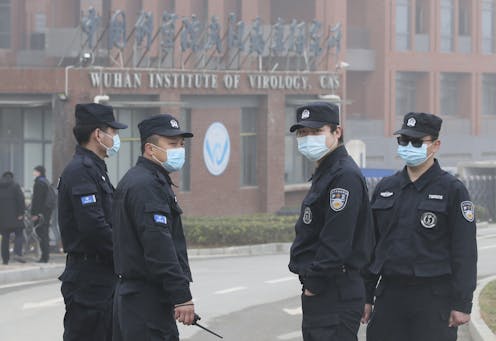
A recent Wall Street Journal article reported on new, classified intelligence from the US Department of Energy about the origins of COVID. It concluded with “low confidence” that the pandemic may have been due to a lab leak in Wuhan, China, rather than a natural disease transmission from animal to human.
The report is the latest chapter in a long saga about the origins of the pandemic, involving conflicting assessments from intelligence, policy and scientific communities around the globe.
The debate over the origins of COVID began early in the pandemic, with a lot of pressure being placed on the intelligence community by then-US President Donald Trump and Secretary of State Mike Pompeo to lay blame on the Chinese government.
In May 2021, the Biden administration tried to resolve some of the conflicting intelligence and data points about the origins of COVID by tasking the US intelligence community to do a 90-day review on the available information.
An unclassified version of this review was then released in October 2021. It was published by the peak body within the US intelligence community – the Office of the Director of National Intelligence.
The report shows a consensus among eight US intelligence agencies and the National Intelligence Council (which provides longer-term strategic analysis for the president) that COVID was not a bioterrorism incident.
However, there was disagreement among the agencies around the two most probable origins of COVID:
it was the result of animal-to-human transmission
it was the result of an accidental laboratory leak, likely from the Wuhan Institute of Virology.
No agency was named in the unclassified report, though four agencies, as well as the National Intelligence Council, have reportedly concluded (also with low confidence) that the origins were from natural transmission. Two others (the FBI and Department of Energy) have now assessed it as a lab leak. Two agencies remain undecided, including, reportedly, the CIA.
Why is intelligence conflicting?
This lack of consensus among intelligence agencies and low levels of confidence on their assessments are due to many factors.
The variations in analytical judgements are mostly due to how each agency interprets what are, at best, fragmented intelligence sources. There’s also the question of how intelligence analysts comprehend complicated scientific research.
Several scientific studies that examined environmental testing for COVID at the live animal and seafood market in Wuhan and early patient cases living nearby have provided strong evidence of a natural transmission of the virus. That is, the scientific evidence leads to the market as the probable epicentre of the epidemic.
Read more: The COVID lab leak theory is dead. Here's how we know the virus came from a Wuhan market
Yet, the scientific and epidemiological data itself is also incomplete. In particular, analysts haven’t identified which animal the virus likely “jumped from” to infect humans. More genetic data and a better understanding of how coronaviruses are transmitted naturally are required to fill the information gaps, notably in the initial cases in Wuhan.
According to US officials, Beijing has not been willing to provide full access to data requests from Western governments – or to the World Health Organization.
What needs to change before the next pandemic
The Department of Energy report highlights an even greater issue that has received less attention. The US intelligence community and its other “Five Eyes” partners (Australia, Canada, the United Kingdom and New Zealand) must improve their intelligence collection methods and analysis of health security threats and dangers, including from potential pandemics.
Four things will help improve the capabilities of the intelligence community and hopefully bring greater confidence in their assessments of the causes of future health emergencies and pandemics.
1. Better health intelligence collection and analysis
As pandemics become more frequent, our intelligence agencies need better risk, threat and hazard assessment methodologies to drive more robust, evidence-based collection and analysis of intelligence.
This means improving ways to combine traditional intelligence sources (often qualitative in nature) with scientific evidence to better assess the potential intent, capability and impact of threats and health hazards.
2. Fostering stronger ties with the scientific community
The intricacy of future pandemic threats and possible weaponisation of biotechnology will require intelligence agencies to foster a more purposeful and consistent interaction with the scientific community.
The US intelligence community has a track record here, but it and other Five Eyes countries will require even more strategic, coordinated outreach from the relatively closed intelligence world to the scientific community.
Greater workforce expertise in microbiology, genetics, virology and public health is also required within the intelligence community.
3. Creating a robust national health security strategy
Each agency cannot feasibly develop the capabilities to improve its intelligence collection and analysis on its own. A whole-of-government approach is required to iron out each agency’s roles, functions and mandates for future health security risks.
We advocate for a national health security strategy, much like the national cybersecurity strategies in each Five Eyes country, to improve governance and coordination across intelligence agencies in the health security space.
4. Conducting a 9/11 commission-style review
Lastly, to develop stronger post-COVID national health security measures, we need full independent reviews of how the intelligence community and key public health agencies worked throughout the pandemic in the US and its allies.
Such reviews could include what was done well and lessons to be learned that can be fed into national health security strategies.
Ideally, a review would also examine any evidence of politicising intelligence. Politics have always influenced intelligence gathering and analysis, not just during COVID.
For example, the assessment of whether Iraq had weapons of mass destruction before the US-led invasion of Iraq in 2003 shows how politics can negatively affect the ability of intelligence agencies to provide independent, non-biased advice to policy makers.
Recent calls for the equivalent of a 9/11 commission into COVID so far have not gone anywhere in Washington. It is not too late for such a review to take place. But realistically, given the fractured political climate in the US, the possibility of establishing an independent commission seems more difficult than in the other Five Eyes countries.
What this means is that we’re missing an opportunity to improve our intelligence agencies, which is acutely needed before the next global pandemic event.
Authors: Patrick F Walsh, Professor Intelligence and Security Studies, Charles Sturt University


















