

Technology hasn't killed public libraries – it's inspired them to transform and stay relevant
- Written by: Danielle Wyatt, Research Fellow, University of Melbourne
In 2017, archaeologists discovered the ruins of the oldest public library in Cologne, Germany. The building may have housed up to 20,000 scrolls, and dates back to the Roman era in the second century. When literacy was restricted to a tiny elite, this library was open to the public. Located in the centre of the city in the marketplace, it sat at the heart of public life.
We may romanticise the library filled with ancient books; an institution dedicated to the interior life of the mind. But the Cologne discovery tells us something else. It suggests libraries may have meant something more to cities and their inhabitants than being just repositories of the printed word.
Read more: State libraries need our support and participation to survive
Contemporary public libraries tell us this too. Membership has generally declined or flat-lined, but people are now using libraries for more than borrowing books. Children come to play video games or complete homework assignments together. People go to hear lectures and musical performances, or attend craft workshops and book clubs.
Libraries have become vital for the marginalised, such as the homeless, to access essential government services such as Centrelink, and to stay connected. They have become defacto providers of basic digital literacy training – such as how to use an iPad or access an eGov account. Others cater to tech-enthusiasts offering advanced courses on coding or robotics in purpose-built spaces and laboratories.
 We do romanticise libraries as being repositories of ancient knowledge.
Clarisse Meyer/Unsplash
We do romanticise libraries as being repositories of ancient knowledge.
Clarisse Meyer/Unsplash
Yet the future of Australia’s public libraries is unfolding according to a contradictory, double narrative. One-off funding for “feature” libraries built by star architects exists in parallel with cuts and closures of libraries on the margins. In Victoria’s city of Geelong, for example, three regional libraries on the city’s periphery faced closure scarcely a year after the opening of the A$45m Geelong Library and Heritage Centre.
Part of the reason for this is that the expanded contribution of libraries to our communities and cities isn’t recognised at higher levels of government.
Read more: Has the library outlived its usefulness in the age of Internet? You'd be surprised
How libraries are changing
In the early 2000s, as archives shifted online, futurists predicted an imminent death to public libraries. But the threat of obsolescence made libraries take proactive steps to remain relevant in a digital world. They thought creatively about how to translate services they have always offered – universal access to information – into new formats.
Libraries digitised their collections and networked their catalogues, exponentially extending the range of materials users could access. They introduced e-books and e-readers to read them with. They mounted screens to watch movies or to play video games.
They also installed computers crucial to that 14% of the population who don’t have access to the internet at home. And they wired up their spaces with free WiFi, retrofitting extra power-points so users could plug in their own devices.
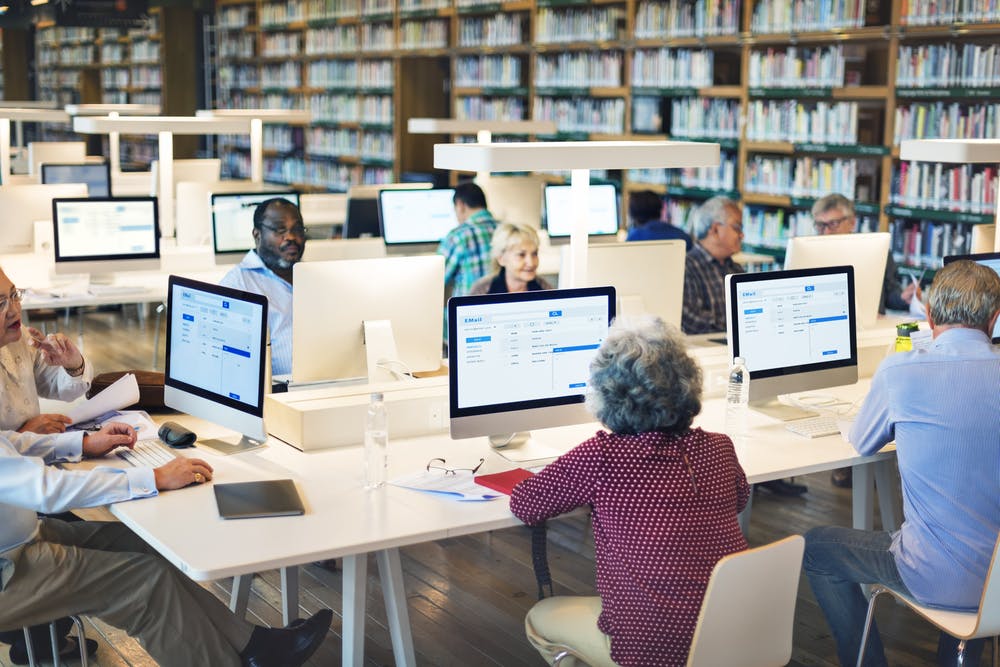 Libraries have a lot of programs around technology and the use of computers.
from shutterstock.com
Libraries have a lot of programs around technology and the use of computers.
from shutterstock.com
Besides offering new technologies and services, libraries offer people a welcoming, safe space to gather without the pressure to spend money. Investing in attractive, versatile furnishings, they have actively encouraged people to dwell in their spaces, whether this is to read a newspaper, complete a job application online, or to study.
In an age where communication technologies create both efficiency as well as forms of isolation, such spaces assume a renewed social importance.
Read more: Friday essay: why libraries can and must change
How libraries shape the city
As vital as libraries are to individuals, their value is also connected to broader civic agendas. Libraries have deliberately sought to change perceptions of themselves from spaces of collection to spaces of creation. Some, such as the State Library of Victoria, see themselves facilitating creativity not only in an artistic sense, but also as entrepreneurial hubs for start-ups and budding innovators.
Public libraries have promoted their relevance to cities by strategically aligning themselves with government visions of economic growth. For instance, the Geelong Library and Heritage Centre was a signature investment in Geelong’s Digital Strategy, promoted as a “platform” to build “digital capacity” and a visible symbol of the city’s transition to a digital future.
Others, such as Dandenong library in Victoria, attract high levels of funding as part of urban renewal projects aimed at revitalising declining urban precincts.
These high-profile libraries, usually in urban centres, overshadow the uncertain fate of smaller libraries on the periphery, fighting to stay viable due to insufficient funding.
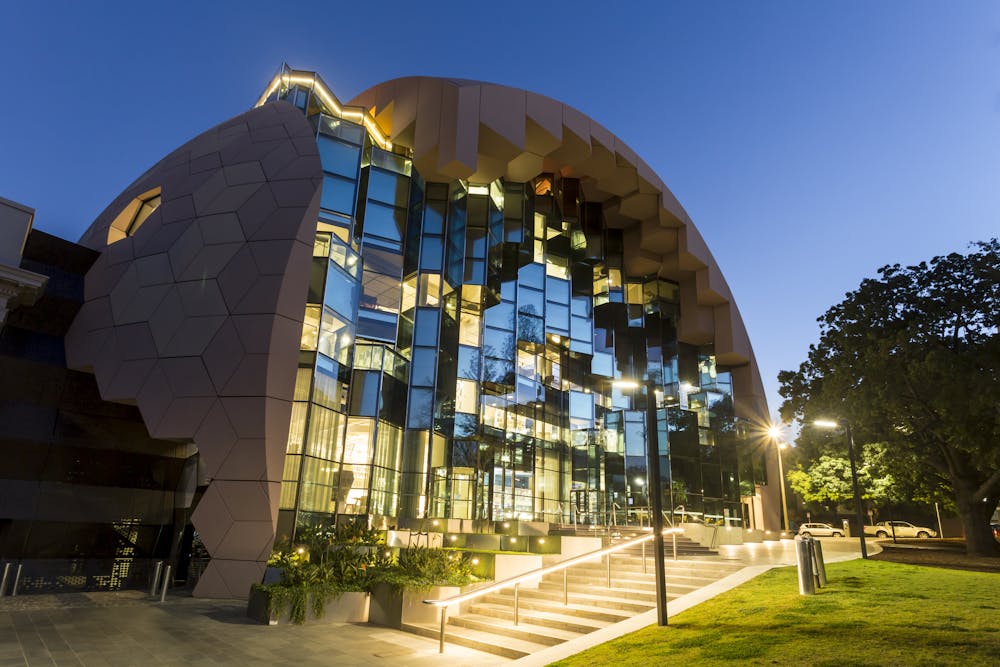 The Geelong Library and Heritage Centre cost millions of dollars to build, while three local libraries lost funding.
from shutterstock.com
The Geelong Library and Heritage Centre cost millions of dollars to build, while three local libraries lost funding.
from shutterstock.com
This contradiction is occurring because provisioning for libraries is not embedded at high levels of urban planning and policy making. There is no nationally consistent model for allocating funds between the states and local government. Nor is there a consistent framework across Australia for evaluating library performance.
Critically and most revealingly, libraries are evaluated based on traditional metrics, such as loan and membership numbers, capturing only a fraction of the full value they contribute to our individual and collective life. Failure to recognise this by governments and policymakers puts at risk the diverse and nuanced ways libraries might shape Australia’s future.
Authors: Danielle Wyatt, Research Fellow, University of Melbourne


















