

Can seaweed save the world? Well it can certainly help in many ways
- Written by: Catriona Macleod, Professor, University of Tasmania
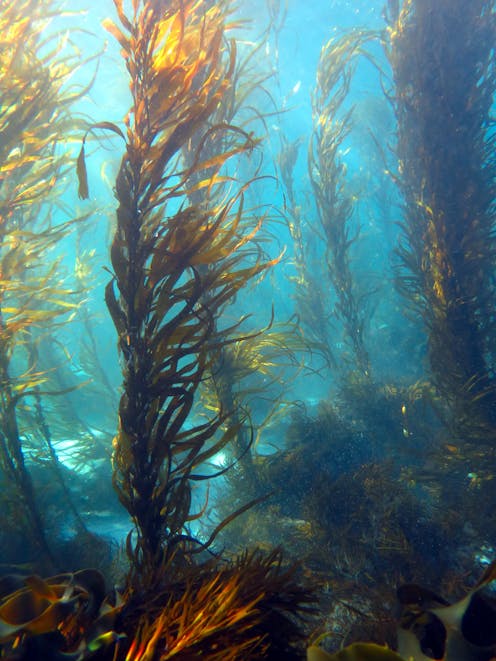
Seaweed is increasingly seen as a solution to many of the world’s most pressing problems. Interest in farming seaweed has exploded.
There’s such a wide range of applications, from fertilisers to foods, bioplastics, textiles, supplements and carbon sinks. It’s hard to think of another substance with so much potential.
Can seaweed save the world? It’s a question being posed this weekend at the WOMADelaide world music festival Planet Talks. I’m on the panel and the answer, I think, is a definite maybe!
I’ve studied seaweeds as ecosystem health indicators for years. I became interested in using seaweed to clean up nutrients in our coastal systems. Now at the Marine Bioproducts Cooperative Research Centre, my eyes have opened to the huge diversity of Australian seaweeds and their many amazing applications.
Read more: Ever heard of ocean forests? They're larger than the Amazon and more productive than we thought
A marvelous multitool
Seaweed is a catch-all term for marine plants. These are the primary producers in our marine and aquatic systems.
In many ways, they’re as diverse as the plants you see on land. Many are foundational species that act like forests underwater, but they come in many different types and forms. We group them into reds, greens and browns. And they have very different properties, just like terrestrial plants, depending on the species and where they live.
It’s true that seaweed has huge potential to address some of the most wicked problems facing the planet. If we were to think of seaweed as one of the tools in the toolbox, they’d be the multitool or Swiss army knife with a wide range of potential applications, including:
reducing methane production in cows and other ruminants such as goats and sheep
capturing and storing carbon dioxide
boosting protein and nutrients in food products
providing extra health benefits in new therapeutics
soaking up excess nutrients in wastewater
creating new materials such as bioplastics, packaging and textiles.
Another thing that blows me away with seaweed is that one plant can actually tap into several of these market opportunities. So you could be growing it as a nutraceutical supplement, a fibre for textiles and as a fertiliser, all at once. That’s really exciting because it’s not something many of our traditional farming approaches have been able to do.
Not without its challenges
Early studies suggested that scaling up seaweed aquaculture could make a big difference to climate change by capturing carbon dioxide emissions. But it turns out it’s not as simple as that.
Verifying whether the carbon dioxide fixed by seaweeds through photosynthesis can be locked up long-term is extremely complex. There are differences between species and ecosystems. And research has to factor in the interactions of the various organisms that live on and around seaweed communities, as well as the prevailing environmental conditions.
In some situations, seaweed ecosystems produce more carbon than they can capture.
Read more: Kelp won't help: why seaweed may not be a silver bullet for carbon storage after all
However, seaweeds may still have a contribution in this space through carbon offsets. As they can be used to make new products to replace other materials that have larger carbon footprints. This includes new foods, new materials such as fabrics, and new building supplies designed to store carbon in the long term.
Cutting methane emissions and other benefits
The native Australian red seaweed Asparagopsis has been shown to markedly reduce methane production in cattle, when added to their diet.
Methane is a potent greenhouse gas that contributes to global warming. It accounts for 20-30% of all greenhouse gas emissions, much of it associated with livestock production.
Any significant reduction in methane production “would have a rapid and significant effect on atmospheric warming potential”, according to a report from the US Environmental Protection Agency.
At the most recent global climate meeting, COP26, it was clearly noted that current national climate commitments will not be enough to avoid exceeding 1.5℃ of warming. So we need new and radical solutions. If Asparagopsis farming lives up to its potential, it could make a truly meaningful difference.
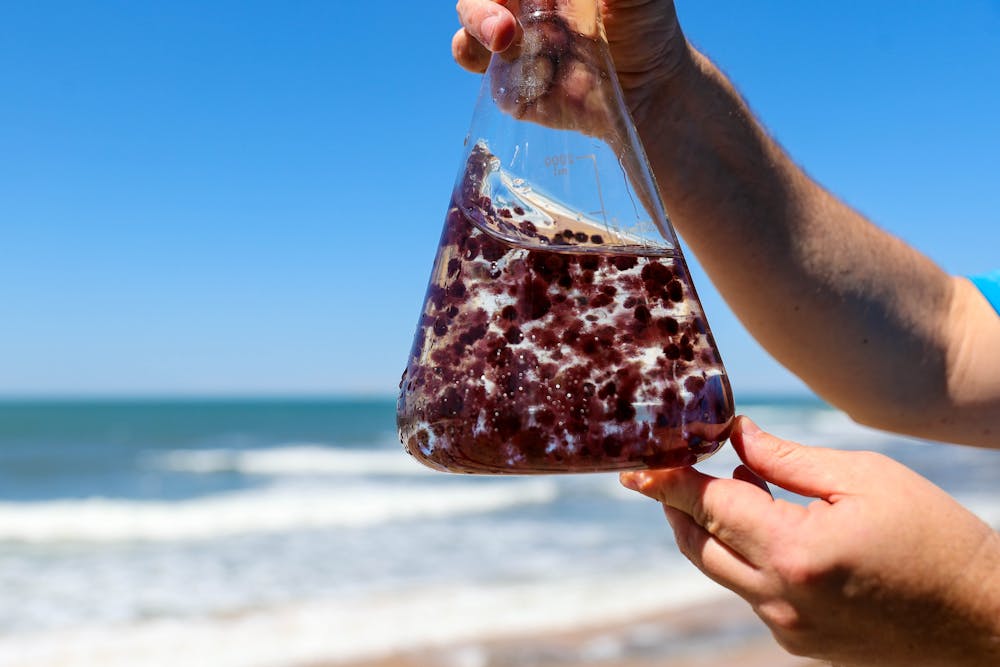
Seaweed can improve intensive agriculture too. As highly effective biostimulants, they provide viable alternatives to synthetic fertilisers.
Seaweed can also be used to recover and recycle excess nutrients such as nitrogen and phosphates from wastewater. So when you have large human populations, intensive land-based farming or aquaculture facilities releasing nutrients into our coastal systems, can be a very effective way to respond to that. Seaweed farms can do better when grown in areas with higher nutrient levels, such as alongside fed finfish production facilities.
Human health and medical benefits extend beyond commercially viable and tasty alternative protein sources. Some seaweeds can contain 10-30% protein, which is comparable with soy protein levels. But they also have the added natural advantage of relatively high levels of long-chain omega-3 fatty acids (brain food), which are not naturally found in terrestrial food sources.
Increasingly we are finding seaweeds with anticoagulant, anti-inflammatory, antioxidant, anticarcinogenic and antiviral properties. Several types of kelp have been shown to promote a beneficial immune response.
Seaweed supplements in animal feeds have also been shown to offer advantages such as improved gut health and digestive efficiency. This has the potential to markedly improve yield and other outcomes on farms.
Let’s get on with it
There are still challenges to overcome, and there may be more issues to contend with down the track. But if we support coordinated and appropriate research and development, focused on fast-tracking the benefits that seaweed has to offer, Australian seaweed really can play a big part in saving the world.
It’s worth mentioning here, several initiatives and funding bodies that are currently supporting seaweed research and development in Australia. Most notably the Marine Bioproducts Co-operative Research Centre (MBCRC), the Blue Economy CRC, AgriFutures Australia, the Fisheries Research and Development Corporation (FRDC) and the Australian Sustainable Seaweed Alliance (ASSA).
And it’s really encouraging to see broader community engagement in this conversation including the panel discussion at the WOMADelaide Festival Planet Talks series. It’s great to have a chance to talk openly about the challenges while showcasing the opportunities. It’s complicated, but it’s exciting. Let’s get on with it.
Authors: Catriona Macleod, Professor, University of Tasmania


















