

Futurists predict a point where humans and machines become one. But will we see it coming?
- Written by: John Kendall Hawkins, Philosopher, University of New England
Most people are familiar with the deluge of artificial intelligence (AI) apps that seem designed to make us more efficient and creative. We’ve got apps that take text prompts and generate art, and the controversial ChatGPT, which raises serious questions about originality, misinformation and plagiarism.
Despite these concerns, AI is becoming ever more pervasive and intrusive. It’s the latest technology that will irreversibly change our lives.
The internet and smartphones were other examples. But unlike those technologies, many philosophers and scientists think AI could one day reach (or even go beyond) human-style “thinking”. This possibility, coupled with our increasing dependence on AI, is at the root of a concept in futurism called “technological singularity”.
This term has been around for a while, having been popularised by the US science fiction writer Vernor Vinge a few decades ago.
Today, the “singularity” refers to a hypothetical point in time at which the development of artificial general intelligence (AGI) – that is, AI with human-level abilities – becomes so advanced that it will irreversibly change human civilisation.
It would mark the dawn of our inseparability from machines. From that moment on, we won’t be able to live without them without ceasing to function as human beings. But if the singularity comes, will we even notice it?
Brain implants as the first stage
To understand why this isn’t the stuff of fairy tales, we need only look as far as recent developments in brain-computer interfaces (BCIs). BCIs are a natural beginning to the singularity in the eyes of many futurists, because they meld mind and machine in a way no other technology so far can.
Elon Musk’s company Neuralink is seeking permission from the US Food and Drug Administration to begin human trials for its BCI technology. This would involve implanting neural connectors into volunteers’ brains so they can communicate instructions by thinking them.
Neuralink hopes to help paraplegic people walk and blind people see again. But beyond these goals are other ambitions.
Musk has long said he believes brain implants will allow telepathic communication, and lead to the co-evolution of humans and machines. He argues that unless we use such technology to augment our intellects, we risk being wiped out by super-intelligent AI.
Musk is understandably not everyone’s go-to for tech expertise. But he’s not alone in predicting a massive growth in AI’s capabilities. Surveys show AI researchers overwhelmingly agree AI will achieve human-level “thinking” within this century. What they don’t agree on is whether this implies consciousness or not, or whether this necessarily means AI will do us harm once it reaches this level.
Another BCI technology company, Synchron, has created a minimally invasive implant that allowed a patient with amyotrophic lateral sclerosis (ALS) to send emails and browse the internet using his thoughts.
A patient demonstrates the capabilities of Synchron’s interface.Synchron chief executive Tom Oxley believes brain implants could ultimately go beyond prosthetic rehabilitation and completely transform how humans communicate. Speaking to a TED audience, he said they may one day allow users to “throw” their emotions so others can feel what they’re feeling, and “the full potential of the brain would then be unlocked”.
Early achievements in BCIs could arguably be considered the first stages of a tumbling towards the postulated singularity, in which human and machine become one. This need not imply machines will become “sentient” or control us. But the integration itself, and our ensuing dependency on it, could change us irrevocably.
It’s also worth mentioning that the start-up funding for Synchron partly came from DARPA, the research and development arm of the US Department of Defense that helped gift the world the internet. It’s probably wise to be concerned about where DARPA places its investment monies.
Would AGI be friend or foe?
According to Ray Kurzweil, a futurist and former Google innovations engineer, humans with AI-augmented minds could be thrown onto the autobahn of evolution – hurtling forward without speed limits.
In his 2012 book How to Create a Mind, Kurzweil theorises the neocortex – the part of the brain thought to be responsible for “higher functions” such as sensory perception, emotion and cognition – is a hierarchical system of pattern recognisers which, if emulated in a machine, could lead to artificial super-intelligence.
He predicts the singularity will be with us by 2045, and thinks it might bring about a world of super-intelligent humans, perhaps even the Nietzschean “Übermensch”: someone who surpasses all worldly constraints to realise their full potential.
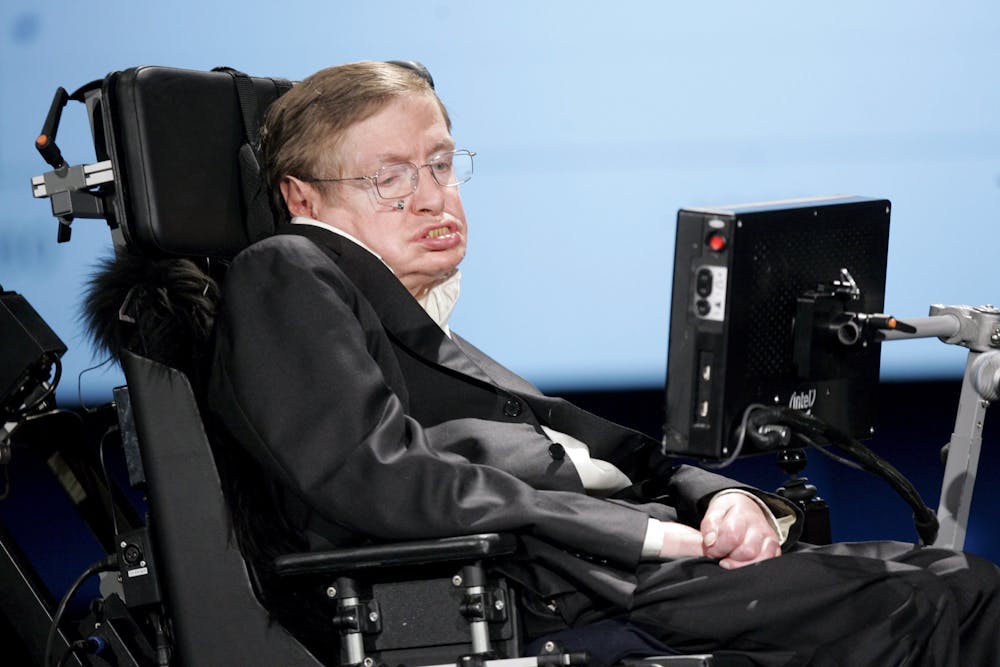
But not everyone sees AGI as a good thing. The late, great theoretical physicist Stephen Hawking warned super-intelligent AI could result in the apocalypse. In 2014, Hawking told the BBC
the development of full artificial intelligence could spell the end of the human race. […] It would take off on its own and redesign itself at an ever-increasing rate. Humans, who are limited by slow biological evolution, couldn’t compete, and would be superseded.
Hawking was, however, an advocate for BCIs.
Connected in a hive mind
Another idea that relates to the singularity is that of the AI-enabled “hive mind”. Merriam-Webster defines a hive mind as
the collective mental activity expressed in the complex, coordinated behaviour of a colony of social insects (such as bees or ants) regarded as comparable to a single mind controlling the behaviour of an individual organism.
A theory has been developed by neuroscientist Giulio Tononi around this phenomenon, called Integrated Information Theory (IIT). It suggests we are all heading toward a merger of all minds and all data.
Philosopher Philip Goff does a good job of explaining the implications of Tononi’s concept in his book Galileo’s Error:
IIT predicts that if the growth of internet-based connectivity ever resulted in the amount of integrated information in society surpassing the amount of integrated information in a human brain, then not only would society become conscious but human brains would be ‘absorbed’ into that higher form of consciousness. Brains would cease to be conscious in their own right and would instead become mere cogs in the mega-conscious entity that is the society including its internet-based connectivity.
It’s worth noting there’s little evidence such a thing could ever come to fruition. But the theory raises important ideas about not only the rapid acceleration of technology (not to mention how quantum computing might propel this) – but about the nature of consciousness itself.
Hypothetically, if a hive mind were to emerge, one could imagine it would mark the end of individuality and the institutions that rely on it, including democracy.
The final frontier is between our ears
Recently OpenAI (the company that developed ChatGPT) released a blog post reaffirming its commitment to achieving AGI. Others will doubtless follow.
Our lives are becoming algorithmically driven in ways we often can’t discern, and therefore can’t avoid. Many features of a technological singularity promise amazing enhancements to our lives, but it’s a worry these AIs are the products of private industry.
They are virtually unregulated, and largely at the whims of impulsive “technopreneurs” with more money than than most of us combined. Regardless of whether we consider them crazy, naïve, or visionaries, we have a right to know their plans (and be able to rebut them).
If the past few decades are anything to go by, where new technologies are concerned, all of us will be affected.
Read more: Netflix's The Social Dilemma highlights the problem with social media, but what's the solution?
Authors: John Kendall Hawkins, Philosopher, University of New England


















